1
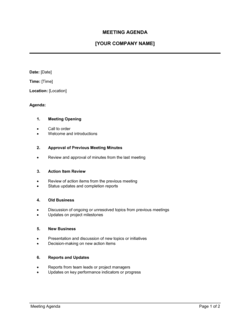
Enter the organization and meeting details
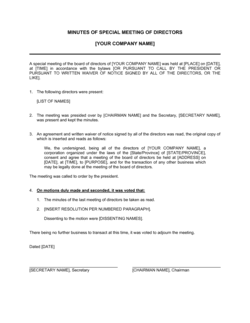
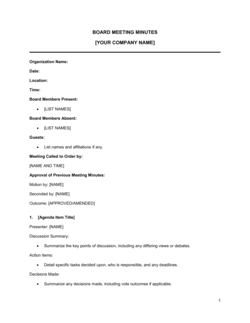
Fill in the organization's full legal name, meeting type, date, time, and location or video conferencing link. Record the date the agenda was distributed and confirm it satisfies the notice period in your bylaws or governance policy.
💡 Note the bylaw or policy section that governs notice period directly on the agenda — it makes compliance self-evident if the meeting is ever challenged.
2
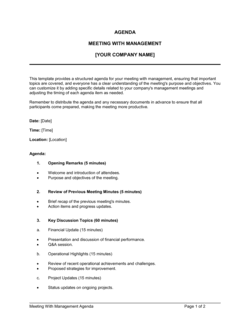
List all expected attendees and proxy holders
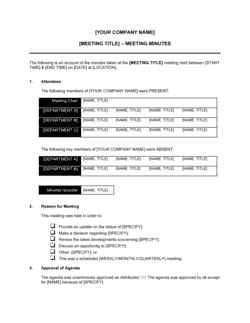
Record each expected member by name and title. Note any anticipated absences and the name of whoever holds a proxy for them. You will confirm quorum at the meeting itself, but listing attendance expectations in advance helps the chair prepare.
💡 Send the draft attendance list with the agenda so members can correct it before the meeting — correcting the record at the meeting consumes time better spent on decisions.
3
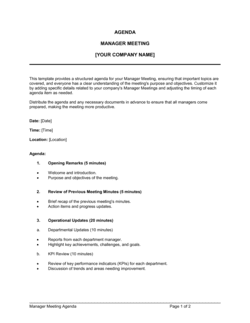
Set the standing business items with time allocations
Enter each recurring agenda item — financial report, operations update, compliance review — with a designated presenter and a specific time budget. List them in the same order every meeting to build a predictable cadence.
💡 Cap standing items at 40% of total meeting time. If recurring reports consistently exceed their allocation, shift them to a pre-read format and use meeting time only for questions.
4
Draft special business items with proposed resolutions
For each decision item, write a specific description of what is being proposed, who is presenting, and the exact text of the proposed resolution so members can review and prepare before the meeting.
💡 Circulate supporting materials — contracts, reports, financial summaries — with the agenda at least 48 hours in advance so the meeting can focus on decision-making rather than information delivery.
5
Define the voting procedure and required threshold
State whether votes will be conducted by show of hands, roll call, or written ballot, and specify the threshold required for each resolution — simple majority (50%+1), supermajority (two-thirds), or unanimous.
💡 Match the threshold to your bylaws for each resolution type. Budget approvals and officer appointments often have different thresholds — using the wrong one invalidates the resolution.
6
Prepare the action items register from the prior meeting
Pull all open action items from the previous meeting's minutes and list them with their owners, original deadlines, and current status. Owners should submit status updates before the meeting so the chair can flag blocked items for discussion.
💡 Color-code the status column — green for complete, yellow for in progress, red for overdue — so the chair can spot accountability gaps in seconds.
7
Distribute the agenda with supporting materials
Send the completed agenda, all supporting documents, and any proposed resolution texts to all members within the notice period required by your bylaws. Record the distribution date and method on the agenda itself.
💡 Use a single file or shared folder rather than multiple email attachments — members who can't find the right document arrive unprepared and slow down the meeting.
8
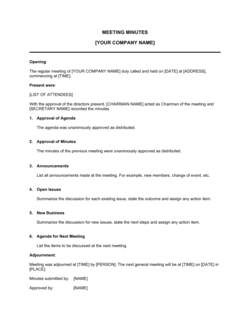
Sign and archive the approved minutes after the meeting
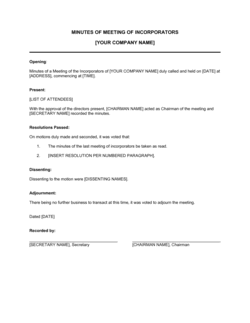
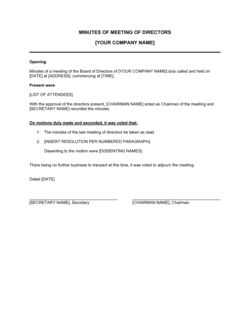
After the meeting, prepare the minutes from the chair's notes and the agenda record, circulate for corrections within the stated turnaround time, then have the chair or secretary sign the approved copy and store it in the corporate records file.
💡 Minutes are a legal document — store the signed copy in the same location as your articles of incorporation, bylaws, and prior resolutions so they are accessible for due diligence or regulatory inspection.