Understanding Organizational Leadership Template

Free Word download • Edit online • Save & share with Drive • Export to PDF

6 pages25–35 min to fillDifficulty: ComplexSignature requiredLegal review recommended
Learn more ↓
FreeUnderstanding Organizational Leadership Template

At a glance

What it is
An Understanding Organizational Leadership document is a formal binding agreement that defines the leadership hierarchy, authority levels, decision-making rights, and accountability structures within an organization. This free Word download gives you a structured, editable template you can tailor to your company's governance needs and export as PDF for board approval or executive sign-off.
When you need it
Use it when establishing a new company's leadership structure, restructuring management following a merger or acquisition, formalizing executive roles after rapid growth, or resolving ambiguity about who holds authority over key organizational decisions.
What's inside
Leadership hierarchy and reporting lines, defined authority levels by role, decision-making thresholds and escalation procedures, accountability and performance obligations, conflict-of-interest provisions, amendment procedures, and governing law — all structured to provide enforceable clarity across the organization.

What is an Understanding Organizational Leadership Document?

An Understanding Organizational Leadership document is a formal binding agreement that defines the leadership hierarchy, authority levels, decision-making thresholds, delegation rules, and accountability structures within an organization. It translates informal assumptions about who can authorize what into enforceable obligations — specifying, for example, that the CFO may approve expenditures up to $250,000 independently, that acquisitions above $1 million require board approval, and that any leader who exceeds their designated authority level faces documented consequences. This free Word download provides a structured, editable framework you can tailor to your company's governance design and execute across your leadership team.

Why You Need This Document

Without a written leadership agreement, authority disputes are resolved by whoever argues most convincingly in the moment — not by any documented standard. The consequences are concrete: unauthorized commitments bind the organization to contracts it didn't sanction, board members discover executives have exceeded their mandate only after the transaction closes, and departing leaders dispute the scope of what they were ever authorized to do. Investors and lenders increasingly require evidence of formalized governance before committing capital, and regulated industries face enforcement action when authority documentation cannot be produced on demand. A signed organizational leadership agreement eliminates these gaps, gives every leader a clear, written mandate, and provides the organization with an enforceable framework for holding the leadership team accountable — all for the cost of a few hours of setup and a legal review where the stakes warrant it.

Which variant fits your situation?

If your situation is…Use this template
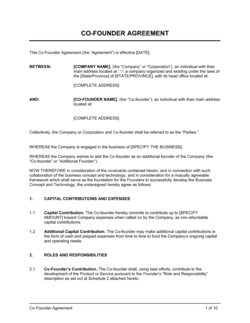
Defining authority between co-founders at the pre-incorporation stageCo-Founder Agreement
Establishing board composition and governance rules for a corporationCorporate Bylaws
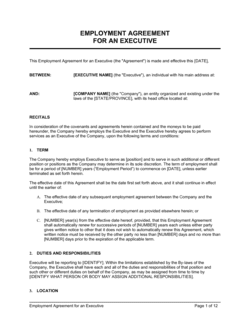
Documenting the CEO or executive director's mandate and authorityExecutive Employment Agreement
Creating a governance charter for a nonprofit boardNonprofit Board Governance Policy
Delegating authority to a specific manager for a defined scope or projectDelegation of Authority Letter
Formalizing leadership transitions after a merger or acquisitionOrganizational Change Management Plan
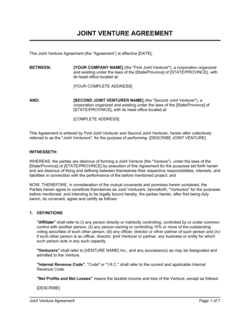
Setting leadership roles within a joint venture structureJoint Venture Agreement

Common mistakes to avoid

❌ Relying on an org chart instead of a written authority clause

Why it matters: Org charts are informal tools — they carry no legal weight in a dispute over who had authority to make a decision. When a transaction is challenged, courts look at the signed document, not the slide deck.

Fix: Embed reporting lines and authority levels in the body of the agreement and attach the org chart as a named schedule that is explicitly incorporated by reference.

❌ Failing to cross-reference corporate bylaws and shareholder agreements

Why it matters: Conflicting provisions between the leadership agreement and the company's governing documents create a legal ambiguity that requires expensive litigation or board resolution to untangle.

Fix: Before finalizing the agreement, have corporate counsel compare it against every existing governance document and resolve any inconsistencies in writing before execution.

❌ Omitting annual review and amendment requirements

Why it matters: Leadership structures change with every hire, promotion, restructuring, or acquisition. An authority matrix that is 18 months out of date routinely produces unauthorized decisions or approval gridlock.

Fix: Include a mandatory annual review clause tied to the fiscal year-end, with a defined owner (board chair or general counsel) responsible for initiating it.

❌ Setting conflict-of-interest definitions too narrowly

Why it matters: A definition limited to direct financial interests misses indirect holdings — a leader's spouse owning equity in a key vendor, for example — leaving the organization exposed to undisclosed influence on procurement or contracting decisions.

Fix: Expand the definition to cover interests held by immediate family members and entities in which the leader holds a material interest, consistent with the organization's code of conduct.

❌ No escalation path for decisions that fall between tiers

Why it matters: Gray-area decisions — those that don't clearly fit a single authority category — stall operations when there is no defined escalation procedure, or get made by the wrong person, creating liability.

Fix: Add a default escalation rule: any decision not clearly assigned to a category is escalated to the next tier above the decision-maker seeking approval, with a response deadline of [5] business days.

❌ Executing the agreement after leaders have already begun acting

Why it matters: Leaders who have already been exercising authority without a signed agreement may argue that their existing de facto authority is broader than what the written document provides, complicating enforcement of new limitations.

Fix: Execute the agreement before any leader begins acting in the relevant role. For existing leaders, execute a formal amendment that supersedes any prior informal understanding, with documented acknowledgment from each party.

The 10 key clauses, explained

Parties and Organizational Scope

In plain language: Identifies the legal entity and all parties bound by the agreement, and defines which organizational units, subsidiaries, or geographic regions the document governs.

Sample language
This Understanding Organizational Leadership Agreement is entered into as of [DATE] by and among [ENTITY LEGAL NAME], a [STATE/COUNTRY] [ENTITY TYPE] ('Organization'), and each individual identified as a leader in Schedule A ('Leaders'). This Agreement governs leadership authority across [SCOPE — e.g., all domestic operations / all subsidiaries listed in Exhibit 1].

Common mistake: Failing to specify which subsidiaries or divisions are covered. When an acquisition adds new entities, leaders in those entities operate outside the agreement's authority framework until explicitly included.

Leadership Hierarchy and Reporting Lines

In plain language: Establishes the formal chain of command — who reports to whom — and confirms how each leadership position relates to the board and to other executive roles.

Sample language
The leadership hierarchy is set out in Schedule B. The [CEO / Executive Director] reports directly to the Board of Directors. The following roles report to the [CEO]: [CFO], [COO], [CMO], [CTO]. Each leader's direct reports are listed in their respective role profiles in Schedule C.

Common mistake: Defining reporting lines only in an org chart and not in the written agreement. Org charts are not legally binding; a dispute over authority reverts to whatever the signed document says.

Authority Levels and Decision Thresholds

In plain language: Specifies the financial and operational decisions each leadership tier is authorized to make independently, and the thresholds above which escalation to a higher authority is required.

Sample language
Category 1 — Operational Decisions (up to $[X]): [ROLE] may approve without further authorization. Category 2 — Significant Decisions ($[X+1] to $[Y]): require written approval from [CEO / CFO]. Category 3 — Reserved Matters (above $[Y] or as listed in Schedule D): require Board approval prior to execution.

Common mistake: Setting dollar thresholds without adjusting them for inflation or organizational growth. A $50,000 threshold set at founding becomes operationally irrelevant within three years for a fast-growing business.

Reserved Matters

In plain language: Enumerates specific high-stakes decisions — such as acquisitions, major debt, executive hiring and termination, and fundamental strategy changes — that are retained exclusively at the board level.

Sample language
The following matters are reserved to the Board of Directors and may not be delegated to executive management: (a) approval of any acquisition or disposal with a value exceeding $[X]; (b) issuance of new equity or debt instruments; (c) appointment or removal of the [CEO / Managing Director]; (d) approval of the annual budget; (e) any amendment to these Articles or corporate bylaws.

Common mistake: Using a reserved matters list that hasn't been cross-referenced against the company's corporate bylaws or shareholder agreement — creating conflicting authority provisions that require court interpretation to resolve.

Delegation and Sub-Delegation

In plain language: Governs whether and how leaders may further delegate their authority to subordinates, and sets the conditions and limits on such delegation.

Sample language
[ROLE] may delegate operational authority within their Category 1 limits to direct reports by written notice to [CFO / General Counsel]. No sub-delegation may exceed the delegating leader's own authority level. All delegations must be documented in the Authority Register maintained by [ROLE / DEPARTMENT] and reviewed no less than annually.

Common mistake: Permitting unlimited sub-delegation without a written record requirement. Undocumented delegations create liability gaps when a subordinate makes a decision that later results in a loss or litigation.

Conflict-of-Interest Obligations

In plain language: Requires leaders to disclose actual or potential conflicts of interest, recuse themselves from related decisions, and follow the organization's conflict management procedures.

Sample language
Each Leader shall promptly disclose to the [Board / General Counsel] any actual or reasonably anticipated conflict of interest arising in connection with their exercise of authority under this Agreement. A Leader with a disclosed conflict shall not participate in any related decision and shall be excluded from any vote or approval process in respect of that matter.

Common mistake: Defining 'conflict of interest' so narrowly that indirect financial interests — investments in suppliers, family members on vendor payrolls — fall outside the disclosure requirement.

Accountability, Performance Standards, and Consequences

In plain language: Sets out how each leader is held accountable for the outcomes within their authority, what performance metrics apply, and what happens when authority is misused or performance thresholds are missed.

Sample language
Each Leader is accountable for the outcomes attributable to decisions made within their designated authority level. The [CEO / Board] shall conduct a formal performance review of each Leader no less than annually. Misuse of authority — including exceeding approved thresholds without prior escalation — constitutes grounds for the remedies set out in the applicable employment agreement, up to and including termination for cause.

Common mistake: Treating accountability as a values statement rather than a documented, measurable standard. Accountability clauses without defined metrics and documented consequences are unenforceable in practice.

Indemnification of Leaders

In plain language: Commits the organization to defend and compensate leaders who face claims arising from good-faith decisions made within their authorized scope, excluding acts of fraud, gross negligence, or willful misconduct.

Sample language
The Organization shall indemnify and hold harmless each Leader from and against any claims, losses, or legal costs arising from decisions made in good faith within the scope of their authority under this Agreement, to the fullest extent permitted by applicable law, excluding any act of fraud, gross negligence, or willful misconduct.

Common mistake: Omitting the carve-outs for fraud and gross negligence. Without them, the indemnification clause may be read as protecting leaders who acted with intentional wrongdoing — which conflicts with public policy in most jurisdictions and voids the provision.

Amendment, Review, and Succession

In plain language: Specifies how the agreement can be amended, how frequently the authority structure must be reviewed, and the process for updating leadership appointments when roles change hands.

Sample language
This Agreement may be amended only by a written instrument signed by [the Board / a majority of Leaders / both parties]. The authority matrix in Schedule D shall be reviewed no less than annually and upon any material change in organizational structure, M&A activity, or leadership appointment. Succession to a listed role transfers this Agreement's obligations automatically to the successor unless the Board resolves otherwise within [30] days of the appointment.

Common mistake: No annual review requirement. Leadership structures evolve rapidly during growth phases — an authority matrix that is two years out of date routinely produces approval gridlock or unauthorized decisions.

Governing Law and Dispute Resolution

In plain language: States which jurisdiction's law governs the agreement and how disputes between leaders or between a leader and the organization will be resolved.

Sample language
This Agreement shall be governed by and construed in accordance with the laws of [STATE / PROVINCE / COUNTRY]. Any dispute arising under or in connection with this Agreement shall be referred first to mediation administered by [BODY] in [CITY]. If mediation fails within [30] days, disputes shall be resolved by binding arbitration under the rules of [AAA / JAMS / ICC], except claims for injunctive relief which may be brought in any court of competent jurisdiction.

Common mistake: Selecting a governing law jurisdiction where neither the organization nor most leaders are located. Courts in unrelated jurisdictions regularly decline to enforce foreign governance provisions — particularly on employment-adjacent authority clauses.

How to fill it out

  1. 1

    Identify all parties and define the organizational scope

    Enter the organization's full registered legal name and list each leader by legal name and role title in Schedule A. Explicitly state which entities, subsidiaries, and geographic regions the agreement covers.

    💡 Check your corporate registry and any existing shareholder agreement before naming entities — using a trade name instead of the registered name can make the document difficult to enforce.

  2. 2

    Map the leadership hierarchy and reporting lines

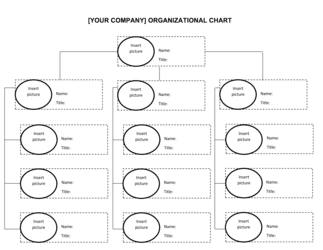
    Document who each leader reports to, starting from the board down through each executive tier. Attach the org chart as Schedule B but ensure the text of the agreement reflects the same structure — the written clause prevails over the diagram in any dispute.

    💡 For organizations with a matrix structure, define both functional and administrative reporting lines separately to avoid ambiguity over who approves what.

  3. 3

    Set authority levels and financial thresholds

    Assign each leadership tier to a decision category and define the dollar threshold for each category. Review the thresholds against your current annual budget to confirm they are operationally sensible.

    💡 Index dollar thresholds to a published inflation measure (e.g., CPI) so they automatically adjust over time without requiring a formal amendment.

  4. 4

    Enumerate reserved matters

    List every decision type the board retains exclusively. Cross-reference this list against your corporate bylaws, shareholder agreement, and any investor rights agreements to confirm there are no conflicts.

    💡 Err on the side of including borderline items as reserved matters — it is easier to delegate authority downward later than to claw it back after a decision has already been made.

  5. 5

    Define delegation rules and set up the authority register

    State whether sub-delegation is permitted, at what level, and under what conditions. Designate a role (typically General Counsel or CFO) responsible for maintaining the written authority register.

    💡 Set a calendar reminder for an annual authority register audit — undocumented delegations are the most common source of governance disputes in fast-growing companies.

  6. 6

    Draft the conflict-of-interest and accountability provisions

    Define conflict of interest broadly enough to capture indirect financial interests. Pair accountability language with specific, measurable performance standards rather than qualitative descriptions.

    💡 Include a named escalation path — e.g., disclose to the General Counsel who then notifies the Audit Committee Chair — so the process is clear without requiring interpretation.

  7. 7

    Confirm indemnification scope and carve-outs

    Review your directors and officers (D&O) insurance policy before finalizing indemnification language. The contractual indemnification should be consistent with — not broader than — your insurance coverage.

    💡 State explicitly that indemnification advances (covering legal costs before a claim is resolved) are available, with a repayment obligation if the leader is ultimately found to have acted in bad faith.

  8. 8

    Execute before the authority structure takes effect

    All listed leaders must sign before they begin exercising authority under the agreement. Record signatures with dates; use eSign to create a timestamped execution record stored alongside your corporate books.

    💡 Where leaders are in multiple jurisdictions, confirm that electronic signatures are legally binding in each location — they are accepted under eIDAS (EU), ESIGN (US), and the Electronic Commerce Act (Canada) but the specific requirements differ.

Frequently asked questions

What is an organizational leadership agreement?

An organizational leadership agreement is a binding document that formally defines the leadership hierarchy, authority levels, decision-making thresholds, and accountability obligations within a company or institution. It translates informal expectations about who can authorize what into enforceable legal obligations, reducing governance disputes and ensuring that decisions are made by the right people at the right level of the organization.

When does an organization need a formal leadership agreement?

The most common triggers are company formation with multiple founders, rapid headcount growth that outpaces informal coordination, a merger or acquisition that combines two management teams, a governance failure or disputed decision that exposes the absence of clear authority rules, and investor or board requirements for formalized governance prior to a funding round. In each case, a written agreement eliminates the ambiguity that drives operational slowdowns and legal disputes.

What is the difference between an organizational leadership agreement and corporate bylaws?

Corporate bylaws govern the structural and procedural rules of the legal entity — board composition, meeting procedures, voting rights, and officer appointment. An organizational leadership agreement operates at the management layer, defining how authority is exercised day-to-day beneath the board level. The two documents should be consistent and cross-referenced, but they serve different purposes. Bylaws are filed with the corporate registry; a leadership agreement is typically an internal governance document.

Is an organizational leadership agreement legally binding?

Yes, when properly executed. A signed agreement between the organization and its leaders creates enforceable contractual obligations on both sides, provided it meets the standard requirements for a binding contract in the applicable jurisdiction — offer, acceptance, and consideration. Leaders who exceed their documented authority level or breach conflict-of-interest provisions can be held liable under the agreement, subject to any applicable employment law protections.

What is a reserved matters clause and why does it matter?

A reserved matters clause is a list of high-stakes decisions — such as major acquisitions, new equity issuances, and CEO appointments — that are retained exclusively at the board or shareholder level and cannot be delegated to management regardless of their authority level. It matters because it prevents executives from taking actions that could materially alter the company's ownership, strategy, or financial position without board knowledge. Investors and institutional lenders routinely require a robust reserved matters list as a condition of financing.

How often should an organizational leadership agreement be reviewed?

At minimum, annually — ideally aligned with the fiscal year-end when the board is already reviewing strategy and performance. Additionally, review it immediately following any material organizational change: a senior leadership hire or departure, an acquisition, a restructuring, or a significant expansion into a new market or jurisdiction. An authority matrix that is more than 18 months old without a review is frequently out of sync with how the organization actually operates.

Do we need a lawyer to create an organizational leadership agreement?

For straightforward single-entity domestic companies with a clear hierarchy, a well-structured template reviewed by an internal HR or legal lead is often sufficient. Engage a lawyer when the organization has multiple entities, investors with board rights, complex executive compensation arrangements, cross-border operations, or a history of governance disputes. A 2–4 hour legal review typically costs $600–$1,500 and is worthwhile for any company where a leadership dispute could materially disrupt operations.

Can authority be delegated further down the organization using this agreement?

Yes, if the agreement includes a delegation and sub-delegation clause that permits it. Leaders can typically delegate authority within their own tier's limits to direct reports by written notice, provided the delegation is recorded in the authority register. Sub-delegation cannot exceed the delegating leader's own authority level — a manager cannot grant a subordinate permissions that the manager themselves does not hold.

How does this document interact with individual employment contracts?

An organizational leadership agreement governs collective authority and governance obligations across the leadership team. Individual employment contracts govern the bilateral relationship between the organization and each leader — compensation, benefits, IP assignment, non-compete, and termination terms. Both documents should be consistent on termination-for-cause language so that a breach of the leadership agreement triggers the remedies described in the employment contract. Where they conflict, the employment contract typically prevails on employment entitlements; the leadership agreement prevails on authority scope.

How this compares to alternatives

vs Corporate Bylaws

Corporate bylaws are the foundational legal document governing the structure and procedures of the legal entity itself — board composition, shareholder meetings, voting thresholds, and officer roles. An organizational leadership agreement operates at the management execution layer, detailing day-to-day authority levels and accountability below the board. Bylaws are filed with the state or corporate registry; a leadership agreement is typically an internal governance document. Both are needed, and they must be consistent with each other.

vs Executive Employment Agreement

An executive employment agreement governs the bilateral relationship between the organization and one individual — compensation, benefits, IP assignment, non-compete, and termination. An organizational leadership agreement governs the collective authority framework across the entire leadership team. They complement each other and should be cross-referenced: a breach of the leadership agreement's authority provisions should explicitly trigger the termination-for-cause mechanism in the employment agreement.

vs Co-Founder Agreement

A co-founder agreement addresses equity splits, IP assignment, vesting, and decision-making rights specifically between founding partners at the pre-incorporation or early-company stage. An organizational leadership agreement is a broader governance document suited to companies with a full management team, board oversight, and defined role hierarchies. Founders typically start with a co-founder agreement and graduate to a leadership agreement as the organization grows and the governance structure matures.

vs Joint Venture Agreement

A joint venture agreement establishes the terms of a collaboration between two or more distinct legal entities, including how the venture is governed and how decisions are shared between the parties. An organizational leadership agreement governs the internal authority structure within a single entity. When a joint venture creates a new operating entity, that entity will typically need both a joint venture agreement (governing the relationship between the parent organizations) and its own organizational leadership agreement (governing the internal management team).

Industry-specific considerations

Technology / SaaS

Rapidly shifting team structures and distributed leadership across engineering, product, and go-to-market require precisely defined escalation thresholds to prevent decision bottlenecks during high-growth phases.

Financial Services

Regulatory requirements in banking and asset management mandate documented authority matrices for trading, credit approval, and client onboarding — with regulator-visible records of who authorized which category of decision.

Healthcare

Clinical and administrative authority must be strictly separated, with documented escalation paths for decisions touching patient care, procurement of controlled substances, and compliance with HIPAA or equivalent privacy frameworks.

Professional Services

Partnership structures and client-facing authority levels require clear documentation of who can commit the firm to engagements, pricing exceptions, and settlement of client disputes above defined dollar thresholds.

Manufacturing

Capital expenditure authority, supplier contract approvals, and plant-level operational decisions must be mapped across multiple management tiers to avoid costly unauthorized procurement or production commitments.

Nonprofit / Education

Board-executive authority boundaries are especially critical in nonprofits, where fiduciary duties to donors and grant-makers require clear documentation that the executive director's spending authority does not overlap with reserved board matters.

Jurisdictional notes

United States

Authority structures must be consistent with state corporate law — Delaware, for example, grants broad authority to boards to delegate management functions to officers. Reserved matters should be cross-referenced against the company's certificate of incorporation and any stockholder agreements. In states with specific officer liability statutes, indemnification provisions must comply with state law maxima. Multi-state operations may require separate authority tiers for regulated activities such as banking, insurance, or healthcare.

Canada

Federal and provincial corporate statutes (Canada Business Corporations Act and provincial equivalents) impose statutory duties on directors and officers that cannot be contracted away — indemnification clauses must be consistent with these duties. Quebec organizations must ensure governance documents are available in French for provincially regulated entities. In regulated industries such as financial services and healthcare, provincial regulators may prescribe mandatory elements of authority documentation.

United Kingdom

UK company law under the Companies Act 2006 sets out directors' duties that apply regardless of internal governance documents — including the duty to act within powers and to promote the success of the company. Authority frameworks should be consistent with the company's articles of association. Listed companies and those with private equity investors typically maintain a separate reserved matters schedule attached to a shareholder or investment agreement, which takes precedence over the internal leadership document.

European Union

EU member states impose varying statutory duties on directors and senior managers, and several countries — notably Germany, France, and the Netherlands — have two-tier board structures (supervisory and management boards) that fundamentally alter how authority is documented. GDPR considerations apply when the agreement references performance monitoring processes that involve personal data. Works council or employee representation rights in several member states (Germany, France, Spain) may require consultation before implementing a new authority framework.

Template vs lawyer — what fits your deal?

PathBest forCostTime
Use the templateSingle-entity domestic companies with a clear leadership hierarchy and no investor board rightsFree2–4 hours
Template + legal reviewCompanies with multiple entities, investor board seats, or executives in more than one jurisdiction$600–$1,5003–5 days
Custom draftedComplex multi-entity groups, regulated industries, PE-backed companies, or post-acquisition leadership integration$2,500–$8,000+2–4 weeks

Glossary

Authority Matrix
A grid mapping specific decisions to the roles or individuals who hold the power to approve, recommend, or execute them.
Delegation of Authority
The formal transfer of decision-making power from a senior leader to a subordinate for a defined scope and duration.
Fiduciary Duty
A legal obligation requiring a leader to act in the best interest of the organization and its stakeholders rather than in their own personal interest.
Governance Framework
The set of rules, practices, and processes by which an organization is directed and controlled at the executive and board level.
Span of Control
The number of direct reports or functional areas a single leader is responsible for managing.
Escalation Threshold
A defined financial or operational limit above which a decision must be referred to a higher authority for approval.
Accountability Structure
The formal system that identifies who is responsible for specific outcomes, how performance is measured, and what the consequences of non-performance are.
Conflict of Interest
A situation in which a leader's personal interests could improperly influence their exercise of organizational authority.
Indemnification
A contractual obligation by the organization to compensate a leader for losses or legal costs arising from their good-faith exercise of their role.
Quorum
The minimum number of decision-making participants who must be present for a vote or approval to be legally valid.
Reserved Matters
Decisions that are explicitly retained at the board or shareholder level and cannot be delegated to executive management regardless of their authority level.

Part of your Business Operating System

This document is one of 3,000+ business & legal templates included in Business in a Box.

  • Fill-in-the-blanks — ready in minutes
  • 100% customizable Word document
  • Compatible with all office suites
  • Export to PDF and share electronically

Create your document in 3 simple steps.

From template to signed document — all inside one Business Operating System.
1
Download or open template

Access over 3,000+ business and legal templates for any business task, project or initiative.

2
Edit and fill in the blanks with AI

Customize your ready-made business document template and save it in the cloud.

3
Save, Share, Send, Sign

Share your files and folders with your team. Create a space of seamless collaboration.

Save time, save money, and create top-quality documents.

★★★★★

"Fantastic value! I'm not sure how I'd do without it. It's worth its weight in gold and paid back for itself many times."

Managing Director · Mall Farm
Robert Whalley
Managing Director, Mall Farm Proprietary Limited
★★★★★

"I have been using Business in a Box for years. It has been the most useful source of templates I have encountered. I recommend it to anyone."

Business Owner · 4+ years
Dr Michael John Freestone
Business Owner
★★★★★

"It has been a life saver so many times I have lost count. Business in a Box has saved me so much time and as you know, time is money."

Owner · Upstate Web
David G. Moore Jr.
Owner, Upstate Web

Run your business with a system — not scattered tools

Stop downloading documents. Start operating with clarity. Business in a Box gives you the Business Operating System used by over 250,000 companies worldwide to structure, run, and grow their business.

Start free · No credit card required