Succession Planning Policy Template

Free Word download β€’ Edit online β€’ Save & share with Drive β€’ Export to PDF

3 pagesβ€’20–30 min to fillβ€’Difficulty: Standard
Learn more ↓
FreeSuccession Planning Policy Template

At a glance

What it is
A Succession Planning Policy is a formal organizational document that defines how a company identifies, develops, and transitions individuals into critical leadership roles when vacancies arise through retirement, resignation, promotion, or unexpected departure. This free Word download gives you a structured, board-ready framework you can edit online and export as PDF to share with HR, senior leadership, or your board of directors.
When you need it
Use it when formalizing your leadership pipeline, preparing for a planned executive transition, responding to a board or investor request for a continuity plan, or ensuring operational resilience against the sudden loss of a key person.
What's inside
Policy purpose and scope, definitions of critical roles, successor identification criteria, readiness assessment methodology, individual development plans for high-potential employees, transition protocols, review cadence, and roles and responsibilities for HR, executives, and the board.

What is a Succession Planning Policy?

A Succession Planning Policy is a formal organizational document that establishes a repeatable, governed process for identifying critical roles, nominating internal successor candidates, assessing their readiness, and managing leadership transitions β€” whether planned or sudden. Unlike a one-time succession plan that captures a snapshot of named candidates, a policy creates the framework that produces and maintains that roster over time: defining who nominates successors, how readiness is assessed, what development actions are required, and how the board or senior leadership is kept informed. It converts an ad hoc practice into a predictable operational capability.

Why You Need This Document

Every organization carries key-person risk. When a critical role empties without a prepared successor β€” through retirement, resignation, illness, or unexpected departure β€” the cost is immediate and concrete: recruiting fees of 20–30% of annual salary, a 3–6 month time-to-fill, lost client relationships, and the institutional knowledge that walks out the door. Boards and investors increasingly treat documented succession planning as a governance prerequisite, not a nice-to-have, and regulated industries in financial services and healthcare face direct compliance obligations to maintain it. Without a policy, succession planning either doesn't happen or happens differently every year depending on who is in the HR seat. This template gives you a board-ready, editable starting point that transforms succession from a reactive scramble into a deliberate business process β€” so the right person is ready before the vacancy, not after.

Which variant fits your situation?

If your situation is…Use this template
Formal enterprise-wide leadership pipeline policy for a large organizationSuccession Planning Policy
Planning ownership and management transfer for a family businessBusiness Succession Plan
Documenting emergency interim coverage for a single critical roleKey Person Contingency Plan
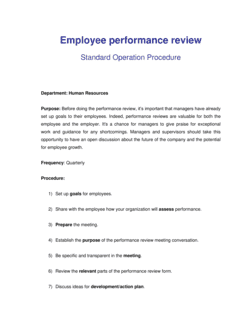
Evaluating high-potential employees for development trackingEmployee Performance Review
Capturing institutional knowledge from a departing executiveKnowledge Transfer Plan
Onboarding an executive hired through a succession transitionEmployee Onboarding Checklist
Aligning succession goals with a 3-to-5-year organizational strategyStrategic Planning Template

Common mistakes to avoid

❌ Treating succession planning as an annual HR report rather than an ongoing process

Why it matters: A plan reviewed once a year drifts out of date within months as roles, strategies, and people change. When a vacancy actually occurs, the roster is stale and the successors are unprepared.

Fix: Integrate succession discussions into quarterly business reviews and trigger off-cycle updates whenever a critical role incumbent leaves or the org structure changes.

❌ Identifying successors without active development plans

Why it matters: A succession roster without IDPs is a list of hopes, not a pipeline. Successors who receive no structured development rarely achieve the readiness timeline the plan assumes.

Fix: Make an approved IDP a prerequisite for any candidate appearing on the succession roster. No IDP, no listing.

❌ Restricting the successor pool to direct reports of the role's incumbent

Why it matters: This systematically excludes high-potential employees in other functions, reinforces existing hierarchies, and reduces the diversity of the pipeline.

Fix: Require nominations to consider candidates across departments and business units. Have HR facilitate a cross-functional calibration session to surface talent that line managers may not nominate independently.

❌ Never briefing emergency interim successors on their designation

Why it matters: When an unplanned vacancy occurs, discovering that the designated interim successor is unaware of key contacts, systems access, or decision authorities adds days of disruption to an already urgent situation.

Fix: Brief all emergency interim successors at designation and refresh that briefing annually, covering key contacts, system access, standing decisions, and where critical documentation is stored.

❌ Omitting a confidentiality provision from the policy

Why it matters: Informally disclosing succession status to candidates without a formal conversation creates implied promotion expectations. When those expectations go unmet, the company loses the very people it was planning to develop.

Fix: Add an explicit confidentiality section to the policy and train HR and executives on when and how to discuss development opportunities with high-potential employees without confirming succession status.

❌ Building a succession plan that covers only the CEO role

Why it matters: Key-person risk exists across many roles below CEO level. A plan that only addresses the top seat leaves operations, sales, finance, and technology functions exposed to the same disruption risk.

Fix: Apply the critical-role criteria systematically across the full org chart. Roles in revenue generation, regulatory compliance, and customer relationships frequently carry higher operational risk than any single executive position.

The 10 key sections, explained

Policy purpose and scope

Definitions of critical roles

Successor identification and nomination

Readiness assessment methodology

Individual development plans

Transition and handover protocol

Roles and responsibilities

Review cadence and governance

Confidentiality provisions

Emergency succession coverage

How to fill it out

  1. 1

    Define critical roles using objective criteria

    Review your org chart and identify roles where a vacancy lasting more than 30–60 days would materially disrupt operations, revenue, or compliance. Document the criteria used β€” do not rely on title or seniority alone.

    πŸ’‘ Limit the initial critical-roles list to 10–15 positions. A shorter, rigorous list gets real investment; a 50-role list gets checkbox activity.

  2. 2

    Assign ownership to each critical role

    For each critical role, designate an executive sponsor responsible for identifying and developing successors. Confirm that the CHRO owns the overall roster and reporting process.

    πŸ’‘ Pair each executive sponsor with an HR business partner β€” this keeps the process honest and prevents favoritism from distorting nominations.

  3. 3

    Conduct the initial successor nomination

    Have each executive sponsor nominate 1–2 successor candidates per critical role. Capture name, current role, and preliminary readiness tier (ready now, 1–2 years, 3+ years) in the succession roster.

    πŸ’‘ Ask sponsors to nominate candidates from outside their direct team to surface cross-functional talent the current manager may not be aware of.

  4. 4

    Complete readiness assessments for each candidate

    For every nominated candidate, map their current competencies against the requirements of the target role. Use the 9-box grid or your existing competency framework to assign a readiness rating and document the key development gaps.

    πŸ’‘ Separate performance from potential in the assessment. High performers who are maximally effective in their current role are not automatically ready to lead at the next level.

  5. 5

    Build individual development plans

    For each candidate rated ready in 1–2 or 3+ years, document a specific IDP with stretch assignments, mentoring relationships, cross-functional exposure, and formal training. Assign a completion date and a named accountable owner.

    πŸ’‘ Limit each IDP to three to five development actions. More than five creates diffuse effort and rarely gets fully executed.

  6. 6

    Document emergency interim successors

    For every critical role, designate a specific individual as the emergency interim successor and confirm that person is aware of and willing to accept the interim responsibility. Add their name to Appendix B.

    πŸ’‘ Brief emergency interim successors annually β€” even a 30-minute conversation ensures they know where key contacts, documents, and decision authorities are held.

  7. 7

    Set the review schedule and reporting structure

    Integrate the annual succession review into your existing talent review calendar. Define the board or committee report format and confirm who presents it. Schedule the first review before distributing the policy.

    πŸ’‘ Tie the succession review date to Q4 performance cycles so readiness data and development progress are fresh when successors are evaluated.

  8. 8

    Communicate the policy without disclosing the roster

    Publish the policy to the organization so employees understand that succession planning exists and how it works. Keep the succession roster and individual assessments confidential and share them only with those who have a specific need to know.

    πŸ’‘ Brief nominated candidates on their development plans without explicitly confirming their succession status β€” framing it as a leadership development investment reduces the risk of creating implied promotion commitments.

Frequently asked questions

What is a succession planning policy?

A succession planning policy is a formal document that establishes how an organization identifies critical roles, nominates and develops internal candidates to fill those roles, and manages transitions when vacancies occur. It defines criteria for classifying roles as critical, the process for assessing successor readiness, and the responsibilities of HR, executives, and the board in maintaining the plan. It is distinct from a one-time succession plan in that it creates a repeatable, governed process rather than a snapshot document.

Why do companies need a succession planning policy?

Without a formal policy, succession planning happens informally β€” or not at all β€” until a vacancy forces a reactive scramble. Key-person departures without prepared successors cost organizations an average of 50–200% of the departing employee's annual salary in recruiting, onboarding, and lost productivity. A policy ensures critical roles always have at least one identified and actively developing successor, regardless of when or why a vacancy occurs.

What is the difference between a succession plan and a succession planning policy?

A succession plan is a specific roster of roles and named candidates with readiness assessments β€” it is a deliverable produced at a point in time. A succession planning policy is the governance framework that defines how that roster is created, maintained, updated, and acted upon. The policy makes succession planning a repeatable business process; the plan is the output of that process at any given moment.

Which roles should be included in a succession plan?

Start with roles where a vacancy lasting more than 30–60 days would materially disrupt operations, revenue, or regulatory compliance. This typically includes C-suite positions, key revenue-generating roles, and any position where specialized knowledge or external relationships take more than 90 days to replace. For most organizations, 10–20 critical roles is a manageable and meaningful scope to start with.

How is succession planning different from workforce planning?

Workforce planning addresses staffing levels, headcount forecasting, and skills inventory across the entire organization over a 1–3 year horizon. Succession planning focuses specifically on identifying and developing named individuals for named critical roles. Both are components of a comprehensive talent strategy, but succession planning is deeper and more role-specific than workforce planning's broader headcount view.

Should succession candidates be told they are on the succession plan?

This requires deliberate judgment. Informing candidates of their development trajectory improves engagement and retention, but confirming explicit succession status creates implied promotion expectations that, when unmet, drive attrition. Best practice is to have a formal development conversation with each candidate that references the leadership investment being made in them without specifically confirming their roster position. The confidentiality section of the policy should govern this distinction.

How often should a succession plan be reviewed?

Annually at minimum, ideally integrated into the existing performance and talent review cycle. Off-cycle reviews should be triggered automatically by any departure from a critical role, a significant organizational restructuring, or a material change in business strategy that alters which roles are truly critical. A plan reviewed less than once per year will be outdated at the moment it is most needed.

Does a small business need a succession planning policy?

Yes β€” key-person risk is proportionally higher in smaller organizations than in large ones. A 20-person company where one person owns the primary client relationships or technical expertise has more operational exposure to that individual's sudden departure than a 500-person company with redundant leadership depth. A simplified succession policy covering 3–5 critical roles is achievable in a small business and provides material protection against sudden disruption.

What is a 9-box grid and how does it relate to succession planning?

A 9-box grid is a talent assessment tool that plots employees on a 3Γ—3 matrix by current performance (low to high) on one axis and future potential (low to high) on the other. In succession planning, it is used to identify which employees warrant investment as successor candidates β€” those scoring high on both performance and potential are prioritized for critical-role development. It also helps distinguish between strong performers who have reached their ceiling and high-potential employees who may be underperforming in their current role but have clear upward trajectory.

How this compares to alternatives

vs Strategic Planning Template

A strategic plan defines organizational goals, initiatives, and resource allocation over a 3–5 year horizon. A succession planning policy focuses specifically on talent and leadership continuity within that strategy. Succession planning is one input to a strategic plan, not a substitute for it β€” organizations need both to align people decisions with strategic direction.

vs Employee Performance Review

A performance review evaluates an individual's past performance against their current role objectives. A succession planning policy uses performance data as one input but focuses forward β€” on potential, development gaps, and readiness for future roles. Performance reviews feed the succession process but serve a different primary purpose.

vs HR Policy Manual

An HR policy manual compiles all people-related policies in a single reference document, covering everything from attendance to compensation. A succession planning policy is a standalone governance document that can be incorporated into the manual or operated independently. Standalone succession policies are typically more detailed and board-facing than a manual entry.

vs Employee Onboarding Checklist

An onboarding checklist manages the practical steps of integrating a new hire into a role. A succession planning policy ensures that the right internal candidate is ready to step into that role before a vacancy occurs. The two documents work in sequence β€” succession planning produces the candidate; onboarding integrates them.

Industry-specific considerations

Financial services

Regulatory requirements from the OCC, FCA, and OSFI mandate documented succession plans for key control functions, making this a compliance obligation rather than just a best practice.

Healthcare

Clinical leadership succession must account for licensure and credentialing timelines, which can extend successor readiness by 6–18 months beyond a standard business role.

Manufacturing

Skilled trades and plant operations roles carry high key-person risk due to long training timelines and a shrinking external labor pool, making internal development pipelines critical.

Professional services

Client relationship ownership is concentrated in senior partners or principals, making succession planning essential to retaining clients through leadership transitions.

Template vs pro β€” what fits your needs?

PathBest forCostTime
Use the templateHR teams in small to mid-size organizations formalizing succession planning for the first timeFree4–8 hours to customize and populate the initial roster
Template + professional reviewMid-market companies integrating succession planning with an existing talent review process or board reporting structure$500–$2,000 for an HR consultant or organizational development review1–2 weeks
Custom draftedRegulated industries (banking, insurance, healthcare) with compliance-driven succession requirements or companies preparing for a transaction or IPO$3,000–$8,000 for a specialized HR or governance consultant4–8 weeks

Glossary

Succession Planning
A deliberate process for identifying and developing internal candidates who can step into key roles when those positions become vacant.
Critical Role
A position whose vacancy would significantly disrupt operations, revenue, or strategic execution if left unfilled for more than 30–60 days.
Successor Candidate
An employee identified as having the potential and trajectory to fill a specific critical role within a defined readiness timeframe.
Readiness Assessment
A structured evaluation of a successor candidate's current competencies versus the requirements of the target role, expressed as ready now, ready in 1–2 years, or ready in 3+ years.
Individual Development Plan (IDP)
A documented action plan outlining the specific experiences, training, and stretch assignments needed to close the gap between a candidate's current capabilities and the target role's requirements.
Talent Pipeline
The pool of identified and actively developed internal candidates positioned to fill one or more critical roles over a defined time horizon.
Key Person Risk
Operational or financial exposure created when critical knowledge, relationships, or decision-making authority is concentrated in a single individual with no identified backup.
Emergency Succession
An unplanned interim leadership arrangement activated immediately when a critical role becomes vacant without prior notice β€” typically through illness, death, or sudden resignation.
Bench Strength
The number and readiness of internal candidates available to fill critical roles, used as a measure of organizational resilience.
9-Box Grid
A talent-assessment matrix that plots employees on performance (x-axis) against potential (y-axis) to prioritize succession investment and development resources.

Part of your Business Operating System

This document is one of 3,000+ business & legal templates included in Business in a Box.

  • Fill-in-the-blanks β€” ready in minutes
  • 100% customizable Word document
  • Compatible with all office suites
  • Export to PDF and share electronically

Create your document in 3 simple steps.

From template to signed document β€” all inside one Business Operating System.
1
Download or open template

Access over 3,000+ business and legal templates for any business task, project or initiative.

2
Edit and fill in the blanks with AI

Customize your ready-made business document template and save it in the cloud.

3
Save, Share, Send, Sign

Share your files and folders with your team. Create a space of seamless collaboration.

Save time, save money, and create top-quality documents.

β˜…β˜…β˜…β˜…β˜…

"Fantastic value! I'm not sure how I'd do without it. It's worth its weight in gold and paid back for itself many times."

Managing Director Β· Mall Farm
Robert Whalley
Managing Director, Mall Farm Proprietary Limited
β˜…β˜…β˜…β˜…β˜…

"I have been using Business in a Box for years. It has been the most useful source of templates I have encountered. I recommend it to anyone."

Business Owner Β· 4+ years
Dr Michael John Freestone
Business Owner
β˜…β˜…β˜…β˜…β˜…

"It has been a life saver so many times I have lost count. Business in a Box has saved me so much time and as you know, time is money."

Owner Β· Upstate Web
David G. Moore Jr.
Owner, Upstate Web

Run your business with a system β€” not scattered tools

Stop downloading documents. Start operating with clarity. Business in a Box gives you the Business Operating System used by over 250,000 companies worldwide to structure, run, and grow their business.

Free Forever PlanΒ Β·Β No credit card required