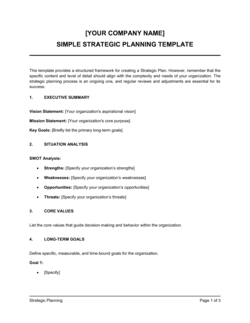
Law Office Business Plan Template

Free Word download β€’ Edit online β€’ Save & share with Drive β€’ Export to PDF

37 pagesβ€’3h – 4h 5m to fillβ€’Difficulty: Expert
Learn more ↓
FreeLaw Office Business Plan Template

At a glance

What it is
A Law Office Business Plan is a structured operational document that maps a law firm's practice areas, target client base, competitive positioning, staffing model, marketing strategy, and 3–5 year financial projections into a single reference document. This free Word download gives attorneys, managing partners, and solo practitioners a ready-to-edit framework they can export as PDF for banks, investors, or internal planning.
When you need it
Use it when launching a new firm or solo practice, applying for a bank loan or line of credit, bringing on equity partners, or realigning an existing practice around a new service area or growth target.
What's inside
Executive summary, firm overview, practice area strategy, target client analysis, competitive landscape, marketing and business development plan, operations and staffing model, and financial projections including revenue per attorney, overhead structure, and cash flow.

What is a Law Office Business Plan?

A Law Office Business Plan is a structured operational document that maps a law firm's practice areas, target client profile, competitive positioning, staffing model, marketing and business development strategy, and 3–5 year financial projections into a single authoritative reference. Unlike a general business plan, it is calibrated to the specific economics of legal practice β€” billable hours, realization and collection rates, malpractice insurance, and trust accounting compliance β€” and is formatted for the audiences that matter most to attorneys: bank lenders, prospective equity partners, and the firm's own leadership team. This free Word download gives solo practitioners, managing partners, and associates going independent a complete, editable starting point they can export as PDF and share immediately.

Why You Need This Document

Launching or growing a law firm without a written plan exposes you to predictable and avoidable failures: revenue projections built on unrealistic billable-hour assumptions, marketing budgets allocated too late to generate clients before operating cash runs out, and bank conversations that stall because there is no financial model to support the loan request. A properly built law office business plan forces you to calculate break-even before you sign a lease, identify your referral network before you need clients, and model the impact of an 80% collection rate before you assume a 95% one. For financing purposes, SBA lenders and commercial banks require a formal plan for any loan above $150,000 β€” and a well-structured, law-firm-specific plan significantly improves approval odds over a generic template. This document gives you the structure to do that work once and use it across every audience that matters to your firm's growth.

Which variant fits your situation?

If your situation is…Use this template
Opening a solo practice in a single specialty areaSolo Law Practice Business Plan
Launching a multi-partner firm with equity structureLaw Partnership Business Plan
Applying for a bank loan to fund office build-out and hiringLaw Office Business Plan (Bank Loan Version)
Expanding an existing firm into a new city or practice areaBusiness Expansion Plan
Quick internal planning or early-stage ideationOne-Page Business Plan
Planning a nonprofit or legal aid organizationNonprofit Business Plan
Pitching the firm concept to a potential equity partnerInvestor Business Plan

Common mistakes to avoid

❌ Overstating the billable hour capacity

Why it matters: Projecting 7–8 billable hours per day for a solo practitioner ignores client intake, administration, continuing legal education, and business development. Inflated utilization assumptions make the financial model unreachable.

Fix: Use 4–5 billable hours per day as the realistic baseline for a new solo practice, and validate it against industry benchmarks before presenting the plan to a lender.

❌ No referral or business development strategy

Why it matters: Legal clients do not find new firms organically in Year 1. Without a specific referral network or marketing plan, revenue projections are unsupported assumptions.

Fix: Name at least three referral sources by category (e.g., CPA firms, real estate brokers, financial advisors) and include a specific outreach plan with a timeline and budget.

❌ Ignoring malpractice insurance costs in the financial model

Why it matters: Professional liability insurance for a new solo practice typically runs $3,000–$8,000 annually depending on practice area β€” omitting it understates overhead and overstates net income.

Fix: Get a premium quote from at least two carriers before finalizing the financial projections and include it as a fixed monthly line item.

❌ Writing the executive summary before completing the plan

Why it matters: A summary written before the underlying sections are finalized routinely contradicts the body β€” different revenue figures, inconsistent client targets β€” undermining the plan's credibility.

Fix: Complete every section of the plan first, then write the executive summary as a compression of what you already built.

❌ Listing too many practice areas

Why it matters: A new firm claiming competence in family law, criminal defense, immigration, real estate, and business transactions signals a lack of focus to both clients and lenders, and spreads marketing budget too thin to be effective.

Fix: Commit to one or two primary practice areas at launch and position all marketing around them. Add areas in Year 2 once the core practice is generating consistent revenue.

❌ No trust account or IOLTA compliance section in the operations plan

Why it matters: Failing to address client fund handling procedures in the business plan raises compliance concerns for bank reviewers and signals operational unpreparedness to potential partners.

Fix: Include a brief paragraph in the operations section confirming the firm's trust accounting system, the bank where the IOLTA account will be held, and the billing platform that tracks client fund balances.

The 9 key sections, explained

Executive Summary

Firm Overview

Practice Areas and Service Description

Target Client Analysis

Competitive Analysis

Marketing and Business Development Plan

Operations and Staffing Model

Financial Projections

Funding Requirements and Use of Funds

How to fill it out

  1. 1

    Define the firm's legal structure and mission

    Start with the entity type (sole proprietorship, LLC, LLP, or professional corporation), the state of organization, and a one-sentence mission that names the client type, practice area, and core value offered.

    πŸ’‘ Check your state bar's rules on entity types for law firms before committing β€” not all states permit LLCs for professional legal practice.

  2. 2

    Select and scope your practice areas

    Choose no more than two to three primary practice areas for a new firm. For each, define the specific services, the billing model, and the average matter size in dollars and time.

    πŸ’‘ Focused practices generate referrals faster than generalist ones β€” attorneys and accountants refer to specialists, not generalists.

  3. 3

    Profile your target client segment

    Describe your ideal client in demographic or firmographic terms, estimate how many such clients exist in your geography, and identify where they currently get legal help.

    πŸ’‘ Run a ZIP-code-level search on your county bar's referral database and LinkedIn to size the addressable pool before committing it to the plan.

  4. 4

    Map the competitive landscape

    Research three to five direct competitors in your practice area and geography. Note their pricing, online reviews, stated specializations, and client base. Then write one specific paragraph on why your firm wins for the target client.

    πŸ’‘ Martindale-Hubbell, Avvo, and Google Business Profiles are the fastest sources for competitor rate and reputation data.

  5. 5

    Build the marketing and referral plan

    List at least three client acquisition channels with a specific action, budget, and timeline for each. Include a referral development strategy β€” accountants, financial advisors, and real estate agents are the most productive referral sources for most practice areas.

    πŸ’‘ Allocate at least 10% of projected Year 1 revenue to marketing. Firms that spend less almost universally miss their first-year client acquisition targets.

  6. 6

    Model your financial projections from the bottom up

    Start with billable hours per attorney per week (target 25–30 for a new practice), multiply by your rate and a realistic collection percentage (80–85%), then subtract itemized monthly overhead to arrive at net income.

    πŸ’‘ Build a separate monthly cash flow model for the first 12 months β€” malpractice insurance, bar dues, and technology setup costs all hit in Month 1 before a single client pays.

  7. 7

    State the funding ask with specific deployment milestones

    If the plan is for a lender or partner, break the total capital request into line items tied to specific operational outcomes β€” office open by Month 2, first hire by Month 4, break-even by Month 10.

    πŸ’‘ SBA lenders expect a personal financial statement alongside the business plan. Have it ready before your first bank meeting.

  8. 8

    Write the executive summary last

    Distill the single strongest data point from each section into a 1–2 page summary. Lead with your most compelling credential or traction metric, then state the market opportunity, the plan, and the ask.

    πŸ’‘ A banker or potential partner reads the executive summary and financials first. If those two sections don't hold up independently, the rest of the plan won't be read.

Frequently asked questions

What is a law office business plan?

A law office business plan is a structured document that defines a law firm's practice areas, target clients, competitive positioning, staffing model, marketing strategy, and financial projections β€” typically covering 3–5 years. It functions as both an internal operating roadmap and an external document used to secure bank financing, attract equity partners, or satisfy bar association requirements for newly admitted attorneys.

Do I need a business plan to open a law firm?

No state bar requires a formal business plan as a condition of licensure, but any attorney seeking a bank loan, SBA financing, or a line of credit will need one. Beyond financing, a written plan is one of the most effective ways to stress-test your revenue assumptions, identify marketing gaps, and set realistic timelines before you spend money on office space and staff.

What financial projections should a law firm business plan include?

At minimum: a monthly revenue model for Year 1 built on billable hours or flat fees per attorney, a realistic collection rate (80–85% for a new practice), itemized monthly overhead, a cash flow statement, and a break-even analysis. Three-year projections with annual P&L are standard for bank submissions. Include a sensitivity scenario at 70% of projected revenue to demonstrate the firm can service debt even if growth is slower than expected.

How is a law office business plan different from a general business plan?

The structure is similar, but several sections are law-firm-specific: billing model (hourly, flat fee, contingency, or retainer), realization and collection rate assumptions, malpractice insurance costs, trust accounting procedures, and bar-specific ethics considerations. The competitive analysis also differs β€” attorney reputation, bar ratings, and referral networks drive competition in ways that differ from product or service businesses.

How long should a law office business plan be?

For bank or lender audiences, 15–25 pages plus a financial model appendix is appropriate. Internal operating plans for a solo practice can be shorter β€” 10–15 pages β€” as long as the financial projections are complete. The plan should be long enough to be credible and short enough to be read in a single sitting by a loan officer or prospective partner.

What billing model should I choose for my law firm?

The right model depends on your practice area and client base. Hourly billing is standard for complex transactional and litigation work. Flat fees work well for high-volume, well-scoped matters like simple wills, uncontested divorces, or trademark filings. Contingency billing suits personal injury and some employment matters. Many firms use a mix β€” for example, flat fees for intake and hourly for litigation phases. Your business plan should justify the chosen model with reference to client expectations and competitor pricing.

How do I estimate revenue for a new law firm?

Start with billable hours: a realistic target for a new solo practice is 4–5 billable hours per working day, 48 weeks per year (accounting for holidays, CLE, and business development). Multiply by your hourly rate and apply an 80% collection rate to arrive at expected cash receipts. For flat-fee practices, project the number of matters per month based on your referral pipeline and marketing plan, not an optimistic ceiling.

Can I write a law office business plan myself?

Yes β€” a structured template handles the framework, and attorneys are generally well-equipped to write the narrative sections. The financial model is the section most likely to benefit from outside help: a CPA familiar with professional services firms can validate your overhead assumptions, realization rates, and cash flow timing in 2–4 hours. For SBA loans above $350,000, a reviewed plan from an accountant or business advisor significantly improves approval odds.

How often should a law firm business plan be updated?

Review and update the plan annually, aligned to your fiscal year. If the firm is actively raising capital, refinancing, or admitting a new partner, update it before each of those conversations. A plan more than 18 months old with no updates is effectively a historical document β€” it no longer reflects current market conditions, staffing, or financial performance.

How this compares to alternatives

vs General Business Plan

A general business plan template covers the same structural sections but lacks law-firm-specific elements: billing model analysis, realization and collection rate projections, malpractice insurance line items, and trust account procedures. The law office version is calibrated for professional-services revenue models and the compliance expectations of legal industry lenders.

vs One-Page Business Plan

A one-page plan is a rapid internal alignment tool for early-stage ideation. It lacks the financial depth and competitive detail that bank lenders and prospective partners require. Use the one-page version to validate the concept, then build the full law office plan before any financing application or partnership discussion.

vs Strategic Plan

A strategic plan focuses on multi-year internal goals, initiatives, and KPIs for an existing organization. A business plan adds market context, competitive analysis, and a capital structure β€” the external-facing narrative that explains why the numbers are credible. An established firm typically needs both: the business plan for financing and the strategic plan for execution.

vs Marketing Plan

A marketing plan covers only client acquisition channels, budget, and tactics. A law office business plan subsumes the marketing section but also includes financial projections, operations, staffing, and the full competitive context. Use a standalone marketing plan when you need to go deeper on referral strategy or digital channels for an existing firm.

Industry-specific considerations

Legal services

Practice area focus, realization and collection rate modeling, malpractice insurance costs, and trust accounting compliance are all law-firm-specific requirements that a general business plan template does not address.

Financial services

Attorneys launching financial regulatory practices must address licensing timelines, compliance infrastructure costs, and the regulatory-referral networks that drive client acquisition in this sector.

Healthcare

Healthcare law practices require detailed notes on HIPAA compliance for client data, credentialing consultation workflows, and the hospital-system referral relationships that define business development in this niche.

Real estate

Real estate law firms depend heavily on agent and broker referral volume, making the marketing section of the business plan central to revenue projections β€” especially in markets with cyclical transaction volumes.

Template vs pro β€” what fits your needs?

PathBest forCostTime
Use the templateSolo practitioners, new associates going independent, and small firms applying for loans under $350,000Free2–4 weeks (30–60 hours)
Template + professional reviewFirms seeking SBA financing, admitting a new equity partner, or entering a new practice area with unfamiliar economics$500–$2,000 for a CPA or legal practice management consultant review3–5 weeks
Custom draftedMulti-partner firms raising significant capital, merging practices, or expanding into a new jurisdiction with complex regulatory requirements$3,000–$8,000 for a professional business plan writer with legal-industry experience4–8 weeks

Glossary

Realization Rate
The percentage of billable hours actually billed to clients, after write-downs and write-offs β€” a key profitability metric for law firms.
Collection Rate
The percentage of billed amounts actually collected from clients; measures how much of invoiced revenue converts to cash.
Billable Hour
A unit of attorney time that can be charged to a client, typically recorded in 6- or 15-minute increments.
Book of Business
The total set of client relationships and recurring revenue an attorney or partner brings to a firm.
Practice Area
A defined area of law in which a firm or attorney specializes, such as family law, corporate transactions, or personal injury.
Origination Credit
Internal credit assigned to the attorney who brought in a new client, used to determine partner compensation and profit-sharing.
Overhead Rate
The ratio of non-billable operating costs to total revenue β€” rent, staff, technology, and insurance expressed as a percentage of receipts.
Flat Fee Billing
A pricing model where clients pay a fixed amount for a defined scope of legal work, regardless of time actually spent.
Trust Account
A separate bank account used to hold client funds β€” such as retainers or settlement proceeds β€” that the firm may not commingle with operating funds.
IOLTA
Interest on Lawyers' Trust Accounts β€” a program in which interest earned on pooled client trust accounts is directed to legal aid organizations.
Run Rate
Annualized revenue calculated by multiplying a recent period's receipts by the number of such periods in a year, used to project full-year performance.

Part of your Business Operating System

This document is one of 3,000+ business & legal templates included in Business in a Box.

  • Fill-in-the-blanks β€” ready in minutes
  • 100% customizable Word document
  • Compatible with all office suites
  • Export to PDF and share electronically

Create your document in 3 simple steps.

From template to signed document β€” all inside one Business Operating System.
1
Download or open template

Access over 3,000+ business and legal templates for any business task, project or initiative.

2
Edit and fill in the blanks with AI

Customize your ready-made business document template and save it in the cloud.

3
Save, Share, Send, Sign

Share your files and folders with your team. Create a space of seamless collaboration.

Save time, save money, and create top-quality documents.

β˜…β˜…β˜…β˜…β˜…

"Fantastic value! I'm not sure how I'd do without it. It's worth its weight in gold and paid back for itself many times."

Managing Director Β· Mall Farm
Robert Whalley
Managing Director, Mall Farm Proprietary Limited
β˜…β˜…β˜…β˜…β˜…

"I have been using Business in a Box for years. It has been the most useful source of templates I have encountered. I recommend it to anyone."

Business Owner Β· 4+ years
Dr Michael John Freestone
Business Owner
β˜…β˜…β˜…β˜…β˜…

"It has been a life saver so many times I have lost count. Business in a Box has saved me so much time and as you know, time is money."

Owner Β· Upstate Web
David G. Moore Jr.
Owner, Upstate Web

Run your business with a system β€” not scattered tools

Stop downloading documents. Start operating with clarity. Business in a Box gives you the Business Operating System used by over 250,000 companies worldwide to structure, run, and grow their business.

Free Forever PlanΒ Β·Β No credit card required