Assignment of Lease by Lessee With Consent of Lessor Template

Free Word download • Edit online • Save & share with Drive • Export to PDF

2 pages20–30 min to fillDifficulty: StandardSignature requiredLegal review recommended
Learn more ↓
FreeAssignment of Lease by Lessee With Consent of Lessor Template

At a glance

What it is
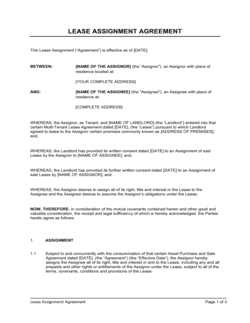
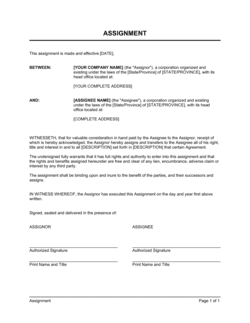
An Assignment of Lease by Lessee with Consent of Lessor is a legally binding agreement that transfers a tenant's (lessee's) remaining rights and obligations under an existing lease to a new tenant (assignee), with the landlord's (lessor's) written approval. This free Word download provides a structured, three-party document you can edit online and export as PDF, covering the assignment terms, landlord consent, and the allocation of ongoing liability between all parties.
When you need it
Use it when a business is selling its operations, relocating, or restructuring and needs to transfer an existing lease to another party before the original lease term expires. It is also required when a landlord's consent clause in the original lease makes written approval a condition of any valid assignment.
What's inside
Identification of all three parties (assignor, assignee, and lessor), a description of the original lease being assigned, the effective date of assignment, representations and warranties from both assignor and assignee, the lessor's formal written consent, indemnification obligations, and governing law.

What is an Assignment of Lease by Lessee with Consent of Lessor?

An Assignment of Lease by Lessee with Consent of Lessor is a three-party legal agreement in which the original tenant (assignor) transfers all remaining rights, interests, and obligations under an existing lease to a new tenant (assignee), with the landlord's (lessor's) formal written approval incorporated directly into the document. Unlike a sublease — where the original tenant remains between the landlord and the occupant — an assignment removes the original tenant from the primary tenancy relationship and installs the assignee as the new direct tenant for the balance of the lease term. The lessor's written consent is both a legal formality and a substantive protection: it confirms no existing defaults, establishes the assignee's standing with the landlord, and determines whether the assignor retains any continuing liability after the transfer.

Why You Need This Document

Without a signed, three-party assignment agreement, transferring a lease exposes everyone involved to serious legal and financial risk. An assignor who hands over keys without documented landlord consent is typically in material default under the original lease — giving the landlord grounds to terminate, pursue unpaid rent, and claim damages from both parties simultaneously. The assignee, meanwhile, has no written record of the landlord's acceptance and could find their occupancy challenged at any moment. The security deposit's fate remains unresolved, the allocation of pre- and post-transfer liability is undefined, and the assignor may discover years later that they remain contingently responsible for a tenant they no longer control. A properly executed assignment agreement, with consent secured before the effective date, closes all of these gaps in a single document — and is typically a mandatory deliverable in any business sale involving leased premises.

Which variant fits your situation?

If your situation is…Use this template
Transferring a residential lease to a new occupantAssignment of Residential Lease
Subletting part of the space rather than transferring the entire leaseSublease Agreement
Assigning a lease as part of a full business asset saleBusiness Asset Purchase Agreement
Extending the original lease instead of transferring itLease Renewal Agreement
Amending specific terms of the existing lease without a full transferLease Amendment
Terminating a lease early by mutual agreement instead of assigning itLease Termination Agreement
Assigning a commercial lease as part of a corporate merger or acquisitionCommercial Lease Assignment (M&A)

Common mistakes to avoid

❌ Proceeding without written lessor consent

Why it matters: Most commercial leases prohibit assignment without written landlord consent. Transferring the lease without it triggers a default, giving the lessor grounds to terminate the lease and pursue both the assignor and assignee for damages.

Fix: Obtain the lessor's signed consent before the assignment's effective date. If the original lease requires it, treat consent as a condition precedent to closing any related business transaction.

❌ Assuming assignment releases the assignor from all liability

Why it matters: Without a formal novation or written release from the lessor, the assignor typically remains contingently liable for the full remaining lease term. If the assignee defaults, the lessor can pursue the original tenant.

Fix: Negotiate a novation or an explicit written release clause within the lessor consent section. If the lessor refuses, the assignor should at minimum obtain a robust indemnification from the assignee.

❌ Failing to attach all lease amendments as exhibits

Why it matters: An assignment that references only the original lease date — without disclosing subsequent amendments — creates a factual misrepresentation. The assignee may later disclaim obligations arising from undisclosed modifications.

Fix: Compile all amendments, side letters, and renewal options into a single exhibit and reference each document by date in the recitals and representations clause.

❌ Leaving the effective date ambiguous or matching it to execution date without verification

Why it matters: A gap between the assignor vacating and the assignee's obligation start date creates a period where neither party clearly owes rent, potentially resulting in a lease default and loss of the assignment.

Fix: Set a specific effective date confirmed in writing by all three parties, and ensure it aligns exactly with possession transfer and any related business closing date.

❌ Omitting the security deposit allocation

Why it matters: Without a clear written record of how the existing deposit is handled, both the assignor and assignee may claim entitlement to the funds at lease end, leading to litigation that could have been resolved with two sentences.

Fix: Include an explicit security deposit clause that states the current balance, how it is handled at assignment, and who the lessor will return it to at the end of the term.

❌ Not verifying the assignee's financial qualification before signing

Why it matters: The lessor's consent is often conditional on the assignee meeting the same credit and financial standards required of the original tenant. An unqualified assignee may cause the lessor to withdraw consent or later argue the assignment was fraudulently induced.

Fix: Have the assignee provide financial statements, bank references, or a credit report to the lessor before submitting the consent request, and include the assignee's financial capacity representation in the agreement.

The 10 key clauses, explained

Parties and recitals

In plain language: Identifies the assignor, assignee, and lessor by full legal name and address, and references the original lease by date, premises address, and term.

Sample language
This Assignment of Lease ('Assignment') is made as of [DATE] by and among [ASSIGNOR FULL LEGAL NAME] ('Assignor'), [ASSIGNEE FULL LEGAL NAME] ('Assignee'), and [LESSOR FULL LEGAL NAME] ('Lessor'), with respect to that certain Lease Agreement dated [ORIGINAL LEASE DATE] for the premises located at [PREMISES ADDRESS] ('Original Lease').

Common mistake: Using trade names instead of registered legal entity names. If the assignor's operating name differs from its registered name, the assignment may fail to bind the correct legal party and invalidate the consent.

Assignment of lease interest

In plain language: The core operative clause transferring all of the assignor's rights, title, and interest in the lease to the assignee as of the effective date.

Sample language
Effective [EFFECTIVE DATE], Assignor hereby assigns, transfers, and conveys to Assignee all of Assignor's right, title, and interest in and to the Original Lease for the remaining term commencing [START DATE] and expiring [EXPIRY DATE].

Common mistake: Failing to specify the effective date separately from the document execution date. If the business transfer closes on a different day, a mismatch creates a gap period where neither party is clearly responsible for rent.

Assumption of obligations

In plain language: The assignee formally accepts all duties and obligations under the original lease from the effective date forward, including rent, maintenance, and compliance with all lease covenants.

Sample language
Assignee hereby accepts the foregoing assignment and assumes and agrees to perform all obligations of the tenant under the Original Lease arising on or after the Effective Date, including the payment of rent of $[MONTHLY RENT] per month due on the [DAY] of each month.

Common mistake: Limiting assumption only to rent obligations and omitting other lease covenants such as repair, insurance, permitted use, and holdover provisions — leaving the assignor exposed to liability for the assignee's non-compliance.

Lessor's consent

In plain language: The landlord's formal written agreement to the assignment, confirming that the transfer does not constitute a default under the original lease and that consent is not unreasonably withheld.

Sample language
Lessor hereby consents to the assignment described herein and confirms that, as of the date hereof, the Original Lease is in full force and effect, Assignor is not in default thereunder, and this Assignment shall not constitute a default or trigger any termination right under the Original Lease.

Common mistake: Omitting a confirmation that the original lease is in good standing at the time of assignment. Without this, the assignee has no written record that the lessor is not already pursuing default remedies that could affect the transferred interest.

Assignor's representations and warranties

In plain language: The assignor's factual statements confirming the original lease is valid and unmodified, no defaults exist, all rent is current, and the assignor has the authority to assign.

Sample language
Assignor represents and warrants that: (a) the Original Lease is in full force and effect and has not been amended except as set forth in Exhibit A; (b) Assignor is not in default under the Original Lease; (c) all rent and additional charges due through [DATE] have been paid in full; and (d) Assignor has full authority to execute this Assignment.

Common mistake: Failing to attach any existing lease amendments as exhibits. If the assignee later discovers undisclosed amendments, they may argue the assignment is based on a materially misrepresented lease.

Assignee's representations and warranties

In plain language: The assignee confirms they have reviewed the original lease, have the authority and financial capacity to assume its obligations, and will comply with all terms from the effective date.

Sample language
Assignee represents and warrants that: (a) Assignee has reviewed and is familiar with all terms of the Original Lease; (b) Assignee has the legal authority to enter into this Assignment; and (c) Assignee has the financial capacity to meet all obligations under the Original Lease.

Common mistake: Omitting the assignee's financial capacity representation. Without it, the lessor has no contractual basis to pursue the assignee for misrepresentation if the assignee later defaults due to insufficient resources.

Continuing liability of assignor

In plain language: States whether the assignor remains secondarily liable to the lessor for lease obligations after the assignment — a critical point that determines the assignor's ongoing exposure.

Sample language
Notwithstanding this Assignment, Assignor shall remain [jointly and severally / secondarily] liable to Lessor for all obligations under the Original Lease unless and until Lessor executes a written release or novation agreement in favor of Assignor.

Common mistake: Assuming that assignment automatically releases the assignor from all liability. In most jurisdictions, assignment does not extinguish the assignor's obligations to the lessor without a formal novation — leaving the assignor exposed if the assignee defaults.

Security deposit

In plain language: Addresses how the existing security deposit is handled — whether it is transferred from assignor to assignee, returned to the assignor, or credited against arrears, and what the lessor acknowledges.

Sample language
The security deposit of $[AMOUNT] currently held by Lessor shall be [transferred to the credit of Assignee / returned to Assignor / applied as follows: [DESCRIPTION]]. Lessor acknowledges receipt of the deposit in the amount stated herein.

Common mistake: Leaving the security deposit treatment undefined. Disputes over who is entitled to the deposit at lease end are among the most common post-assignment litigation matters.

Indemnification

In plain language: Allocates responsibility for losses: the assignor indemnifies the lessor and assignee for pre-assignment breaches; the assignee indemnifies for post-assignment obligations.

Sample language
Assignor shall indemnify and hold harmless Lessor and Assignee from any claims, damages, or liabilities arising from Assignor's obligations under the Original Lease prior to the Effective Date. Assignee shall indemnify Lessor and Assignor from claims arising from obligations on or after the Effective Date.

Common mistake: Using a one-sided indemnification that only protects the lessor. Without mutual indemnification, the assignor remains exposed to claims from the lessor for the assignee's post-assignment defaults with no recourse against the assignee.

Governing law and entire agreement

In plain language: Identifies the jurisdiction whose law governs the assignment and confirms that this document — together with the original lease — constitutes the entire agreement among the parties.

Sample language
This Assignment shall be governed by the laws of [STATE / PROVINCE / COUNTRY]. This Assignment, together with the Original Lease, constitutes the entire agreement of the parties with respect to the assignment of the Premises and supersedes all prior negotiations and representations.

Common mistake: Choosing a governing law that differs from the one in the original lease without a specific reason. Conflicting governing law clauses create forum uncertainty and increase litigation costs for all three parties.

How to fill it out

  1. 1

    Identify all three parties with legal entity names

    Enter the full registered legal name, address, and entity type (LLC, corporation, individual) for the assignor, assignee, and lessor. Cross-reference the original lease to confirm the lessor's name matches exactly.

    💡 Request a current certificate of good standing for both the assignor and assignee if either is a business entity — this confirms they have authority to execute the agreement.

  2. 2

    Reference the original lease precisely

    Include the original lease execution date, the full premises address, and the remaining lease term (start and end dates). Attach the original lease and all amendments as exhibits.

    💡 If any amendments, side letters, or renewal options exist, list each one by date in the recitals — undisclosed modifications are the most common source of post-assignment disputes.

  3. 3

    Set the effective date of assignment

    Enter the specific calendar date on which the assignment takes effect. This date should align with the closing date of any related business sale or the date the assignee takes physical possession.

    💡 Allow at least 5 business days between execution and the effective date to give the lessor time to confirm no defaults exist before the transfer activates.

  4. 4

    Complete the assumption of obligations clause

    Confirm the monthly rent amount, due date, and all other material lease obligations — permitted use, operating hours, insurance requirements, and maintenance responsibilities — the assignee is assuming.

    💡 Have the assignee read the full original lease before signing, not just the assumption clause. Assignees who only read the assignment document are regularly surprised by obligations buried in the original lease.

  5. 5

    Address security deposit treatment

    Decide whether the existing deposit transfers to credit the assignee, is returned to the assignor with the assignee providing a fresh deposit, or is applied against any outstanding arrears. Document the outcome clearly in the security deposit clause.

    💡 Confirm the current deposit balance in writing with the lessor before executing — discrepancies between the document and the lessor's records create immediate disputes at the time of signing.

  6. 6

    Negotiate and document continuing liability

    Determine whether the assignor will remain secondarily liable after assignment or seek a full release (novation). If a novation is required, prepare a separate novation agreement or include release language in the lessor's consent clause.

    💡 Assignors in a business sale context should insist on a lessor release or novation as a condition of closing — buyers typically require it to ensure the seller has no lingering claim against the leased premises.

  7. 7

    Obtain the lessor's executed consent

    Ensure the lessor signs the consent section before the effective date. A consent signed after the assignment's effective date may not protect the parties from an interim default claim under the original lease.

    💡 Send the consent request to the lessor at least 30 days before the intended effective date — most commercial leases allow the landlord 30 days to respond to assignment requests.

  8. 8

    Execute with all three parties and retain originals

    All three parties — assignor, assignee, and lessor — must sign and date the document. Distribute one fully executed original to each party and retain a copy with the original lease in your lease file.

    💡 Use a timestamped e-signature platform so all three parties' execution dates are independently verified — this matters if the assignee later disputes when their obligations began.

Frequently asked questions

What is the difference between a lease assignment and a sublease?

A lease assignment transfers the tenant's entire remaining interest in the lease to a new party. A sublease creates a secondary tenancy in which the original tenant retains their lease obligations to the landlord and becomes a de facto landlord to the subtenant for a portion of the term or space. In an assignment, the assignee deals directly with the lessor; in a sublease, the original tenant remains the primary obligor. Assignment is typically the correct structure when the original tenant is exiting entirely.

Does a lease assignment release the original tenant from liability?

Not automatically. In most jurisdictions, assignment transfers the tenant's rights but does not extinguish their obligations unless the landlord agrees to a formal novation or written release. Without one, the assignor remains contingently liable for the full remaining lease term — meaning if the assignee defaults on rent or causes damage, the landlord can pursue the original tenant. Assignors should negotiate a release or novation as part of the consent process wherever possible.

What documents should be attached to a lease assignment?

At minimum, attach a copy of the original lease agreement and all amendments, side letters, or renewal option exercises. If the lessor is providing consent as a separate document rather than inline, attach that as well. Many commercial assignments also attach a premises description, an inventory of fixtures and fittings transferred, and any estoppel certificate the lessor has issued confirming the lease is in good standing.

What happens to the security deposit when a lease is assigned?

The treatment of the security deposit depends on what the parties agree in the assignment document. Common approaches include transferring the existing deposit to the assignee's account, returning it to the assignor while the assignee provides a fresh deposit directly to the lessor, or applying it against any outstanding arrears before closing. The deposit balance and its allocation should be confirmed in writing by the lessor and documented in the assignment agreement to avoid disputes at lease end.

Is a lease assignment valid without all three parties signing?

A lease assignment is generally not valid without the lessor's signed consent when the original lease requires it. A document signed only by the assignor and assignee is an agreement between those two parties but does not bind the lessor and does not cure any default that arises from assigning without consent. All three parties should sign before the effective date to ensure the assignment is enforceable against all of them.

Do I need a lawyer to complete a lease assignment?

For straightforward commercial lease assignments with a cooperative landlord and a creditworthy assignee, a professional template reviewed by a real estate attorney is typically sufficient. Legal advice is strongly recommended when the remaining lease term exceeds three years, the monthly rent is substantial, the original lease contains complex restrictions or assignment fees, the transaction is part of a business sale, or the parties are in different legal jurisdictions. A 1–2 hour attorney review typically costs $300–$800 and is worthwhile given the contingent liability implications.

How this compares to alternatives

vs Sublease Agreement

A sublease creates a secondary tenancy where the original tenant retains their obligations to the landlord and becomes a landlord themselves to the subtenant. A lease assignment transfers the entire remaining interest to the assignee, and the original tenant exits the direct landlord relationship. Use a sublease when the original tenant wants to retain an interest or return; use an assignment when they are exiting entirely.

vs Lease Termination Agreement

A lease termination agreement ends the lease entirely by mutual agreement between the existing tenant and landlord, releasing all parties from future obligations. A lease assignment continues the lease with a new tenant stepping into the original tenant's shoes. Use termination when no replacement tenant is available or the landlord agrees to end the lease early; use assignment when the lease has value worth transferring.

vs Lease Amendment

A lease amendment modifies specific terms of the existing lease — rent, term, permitted use, or square footage — between the original landlord and original tenant. A lease assignment changes who the tenant is, not the terms themselves. If you need to change both the tenant and some lease terms simultaneously, execute both documents concurrently.

vs Lease Renewal Agreement

A lease renewal extends the existing tenant's occupancy beyond the original expiry date on agreed new or continuing terms. A lease assignment transfers the remaining term to a new tenant before expiry. If the original tenant wants to stay, use a renewal; if they want to exit and hand off to someone else, use an assignment.

Industry-specific considerations

Retail

Retail lease assignments frequently accompany store closures or brand acquisitions, requiring the assignee to maintain the permitted use clause and comply with co-tenancy and radius restrictions in the original lease.

Food and beverage

Restaurant and café lease assignments must address equipment fixtures, health-permit transfers, and any exclusive-use provisions granted to the original tenant that may not automatically transfer to the assignee.

Professional services

Law firms, accounting practices, and consulting businesses assign office leases during mergers and acquisitions, requiring careful coordination between the lease assignment and the business purchase agreement closing timelines.

Franchise

Franchise system lease assignments require simultaneous franchisor approval alongside lessor consent, and must address whether the new franchisee's obligations under the franchise agreement alter the permitted use under the original lease.

Jurisdictional notes

United States

Lease assignment law is governed primarily by state contract and property law, with significant variation. Most commercial leases include an anti-assignment clause requiring landlord consent; courts in most states enforce these clauses strictly. California and New York have tenant-favorable case law on reasonableness of consent withholding. Some states impose an assignment fee cap or deemed-consent rule if the landlord fails to respond within a set period — review the original lease and state statutes before proceeding.

Canada

Each province governs commercial lease assignments under its own commercial tenancy or property legislation. Ontario's Commercial Tenancies Act and British Columbia's Law and Equity Act both address assignment rights. Landlords who unreasonably withhold consent may be liable for the tenant's losses in several provinces. Quebec commercial leases are governed under the Civil Code of Quebec and must be executed in French for provincially-regulated parties.

United Kingdom

The Landlord and Tenant Act 1988 requires UK landlords to respond to assignment consent requests within a reasonable time and not to withhold consent unreasonably — failure to comply makes the landlord liable in damages. The Landlord and Tenant (Covenants) Act 1995 governs the release of outgoing tenants from future liability for leases granted on or after 1 January 1996 (Authorized Guarantee Agreements may still be required). Scottish commercial leases are governed by Scots property law and have distinct assignment rules.

European Union

There is no unified EU framework for commercial lease assignments; rules vary significantly by member state. France requires a formal acte de cession de bail executed before a notary for registered leases. German commercial lease assignments are governed by the Bürgerliches Gesetzbuch (BGB) and generally require landlord consent. The Netherlands permits assignment in limited circumstances under the Huurrecht provisions of Book 7 of the Dutch Civil Code. GDPR considerations apply when sharing assignee financial and personal data with the lessor as part of the consent process.

Template vs lawyer — what fits your deal?

PathBest forCostTime
Use the templateShort remaining lease terms, modest monthly rents, cooperative landlord, and no related business saleFree1–2 hours to complete; 1–4 weeks for lessor consent process
Template + legal reviewLease terms exceeding 2 years, monthly rents above $5,000, or assignment connected to a business sale$300–$800 for a real estate attorney review3–5 business days
Custom draftedComplex commercial leases with assignment fees, co-tenancy clauses, large remaining liability, or multi-jurisdiction transactions$1,500–$5,000+1–3 weeks

Glossary

Assignor
The original tenant who transfers their lease rights and obligations to a new party.
Assignee
The new tenant who receives the assignor's rights and assumes responsibility for the lease obligations going forward.
Lessor
The landlord or property owner who holds the original lease and must consent to the assignment for it to be valid.
Consent of Lessor
Written approval from the landlord permitting the lease to be transferred, typically required by a clause in the original lease agreement.
Privity of Contract
The legal relationship between parties to a contract; assignment can affect which parties remain liable to the landlord after the transfer.
Novation
A separate legal mechanism that fully releases the original tenant from all obligations — unlike assignment, where the assignor may retain contingent liability.
Assumption of Obligations
The assignee's formal agreement to be bound by all terms of the original lease from the effective date of assignment onward.
Security Deposit Transfer
The portion of the original security deposit credited or transferred to the assignee, subject to the landlord's approval and accounting.
Original Lease
The governing lease agreement between the assignor and lessor whose remaining term is being transferred through this assignment.
Indemnification
A contractual obligation by one party to compensate another for losses arising from a specific event — here, typically the assignor indemnifying the lessor for pre-assignment breaches.
Holdover Tenant
A tenant who remains in possession after a lease expires without a new agreement, potentially creating liability for the assignor if the assignment was ineffective.

Part of your Business Operating System

This document is one of 3,000+ business & legal templates included in Business in a Box.

  • Fill-in-the-blanks — ready in minutes
  • 100% customizable Word document
  • Compatible with all office suites
  • Export to PDF and share electronically

Create your document in 3 simple steps.

From template to signed document — all inside one Business Operating System.
1
Download or open template

Access over 3,000+ business and legal templates for any business task, project or initiative.

2
Edit and fill in the blanks with AI

Customize your ready-made business document template and save it in the cloud.

3
Save, Share, Send, Sign

Share your files and folders with your team. Create a space of seamless collaboration.

Save time, save money, and create top-quality documents.

★★★★★

"Fantastic value! I'm not sure how I'd do without it. It's worth its weight in gold and paid back for itself many times."

Managing Director · Mall Farm
Robert Whalley
Managing Director, Mall Farm Proprietary Limited
★★★★★

"I have been using Business in a Box for years. It has been the most useful source of templates I have encountered. I recommend it to anyone."

Business Owner · 4+ years
Dr Michael John Freestone
Business Owner
★★★★★

"It has been a life saver so many times I have lost count. Business in a Box has saved me so much time and as you know, time is money."

Owner · Upstate Web
David G. Moore Jr.
Owner, Upstate Web

Run your business with a system — not scattered tools

Stop downloading documents. Start operating with clarity. Business in a Box gives you the Business Operating System used by over 250,000 companies worldwide to structure, run, and grow their business.

Free Forever Plan · No credit card required