- Informed Consent
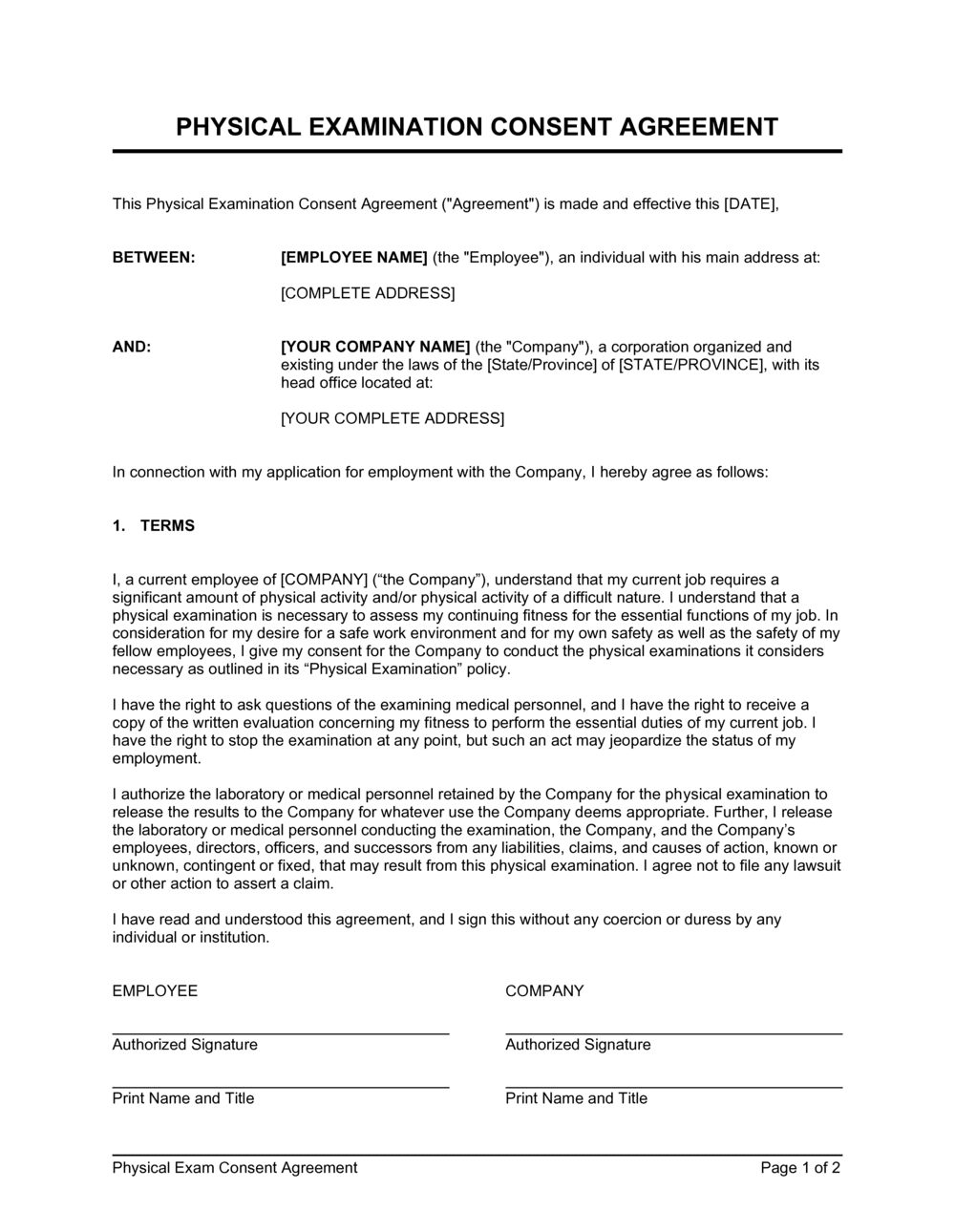
- A person's voluntary, knowledgeable agreement to undergo a procedure after being told its purpose, scope, risks, and alternatives.
- Examinee
- The individual who is the subject of the physical examination and whose signature authorizes it to proceed.
- Examining Party
- The licensed medical professional or occupational health clinic authorized by the form to conduct the physical examination.
- Fitness for Duty
- A medical determination that an employee is physically and mentally capable of performing the essential functions of their job safely.
- Scope of Examination
- The specific tests, assessments, and procedures authorized by the consent form — only activities listed within scope may be performed.
- Right to Withdraw
- The examinee's right to revoke consent at any time before or during the examination, without penalty, though some employment consequences may apply.
- Authorized Recipient
- Any person or organization — typically the employer or an insurance carrier — named in the form as permitted to receive the examination results.
- HIPAA
- The US Health Insurance Portability and Accountability Act, which sets federal standards for the privacy and security of individually identifiable health information.
- Data Retention Period
- The defined length of time the examining party and authorized recipient may retain the examinee's medical records before they must be destroyed or anonymized.
- Minor Consent
- For examinees under the legal age of majority, a parent or legal guardian must sign the consent form in place of — or alongside — the minor.
- Occupational Health Provider
- A clinic or physician specializing in work-related health assessments, injury management, and employer-mandated medical evaluations.