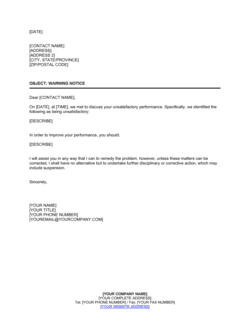
Polygraph Consent Template

Free Word download • Edit online • Save & share with Drive • Export to PDF

1 page20–30 min to fillDifficulty: StandardSignature requiredLegal review recommended
Learn more ↓
FreePolygraph Consent Template

At a glance

What it is
A Polygraph Consent is a legally binding document in which an individual voluntarily agrees to submit to a polygraph (lie detector) examination, acknowledges their rights, and authorizes the examiner and requesting party to conduct and use the results. This free Word download covers the scope of questioning, voluntary participation, confidentiality of results, and the right to withdraw — all in a single document you can edit online and export as PDF.
When you need it
Use it before any polygraph examination — whether for pre-employment screening in a federally exempted industry, an internal investigation involving suspected theft or misconduct, or a law enforcement or security clearance context. No examination should proceed without a signed consent form in place.
What's inside
Identification of the parties, the voluntary nature of participation, the scope and purpose of the examination, the subject's statutory rights under applicable law, a confidentiality and disclosure clause, a results authorization clause, a right-to-withdraw clause, and a signature block with date and witness line.

What is a Polygraph Consent?

A Polygraph Consent is a legally binding document in which an individual knowingly and voluntarily authorizes a trained examiner to administer a polygraph (lie detector) examination and consents to the defined use of the results. It identifies all parties, states the specific purpose and scope of the examination, discloses the subject's statutory rights, records the voluntary nature of participation, and governs who may receive the results and under what conditions. In the United States, the document must satisfy the written notice requirements of the Employee Polygraph Protection Act before any EPPA-exempt private employer examination can proceed — and courts in most jurisdictions treat a properly executed consent form as the foundational evidence that the examination was lawful and the subject's participation was not coerced.

Why You Need This Document

Administering a polygraph without a signed, compliant consent form is not a procedural technicality — it is a legal violation that carries concrete financial and reputational consequences. US private employers who skip or short-cut the EPPA's written notice requirements face civil penalties of up to $10,000 per violation and potential reinstatement orders. Beyond the regulatory exposure, an undocumented or coerced consent gives the subject grounds to suppress results, file a civil claim, and convert what was intended as an investigative tool into a liability. A properly drafted consent form establishes the evidentiary chain that protects the examiner, the requesting party, and the integrity of any resulting investigation — while ensuring the subject is treated fairly enough that the results hold up when challenged.

Which variant fits your situation?

If your situation is…Use this template
Pre-employment screening for a federally exempt employer (defense, intelligence, armored car)Pre-Employment Polygraph Consent
Internal investigation of suspected employee theft or embezzlementEmployee Polygraph Consent (Investigation)
Law enforcement voluntary examination of a witness or suspectLaw Enforcement Polygraph Consent
Security clearance examination for government or defense contractorSecurity Clearance Polygraph Consent
Private civil dispute or insurance fraud investigationCivil Polygraph Consent Agreement
Periodic or random polygraph testing for employees in a regulated rolePeriodic Polygraph Consent Form
Post-incident examination where an employee is a witness, not a suspectWitness Polygraph Consent

Common mistakes to avoid

❌ Providing the consent form at the examination, not 48 hours before

Why it matters: The EPPA requires the subject to receive the written notice at least 48 hours before the examination. Handing the form over on the day of the test is a per se EPPA violation exposing the employer to a civil penalty of up to $10,000.

Fix: Calendar the 48-hour delivery deadline as soon as the examination is scheduled, deliver by tracked email or in person with a signed acknowledgment of receipt, and record the delivery timestamp in the examination file.

❌ Defining the examination scope too broadly

Why it matters: A scope clause that covers general honesty, unrelated past conduct, or an entire employment history turns a permitted specific-incident examination into an illegal general screening — the single most common EPPA violation by private employers.

Fix: Limit the scope to one identifiable incident with a specific date range, location, and the type of loss involved. Have employment counsel review the scope before issuance.

❌ Failing to specify what happens to partial results if the subject withdraws

Why it matters: Without explicit language, partial polygraph data can be disclosed as 'inconclusive' or used informally to support an adverse decision — creating discrimination and defamation exposure without any legal basis.

Fix: Include a clause specifying that results from a terminated examination shall not be disclosed or used for any employment, investigative, or legal purpose.

❌ No witness signature on the consent form

Why it matters: If the subject later claims they were coerced into signing, an unwitnessed consent form leaves a credibility contest between the subject and the examiner — which courts frequently resolve in the subject's favor.

Fix: Always have an independent witness — not the examiner or the requesting party's direct supervisor — sign and date the consent form at the time of execution.

❌ Using a generic authorization form across jurisdictions without adaptation

Why it matters: Several US states (California, New York, Alaska, Connecticut, and others) impose restrictions beyond federal EPPA that are not covered by a generic federal-only template. Using the same form in California as in Texas creates silent compliance gaps.

Fix: Append a jurisdiction-specific addendum or have local counsel review the form before use in any state with polygraph-specific statutes beyond the EPPA.

❌ Omitting the confidentiality and disclosure clause

Why it matters: Without it, the examiner's firm or the requesting party's HR team may share results with future employers, colleagues, or third parties — exposing the requesting party to defamation, privacy, and data protection liability.

Fix: Include an explicit list of permitted disclosees, require written authorization for any disclosure not on that list, and specify that results are confidential business records of the requesting party.

The 9 key clauses, explained

Parties and examination identification

In plain language: Names the subject, the examiner, and the requesting party, and assigns a unique examination reference to tie the consent to a specific test event.

Sample language
This Polygraph Consent Agreement is entered into on [DATE] between [SUBJECT FULL NAME] ('Subject'), [EXAMINER NAME / FIRM], a licensed polygraph examiner ('Examiner'), and [REQUESTING PARTY NAME] ('Requesting Party'). Examination Reference No.: [EXAM-YYYY-NNNN].

Common mistake: Listing only the examiner without naming the requesting party. This omission obscures who receives the results and who is obligated to protect them, creating disclosure liability.

Voluntary participation and absence of coercion

In plain language: States explicitly that the subject is participating of their own free will, that no promise or threat has been made, and that refusal carries no specified penalty.

Sample language
Subject acknowledges that participation in this examination is entirely voluntary. No promise, inducement, threat, or coercion has been made to secure Subject's participation. Subject understands that declining to participate will not, by itself, result in [adverse employment action / criminal charge / other stated consequence].

Common mistake: Omitting the 'no adverse consequence for refusal' language. Without it, the consent may be challenged as coerced, rendering results inadmissible and exposing the requesting party to EPPA or equivalent liability.

Scope and purpose of the examination

In plain language: Defines the specific subject matter the examination will cover — a particular incident, date range, or issue — and prohibits the examiner from asking questions outside that scope.

Sample language
The examination is limited to questions concerning [SPECIFIC INCIDENT / MATTER], occurring on or about [DATE(S)], at [LOCATION]. The Examiner shall not ask questions outside this defined scope without Subject's additional written consent.

Common mistake: Defining the scope so broadly that it covers unrelated conduct or general character. Overly broad scope clauses are the leading cause of EPPA violations and may expose the employer to civil penalties of up to $10,000 per violation.

Statutory rights disclosure

In plain language: Informs the subject of their rights under applicable law — in the US, the specific EPPA disclosures required at least 48 hours before the examination.

Sample language
Subject has been informed of and acknowledges the following rights: (a) the right to consult with legal counsel before and during the examination; (b) the right to terminate the examination at any time; (c) the right to review all questions prior to the examination; (d) the right to receive a copy of this consent and any written examination report.

Common mistake: Providing the statutory disclosure at the time of examination rather than at least 48 hours in advance, as required by the EPPA. This procedural defect voids the examination for EPPA purposes regardless of whether the content is accurate.

Question review and pre-test disclosure

In plain language: Confirms that the subject has reviewed all questions that will be asked before the examination begins and agrees that no surprise or undisclosed questions will be introduced.

Sample language
Subject confirms that all examination questions have been reviewed with and explained by the Examiner prior to commencement. Subject has had the opportunity to seek clarification and consents to the specific questions set out in Schedule A attached hereto.

Common mistake: Attaching a Schedule A that lists only broad topic areas rather than the exact questions. Courts and regulators require the actual questions to have been disclosed — topic headings do not satisfy the requirement.

Confidentiality and results disclosure

In plain language: Limits who may receive the examination results and under what conditions — typically the requesting party, law enforcement under court order, or third parties with the subject's written authorization.

Sample language
Examination results shall be disclosed only to [REQUESTING PARTY NAME]. Results shall not be disclosed to any other person or entity without Subject's prior written consent, except as required by court order, subpoena, or applicable law. Results shared with Requesting Party shall be treated as confidential.

Common mistake: Omitting a confidentiality clause entirely. Without it, the examiner or requesting party may share results broadly — including with future employers — exposing the subject and increasing liability for the requesting party.

Authorization to conduct the examination

In plain language: Grants the examiner express authorization to attach instrumentation, conduct the test, and record physiological data for the duration of the examination.

Sample language
Subject hereby authorizes the Examiner to attach polygraph instrumentation to Subject's person, to ask the approved questions, and to record physiological responses during the examination conducted on [DATE] at [LOCATION].

Common mistake: Using past-tense authorization language ('Subject authorized...') drafted as a post-examination acknowledgment. Consent must be obtained before the examination begins — backdating or post-hoc documentation is legally invalid.

Right to withdraw and stop-test procedure

In plain language: Reminds the subject of their right to stop the examination at any time, describes how to exercise that right, and confirms there is no penalty for doing so mid-test.

Sample language
Subject may withdraw consent and terminate the examination at any time by stating 'I am stopping the examination' to the Examiner. Upon such statement, the Examiner shall cease questioning immediately. Partial results from a terminated examination shall not be used or disclosed.

Common mistake: Failing to address what happens to partial results if the subject stops mid-examination. Without this clause, partial data could be disclosed as inconclusive or deceptive, causing reputational harm without any legal basis for use.

Acknowledgment and signature block

In plain language: Records the subject's dated signature confirming they have read the document, had an opportunity to ask questions, and are signing voluntarily.

Sample language
Subject acknowledges that they have read this Agreement in full, had an opportunity to ask questions, and are signing voluntarily and without coercion. Signed: [SUBJECT SIGNATURE] Date: [DATE] Witness: [WITNESS NAME / SIGNATURE]

Common mistake: No witness line on the signature block. A third-party witness signature substantially strengthens the voluntariness of consent if the agreement is later challenged.

How to fill it out

  1. 1

    Identify all parties and assign an examination reference number

    Enter the subject's full legal name, the examiner's full name and firm, and the requesting party's legal entity name. Assign a sequential examination reference number (e.g., EXAM-2026-0001) to link this consent to the specific test event.

    💡 Use the same reference number on the examiner's written report and any results letter so every document in the chain is traceable to a single examination.

  2. 2

    Define the exact scope of the examination

    Describe the specific incident or matter the examination will address, including approximate dates and location. Review this scope against EPPA or equivalent requirements to confirm it qualifies as a permitted examination before proceeding.

    💡 Have employment counsel review the scope statement before any examination in a private-employer context — scope errors are the most common source of EPPA civil penalties.

  3. 3

    Attach Schedule A with the exact examination questions

    List every question the examiner intends to ask, word for word, as Schedule A. Do not use topic headings as a substitute. Confirm with the examiner that no additional questions will be introduced during the examination.

    💡 Number the questions in Schedule A to match the examiner's question sequence. This makes a post-examination dispute about undisclosed questions straightforward to resolve.

  4. 4

    Provide the statutory rights disclosure at least 48 hours in advance

    Deliver the completed consent form — including the rights disclosure section — to the subject at least 48 hours before the scheduled examination. Document the delivery method and timestamp.

    💡 Email delivery with a read-receipt timestamp satisfies the 48-hour requirement in most US jurisdictions and creates an auditable delivery record.

  5. 5

    Review the document with the subject before signing

    Walk through each clause with the subject verbally before they sign, answer any questions, and confirm they have had an opportunity to consult with an attorney if they wish. Do not rush this step.

    💡 Record a brief written note — separate from the consent form — documenting that you reviewed the form with the subject and that they indicated they understood it. This contemporaneous note is invaluable if voluntariness is later challenged.

  6. 6

    Obtain dated signatures with a witness

    Have the subject sign and date the form in the presence of an independent witness — ideally not the examiner or the requesting party's direct representative. The witness should also sign and date.

    💡 A neutral HR representative or legal counsel makes the strongest witness because they have no direct stake in the examination outcome.

  7. 7

    Retain the original and provide a copy to the subject

    File the original signed consent form in the examination record and provide the subject with a complete copy, including Schedule A, before the examination begins. Do not begin the examination without this exchange completed.

    💡 Scan and upload the signed document to a secure record system immediately after signing — physical documents in a pending investigation are at risk of loss or spoliation claims.

  8. 8

    Confirm jurisdiction-specific compliance before the examination date

    Verify that the examination is lawful in the jurisdiction where the subject works and resides. Some US states impose restrictions beyond the EPPA; several countries prohibit polygraph use in employment contexts entirely.

    💡 Prepare a short jurisdiction checklist (federal EPPA, state law, local ordinance) before scheduling any examination — some jurisdictions require additional disclosures not covered by this template.

Frequently asked questions

When can an employer legally request a polygraph examination?

Under the US Employee Polygraph Protection Act (EPPA), most private employers cannot require, request, suggest, or cause an employee or applicant to take a polygraph. The law provides narrow exemptions for employers in certain industries — federal defense contractors, certain security firms, and pharmaceutical distributors — and for specific incident investigations involving a reasonable suspicion of economic loss. Government employers are not covered by the EPPA and may use polygraphs more broadly. Always confirm the applicable exemption in writing before scheduling an examination.

Are polygraph results admissible in court?

In the United States, polygraph results are generally inadmissible in federal court and in most state courts as evidence of guilt or innocence, because courts have not accepted polygraphs as scientifically reliable enough to meet evidence standards. However, results may be used in limited contexts — administrative proceedings, employment termination decisions in exempt industries, or by agreement of both parties in some state courts. Admissibility rules vary significantly by jurisdiction, so legal counsel should assess whether results can be used for the intended purpose before the examination is administered.

Can an employee be fired for refusing a polygraph?

In most US private-sector contexts, no — the EPPA prohibits disciplining, discharging, or discriminating against an employee or applicant solely because they refused to take a polygraph examination. The narrow exception applies in specific incident investigations where the employer has met all EPPA procedural requirements and the refusal is one factor — not the sole factor — in an adverse action. Government employers and employers in certain exempt industries operate under different rules. Outside the US, rules vary substantially by country.

How this compares to alternatives

vs Non-Disclosure Agreement

An NDA protects confidential information by prohibiting disclosure — it is a forward-looking restriction on speech. A polygraph consent is a procedural authorization for a specific examination event. The two documents serve entirely different functions, though investigators sometimes use both together: an NDA to protect investigation details and a consent form to authorize the polygraph itself.

vs Authorization to Release Information

An authorization to release information allows a third party to access records or data the subject controls. A polygraph consent authorizes a physical examination procedure and governs how the results of that procedure may be used. The polygraph consent is narrower in subject matter but carries more significant statutory compliance obligations in the employment context.

vs Background Check Authorization

A background check authorization permits a third party to pull records — criminal history, credit, employment — using existing data. A polygraph consent authorizes an active physiological examination. The two are sometimes confused in pre-employment screening, but they have separate legal frameworks: background checks fall under the FCRA; polygraphs fall under the EPPA. Neither authorization form covers the other.

vs Employee Investigation Report

An employee investigation report documents the findings of an internal inquiry — interviews, evidence review, and conclusions. A polygraph consent form is a prerequisite procedural document that must be executed before a polygraph can be used as one input in that investigation. The consent form does not establish findings; the investigation report does.

Industry-specific considerations

Government and defense

Security clearance and counterintelligence polygraphs are a routine part of onboarding and periodic reinvestigation at federal agencies and cleared defense contractors, requiring consent documentation that complies with both agency policy and applicable federal law.

Financial services

Loss prevention and internal fraud investigations in banking and insurance may involve voluntary polygraphs of employees with access to client funds or data, where precise scope and strict confidentiality clauses are essential to avoid regulatory and defamation exposure.

Security and law enforcement

Private security firms that qualify as EPPA-exempt employers use pre-employment polygraphs, while law enforcement agencies use voluntary consent forms for witnesses and suspects in criminal investigations, each requiring distinct statutory language.

Healthcare and pharmaceuticals

Pharmaceutical distributors authorized to access controlled substances are one of the EPPA's specific-exemption categories, allowing pre-employment and ongoing polygraph screening for roles involving Schedule I–II drug inventory, with tight scope and documentation requirements.

Jurisdictional notes

United States

The Employee Polygraph Protection Act (29 U.S.C. § 2001 et seq.) prohibits most private employers from requiring or requesting polygraph examinations, with narrow exemptions for defense contractors, certain security companies, and pharmaceutical distributors, as well as specific incident investigations with reasonable suspicion. The EPPA mandates a written pre-examination notice delivered at least 48 hours in advance and imposes civil penalties of up to $10,000 per violation. Approximately 20 states — including California, Alaska, Connecticut, Delaware, and New York — impose additional restrictions on top of the EPPA, and this template should be reviewed against state law before use.

Canada

Canada has no federal statute directly equivalent to the US EPPA, but polygraph use by employers is severely restricted under provincial human rights and privacy legislation. In most provinces, requiring a polygraph as a condition of employment or continued employment constitutes a human rights violation. Ontario's Human Rights Code and British Columbia's Human Rights Code have been interpreted to prohibit mandatory polygraphs. Voluntary examinations conducted with fully informed consent may be permissible in limited investigative contexts, but employers should obtain provincial employment law advice before proceeding. Quebec's distinct civil law framework adds additional privacy protections under the Act Respecting the Protection of Personal Information in the Private Sector.

United Kingdom

Polygraph examinations are not generally admissible in UK criminal proceedings and are rarely used in employment contexts. The UK government has authorized limited polygraph use for specific categories of serious sexual or violent offenders on probation under the Offender Management Act 2007, conducted by trained probation officers under strict protocols. Private employers using polygraphs face significant exposure under the UK GDPR and the Data Protection Act 2018, as physiological data constitutes special-category personal data requiring explicit consent and a lawful processing basis beyond mere consent alone. Legal advice is strongly recommended before any non-probation polygraph use in the UK.

European Union

Polygraph use in employment and civil contexts is either explicitly prohibited or practically unenforceable in most EU member states. Under the EU GDPR, physiological data recorded during a polygraph examination is special-category data under Article 9, requiring explicit consent and a specific derogation — such as a substantial public interest basis — that is difficult to establish in an employment context. Germany, France, and the Netherlands have national laws or judicial precedent effectively banning employer-administered polygraphs. Any EU-based use should involve a Data Protection Impact Assessment and review by a local data protection officer before proceeding.

Template vs lawyer — what fits your deal?

PathBest forCostTime
Use the templateGovernment employers and EPPA-exempt private employers conducting routine examinations in a single US state with straightforward scopeFree30 minutes to complete and deliver
Template + legal reviewPrivate employers invoking a specific EPPA exemption, multi-state investigations, or examinations where results may support termination or legal action$300–$700 for an employment attorney review1–3 days
Custom draftedFederal agency or cleared contractor polygraph programs, criminal investigations with anticipated litigation, or multi-jurisdiction examinations involving non-US subjects$1,000–$3,500+1–2 weeks

Glossary

Polygraph
An instrument that measures and records physiological indicators — blood pressure, respiration, skin conductivity, and pulse — while a subject answers a series of questions, used to detect deception.
Informed Consent
A subject's knowing, voluntary, and uncoerced agreement to participate in an examination after being told its purpose, scope, and their rights.
Employee Polygraph Protection Act (EPPA)
A 1988 US federal law that prohibits most private employers from requiring, requesting, or using polygraph examinations on employees or applicants, with specific industry exemptions.
Examiner
A licensed or certified professional trained to administer polygraph examinations and interpret the recorded physiological data.
Relevant Question
A question directly related to the specific incident or matter under investigation, as opposed to a control or comparison question used to calibrate the instrument.
Right to Withdraw
The subject's ability to stop the examination at any point without penalty — a right that must be disclosed in the consent document in most jurisdictions.
Countermeasure
A deliberate technique — physical or mental — used by a subject in an attempt to distort polygraph readings and defeat detection.
Polygraph Results Disclosure
The circumstances under which examination results may be shared — typically limited to the requesting employer, law enforcement upon court order, or with the subject's written permission.
Security Clearance
Government authorization granting an individual access to classified information, often contingent on passing a polygraph examination as part of a background investigation.
Specific Incident Investigation
Under the EPPA, one of the narrow circumstances in which a private employer may request an employee polygraph — tied to an identifiable economic loss and reasonable suspicion focused on a specific individual.
Voluntariness
The legal standard requiring that consent be given freely, without duress, coercion, or misrepresentation — a condition courts examine when the admissibility of polygraph results is challenged.

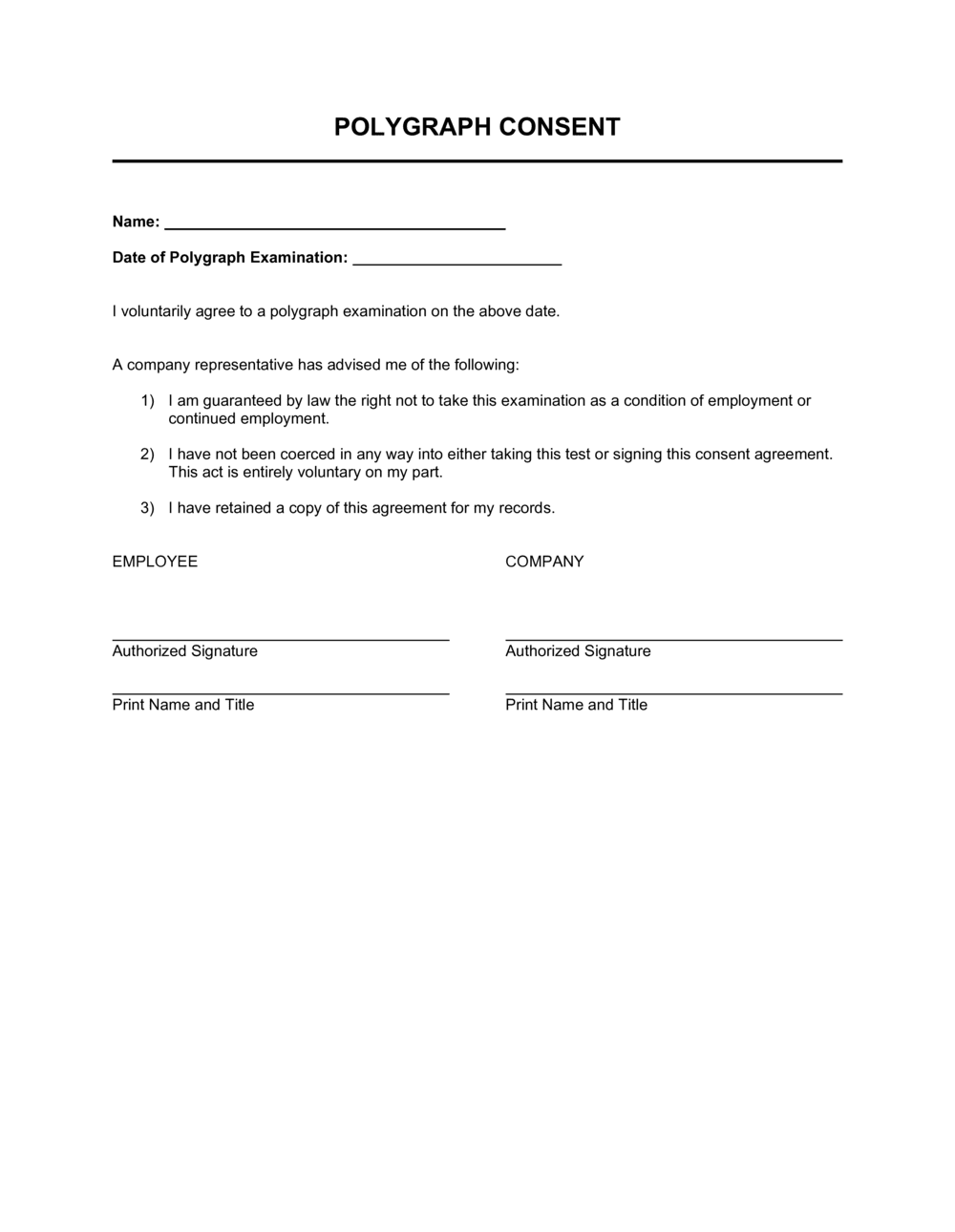
Part of your Business Operating System

This document is one of 3,000+ business & legal templates included in Business in a Box.

  • Fill-in-the-blanks — ready in minutes
  • 100% customizable Word document
  • Compatible with all office suites
  • Export to PDF and share electronically

Create your document in 3 simple steps.

From template to signed document — all inside one Business Operating System.
1
Download or open template

Access over 3,000+ business and legal templates for any business task, project or initiative.

2
Edit and fill in the blanks with AI

Customize your ready-made business document template and save it in the cloud.

3
Save, Share, Send, Sign

Share your files and folders with your team. Create a space of seamless collaboration.

Save time, save money, and create top-quality documents.

★★★★★

"Fantastic value! I'm not sure how I'd do without it. It's worth its weight in gold and paid back for itself many times."

Managing Director · Mall Farm
Robert Whalley
Managing Director, Mall Farm Proprietary Limited
★★★★★

"I have been using Business in a Box for years. It has been the most useful source of templates I have encountered. I recommend it to anyone."

Business Owner · 4+ years
Dr Michael John Freestone
Business Owner
★★★★★

"It has been a life saver so many times I have lost count. Business in a Box has saved me so much time and as you know, time is money."

Owner · Upstate Web
David G. Moore Jr.
Owner, Upstate Web

Run your business with a system — not scattered tools

Stop downloading documents. Start operating with clarity. Business in a Box gives you the Business Operating System used by over 250,000 companies worldwide to structure, run, and grow their business.

Start free · No credit card required