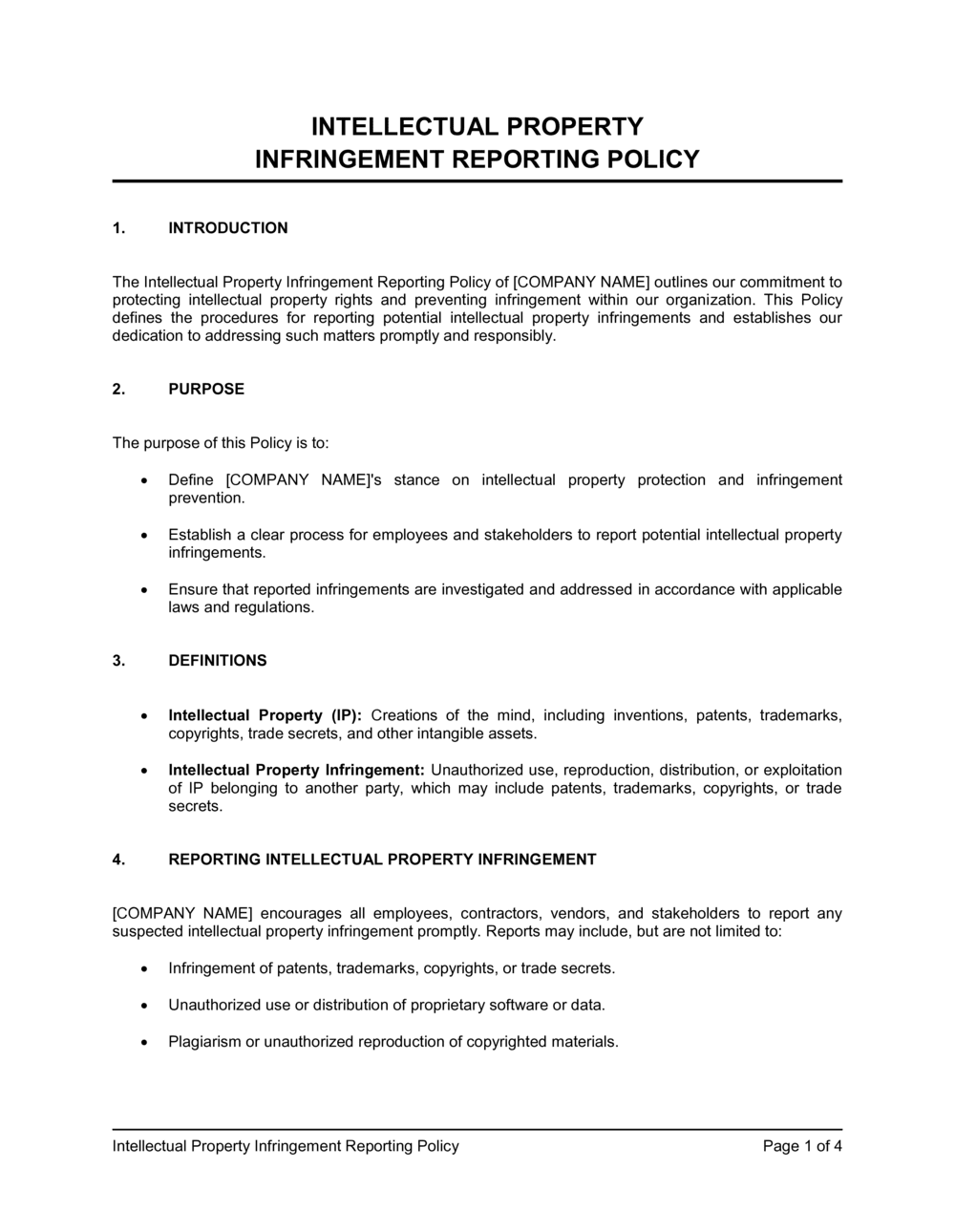
- Intellectual Property (IP)
- Creations of the mind — inventions, designs, brand names, software, and creative works — that are protected by patents, trademarks, copyrights, or trade secret law.
- Infringement
- The unauthorized use, reproduction, distribution, or exploitation of IP rights held by another party.
- Trade Secret
- Confidential business information — formulas, processes, customer lists, or algorithms — that derives economic value from not being publicly known.
- Copyright
- An automatic legal right protecting original creative works — text, images, software, and audio — from reproduction or distribution without the owner's permission.
- Trademark
- A word, symbol, logo, or phrase that identifies and distinguishes the source of goods or services and is protected from confusingly similar use by others.
- Patent
- A government-granted exclusive right to make, use, or sell an invention for a defined period, typically 20 years from the filing date.
- DMCA (Digital Millennium Copyright Act)
- A US law that provides a formal notice-and-takedown procedure for removing infringing content from online platforms.
- Good-Faith Reporter
- An employee or contractor who reports a suspected IP violation based on a reasonable, honest belief — not for malicious or retaliatory purposes.
- Escalation Path
- The defined sequence of individuals or departments to whom an IP report is routed as its severity or complexity increases.
- IP Register
- An internal record listing all IP assets owned or licensed by the company, including registration numbers, renewal dates, and ownership details.
- Counterfeit
- A product or item that copies a trademarked or patented design without authorization, typically sold to deceive consumers.