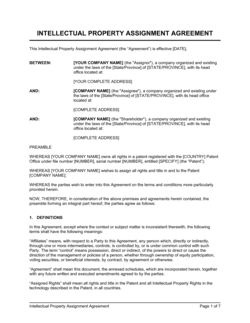
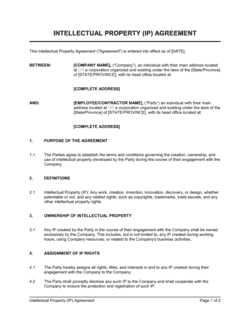
Assignment of Intellectual Property Rights Template

Free Word download • Edit online • Save & share with Drive • Export to PDF

6 pages25–35 min to fillDifficulty: ComplexSignature requiredLegal review recommended
Learn more ↓
FreeAssignment of Intellectual Property Rights Template

At a glance

What it is
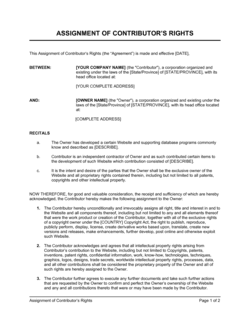
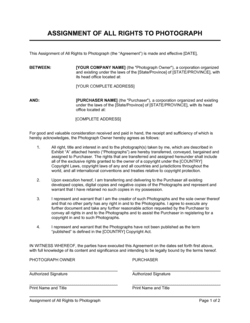
An Assignment of Intellectual Property Rights is a legally binding agreement in which one party (the Assignor) permanently transfers ownership of specified intellectual property — patents, copyrights, trademarks, trade secrets, or software — to another party (the Assignee). This free Word download gives you a structured, attorney-reviewed starting point you can edit online and export as PDF to execute alongside a contractor agreement, acquisition, or employment arrangement.
When you need it
Use it when acquiring a business or product line that includes IP assets, onboarding a contractor whose deliverables must belong to your company, or transferring IP from a founder to the incorporated entity before a funding round. It is also required when an employee creates protectable IP outside the scope of their employment contract's IP assignment clause.
What's inside
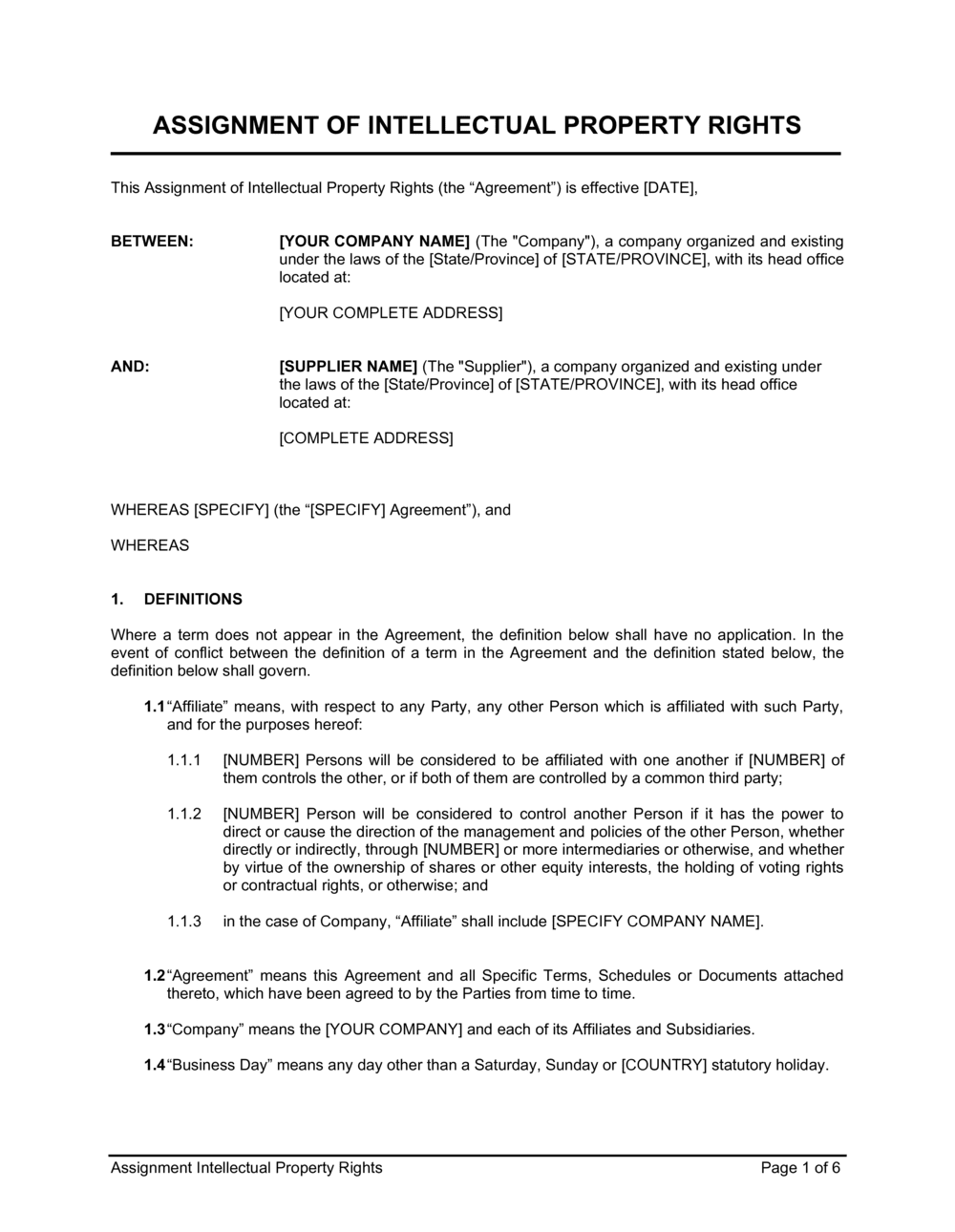
Identification of the Assignor and Assignee, a precise description of the IP being transferred, the consideration paid, representations and warranties of clear title, a power of attorney for registration filings, and governing law. The agreement creates a permanent, irrevocable transfer of ownership rather than a license to use.

What is an Assignment of Intellectual Property Rights?

An Assignment of Intellectual Property Rights is a legally binding agreement in which one party — the Assignor — permanently transfers full ownership of specified intellectual property to another party — the Assignee. The transferred IP can include patents, copyrights, trademarks, trade secrets, software source code, or any combination of these. Unlike a license, which grants permission to use IP while the original owner retains title, an assignment is a complete and irrevocable conveyance: after execution and recordation, the Assignee becomes the sole legal owner and may use, license, enforce, or sell the IP in their own name without any ongoing rights in the Assignor.

Why You Need This Document

Without a signed IP assignment, your company may not legally own the work it paid to create. Contractors who build software, design brands, or produce written content retain copyright in their deliverables by default in most jurisdictions — payment alone does not transfer ownership. Founders who created technology before incorporating carry personal IP rights that do not automatically vest in the company, a defect that surfaces immediately when investors run due diligence. In M&A transactions, a broken chain of title on a core patent or software platform can reduce valuation, trigger escrow holdbacks, or kill the deal entirely. A properly executed and recorded IP assignment closes these gaps before they become expensive problems — and this template gives you a structured, attorney-reviewed starting point to do it in under 30 minutes for straightforward transfers.

Which variant fits your situation?

If your situation is…Use this template
Contractor handing over software, designs, or written deliverables to a clientContractor IP Assignment Agreement
Founder transferring all personal IP into a newly incorporated entityFounder IP Assignment Agreement
Transferring a patent from inventor to company as part of an asset salePatent Assignment Agreement
Transferring ownership of a trademark or brand nameTrademark Assignment Agreement
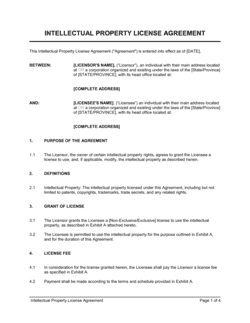
Licensing IP for use without transferring ownershipIntellectual Property License Agreement
Transferring IP as part of a broader business asset acquisitionAsset Purchase Agreement
IP assignment embedded in a consulting or service engagementIndependent Contractor Agreement

Common mistakes to avoid

❌ Using license language instead of assignment language

Why it matters: Phrases like 'grants exclusive rights' or 'assigns the right to use' create a license, not a transfer of ownership. The Assignor remains the legal owner, which surfaces as a fatal defect in investor due diligence.

Fix: Use the operative words 'assigns, transfers, and conveys all right, title, and interest' in the transfer clause. Have a lawyer review any agreement where IP ownership is commercially material.

❌ Describing the IP vaguely in the body instead of a detailed schedule

Why it matters: Courts have declined to enforce assignments where the scope of the IP was genuinely ambiguous — leaving the Assignee without title to the assets they paid for.

Fix: Attach a Schedule A that lists every patent number, trademark registration, copyright registration number, and software repository with version specificity. Reference the schedule explicitly in the assignment clause.

❌ Skipping the moral rights waiver for non-US creators

Why it matters: A Canadian, EU, or UK creator retains moral rights even after a valid economic assignment — including the right to object to modifications. This can block the Assignee from adapting or relicensing the work.

Fix: Include an explicit moral rights waiver clause whenever the Assignor created the work in a jurisdiction that recognizes moral rights, regardless of where the Assignee is located.

❌ Not recording the assignment with the relevant IP office

Why it matters: An unrecorded assignment is valid between the parties but invisible to third parties. A subsequent bona-fide purchaser who records first can defeat an earlier unrecorded assignment in several jurisdictions.

Fix: File the assignment with the USPTO, CIPO, UKIPO, or EUIPO within 90 days of execution. Keep the recordation receipt as part of the IP chain of title.

❌ Signing the assignment after the related transaction or engagement ends

Why it matters: Post-closing IP assignments in M&A deals require reopening negotiations. Post-termination contractor assignments may fail for lack of fresh consideration and leave the company without ownership of work it already paid for.

Fix: Make IP assignment execution a condition precedent to closing any acquisition, contractor engagement, or funding round. Build it into your standard onboarding checklist.

❌ Failing to conduct an IP audit before accepting warranties

Why it matters: If the Assignor unknowingly used open-source code under a GPL or AGPL license, or incorporated third-party assets without a license, the warranty of clear title is false and the Assignee inherits the infringement exposure.

Fix: Require the Assignor to provide a written IP disclosure listing all third-party tools, libraries, fonts, datasets, and code used in developing the assigned IP. Conduct a brief open-source license audit before signing.

The 9 key clauses, explained

Parties and recitals

In plain language: Identifies the Assignor and Assignee by full legal name and entity type, and explains the background and purpose of the transfer.

Sample language
This Assignment of Intellectual Property Rights (the 'Agreement') is entered into as of [DATE] by and between [ASSIGNOR FULL LEGAL NAME], a [ENTITY TYPE] organized under the laws of [JURISDICTION] ('Assignor'), and [ASSIGNEE FULL LEGAL NAME], a [ENTITY TYPE] ('Assignee').

Common mistake: Using a trade name instead of the registered legal entity name. If the Assignor's name doesn't match USPTO or copyright registration records, the chain of title breaks and registration filings will be rejected.

Description of assigned IP

In plain language: Precisely identifies every item of IP being transferred — patent numbers, copyright registration numbers, trademark registrations, software repository names, or trade secret descriptions — so there is no ambiguity about what changed hands.

Sample language
Assignor hereby assigns to Assignee all right, title, and interest in and to the following intellectual property: (a) U.S. Patent No. [PATENT NUMBER], titled '[INVENTION TITLE]'; (b) the software codebase known as '[PRODUCT NAME],' including all source code, object code, and documentation located at [REPOSITORY URL]; and (c) all related pending applications, continuations, and foreign counterparts.

Common mistake: Using vague descriptions like 'all IP related to the project.' Courts have found overly broad descriptions unenforceable where the scope is genuinely ambiguous — attach a schedule listing each item specifically.

Consideration

In plain language: States the payment or other value the Assignee provides in exchange for the IP, which is required for the agreement to be a binding contract rather than an unenforceable gift.

Sample language
In consideration of [USD $X / the sum of one dollar ($1.00) and other good and valuable consideration], the receipt and sufficiency of which are hereby acknowledged, Assignor agrees to the terms of this Agreement.

Common mistake: Omitting consideration entirely, or using a nominal $1 without acknowledging receipt. In several jurisdictions, a contract without documented consideration is voidable — and a $1 nominal amount is acceptable only when accompanied by language acknowledging adequacy.

Representations and warranties

In plain language: The Assignor promises that they own the IP outright, that no third party has a claim on it, that the IP does not infringe anyone else's rights, and that they have authority to make the transfer.

Sample language
Assignor represents and warrants that: (a) Assignor is the sole and exclusive owner of the Assigned IP; (b) the Assigned IP is free and clear of all liens, licenses, encumbrances, and third-party claims; (c) the Assigned IP does not, to Assignor's knowledge, infringe any third-party intellectual property rights; and (d) Assignor has full right, power, and authority to enter into this Agreement.

Common mistake: Accepting broad warranties from a contractor or individual without due diligence. If the Assignor used open-source code with a copyleft license, the warranty is false and the Assignee inherits the infringement risk.

Assignment and transfer of rights

In plain language: The operative clause that actually transfers ownership — all right, title, and interest, worldwide, permanently and irrevocably, from Assignor to Assignee.

Sample language
Assignor hereby irrevocably assigns, transfers, and conveys to Assignee all right, title, and interest in and to the Assigned IP, including all intellectual property rights therein, throughout the world, in perpetuity, free and clear of any encumbrances.

Common mistake: Using 'license' language instead of 'assign' language. Words like 'grants the right to use' create a license — not a transfer of ownership. The operative verb must be 'assigns' or 'conveys.'

Moral rights waiver

In plain language: In jurisdictions that recognize moral rights (Canada, the EU, the UK), the Assignor waives the right to be attributed as creator and the right to object to modifications of the work — rights that exist independently of economic ownership.

Sample language
To the fullest extent permitted by applicable law, Assignor hereby irrevocably waives all moral rights, droit moral, and similar rights in and to the Assigned IP, including the right of attribution and the right of integrity.

Common mistake: Omitting the moral rights waiver for contracts involving Canadian, EU, or UK creators. Economic ownership can transfer while moral rights remain — a Canadian author can later object to how their work is modified even after a valid assignment.

Power of attorney for filings

In plain language: Authorizes the Assignee to sign and file patent, trademark, and copyright assignment documents with national IP offices on the Assignor's behalf, in case the Assignor becomes unreachable or uncooperative after signing.

Sample language
Assignor hereby appoints Assignee as Assignor's attorney-in-fact to execute, file, and prosecute any applications, assignments, and other documents necessary to record the assignment of the Assigned IP with any relevant governmental authority, including the USPTO, CIPO, EUIPO, and UKIPO.

Common mistake: Skipping this clause because the parties expect to cooperate. If the Assignor later disputes the transfer or is simply unreachable, the Assignee cannot record the ownership change at the USPTO or other registries without a power of attorney.

Further assurances

In plain language: Requires the Assignor to sign any additional documents and take any additional steps reasonably requested by the Assignee to perfect or record the transfer after closing.

Sample language
Assignor agrees to execute and deliver any additional documents, instruments, or agreements, and to take any further actions, that Assignee may reasonably request to carry out the purposes of this Agreement and to perfect Assignee's ownership of the Assigned IP.

Common mistake: Treating this as a formality. A further-assurances clause is the practical safety net that compels cooperation on recordation filings, third-party consents, and estoppel certificates that often arise months after signing.

Governing law and dispute resolution

In plain language: Specifies which jurisdiction's law governs the agreement and how disputes are resolved — litigation, arbitration, or mediation — and in which venue.

Sample language
This Agreement is governed by the laws of the State of [STATE], without regard to its conflict-of-laws provisions. Any dispute arising under this Agreement shall be resolved by binding arbitration in [CITY, STATE] administered by [AAA / JAMS], except that either party may seek injunctive relief in any court of competent jurisdiction.

Common mistake: Choosing a governing law that has no connection to where either party operates or where the IP is registered. Courts may apply local law regardless, and an irrelevant choice-of-law clause signals a template was used carelessly.

How to fill it out

  1. 1

    Identify both parties with their full legal names

    Enter the Assignor's and Assignee's complete registered legal names and entity types — corporation, LLC, sole proprietor, or individual. Confirm the Assignor's name matches exactly what appears on any existing IP registrations.

    💡 For patents and trademarks, run a quick USPTO assignment search to confirm the Assignor is the recorded owner before signing — a mismatch creates a broken chain of title.

  2. 2

    List every item of IP being transferred with specificity

    In Schedule A, itemize each asset: patent numbers, trademark registration numbers, copyright registration numbers, software repository URLs, or a precise description of each trade secret. Attach the schedule to the agreement and reference it in the body.

    💡 If the IP includes source code, note the specific version or commit hash in the schedule — this prevents later disputes about what version was covered.

  3. 3

    State the consideration clearly

    Enter the agreed payment amount, or if nominal, acknowledge receipt of $1 and other good and valuable consideration. If consideration is equity, reference the share issuance document by name.

    💡 In a founder-to-company IP assignment, $1 nominal consideration is standard — but courts in Ontario and several US states scrutinize this. Adding a recital that the founder also receives employment or equity makes the consideration more defensible.

  4. 4

    Complete the representations and warranties section

    Confirm that each warranty — sole ownership, no encumbrances, no infringement, authority to assign — is accurate before the Assignor signs. Conduct a brief IP audit: check open-source licenses, prior assignments, and any third-party contributions to the work.

    💡 Ask the Assignor to provide a written IP disclosure listing all tools, libraries, and third-party materials used. This becomes an exhibit and limits warranty disputes later.

  5. 5

    Include the moral rights waiver if applicable

    If the Assignor is based in Canada, the UK, the EU, or any jurisdiction recognizing moral rights, include the waiver clause in full. If the Assignor is a US resident and the IP is purely domestic, this clause is less critical but harmless to include.

    💡 Do not assume a work-for-hire clause eliminates moral rights in non-US jurisdictions — it does not. The waiver must be explicit.

  6. 6

    Record the assignment with the relevant IP office

    After execution, file the assignment with the USPTO (for US patents and trademarks), Copyright Office, CIPO, EUIPO, or UKIPO as applicable. Use the power-of-attorney clause if the Assignor is unavailable to co-sign the registration forms.

    💡 USPTO patent assignment recordation costs $40 per patent as of 2025. Filing within three months of execution provides constructive notice to third parties under 35 U.S.C. §261.

  7. 7

    Execute with wet or electronic signatures before any related transaction closes

    Both parties must sign before the IP changes hands, before any M&A transaction closes, and before the contractor's engagement ends. Post-closing or post-termination signatures create fresh-consideration and enforceability risks.

    💡 Use a timestamped e-signature platform so the execution date is independently verifiable — critical if the assignment is ever challenged in litigation.

  8. 8

    Store the fully executed agreement with the IP asset records

    File the signed agreement alongside the IP's registration certificates, prosecution files, and any related license agreements. Investors and acquirers will request these during due diligence.

    💡 Create a single IP folder in your data room at incorporation. A clean, complete IP chain of title is one of the top factors in determining how smoothly a Series A or M&A diligence process goes.

Frequently asked questions

What is an assignment of intellectual property rights?

An assignment of intellectual property rights is a legally binding agreement in which the original owner (Assignor) permanently transfers full ownership of a specified IP asset — such as a patent, copyright, trademark, or trade secret — to another party (Assignee). Unlike a license, which grants permission to use IP while the original owner retains title, an assignment is a complete and irrevocable transfer of ownership. The Assignee becomes the new legal owner and can use, license, sell, or enforce the IP in their own name going forward.

When do I need an IP assignment agreement?

You need one whenever IP ownership must formally change hands: when a contractor creates software, designs, or written content for your company; when a founder transfers personally created IP into an incorporated entity before a funding round; when you acquire a business or product line that includes IP assets; or when an employee created protectable work outside the scope of their employment agreement's IP clause. Investors and acquirers routinely audit IP chain of title — gaps discovered in due diligence can delay or kill transactions.

What is the difference between an IP assignment and an IP license?

An assignment permanently transfers ownership of the IP — the Assignee becomes the new owner and the Assignor has no further rights. A license grants the licensee permission to use the IP in specified ways while the licensor retains ownership. Licenses can be exclusive or non-exclusive, time-limited, and geographically restricted. Use an assignment when you need to own the IP outright; use a license when you want to monetize IP you intend to keep.

Does an IP assignment need to be in writing?

Yes, in virtually every jurisdiction. In the US, patent assignments must be in writing to be valid under 35 U.S.C. §261. Copyright assignments in the US must be in writing under 17 U.S.C. §204. Trademark assignments should be in writing to be recordable at the USPTO. In Canada, the UK, and the EU, similar writing requirements apply. An oral IP assignment is generally unenforceable and will not survive due diligence.

What consideration is required for an IP assignment to be valid?

A valid assignment requires some form of consideration — the value exchanged to make the contract binding. This can be a negotiated cash payment, equity in the Assignee company, or a nominal amount such as $1 accompanied by a written acknowledgment of receipt. In founder-to-company assignments, $1 nominal consideration is commonly accepted, but courts in some jurisdictions scrutinize thin consideration more closely for high-value IP. Pairing nominal payment with employment, equity, or other documented benefits strengthens enforceability.

Do I need to record an IP assignment with a government office?

Recording is not required for the assignment to be valid between the parties, but it is strongly recommended for patents and trademarks. An unrecorded patent assignment in the US can be defeated by a subsequent bona-fide purchaser who records first (35 U.S.C. §261). Recording with the USPTO costs $40 per patent and provides constructive notice to all third parties. For trademarks, EUIPO and UKIPO recording affects third- party rights similarly. For copyright, US registration is voluntary but required before suing for infringement.

What are moral rights and why do they matter for IP assignments?

Moral rights are personal rights creators hold independently of economic ownership in many jurisdictions — including Canada, the EU, and the UK. They include the right of attribution (to be credited as the creator) and the right of integrity (to object to modifications that distort the work). A valid economic assignment does not automatically extinguish moral rights in these jurisdictions. An explicit written waiver of moral rights must be included in the assignment agreement whenever the creator is based in a country that recognizes them, or the Assignee's ability to modify or sublicense the work may be legally challenged.

Can an employment contract replace a standalone IP assignment?

A well-drafted employment contract with a broad IP assignment clause covers IP created within the scope of employment — but gaps remain. IP created by an employee on personal time, using personal equipment, on projects unrelated to their role may fall outside the employment clause. Contractors and freelancers are not employees, so their work is not automatically owned by the client without a written assignment. A standalone IP assignment agreement closes these gaps and should be used whenever IP ownership is commercially important.

What happens if a contractor does not sign an IP assignment?

Without a signed assignment, the contractor typically retains copyright in their work product — even if you paid for it. In the US, work created by an independent contractor is only 'work for hire' in nine specific statutory categories listed in 17 U.S.C. §101, and software generally does not fall within them without an express written agreement. This means a company could own a product built entirely by a contractor who technically retains the copyright — a serious vulnerability in any M&A or funding due diligence.

Do I need a lawyer to complete an IP assignment agreement?

For a straightforward contractor or founder-to-company assignment involving well-defined IP, a high-quality template is typically sufficient. Legal review is recommended when the IP being assigned is high-value (a core patent portfolio, a registered trademark, or a commercially deployed software platform), when the Assignor is based in a different country, when open-source components are involved, or when the assignment is part of an M&A or financing transaction. A 1–2 hour attorney review typically costs $300–$800 and is worthwhile whenever the IP represents meaningful business value.

How this compares to alternatives

vs Intellectual Property License Agreement

A license grants permission to use IP while the original owner retains title — it can be exclusive, time-limited, and revocable under specified conditions. An assignment permanently transfers full ownership with no ongoing relationship required. Use a license when you want to monetize IP you intend to keep; use an assignment when you need the other party to own it outright. Assigning when you intended to license — or vice versa — is one of the costliest drafting errors in IP practice.

vs Independent Contractor Agreement

An independent contractor agreement governs the service relationship, deliverables, and payment terms. A standalone IP assignment is the instrument that actually transfers ownership of the work produced. Many contractor agreements include an embedded IP assignment clause, but it is often narrow or ambiguous — a standalone assignment provides a cleaner, more defensible transfer, especially for high-value or complex IP.

vs Employment Contract

An employment contract with an IP assignment clause covers work created within the scope of employment. A standalone IP assignment is needed when an employee created IP before the contract was signed, when work was done outside the clause's scope, or when a founder must transfer pre-incorporation IP to the company. The two documents complement rather than replace each other.

vs Asset Purchase Agreement

An asset purchase agreement transfers a bundle of business assets — equipment, contracts, goodwill, and IP — in a single transaction. A standalone IP assignment transfers only the specified intellectual property and is simpler and faster to execute. In most M&A deals, the asset purchase agreement references and is accompanied by one or more standalone IP assignments that formally record each IP transfer with the relevant registry.

Industry-specific considerations

Technology / SaaS

All contractor-developed code, algorithms, and ML training data must be assigned to the company before a seed round — investors treat unassigned IP as a blocking issue during diligence.

Creative and Marketing Agencies

Copyright in client deliverables — brand identities, ad campaigns, website copy — does not transfer automatically to the client without a written assignment, even after full payment.

Pharmaceutical and Biotech

Patent assignment from individual inventors to the company is a regulatory and licensing prerequisite; chain-of-title defects can invalidate FDA submissions and licensing deals.

Manufacturing and Engineering

Design patents and utility patents for new products must be formally assigned from the engineering team to the corporate entity before filing or commercialization.

Jurisdictional notes

United States

Patent assignments must be in writing under 35 U.S.C. §261 and should be recorded with the USPTO within three months of execution to defeat subsequent bona-fide purchasers. Copyright assignments require a signed writing under 17 U.S.C. §204. California Labor Code §2870 limits employer IP assignment clauses for inventions developed entirely on the employee's own time without company resources — verify scope before executing.

Canada

Canadian copyright law (Copyright Act, R.S.C. 1985, c. C-42) requires assignments to be in writing. Moral rights cannot be assigned but can be waived — an explicit waiver clause is essential for Canadian creators. Patent assignments should be recorded with the Canadian Intellectual Property Office (CIPO) to protect against subsequent purchasers. Quebec's Civil Code applies to assignments involving Quebec-based parties and may impose additional formality requirements.

United Kingdom

Under the Copyright, Designs and Patents Act 1988, copyright assignments must be in writing and signed by or on behalf of the Assignor. Moral rights exist for literary, dramatic, musical, and artistic works and must be expressly waived in the agreement. Patent assignments should be recorded with the UK Intellectual Property Office (UKIPO) within six months to be effective against third parties. Post-Brexit, EUIPO registrations no longer cover the UK — separate UK filings are required.

European Union

IP assignment requirements vary by member state, but written form is universally required for patents and copyright transfers across the EU. Moral rights are strongly protected in France (droit moral is perpetual and inalienable), Germany, and several other member states — economic rights can transfer but moral rights cannot be fully waived in some jurisdictions. EUIPO trademark and design assignments should be recorded to be effective against third parties. GDPR considerations apply if the assigned IP includes personal data or AI training datasets.

Template vs lawyer — what fits your deal?

PathBest forCostTime
Use the templateContractor-to-client assignments of clearly defined deliverables, founder-to-company transfers of straightforward IP at incorporationFree20–30 minutes
Template + legal reviewHigh-value IP, multi-jurisdiction assignments, open-source component concerns, or IP being transferred as part of a financing round$300–$8001–3 days
Custom draftedCore patent portfolios, M&A transactions, pharmaceutical or biotech IP, or assignments where title disputes are anticipated$1,500–$5,000+1–3 weeks

Glossary

Assignor
The party transferring ownership of the intellectual property to the other party — typically the original creator or current rights holder.
Assignee
The party receiving ownership of the intellectual property — the company, investor, or acquirer who will hold the rights going forward.
Intellectual Property (IP)
Legal rights protecting creations of the mind — patents, copyrights, trademarks, trade secrets, and related intangible assets.
Consideration
The value exchanged for the assignment — typically a cash payment, equity, or a nominal amount (e.g., $1) to make the contract legally binding.
Chain of Title
The documented history of IP ownership from original creation to the current assignee, establishing clear and unencumbered title.
Work for Hire
A US copyright doctrine under which work produced by an employee within the scope of employment, or by a contractor under a written work-for-hire agreement, belongs to the employer or commissioning party automatically.
Warranty of Title
A contractual promise by the Assignor that they own the IP free and clear of any liens, claims, or third-party rights.
Power of Attorney
A clause authorizing the Assignee to execute patent, trademark, or copyright registration filings on the Assignor's behalf after the assignment.
Moral Rights
Rights in many jurisdictions — especially the EU and Canada — that allow creators to claim authorship and object to distortion of their work, distinct from economic ownership rights.
Encumbrance
Any claim, lien, license, or obligation attached to an IP asset that limits or clouds the Assignee's ability to use or enforce it freely.
Recordation
The formal filing of an IP assignment with a national IP office (USPTO, CIPO, UKIPO) to put third parties on notice of the change in ownership.

Part of your Business Operating System

This document is one of 3,000+ business & legal templates included in Business in a Box.

  • Fill-in-the-blanks — ready in minutes
  • 100% customizable Word document
  • Compatible with all office suites
  • Export to PDF and share electronically

Create your document in 3 simple steps.

From template to signed document — all inside one Business Operating System.
1
Download or open template

Access over 3,000+ business and legal templates for any business task, project or initiative.

2
Edit and fill in the blanks with AI

Customize your ready-made business document template and save it in the cloud.

3
Save, Share, Send, Sign

Share your files and folders with your team. Create a space of seamless collaboration.

Save time, save money, and create top-quality documents.

★★★★★

"Fantastic value! I'm not sure how I'd do without it. It's worth its weight in gold and paid back for itself many times."

Managing Director · Mall Farm
Robert Whalley
Managing Director, Mall Farm Proprietary Limited
★★★★★

"I have been using Business in a Box for years. It has been the most useful source of templates I have encountered. I recommend it to anyone."

Business Owner · 4+ years
Dr Michael John Freestone
Business Owner
★★★★★

"It has been a life saver so many times I have lost count. Business in a Box has saved me so much time and as you know, time is money."

Owner · Upstate Web
David G. Moore Jr.
Owner, Upstate Web

Run your business with a system — not scattered tools

Stop downloading documents. Start operating with clarity. Business in a Box gives you the Business Operating System used by over 250,000 companies worldwide to structure, run, and grow their business.

Start free · No credit card required