1
Set the review date and define the scope
Enter the period-end date and confirm which entities, business units, or customer segments are included in this review cycle.
💡 Run the review within three business days of month-end while the data is current and any payment receipts are fully posted.
2
Reconcile the debtors ledger to the general ledger
Pull the total from the debtors subsidiary ledger and compare it to the accounts receivable control account in the general ledger. Investigate and document any variance before proceeding.
💡 A common reconciling item is a payment received and posted to the bank but not yet applied to the customer's account — clear these before aging.
3
Generate and populate the aging summary
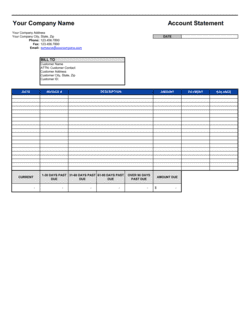
Export the aged receivables report from your accounting system and enter or paste the balances into the aging summary section. Confirm that aging is calculated from each invoice's due date, not its issue date.
💡 Separate disputed invoices from clean overdue balances at this stage — mixing them distorts your true overdue exposure.
4
Assign credit risk ratings to each debtor
Review payment history, recent communications, and any known financial difficulties for each debtor. Assign a Low, Medium, or High risk rating and record the specific basis for your assessment.
💡 Check trade credit reports or news sources for any publicly available information on high-balance debtors you have rated Medium or High.
5
Update the collection actions log
Record all contact made since the last review — calls, emails, letters — with the date, outcome, and next planned action for each overdue account.
💡 Log contacts within 24 hours of making them. Reconstructing a contact history from memory at review time is unreliable and creates gaps.
6
Calculate the provision for doubtful debts
Apply your standard provisioning percentages to each aging bracket and add any specific provisions for individually identified high-risk debtors. Compare the result to the current ledger provision and calculate the required adjustment.
💡 Document the provisioning percentages used and obtain management approval if the required adjustment exceeds a materiality threshold.
7
Identify write-off candidates and complete the action summary
Flag balances that meet your write-off criteria, document the collection history supporting each recommendation, and summarize all actions with named owners and due dates.
💡 Get written authorization for write-offs from the appropriate level of management before processing the journal entry — verbal approvals create audit problems.
8
Present the key metrics and obtain sign-off
Complete the metrics summary with current-period and prior-period comparisons, present to the responsible manager, and record their sign-off with the date of the next scheduled review.
💡 Attach the completed review to your month-end close file so auditors and lenders can access the full documentation trail without requesting it separately.