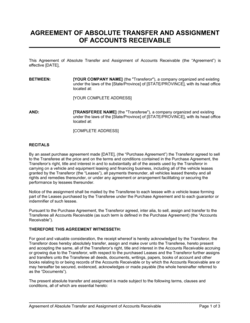
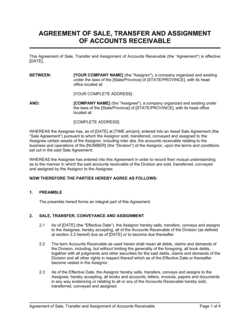
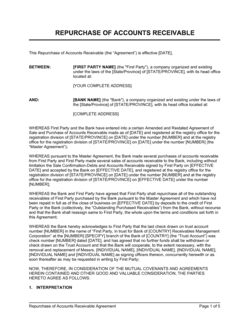
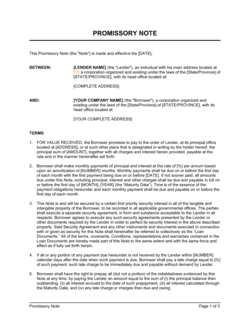
Assignment of Accounts Receivable Non-Recourse Template

Free Word download • Edit online • Save & share with Drive • Export to PDF

1 page20–30 min to fillDifficulty: StandardSignature requiredLegal review recommended
Learn more ↓
FreeAssignment of Accounts Receivable Non-Recourse Template

At a glance

What it is
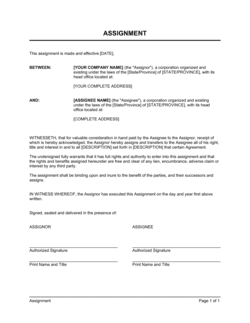
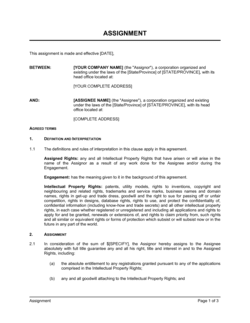
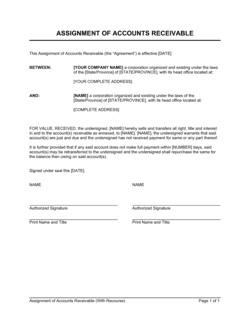
An Assignment of Accounts Receivable (Non-Recourse) is a legally binding agreement in which a business (the Assignor) transfers ownership of outstanding invoices or receivables to a buyer or lender (the Assignee) in exchange for immediate cash, with no right of recourse against the Assignor if the underlying debtor fails to pay. This free Word download lets you document a clean transfer of credit risk, edit terms online, and export as a PDF ready for execution.
When you need it
Use it when you want to convert outstanding invoices into immediate liquidity and are unwilling or unable to guarantee repayment if your customer defaults. It is common in invoice factoring, trade finance, and asset-based lending arrangements where the Assignee accepts the credit risk outright.
What's inside
Identification of the parties and the specific receivables being transferred, the purchase price and payment mechanics, a non-recourse representation eliminating the Assignor's liability for debtor default, warranties about the validity of the assigned receivables, notice and collection procedures, and governing law.

What is an Assignment of Accounts Receivable (Non-Recourse)?

An Assignment of Accounts Receivable (Non-Recourse) is a legally binding agreement in which a business (the Assignor) sells and transfers ownership of one or more outstanding invoices to a buyer or financial institution (the Assignee) in exchange for an immediate cash payment, with no obligation to repay the Assignee if the underlying customer fails to pay. The non-recourse feature is the defining characteristic: once the receivables transfer, the credit risk of debtor default travels with them. The Assignee prices that risk into the discount it applies to the face value of the invoices, and the Assignor walks away from the transaction without a contingent liability on its books.

Unlike a loan secured by receivables, a properly structured non-recourse assignment is designed to function as a true sale — removing the assets from the Assignor's balance sheet and insulating the transferred receivables from the Assignor's bankruptcy estate. The agreement accomplishes this through four interlocking mechanisms: an absolute transfer of title, warranties from the Assignor about the quality and validity of the receivables, a notice to the account debtor redirecting payment, and a UCC-1 or PPSA financing statement that perfects the Assignee's ownership interest against third-party creditors.

Why You Need This Document

Operating without a properly documented non-recourse assignment exposes both parties to serious legal and financial risk. For the Assignee — a factor, lender, or investor — an undocumented or improperly perfected purchase gives no enforceable priority over the Assignor's other creditors if the Assignor enters bankruptcy. The receivables can be swept into the estate, and the Assignee is left as an unsecured creditor. For the Assignor, an informally structured arrangement may be recharacterized by a court as a secured loan rather than a true sale, putting the assets back on the balance sheet and triggering debt-covenant violations or accounting restatements.

A clear, well-drafted agreement also resolves the most common operational disputes before they arise: when the holdback reserve gets released, what happens if the debtor disputes an invoice after the assignment, who bears the cost of collection, and which party must cooperate on filing corrections. This template provides the complete legal framework for a defensible, bankrupt-remote transfer of receivables — protecting the Assignee's investment and giving the Assignor clean access to working capital without ongoing contingent liability.

Which variant fits your situation?

If your situation is…Use this template
Assigning receivables but retaining liability if the debtor defaultsAssignment of Accounts Receivable (With Recourse)
Selling a portfolio of receivables in a single bulk transactionReceivables Purchase Agreement
Pledging receivables as collateral for a revolving credit lineAccounts Receivable Pledge Agreement
Ongoing factoring of multiple invoices under a master facilityFactoring Agreement
Transferring a single specific debt rather than a trade receivableDebt Assignment Agreement
Assigning rights under a contract including payment entitlementsAssignment of Contract
Transferring receivables as part of a business sale or acquisitionAsset Purchase Agreement

Common mistakes to avoid

❌ Failing to perfect the assignment with a UCC-1 or PPSA filing

Why it matters: An unrecorded assignment gives the Assignee contractual rights against the Assignor but no priority over a subsequent lien creditor or a bankruptcy trustee who can avoid unperfected transfers under §544 of the US Bankruptcy Code.

Fix: File the UCC-1 financing statement in the Assignor's state of incorporation on or before the closing date, and confirm filing by retrieving the stamped acknowledgment copy from the Secretary of State.

❌ Omitting the notice of assignment to the account debtor

Why it matters: Until the account debtor receives notice, it can validly discharge its debt by paying the original creditor (Assignor). The Assignee then holds a purchased receivable with no legal claim against the debtor.

Fix: Send written notice to each account debtor on the closing date using a tracked delivery method, and retain proof of receipt as part of the transaction file.

❌ Drafting carve-outs to the non-recourse clause too broadly

Why it matters: Carve-outs for 'any dispute' or 'any credit' without limiting language can expose the Assignor to recourse liability for events entirely outside its control, effectively rewriting the agreement as a with-recourse assignment.

Fix: Limit carve-outs to specific, defined events — Assignor misrepresentation, warranty breach, or fraud — and exclude debtor-side credit events, insolvency, or commercial disputes that arise after assignment.

❌ Assigning receivables before the underlying goods or services are fully delivered

Why it matters: An account debtor has the right to withhold payment or assert a counterclaim if the Assignor has not fully performed. This reduces the receivable's face value and may trigger the indemnification clause — or, if the non-recourse carve-outs are broad, recourse liability.

Fix: Warrant only receivables for which goods have shipped or services have been fully rendered and accepted, and confirm delivery documentation exists before including an invoice on Schedule A.

❌ Using an incomplete or generic Schedule A

Why it matters: A schedule that references receivables only by debtor name without invoice numbers, amounts, and due dates fails to identify the assigned property with sufficient specificity — courts have refused to enforce assignments that lack adequate identification.

Fix: Include invoice number, debtor legal name, face amount, invoice date, and due date for every assigned receivable. Number and initial each page of the schedule at signing.

❌ Ignoring the difference between a true sale and a secured loan

Why it matters: If a court recharacterizes the assignment as a secured loan rather than a true sale, the Assignee loses off-balance-sheet treatment, the transaction may need to be restructured, and the Assignee's priority in the Assignor's bankruptcy is reduced to that of a secured creditor subject to avoidance powers.

Fix: Draft the agreement to reflect outright ownership transfer — use 'purchase and sale' language, set the purchase price at a market discount, and avoid terms like 'loan' or 'borrow.' Have counsel assess true-sale risk for any transaction over $250K.

The 10 key clauses, explained

Parties and recitals

In plain language: Identifies the Assignor and Assignee by full legal name, describes the commercial relationship giving rise to the receivables, and records the effective date of the assignment.

Sample language
This Assignment of Accounts Receivable (Non-Recourse) is entered into as of [DATE] between [ASSIGNOR LEGAL NAME], a [STATE/PROVINCE] [ENTITY TYPE] ('Assignor'), and [ASSIGNEE LEGAL NAME], a [STATE/PROVINCE] [ENTITY TYPE] ('Assignee').

Common mistake: Using a trade name instead of the registered legal entity for either party. Enforcement actions and UCC filings require the exact legal name; a mismatch can invalidate the filing or complicate litigation.

Description and schedule of assigned receivables

In plain language: Identifies the specific invoices, invoice numbers, debtor names, face amounts, and due dates being transferred — either as a schedule attached to the agreement or by reference to a master schedule updated with each advance.

Sample language
Assignor hereby assigns to Assignee all right, title, and interest in the receivables listed in Schedule A attached hereto, including Invoice Nos. [INVOICE NUMBERS] issued to [DEBTOR NAME(S)] totalling $[FACE VALUE], each due on [DUE DATE(S)].

Common mistake: Attaching a vague or incomplete schedule that omits invoice numbers or face amounts. An insufficiently described receivable may not be enforceable against the account debtor or may fail a perfection challenge.

Purchase price and payment mechanics

In plain language: States the advance rate (e.g., 85% of face value), the dollar amount payable at closing, the timing of payment, and any reserve holdback to be released upon debtor payment.

Sample language
Assignee shall pay Assignor [X]% of the aggregate face value of the assigned receivables (the 'Purchase Price'), being $[AMOUNT], within [2] business days of execution. Assignee shall retain a reserve of [X]% pending collection.

Common mistake: Omitting the reserve release mechanism and timeline. Without clear terms for when and how the holdback is returned, disputes arise and the Assignee may delay release indefinitely.

Non-recourse provision

In plain language: Expressly states that the Assignee bears the full credit risk of debtor non-payment and has no right to demand repayment from the Assignor solely because the account debtor failed to pay.

Sample language
The assignment made herein is without recourse to Assignor with respect to the failure of any account debtor to pay any assigned receivable solely by reason of the account debtor's financial inability to pay or insolvency.

Common mistake: Drafting the non-recourse clause with broad carve-outs that swallow the protection — for example, excepting 'any disputed amount' without defining 'dispute.' Overly broad carve-outs effectively convert the agreement to a with-recourse arrangement.

Assignor warranties and representations

In plain language: The Assignor represents that each assigned receivable is genuine, fully earned, not subject to offset or counterclaim, not previously assigned or pledged, and that the Assignor has the legal authority to transfer it.

Sample language
Assignor represents and warrants that: (a) each assigned receivable is a bona fide, undisputed obligation of the account debtor; (b) the receivable has not been previously assigned or encumbered; (c) the goods or services giving rise to the receivable have been delivered or performed in full.

Common mistake: Omitting the warranty that goods or services have been fully delivered. A receivable for undelivered services can be disputed or reduced by the debtor, exposing the Assignee to a loss the non-recourse provision does not cover.

Notice of assignment to account debtor

In plain language: Requires the Assignor to promptly notify the account debtor of the assignment and direct all future payments to the Assignee, and specifies the form and timing of that notice.

Sample language
Assignor shall, within [3] business days of execution, deliver written notice of this assignment to each account debtor in the form set out in Schedule B, directing payment to Assignee at [PAYMENT DETAILS].

Common mistake: Delaying or failing to send the notice of assignment. Until notified, account debtors can validly discharge their obligation by paying the Assignor, leaving the Assignee without recourse against the debtor.

Collections and remittance

In plain language: Governs who collects payments from the debtor, what happens if the Assignor receives a payment that should go to the Assignee, and the timeline for remitting any misdirected funds.

Sample language
From and after the effective date, Assignee shall have the sole right to collect the assigned receivables. Any amounts received by Assignor with respect to the assigned receivables shall be held in trust and remitted to Assignee within [2] business days of receipt.

Common mistake: No trust or constructive-trust language for misdirected payments. Without it, a payment received by the Assignor and co-mingled with operating funds may be difficult to recover, especially in an insolvency.

Perfection and further assurances

In plain language: Requires the Assignor to cooperate in filing any UCC-1 financing statements, notify the Assignee of any disputes or credits that reduce a receivable, and execute any additional documents needed to perfect the transfer.

Sample language
Assignor shall, at Assignee's request and expense, execute and file any UCC financing statements, amendments, or other documents necessary to perfect Assignee's ownership interest in the assigned receivables in all applicable jurisdictions.

Common mistake: Treating perfection as optional or post-closing. An unperfected assignment in the US gives the Assignee no priority over a subsequent lien creditor or the Assignor's bankruptcy trustee.

Indemnification for warranty breach

In plain language: Requires the Assignor to indemnify the Assignee for losses arising from a breach of the Assignor's warranties — such as a receivable that turns out to be disputed, already assigned, or based on undelivered services — but not for debtor insolvency.

Sample language
Assignor shall indemnify and hold Assignee harmless from any loss, cost, or expense arising from a breach of Assignor's representations and warranties, including any reduction in a receivable due to disputes, offsets, or credits existing at the time of assignment.

Common mistake: Conflating warranty-breach indemnification with recourse for non-payment. The indemnity covers Assignor fraud or misrepresentation; the non-recourse clause covers debtor credit failure. Merging the two undermines the non-recourse nature of the transaction.

Governing law and dispute resolution

In plain language: Specifies which jurisdiction's law governs the agreement and how disputes are resolved — typically arbitration or litigation in a named court.

Sample language
This Agreement is governed by the laws of [STATE/PROVINCE/COUNTRY]. Any dispute shall be resolved by binding arbitration under the rules of [AAA/JAMS/ADRIC] in [CITY], except that either party may seek injunctive relief in any court of competent jurisdiction.

Common mistake: Choosing a governing law that differs from the jurisdiction where UCC or PPSA perfection filings are made. Misalignment between the governing law and the perfection jurisdiction can create gaps in the Assignee's priority.

How to fill it out

  1. 1

    Identify the parties with full legal names

    Enter the Assignor's and Assignee's complete registered legal names, jurisdiction of formation, entity type, and principal addresses. Confirm these match the names used on any UCC-1 or PPSA filings you intend to make.

    💡 Run a quick corporate registry search before signing to confirm the exact legal name — a one-word mismatch in a UCC filing can subordinate your priority to a later creditor.

  2. 2

    Complete Schedule A with every assigned receivable

    List each invoice by number, the account debtor's full legal name, the face amount, the invoice date, and the due date. Attach this schedule to the executed agreement and initial each page.

    💡 For ongoing factoring facilities, use a master schedule format that can be updated with each advance rather than amending the core agreement every time.

  3. 3

    Set the purchase price, advance rate, and reserve terms

    Enter the agreed advance rate as a percentage of face value, calculate the dollar amount payable at closing, and specify the reserve holdback percentage and the conditions and timeline for its release.

    💡 Tie reserve release to a specific trigger — debtor payment confirmed in cleared funds — not to a date. Date-based release gives the Assignee no protection against last-minute payment reversals.

  4. 4

    Draft the non-recourse provision carefully

    State clearly that the Assignee has no right of recourse against the Assignor for debtor non-payment due solely to the debtor's financial inability or insolvency. Enumerate any carve-outs narrowly — warranty breach, fraud, or misrepresentation only.

    💡 Review each carve-out against the warranties clause. Every exception to non-recourse should map exactly to a specific warranty so the scope of Assignor liability is predictable.

  5. 5

    Prepare and send the notice of assignment

    Use the form in Schedule B to notify each account debtor of the transfer in writing, direct payment to the Assignee's designated account, and obtain confirmation of receipt where possible.

    💡 Send the notice by a method that creates a delivery record — email with read receipt, courier with signature, or registered mail. Verbal notice is generally insufficient to cut off the debtor's right to pay the Assignor.

  6. 6

    File the UCC-1 financing statement (or PPSA equivalent)

    File a UCC-1 in the Assignor's state of formation (for US transactions) or a PPSA financing statement in the Assignor's province (for Canadian transactions) to perfect the Assignee's ownership interest against third-party creditors.

    💡 File before or simultaneously with execution, not after. A gap between signing and filing creates a window during which a judgment creditor or trustee in bankruptcy could claim priority.

  7. 7

    Execute with authorized signatures before funding

    Both parties must sign before the Assignee advances any funds. Ensure signatories have authority under their respective corporate governance documents — minutes, resolutions, or incumbency certificates if required.

    💡 For corporate parties, attach a board resolution or officer's certificate confirming signing authority. Challenges to authority are a common tactic in assignment disputes.

  8. 8

    Store the executed agreement and filing confirmations together

    Keep the fully executed agreement, Schedule A, the notice of assignment, proof of debtor notification, and the UCC-1 or PPSA filing confirmation in a single organized file for each transaction.

    💡 If the Assignor enters bankruptcy, the Assignee will need to produce all four documents to the trustee quickly — disorganized records can delay enforcement by weeks.

Frequently asked questions

What is a non-recourse assignment of accounts receivable?

A non-recourse assignment of accounts receivable is a legal agreement in which a business sells its outstanding invoices to a buyer — typically a factoring company or lender — and the buyer accepts the full credit risk of debtor non-payment. If the underlying customer fails to pay because of insolvency or financial difficulty, the buyer cannot demand repayment from the original seller. This structure provides the seller with immediate liquidity while transferring credit exposure off its books.

What is the difference between recourse and non-recourse accounts receivable assignment?

In a recourse assignment, the Assignor remains liable to repay the Assignee if the account debtor defaults — the credit risk stays with the seller. In a non-recourse assignment, the Assignee absorbs the loss from debtor non-payment and cannot pursue the Assignor. Non-recourse transactions typically carry a higher discount rate (lower advance rate) because the buyer is pricing in the credit risk it is accepting. The choice between the two depends on the seller's tolerance for contingent liability and the buyer's assessment of debtor creditworthiness.

Does a non-recourse assignment protect the Assignor from all liability?

No. Non-recourse protection covers debtor non-payment due to financial inability or insolvency only. The Assignor remains liable for warranty breaches — for example, if an assigned receivable turns out to be disputed, already pledged, or based on goods that were never delivered. Carve-outs for Assignor fraud and misrepresentation are standard and enforceable. The non-recourse clause does not insulate an Assignor who misrepresents the quality of the receivables being transferred.

Does a non-recourse assignment of receivables need to be filed publicly?

In the United States, filing a UCC-1 financing statement is not required for the assignment to be valid between the parties, but it is required to perfect the Assignee's ownership interest against third-party creditors and the Assignor's bankruptcy trustee. Without a timely UCC-1 filing, a later creditor who files can claim priority. In Canada, a similar filing under the applicable provincial Personal Property Security Act (PPSA) is required for perfection. In the UK and EU, registration requirements vary by jurisdiction and structure.

What is a notice of assignment and must it be sent to the account debtor?

A notice of assignment is a written communication informing the account debtor that the receivable has been transferred and directing future payments to the Assignee. In most jurisdictions, the assignment is valid between the parties without notice, but the account debtor can continue to discharge its obligation by paying the original creditor until it receives notice. Sending notice promptly after execution is essential to protect the Assignee's right to collect directly from the debtor.

What is a 'true sale' and why does it matter for a non-recourse assignment?

A true sale is a legal conclusion that the receivables transfer constitutes a genuine purchase rather than a disguised secured loan. True-sale treatment matters because it keeps the receivables off the Assignor's balance sheet, protects the Assignee from the Assignor's bankruptcy (the assets are no longer part of the estate), and avoids recharacterization risk. Courts assess true-sale based on factors including whether the transfer is absolute, the price reflects market terms, and the Assignor retains no residual economic interest. Professional legal review is recommended for any transaction where true-sale treatment is commercially important.

Can I assign receivables that are not yet due?

Yes. Future or not-yet-due receivables can be assigned in most jurisdictions, provided the underlying obligation exists at the time of assignment — for example, goods have been shipped or services rendered even if the invoice is not yet payable. Assigning receivables before the underlying performance is complete is riskier because the account debtor retains defences that may reduce the receivable's face value, potentially triggering the Assignor's warranty obligations.

How is the purchase price typically calculated in a non-recourse assignment?

The purchase price is usually expressed as an advance rate — a percentage of the receivable's face value — less a discount fee that reflects the Assignee's cost of funds, the tenor of the receivable, and the account debtor's creditworthiness. Advance rates for non-recourse factoring typically range from 80% to 92% of face value. The Assignee may also retain a reserve of 5–15% released upon debtor payment. The effective annual cost to the Assignor can range from 1.5% to 5% per month depending on these variables.

Do I need a lawyer to complete a non-recourse assignment of accounts receivable?

For straightforward domestic transactions with a single creditworthy debtor, a well-drafted template is a strong starting point. Legal review is strongly recommended when the transaction involves amounts over $100K, cross-border receivables, a debtor in a regulated industry, or any situation where true-sale treatment is important for balance-sheet or bankruptcy purposes. Errors in the non-recourse carve-outs, perfection filings, or notice procedures can significantly reduce the Assignee's protection and are difficult to correct after execution.

How this compares to alternatives

vs Assignment of Accounts Receivable (With Recourse)

A with-recourse assignment requires the Assignor to repay the Assignee if the account debtor defaults — the credit risk stays with the seller. Non-recourse transfers that risk entirely to the buyer. With-recourse transactions typically carry higher advance rates (lower discount) because the Assignee bears less risk, but they expose the Assignor to contingent liability that must be disclosed on financial statements.

vs Factoring Agreement

A factoring agreement is a master facility document governing an ongoing, revolving relationship between a factor and a client — covering eligibility criteria, fees, advance rates, reporting obligations, and termination across many transactions. A non-recourse assignment is a transaction-level document used for a single batch of receivables. The factoring agreement typically incorporates individual assignments by reference.

vs Accounts Receivable Pledge Agreement

A pledge agreement uses receivables as collateral for a loan — the Assignor retains ownership and repays the lender from debtor collections, with the lender taking the receivables only on default. A non-recourse assignment transfers outright ownership immediately. The pledge keeps the debt on the Assignor's balance sheet; the assignment (if structured as a true sale) removes it.

vs Assignment of Contract

An assignment of contract transfers all rights and obligations under an entire contract — including performance duties — to a new party. An assignment of accounts receivable transfers only the payment right arising from a completed transaction, without shifting any ongoing obligations. Use a contract assignment when duties remain to be performed; use a receivables assignment when the only remaining obligation is debtor payment.

Industry-specific considerations

Staffing and Recruitment

Staffing agencies assign weekly payroll-cycle receivables to factors to bridge the gap between client invoice dates and employee pay dates — a common non-recourse structure given the volume and frequency of assignments.

Construction and Contracting

Contractors assign progress-billing receivables to fund subcontractors and materials mid-project; lien-waiver coordination and retainage handling require specific schedule and notice provisions.

Manufacturing and Distribution

Manufacturers with long invoice-to-payment cycles (Net 60–90) use non-recourse factoring to smooth cash flow; advance rates depend heavily on debtor concentration and industry default rates.

Healthcare

Medical practices and clinics assign insurance reimbursement receivables to factors; HIPAA compliance and insurer assignment restrictions require specific consent and notice provisions not found in standard commercial templates.

Jurisdictional notes

United States

Article 9 of the Uniform Commercial Code (UCC) governs the assignment of most commercial receivables. Perfection requires a UCC-1 financing statement filed in the Assignor's state of organization, not the debtor's state. The Assignor's bankruptcy trustee can avoid unperfected assignments under Bankruptcy Code §544. True-sale analysis is critical for securitization or off-balance-sheet treatment, and several states have enacted specific receivables-purchase statutes.

Canada

Personal Property Security Acts (PPSA) in each common-law province govern perfection of receivables assignments; filing is made in the Assignor's province of registration. Quebec is governed by the Civil Code of Quebec, which has distinct rules for the assignment (cession) of claims — a notice or acknowledgment by the debtor is required to make the assignment opposable to third parties. Federal Bankruptcy and Insolvency Act provisions mirror US Bankruptcy Code §544 for unperfected assignments.

United Kingdom

English law distinguishes between legal and equitable assignments: a legal assignment under s.136 of the Law of Property Act 1925 requires written notice to the debtor and transfers the full legal right to sue; an equitable assignment is valid without notice but gives the Assignee weaker rights. The Companies Act 2006 requires companies to register certain charges at Companies House, though outright true-sale assignments are typically exempt. Post-Brexit, UK and EU rules diverge on cross-border enforceability.

European Union

The EU Regulation on the law applicable to the third-party effects of assignments (EU 2018/1) generally applies the law of the Assignor's habitual residence to determine priority against third parties, though not all member states have fully implemented it. GDPR is relevant when receivables schedules include personal data of individual debtors. France, Germany, and the Netherlands have distinct domestic requirements for notifying or recording assignments against account debtors, and some member states require notarial involvement for certain commercial assignments.

Template vs lawyer — what fits your deal?

PathBest forCostTime
Use the templateSingle domestic receivable assignments under $100K with creditworthy debtors and no balance-sheet treatment requirementsFree30–60 minutes
Template + legal reviewTransactions between $100K–$500K, cross-state or cross-provincial assignments, or situations where perfection filing priority is important$400–$9002–4 days
Custom draftedCross-border transactions, true-sale opinion required, healthcare or regulated-industry receivables, or master factoring facilities over $500K$2,000–$8,000+1–3 weeks

Glossary

Non-Recourse
A term describing a transfer where the seller has no obligation to repay the buyer if the underlying debtor fails to pay — the buyer absorbs the credit loss.
Assignor
The original creditor who owns the receivables and transfers them to another party in exchange for immediate payment.
Assignee
The buyer or lender who purchases the receivables, takes ownership, and assumes the risk of non-payment by the debtor.
Account Debtor
The customer or third party who owes the underlying invoice amount and whose obligation is being transferred by the assignment.
Factoring
A financing arrangement in which a business sells its receivables to a third party (factor) at a discount in exchange for immediate cash.
Purchase Price / Advance Rate
The amount the Assignee pays for the receivable, typically expressed as a percentage of face value — commonly 80–95% depending on credit risk and tenor.
Notice of Assignment
A written notification sent to the account debtor informing it that ownership of the receivable has transferred and that future payments must be directed to the Assignee.
Warranty of Collectability
A representation made by the Assignor that the assigned receivable is valid, undisputed, and not subject to any offset, counterclaim, or defence at the time of transfer.
Dilution
The reduction in a receivable's face value due to credits, disputes, returns, chargebacks, or early-payment discounts — a key risk metric for Assignees in factoring.
UCC Financing Statement (Form UCC-1)
A public filing in US states that perfects the Assignee's security interest in the assigned receivables, providing priority over other creditors.
True Sale
A legal determination that the receivable transfer constitutes an outright sale and not a secured loan, which is critical for keeping the assets off the Assignor's balance sheet.

Part of your Business Operating System

This document is one of 3,000+ business & legal templates included in Business in a Box.

  • Fill-in-the-blanks — ready in minutes
  • 100% customizable Word document
  • Compatible with all office suites
  • Export to PDF and share electronically

Create your document in 3 simple steps.

From template to signed document — all inside one Business Operating System.
1
Download or open template

Access over 3,000+ business and legal templates for any business task, project or initiative.

2
Edit and fill in the blanks with AI

Customize your ready-made business document template and save it in the cloud.

3
Save, Share, Send, Sign

Share your files and folders with your team. Create a space of seamless collaboration.

Save time, save money, and create top-quality documents.

★★★★★

"Fantastic value! I'm not sure how I'd do without it. It's worth its weight in gold and paid back for itself many times."

Managing Director · Mall Farm
Robert Whalley
Managing Director, Mall Farm Proprietary Limited
★★★★★

"I have been using Business in a Box for years. It has been the most useful source of templates I have encountered. I recommend it to anyone."

Business Owner · 4+ years
Dr Michael John Freestone
Business Owner
★★★★★

"It has been a life saver so many times I have lost count. Business in a Box has saved me so much time and as you know, time is money."

Owner · Upstate Web
David G. Moore Jr.
Owner, Upstate Web

Run your business with a system — not scattered tools

Stop downloading documents. Start operating with clarity. Business in a Box gives you the Business Operating System used by over 250,000 companies worldwide to structure, run, and grow their business.

Free Forever Plan · No credit card required