Quarterly Business Review Template

Free Word download β€’ Edit online β€’ Save & share with Drive β€’ Export to PDF

18 pagesβ€’30–45 min to fillβ€’Difficulty: Complexβ€’Signature requiredβ€’Legal review recommended
Learn more ↓
FreeQuarterly Business Review Template

At a glance

What it is
A Quarterly Business Review (QBR) is a formal document executed between a service provider and a client β€” or between a company and its executive stakeholders β€” to assess performance, validate strategic alignment, and set binding commitments for the next quarter. This free Word download gives you a structured, signable template you can edit online and export as PDF to present in board meetings, vendor reviews, or client success sessions.
When you need it
Use it at the close of each fiscal quarter to document what was delivered against agreed targets, surface issues requiring escalation, and formalize the objectives and resource commitments for the coming 90 days. It is especially critical in managed-service, SaaS, and enterprise vendor relationships where contractual SLAs are reviewed and renewed each quarter.
What's inside
Executive summary of quarter performance, KPI scorecard with actuals vs. targets, financial results and variance analysis, strategic initiative status, risk and issue log, agreed action items with owners and due dates, and next-quarter objectives with signed acknowledgment by both parties.

What is a Quarterly Business Review?

A Quarterly Business Review (QBR) is a formal bilateral document executed between a service provider and a client β€” or between a company's leadership and its executive stakeholders β€” that records performance results for the prior 90-day period, documents open risks, and creates signed commitments for the coming quarter. Unlike an internal status report, a properly executed QBR is signed by authorized representatives of both parties, giving it the character of a binding contractual instrument that can trigger service credits, remediation obligations, or renewal terms under the underlying service agreement. It covers KPI actuals against targets, financial variance analysis, strategic initiative progress, and a structured action-item log β€” all in a single document designed to be referenced, enforced, and built upon each quarter.

Why You Need This Document

Without a signed QBR, performance disputes have no authoritative record to resolve them. When a client claims an SLA was missed or a provider denies a service credit obligation, an unsigned meeting summary carries no contractual weight. A properly executed QBR creates a timestamped, bilateral acknowledgment of what was delivered, what fell short, and what both parties committed to correct β€” making it the evidentiary foundation for any escalation, credit claim, or contract termination that follows. For managed service, SaaS, and enterprise vendor relationships, QBRs also protect against scope creep: every quarter-over-quarter commitment is documented in writing before work begins, eliminating the ambiguity that generates invoice disputes and relationship breakdowns. This template gives you a structured, signable starting point that turns a routine review meeting into an enforceable record of accountability.

Which variant fits your situation?

If your situation is…Use this template
Reviewing a managed IT or cloud service provider relationshipIT Service QBR
Reporting quarterly financial and operational results to a boardBoard of Directors Report
Conducting an annual strategic performance review instead of quarterlyAnnual Business Review
Reviewing an individual employee's performance each quarterEmployee Performance Review
Evaluating a vendor or supplier against contract termsVendor Performance Review
Presenting customer success metrics for a SaaS productCustomer Success Report
Documenting monthly performance between full quarterly reviewsMonthly Business Review

Common mistakes to avoid

❌ Using vague KPI definitions with no measurement source

Why it matters: When performance is disputed, a metric defined only as 'customer satisfaction' has no objective standard for resolution, leaving both parties with no enforceable basis to invoke remedies.

Fix: Define every KPI by its exact formula, data source, and measurement frequency in a Schedule A attached to the document. Reference the schedule explicitly in the scorecard.

❌ Assigning action items to teams rather than named individuals

Why it matters: Actions owned by 'the operations team' or 'both parties' produce no accountability β€” they recur in the next QBR with the same open status and erode trust in the review process.

Fix: Every action item must have a single named person with a title and party designation. If joint ownership is genuinely required, name a primary lead and a secondary reviewer.

❌ No escalation contacts or remediation triggers defined

Why it matters: A QBR that records a Red-rated KPI but provides no defined escalation path or credit trigger is an observation document, not a binding review β€” the provider faces no consequence for repeated underperformance.

Fix: Include an escalation clause naming specific contacts at each level and a remediation-plan requirement triggered after two consecutive Red ratings on any KPI.

❌ Signing with a contact who lacks binding authority

Why it matters: If a service credit, scope change, or termination clause is later invoked based on QBR records, a signature from an unauthorized individual may render the document unenforceable against the entity.

Fix: Confirm the signer's authority level against the underlying contract before routing for signature. VP or C-suite sign-off is the standard for enterprise vendor QBRs.

The 9 key clauses, explained

Parties and review period identification

In plain language: Names the service provider and client (or company and stakeholder group) as legal entities and defines the exact calendar quarter under review.

Sample language
This Quarterly Business Review is entered into between [SERVICE PROVIDER LEGAL NAME] ('Provider') and [CLIENT LEGAL NAME] ('Client') and covers performance for the period [START DATE] through [END DATE] ('Review Period').

Common mistake: Using trade names instead of registered legal entity names. If a performance dispute escalates to contract enforcement, the document must reference the same entities named in the underlying service agreement.

Performance scorecard β€” KPIs and actuals

In plain language: Tabulates each agreed KPI with its target, the actual result for the quarter, the variance, and a RAG (Red/Amber/Green) status rating.

Sample language
KPI: [METRIC NAME] | Target: [X] | Actual: [Y] | Variance: [+/-Z%] | Status: [GREEN / AMBER / RED]. All KPIs are measured against the definitions and thresholds set out in Schedule A.

Common mistake: Omitting the measurement methodology or data source for each KPI. When actuals are disputed, an undefined metric has no objective basis for resolution.

Financial results and variance analysis

In plain language: Documents revenue, cost, and margin actuals against the quarter's budget or contracted amounts, with a written explanation for any variance exceeding a defined threshold.

Sample language
Q[X] [YEAR] Revenue: $[ACTUAL] vs. Budget $[TARGET] (Variance: [+/-X]%). Variances exceeding [5]% of budget are explained in Exhibit B. Gross margin: [X]%.

Common mistake: Presenting financial results without a written variance explanation. An unexplained shortfall against budget creates ambiguity about whether a service credit or remediation obligation is triggered.

Strategic initiative status

In plain language: Reports the progress of each strategic initiative or project agreed in the prior QBR, with a completion percentage, milestone status, and any schedule slippage.

Sample language
Initiative: [NAME] | Owner: [NAME / ROLE] | Target completion: [DATE] | Status: [ON TRACK / AT RISK / DELAYED] | % Complete: [X]%. Reason for delay (if applicable): [DESCRIPTION].

Common mistake: Reporting initiatives as 'in progress' without a percentage complete or updated milestone date. This prevents either party from identifying whether a contractual deadline has been missed.

Risk and issue log

In plain language: Identifies open risks and issues that could affect performance in the next quarter, their probability and impact rating, and the party responsible for mitigation.

Sample language
Risk ID: [R-001] | Description: [DESCRIPTION] | Probability: [HIGH / MEDIUM / LOW] | Impact: [HIGH / MEDIUM / LOW] | Owner: [PARTY] | Mitigation: [ACTION] | Due: [DATE].

Common mistake: Including risks with no assigned owner or mitigation action. An unowned risk is an undisclosed liability β€” and in a signed document, the absence of mitigation can be construed as acceptance of the risk by the responsible party.

Agreed action items with owners and deadlines

In plain language: Lists every specific action agreed during the review meeting, the accountable individual, and the due date before the next QBR.

Sample language
Action: [DESCRIPTION] | Owner: [NAME, TITLE, PARTY] | Due Date: [DATE] | Status at next QBR: [TO BE COMPLETED].

Common mistake: Assigning actions to a team or department rather than a named individual. Collective ownership produces no ownership β€” unresolved actions recur quarter after quarter.

Next-quarter objectives and commitments

In plain language: States the agreed targets, deliverables, and service levels for the upcoming quarter that both parties are committing to in writing.

Sample language
For Q[X] [YEAR], Provider commits to: (a) [OBJECTIVE 1] with a target of [METRIC]; (b) [OBJECTIVE 2] with a target of [METRIC]. Client commits to: (a) [RESOURCE / ACCESS COMMITMENT] by [DATE].

Common mistake: Copying the same objectives from the previous QBR without updating them to reflect actual results or changed business priorities β€” rendering the commitments meaningless.

Remediation and escalation terms

In plain language: Defines what happens when a KPI is rated Red for two or more consecutive quarters β€” including the remediation plan requirement, escalation contacts, and any contractual remedy such as a service credit.

Sample language
If any KPI is rated RED for [two] consecutive Review Periods, Provider shall deliver a written Remediation Plan within [10] business days. Escalation contacts: Provider β€” [NAME, TITLE]; Client β€” [NAME, TITLE]. Service credits, if applicable, are governed by Section [X] of the Master Services Agreement.

Common mistake: Referencing a service credit framework that is not attached or cross-referenced. Without the credit calculation method in the document, the remedy is unenforceable.

Acknowledgment and signatures

In plain language: Confirms that both parties have reviewed the document, that the KPI results are accurate, and that the next-quarter commitments are binding on the signing entities.

Sample language
By signing below, each party confirms they have reviewed this QBR, acknowledge the performance results as stated, and commit to the objectives and actions set out herein. Provider: [SIGNATURE / NAME / TITLE / DATE]. Client: [SIGNATURE / NAME / TITLE / DATE].

Common mistake: Having a junior operations contact sign instead of an authorized representative. If a service credit or termination clause is later invoked, the signature must be from someone with actual authority to bind the entity.

How to fill it out

  1. 1

    Identify the parties and define the review period

    Enter the full registered legal names of both parties and specify the exact start and end dates of the quarter under review. Cross-reference the entity names against the underlying service agreement.

    πŸ’‘ Use ISO date format (YYYY-MM-DD) in the header to eliminate any ambiguity about the quarter covered, especially for international parties.

  2. 2

    Populate the KPI scorecard from your data sources

    Pull actuals from your reporting system for each KPI defined in the contract or the prior QBR. Enter target, actual, variance, and RAG status for every metric. Do not round or adjust actuals before entry.

    πŸ’‘ Include the data source (e.g., 'Salesforce report run [DATE]') next to each KPI row β€” this prevents disputes about measurement methodology at the next review.

  3. 3

    Complete the financial results section

    Enter revenue, cost, and margin actuals against budget for the quarter. Write a one-paragraph variance explanation for any line that differs from budget by more than the agreed threshold (typically 5%).

    πŸ’‘ If the underlying contract has a financial reconciliation clause, confirm the figures match the billing statement for the same period before signing.

  4. 4

    Update the strategic initiative status

    For each initiative listed in the prior QBR, update the completion percentage, current milestone status, and revised target date if slippage has occurred. Add any new initiatives approved during the quarter.

    πŸ’‘ Tag initiatives as ON TRACK, AT RISK, or DELAYED β€” not 'in progress.' Vague status labels hide accountability.

  5. 5

    Document open risks and issues

    List every risk or issue that could affect next-quarter performance. Assign a probability, impact rating, named owner, and a specific mitigation action with a due date.

    πŸ’‘ Carry forward unresolved risks from the prior QBR and update their status β€” a risk that was open last quarter and has no new action is a red flag for both parties.

  6. 6

    Define next-quarter objectives and mutual commitments

    Write specific, measurable objectives for the coming quarter with a named metric and target for each. Include any resource, access, or approval commitments the client must fulfill to enable delivery.

    πŸ’‘ Limit next-quarter objectives to five or fewer. More than five dilutes focus and makes accountability at the next review harder to enforce.

  7. 7

    Assign all action items to named individuals

    List every action agreed during the review session with the full name, title, and party of the accountable individual. Set a due date at least two weeks before the next QBR to allow follow-up.

    πŸ’‘ Send the signed QBR to all action-item owners within 24 hours of the meeting. Delayed distribution is the single most common reason actions are forgotten before the next cycle.

  8. 8

    Obtain signatures from authorized representatives

    Route the document to a signatory with authority to bind each entity β€” typically VP-level or above for enterprise relationships. Both parties sign before the document is considered final.

    πŸ’‘ Use an e-signature platform to timestamp execution and create an audit trail. A QBR signed two weeks after the meeting date weakens the credibility of the performance record.

Frequently asked questions

What is a quarterly business review (QBR)?

A quarterly business review is a formal, structured meeting and its accompanying document in which a service provider and client β€” or a company's leadership team β€” assess performance against agreed targets for the prior 90 days, address open risks, and commit to objectives for the next quarter. When signed by authorized representatives, the QBR document functions as a binding addendum to the underlying service agreement, creating an enforceable record of performance and commitments.

How is a QBR different from a regular status report?

A status report is a one-way communication of current project or operational conditions β€” it documents facts but does not create obligations. A QBR is a bilateral review that results in signed commitments, updated targets, and formally assigned action items. The signature block is what elevates a QBR from an internal report to a document that can trigger service credits, remediation obligations, or contract renewal terms.

What should a quarterly business review include?

A complete QBR covers eight elements: parties and review period, KPI scorecard with actuals and RAG status, financial results and variance analysis, strategic initiative progress, risk and issue log, agreed action items with named owners and due dates, next-quarter objectives and mutual commitments, and a signature block. Omitting the signature block or the next-quarter commitments reduces the document to a historical record with no forward-looking accountability.

Does a QBR need to be signed to be enforceable?

Generally, yes β€” if you intend the QBR to trigger service credits, remediation obligations, or renewal commitments under the underlying contract, it must be executed by authorized representatives of both parties. An unsigned QBR is typically treated as an internal record rather than a binding contractual instrument. Consider consulting a lawyer if the QBR will be used to document SLA breaches that could lead to termination or financial penalties.

How often should a QBR be conducted?

By definition, quarterly β€” once per fiscal quarter, covering the prior 90-day period. Most enterprise service agreements schedule QBRs within 30 days of each quarter's close. Businesses with particularly dynamic relationships sometimes supplement QBRs with monthly business reviews, but the QBR remains the formal governance checkpoint at which signed commitments are recorded.

What KPIs should be included in a QBR?

KPIs should reflect the specific obligations in the underlying contract or service agreement β€” typically SLA compliance rates, financial metrics (revenue, margin, cost variance), customer satisfaction scores (NPS or CSAT), strategic initiative milestones, and any product-specific metrics such as uptime, churn, or utilization. Limit the scorecard to 8–12 KPIs to keep the review focused; more than 12 dilutes accountability and lengthens the meeting without proportionate value.

Who should sign a QBR?

Both parties should be signed by individuals with authority to bind the entity β€” typically a VP, Director, or C-suite officer on each side. For enterprise managed-service relationships, the account executive or customer success director signs on the provider side, and the IT director or VP of Operations signs on the client side. Avoid routing solely to project managers who may lack contractual signing authority.

Can a QBR be used to modify the underlying service agreement?

A QBR can document agreed scope changes, updated SLA thresholds, or adjusted pricing commitments, but only if the underlying service agreement allows QBR documents to serve as amendments. In most contracts, formal amendments require a separate change order or amendment agreement signed by the same parties. Review the governing contract's amendment clause before using a QBR to formalize any change to core terms.

What happens if a provider consistently misses QBR targets?

The consequence depends on what the underlying contract and the QBR remediation clause specify. Typically, two consecutive Red-rated KPIs trigger a written remediation plan requirement; three or more may entitle the client to service credits or early termination without penalty. A QBR document that accurately records missed targets and signed acknowledgments provides the evidentiary foundation needed to invoke these remedies β€” which is why the signature block and escalation clause are the two most legally significant sections in the document.

How this compares to alternatives

vs Service Level Agreement (SLA)

An SLA is the upstream contract that defines what performance standards must be met and what remedies apply. A QBR is the periodic review document that measures actual performance against those standards and records whether they were met. The SLA creates the obligation; the QBR creates the evidence. Both are needed for an enforceable performance management framework.

vs Board of Directors Report

A board report is prepared by management for a governance audience β€” directors and shareholders β€” and covers strategic direction, financial results, and risk at the company level. A QBR is a bilateral operational document between a service provider and client focused on specific contracted deliverables. Board reports are typically one-directional; QBRs require acknowledgment and signature by both parties.

vs Employee Performance Review

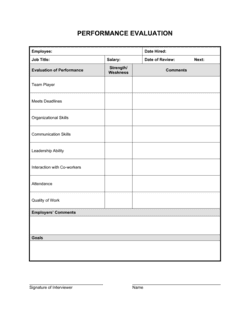
An employee performance review assesses an individual's contribution against role-specific goals and is governed by employment law in the relevant jurisdiction. A QBR assesses an organization's performance against contractual commitments in a vendor or client relationship. The two documents share structural similarities β€” scorecard, action items, next-period objectives β€” but operate under fundamentally different legal frameworks.

vs Annual Business Review

An annual business review covers a full 12-month period and typically includes strategic realignment, contract renewal negotiation, and multi-year planning. A QBR is a 90-day operational checkpoint focused on near-term performance and action items. Most enterprise relationships conduct both: QBRs for operational accountability and an annual review for strategic and commercial renegotiation.

Industry-specific considerations

SaaS / Technology

QBRs in SaaS relationships focus on product adoption rates, feature utilization, churn, NPS, and expansion revenue targets alongside uptime SLA compliance.

Managed IT Services

IT managed service QBRs validate SLA metrics such as mean-time-to-resolution, ticket closure rates, and security compliance alongside infrastructure cost variance.

Professional Services

Consulting and advisory QBRs track billable utilization, project milestone completion, client satisfaction scores, and scope-change documentation critical for billing disputes.

Manufacturing and Supply Chain

Supplier QBRs measure on-time delivery rates, defect rates (PPM), cost reduction commitments, and capacity compliance against purchase volume forecasts.

Jurisdictional notes

United States

In the US, a signed QBR can function as an enforceable contract modification if the underlying agreement permits it and adequate consideration exists. State contract law governs; in states like New York and California, courts scrutinize whether QBR signatories had actual authority to bind the entity. Service credit clauses should be reviewed against the Uniform Commercial Code where goods are involved.

Canada

Canadian courts apply common-law contract principles to signed QBRs; a QBR that acknowledges SLA breaches and commits to remediation can be introduced as evidence in a damages claim. In Quebec, civil law applies β€” written acknowledgments of obligation carry particular weight. French-language versions may be required for provincially regulated entities operating in Quebec.

United Kingdom

Under English contract law, a signed QBR that documents performance failures and commits to remediation can support a damages or termination claim if the underlying agreement is breached. IR35 considerations may be relevant if the QBR relationship involves personal service companies. UK GDPR applies to any customer or employee data included in performance metrics reported in the document.

European Union

EU member states apply varying contract law standards, but signed bilateral documents acknowledging performance and committing to future obligations are generally enforceable across jurisdictions. GDPR compliance is critical β€” QBR scorecards that include personal data (such as individual customer satisfaction records) must comply with data minimization principles. In Germany and France, works council notification may be required before introducing a QBR process that affects employee performance metrics.

Template vs lawyer β€” what fits your deal?

PathBest forCostTime
Use the templateStandard vendor or client QBRs under an existing service agreement with no active performance disputesFree1–2 hours per quarter
Template + legal reviewQBRs that will document SLA breaches, trigger service credits, or support a contract renewal negotiation$300–$8001–3 days
Custom draftedEnterprise multi-party agreements, regulated industries, or QBRs intended to serve as formal contract amendments$1,500–$4,000+1–2 weeks

Glossary

KPI (Key Performance Indicator)
A quantifiable metric used to measure progress toward a specific business objective over a defined period.
SLA (Service Level Agreement)
A contractual commitment specifying the minimum performance standards β€” uptime, response time, or delivery rate β€” a service provider must meet.
Variance Analysis
The process of comparing actual results to budgeted or targeted figures and explaining the difference in quantitative and qualitative terms.
OKR (Objectives and Key Results)
A goal-setting framework pairing a qualitative objective with two to five measurable outcomes used to track whether the objective was achieved.
Escalation Path
The documented chain of contacts and timeframes for raising unresolved issues from operational to executive level.
Run Rate
An annualized projection of current-period revenue or cost, calculated by multiplying the most recent period's figure by the number of periods in a year.
Churn Rate
The percentage of customers or revenue lost in a given period, most often used in SaaS and subscription businesses.
Net Promoter Score (NPS)
A survey-based measure of customer loyalty scored on a -100 to +100 scale based on the likelihood of recommending the product or service.
Remediation Plan
A documented set of corrective actions with owners and deadlines, issued when performance falls below the agreed contractual threshold.
Renewal Commitment
A signed statement by both parties confirming their intent to continue the engagement for the next contract period under stated terms.

Part of your Business Operating System

This document is one of 3,000+ business & legal templates included in Business in a Box.

  • Fill-in-the-blanks β€” ready in minutes
  • 100% customizable Word document
  • Compatible with all office suites
  • Export to PDF and share electronically

Create your document in 3 simple steps.

From template to signed document β€” all inside one Business Operating System.
1
Download or open template

Access over 3,000+ business and legal templates for any business task, project or initiative.

2
Edit and fill in the blanks with AI

Customize your ready-made business document template and save it in the cloud.

3
Save, Share, Send, Sign

Share your files and folders with your team. Create a space of seamless collaboration.

Save time, save money, and create top-quality documents.

β˜…β˜…β˜…β˜…β˜…

"Fantastic value! I'm not sure how I'd do without it. It's worth its weight in gold and paid back for itself many times."

Managing Director Β· Mall Farm
Robert Whalley
Managing Director, Mall Farm Proprietary Limited
β˜…β˜…β˜…β˜…β˜…

"I have been using Business in a Box for years. It has been the most useful source of templates I have encountered. I recommend it to anyone."

Business Owner Β· 4+ years
Dr Michael John Freestone
Business Owner
β˜…β˜…β˜…β˜…β˜…

"It has been a life saver so many times I have lost count. Business in a Box has saved me so much time and as you know, time is money."

Owner Β· Upstate Web
David G. Moore Jr.
Owner, Upstate Web

Run your business with a system β€” not scattered tools

Stop downloading documents. Start operating with clarity. Business in a Box gives you the Business Operating System used by over 250,000 companies worldwide to structure, run, and grow their business.

Start freeΒ Β·Β No credit card required