Do Your Routines Serve Or Sabotage Your Goals Template

Free to read β€’ Save or share with one click

FreeDo Your Routines Serve Or Sabotage Your Goals Template

At a glance

What it is
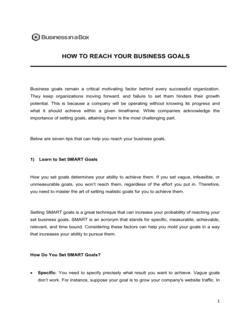
Do Your Routines Serve or Sabotage Your Goals is a structured productivity and self-reflection guide that walks entrepreneurs and professionals through an honest audit of their daily habits β€” identifying which routines actively advance their goals and which quietly drain focus, energy, and momentum. This free Word download gives you a repeatable framework you can edit online and revisit quarterly.
When you need it
Use it when you feel busy but not productive, when quarterly goals are consistently missed despite effort, or when you want to deliberately redesign your daily schedule before a major transition β€” a new role, a business launch, or a growth sprint.
What's inside
A goal-to-routine alignment audit, habit inventory, energy mapping, environment design checklist, routine optimization plan, and a 30-day commitment tracker. Each section pairs reflective questions with concrete action prompts so the guide produces decisions, not just insight.

What is Do Your Routines Serve or Sabotage Your Goals?

Do Your Routines Serve or Sabotage Your Goals is a structured productivity and self-reflection guide that walks entrepreneurs and professionals through a systematic audit of their daily habits β€” mapping each behavior against stated goals to determine what is driving results, what is neutral, and what is quietly working against them. The guide combines behavioral science concepts (habit loops, energy mapping, environment design) with concrete worksheets that produce a redesigned daily routine and a 30-day tracking plan. Unlike generic planners that tell you how to schedule tasks, this document examines the habitual layer underneath your schedule β€” the automatic behaviors that run whether or not they appear on any to-do list.

Why You Need This Document

The cost of unexamined routines is not obvious β€” it is the accumulation of small, invisible decisions made on autopilot every day. Entrepreneurs who feel productive but miss quarterly goals almost always discover, when they log actual behavior, a significant gap between what they intended to do and what their habits caused them to do. Reactive email cycles, mismatched task-to-energy scheduling, and environmental triggers for low-value behavior together account for hours of lost high-quality work each week. Without a structured audit, these patterns persist across every new planning cycle β€” better goals do not fix behavioral drift. This template gives you a repeatable framework to make that drift visible, diagnose its causes, and replace it with a routine architecture that is genuinely aligned with where you are trying to go.

Which variant fits your situation?

If your situation is…Use this template
Auditing routines as part of a broader annual planning cycleAnnual Goals and Action Plan
Setting specific, measurable goals before redesigning routinesSMART Goals Template
Improving team-level productivity and work habitsTeam Productivity Plan
Tracking daily and weekly task completion against goalsWeekly Planner Template
Managing time allocation across projects and prioritiesTime Management Plan
Conducting a broader personal or professional self-assessmentPersonal Development Plan
Building a structured morning or evening routine from scratchDaily Schedule Template

Common mistakes to avoid

❌ Auditing the ideal routine instead of the real one

Why it matters: A sanitized routine log produces a flattering but useless audit. You cannot fix patterns you refuse to acknowledge, and the gap between what you think you do and what you actually do is typically 90–120 minutes per day.

Fix: Log behavior in real time for three days using a timer, not from memory at the end of the day. Treat it as a neutral observation, not a performance review.

❌ Tracking more than three new habits at once

Why it matters: Cognitive bandwidth for habit formation is limited. Attempting to change five or more behaviors simultaneously consistently produces the same result β€” partial adoption of none of them and complete reversion by week three.

Fix: Select the three highest-impact habits from the alignment audit. Install them completely β€” meaning they feel automatic β€” before adding any new ones.

❌ Scheduling high-priority work in low-energy time blocks

Why it matters: Most professionals schedule important creative and strategic work whenever a gap appears in the calendar, regardless of cognitive state. An hour of deep work at peak energy produces 2–3Γ— the output of the same hour in an energy trough.

Fix: Complete the energy map before drafting the routine blueprint. Then hard-schedule the most cognitively demanding task of the day into the first 90 minutes of your identified peak window.

❌ Skipping the quarterly review when things are going well

Why it matters: Routines that work during low-pressure periods often erode silently when a busy season hits. Without a scheduled review, the drift is invisible until goal progress has already stalled.

Fix: Schedule the next quarterly review on the calendar before closing the document. Treat it as a non-negotiable recurring appointment, not an optional check-in.

❌ Planning environment changes without acting on them immediately

Why it matters: The insight-to-action window is narrow. Research on implementation intentions shows that people who plan a behavior change but do not act within 24–48 hours are as likely to change as those who made no plan at all.

Fix: Add a '24-hour action' field to each environment design item and complete at least one physical or digital change before the end of the day you complete the audit.

❌ Treating the routine blueprint as a rigid script

Why it matters: An overly rigid schedule breaks entirely at the first disruption β€” a sick child, an urgent client call, a travel day β€” and the resulting guilt often causes complete abandonment of the new routine.

Fix: Build deliberate buffers of 15 minutes between major blocks and designate one flex hour per day for overflow. A routine with margin survives real life; a perfect routine that cannot bend does not.

The 9 key sections, explained

Goal clarity check

Current routine inventory

Alignment scoring

Energy map

Friction and trigger analysis

Environment design plan

Redesigned routine blueprint

30-day commitment tracker

Quarterly review and reset

How to fill it out

  1. 1

    Write down your 2–3 active goals before touching anything else

    Open the goal clarity section and write your current top goals in specific, measurable terms with a deadline. Do this before you look at your calendar or routine β€” goal clarity must precede the audit.

    πŸ’‘ If you cannot write a goal in one sentence with a number and a date, it is not a goal yet β€” it is a direction. Clarify it first.

  2. 2

    Log your actual routine for three consecutive days

    Use the routine inventory section as a live log β€” not a retrospective one. Set a phone timer every 90 minutes and record what you actually did in the preceding block.

    πŸ’‘ Three days is the minimum for pattern recognition. A Monday-only log captures your most intentional day and misses the drift that happens by Wednesday.

  3. 3

    Score each routine for goal alignment

    Go through every logged behavior and assign a rating: high-alignment (directly advances a goal), neutral (neither helps nor hurts), or sabotaging (displaces time or energy from a goal). Add a one-line reason for each rating.

    πŸ’‘ Pay particular attention to routines rated neutral β€” they are often the hidden culprits. A 'harmless' 30-minute news habit at peak-energy time is a 2.5-hour weekly tax on your best thinking.

  4. 4

    Complete the energy map over five real workdays

    At the end of each 90-minute block, log your energy level on a 1–5 scale and note any obvious contributing factors. Do this for five consecutive workdays before drawing conclusions.

    πŸ’‘ Most people discover their peak-energy window starts earlier than they schedule their most important work. Shift your hardest task 30 minutes earlier for two weeks and measure the output difference.

  5. 5

    Identify the top three friction points and triggers

    From the friction and trigger analysis section, select the three behavior patterns causing the most goal-alignment damage. For each, write one specific environmental or scheduling change that reduces its pull.

    πŸ’‘ Focus on context changes, not willpower pledges. 'I will resist checking email until 10am' fails. 'I will keep my phone in another room until 10am' works.

  6. 6

    Draft your redesigned routine blueprint

    Using your energy map and alignment scores, rewrite your ideal day. Schedule deep work in your highest-energy window, batch reactive tasks in your lowest-energy block, and place anchor habits at the day's start and close.

    πŸ’‘ Write the blueprint as a time-blocked schedule, not a to-do list. A list has no location in time β€” a schedule makes non-negotiable the work that matters most.

  7. 7

    Pick three habits to track and start the 30-day log

    Select no more than three target behaviors from your redesigned routine, enter them in the tracker, and begin logging daily β€” even if execution is imperfect in the first week.

    πŸ’‘ Missing one day is normal. Missing two days in a row is the pattern to interrupt immediately. A single missed day does not break a habit; two consecutive misses begin rebuilding the old one.

  8. 8

    Schedule your quarterly review before you close the document

    Open your calendar right now and block a 60-minute quarterly review session. Set a recurring reminder 90 days out. The review only happens if it is already on the calendar before the urgency of daily work crowds it out.

    πŸ’‘ Pair the quarterly review with an existing calendar anchor β€” a board meeting, a fiscal quarter close, or a birthday β€” so it never gets bumped.

Frequently asked questions

What is a habit audit and why does it matter for goal achievement?

A habit audit is a structured review of your current daily behaviors to determine which are aligned with your stated goals, which are neutral, and which are actively working against you. It matters because most people overestimate how intentional their daily activity is β€” research consistently shows that 40–45% of daily behavior is habitual rather than consciously chosen. Without auditing those automatic patterns, you can work hard every day and still make no progress on what actually matters.

How do I know if a routine is sabotaging my goals?

A routine is sabotaging your goals when it regularly displaces time or energy that would otherwise go toward high-priority work β€” even if it feels productive or harmless. Common signs include consistently missing weekly targets despite feeling busy, beginning important tasks only in the last hour of the day, and arriving at Friday without having made meaningful progress on any top-priority goal set on Monday. The alignment scoring section of this guide gives you a repeatable method for making this judgment objectively.

How long does it take to change a routine?

The popular claim that habits take 21 days to form is not supported by research. A 2010 study by Phillippa Lally at University College London found that habit formation typically takes 18 to 254 days, with a median around 66 days depending on the complexity of the behavior and the individual. Simple behaviors like drinking a glass of water at breakfast automate quickly; complex ones like a daily deep-work block in a busy calendar take considerably longer. Plan for 60–90 days of deliberate practice before a new routine feels effortless.

What is the difference between a routine and a habit?

A habit is a single automatic behavior triggered by a cue β€” checking your phone when you sit down at your desk, for example. A routine is a sequence of behaviors performed in a consistent order, often at a fixed time β€” a morning routine comprising exercise, journaling, and email triage. Routines can contain both intentional behaviors and embedded habits. This guide addresses both: identifying individual habit loops that need to change and redesigning the broader routine sequences that determine how your day unfolds.

Should I redesign my morning routine or my full-day routine?

Start with the full-day routine audit before focusing on any single segment. Many professionals assume their morning routine is the problem when the real damage happens between 1:00 and 4:00 pm β€” a period of reactive email, unfocused meetings, and low-output activity. The energy map section of this guide will show you where your actual performance gaps are. Once you have that data, redesign the full day first, then optimize individual segments like the morning and evening.

How does environment design help change habits?

Environment design works by changing the default choice β€” making the behavior you want to do easier to start and the behavior you want to stop harder to access. Placing your running shoes next to your bed reduces the activation energy to exercise. Removing social media apps from your phone's home screen adds enough friction to interrupt automatic checking. These changes work independently of motivation and willpower, which makes them more durable than resolution-based approaches.

Can this template be used for team-level routine audits?

Yes. HR professionals, managers, and performance coaches use this guide in one-on-one coaching sessions and team workshops. For group use, facilitate the goal clarity and alignment scoring sections as a team exercise first, then have each individual complete the energy map and redesigned routine blueprint independently. The 30-day tracker can be used individually or adapted into a team accountability check-in format.

How often should I redo the routine audit?

A full audit is worth completing quarterly β€” aligned to fiscal or calendar quarters β€” and whenever a significant life or work transition occurs: a new role, a business launch, a move, or a major project kickoff. The quarterly review section of the template is designed for exactly this cadence. Between full audits, the 30-day tracker provides enough signal to identify whether your redesigned routine is holding or starting to drift.

What if my goals change mid-quarter after I complete the audit?

Goal changes mid-quarter are common and should trigger an immediate mini-audit, not a wait until the scheduled quarterly review. Return to the alignment scoring section, re-rate your current routines against the new goal, and identify any behaviors that shifted from neutral to sabotaging given the updated priority. A 30-minute refresh is usually sufficient β€” you do not need to redo the full audit from scratch.

How this compares to alternatives

vs Personal Development Plan

A personal development plan identifies skills to build and career milestones to reach over a 6–12 month horizon. This routine audit focuses specifically on daily behavioral patterns that either support or undermine those goals. The two documents work best together β€” a personal development plan sets the destination; this audit determines whether your daily habits are actually moving you toward it.

vs Time Management Plan

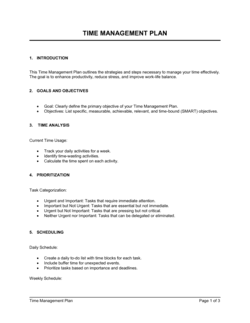
A time management plan structures how tasks and projects are scheduled and prioritized across weeks and months. This routine audit goes deeper β€” examining the habit loops, energy patterns, and environmental triggers that determine whether the time management plan is ever actually followed. Use the time management plan for project-level scheduling and this audit for the behavioral layer underneath it.

vs SMART Goals Template

A SMART goals template helps you write well-formed, measurable goals. This routine audit assumes goals are already set and asks a different question: are your daily behaviors actually aligned with those goals? The SMART goals template is the input; this audit is the diagnostic that determines whether execution is tracking to the plan.

vs Weekly Planner Template

A weekly planner manages task allocation and scheduling for a single week at a time. This routine audit operates at a structural level β€” examining the habitual patterns that persist across weeks regardless of what is on any individual planner. A weekly planner is a tactical tool; this audit is a strategic one. Both are necessary, but the audit addresses the root causes that a weekly planner cannot.

Industry-specific considerations

Technology / SaaS

Engineers and product managers use the energy map to protect deep-work coding blocks from Slack-driven interruption cycles; founders use the alignment audit to reclaim strategic time lost to operational firefighting.

Professional Services

Consultants and lawyers apply the routine blueprint to manage billable hour targets alongside business development commitments, ensuring neither consistently displaces the other.

Retail / E-commerce

Operators and solo founders in high-volume retail use the trigger analysis to break reactive customer-service cycles that prevent scheduled inventory, marketing, and growth work from happening.

Creative and Marketing Agencies

Creative directors and account managers use time blocking and energy mapping to protect uninterrupted creative production time from the client-responsiveness expectations that dominate agency culture.

Template vs pro β€” what fits your needs?

PathBest forCostTime
Use the templateEntrepreneurs, professionals, and managers completing a self-directed routine auditFree3–5 hours over one week (log phase) plus 90 minutes of analysis
Template + professional reviewProfessionals working with a performance coach, executive coach, or therapist who can provide external perspective on blind spots$150–$500 for 1–2 coaching sessionsOne to two weeks
Custom draftedOrganizations running team-wide productivity programs or leadership development workshops using this framework as a facilitated exercise$1,000–$5,000 for a facilitator or organizational coach2–4 weeks including pre-work and follow-up sessions

Glossary

Habit Loop
The three-part neurological pattern β€” cue, routine, reward β€” that drives automatic behavior and makes habits hard to change without deliberately targeting each component.
Keystone Habit
A single habit whose adoption tends to trigger positive change across multiple other behaviors β€” for example, daily exercise often improving sleep, diet, and focus simultaneously.
Habit Audit
A structured review of current daily behaviors to determine which are aligned with stated goals, which are neutral, and which actively undermine progress.
Energy Mapping
The practice of tracking personal energy and cognitive clarity across the day to identify peak performance windows and schedule high-priority work accordingly.
Environment Design
Deliberately arranging your physical and digital surroundings to make desired behaviors easier to start and undesired behaviors harder to default to.
Activation Energy
The friction or effort required to begin a behavior β€” reducing activation energy for good habits and increasing it for bad ones is a core routine optimization lever.
Time Block
A pre-scheduled, protected segment of the calendar dedicated to a specific task or category of work, shielded from meetings and interruptions.
Decision Fatigue
The degradation in decision quality that occurs after making many decisions in sequence β€” routines reduce fatigue by converting recurring choices into automatic behaviors.
Reactive Mode
A work pattern in which the day is driven by incoming requests, notifications, and crises rather than by intentional priorities set in advance.
Intention-Action Gap
The well-documented disconnect between what a person intends to do and what they actually do β€” often explained by environment, cues, or missing implementation intentions.
Implementation Intention
A specific if-then plan that links a situation to a behavior: 'When X occurs, I will do Y' β€” shown in research to significantly improve follow-through on goals.

Part of your Business Operating System

This document is one of 3,000+ business & legal templates included in Business in a Box.

  • Fill-in-the-blanks β€” ready in minutes
  • Compatible with all office suites
  • Export to PDF and share electronically

Create your document in 3 simple steps.

From template to signed document β€” all inside one Business Operating System.
1
Download or open template

Access over 3,000+ business and legal templates for any business task, project or initiative.

2
Edit and fill in the blanks with AI

Customize your ready-made business document template and save it in the cloud.

3
Save, Share, Send, Sign

Share your files and folders with your team. Create a space of seamless collaboration.

Save time, save money, and create top-quality documents.

β˜…β˜…β˜…β˜…β˜…

"Fantastic value! I'm not sure how I'd do without it. It's worth its weight in gold and paid back for itself many times."

Managing Director Β· Mall Farm
Robert Whalley
Managing Director, Mall Farm Proprietary Limited
β˜…β˜…β˜…β˜…β˜…

"I have been using Business in a Box for years. It has been the most useful source of templates I have encountered. I recommend it to anyone."

Business Owner Β· 4+ years
Dr Michael John Freestone
Business Owner
β˜…β˜…β˜…β˜…β˜…

"It has been a life saver so many times I have lost count. Business in a Box has saved me so much time and as you know, time is money."

Owner Β· Upstate Web
David G. Moore Jr.
Owner, Upstate Web

Run your business with a system β€” not scattered tools

Stop downloading documents. Start operating with clarity. Business in a Box gives you the Business Operating System used by over 250,000 companies worldwide to structure, run, and grow their business.

Free Forever PlanΒ Β·Β No credit card required