- Harassment
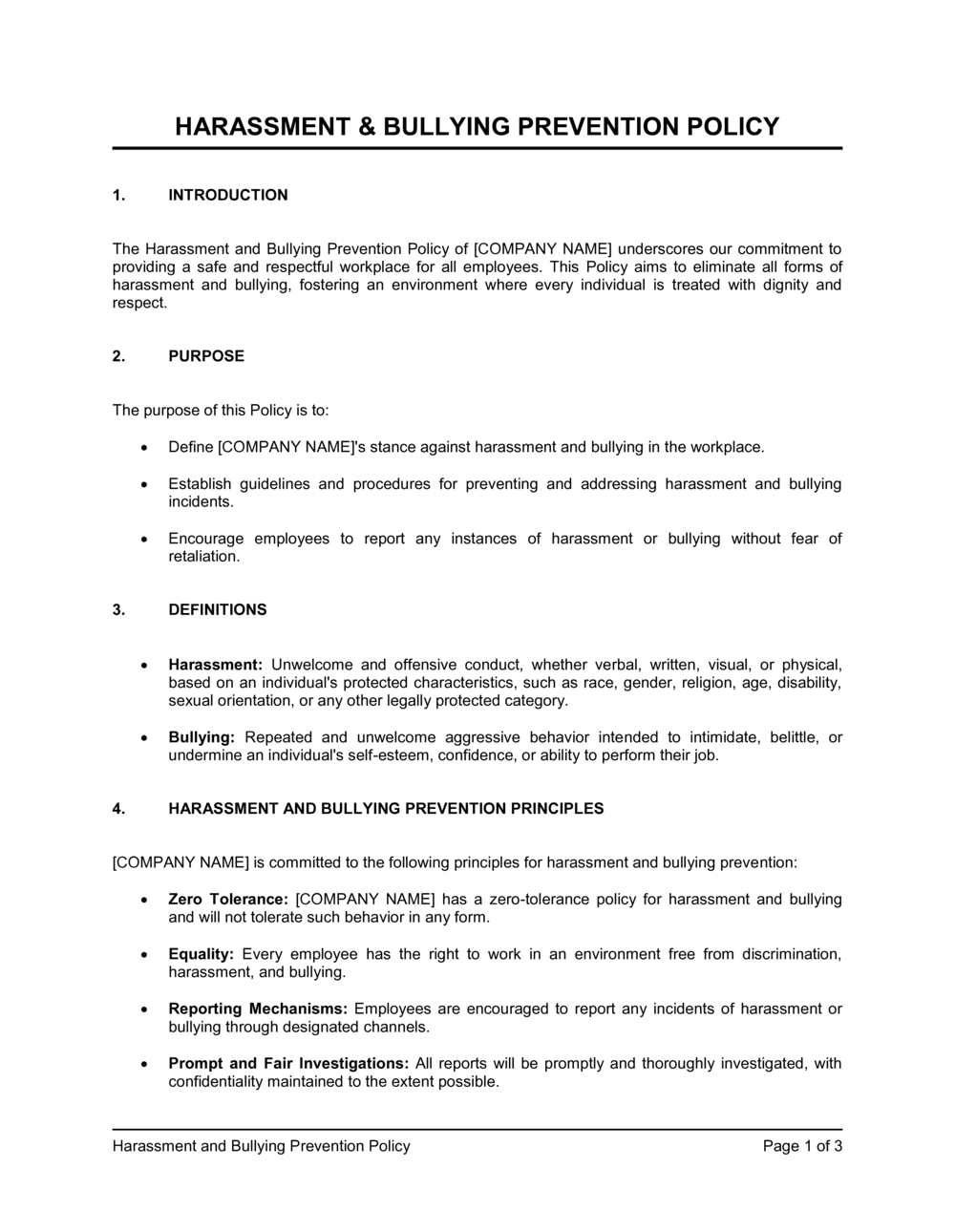
- Unwelcome conduct based on a protected characteristic — such as race, gender, age, or disability — that creates a hostile, intimidating, or offensive work environment.
- Workplace Bullying
- Repeated, unreasonable behavior directed at an employee or group that creates a risk to health and safety, distinct from harassment in that it need not be linked to a protected characteristic.
- Protected Characteristic
- A personal attribute — such as gender, race, religion, age, disability, or sexual orientation — that employment law in most jurisdictions prohibits as a basis for adverse treatment.
- Hostile Work Environment
- A workplace where pervasive or severe conduct based on a protected characteristic unreasonably interferes with an employee's ability to perform their job.
- Complainant
- The person who reports an incident of harassment or bullying, either as the target of the conduct or as a witness.
- Respondent
- The person alleged to have engaged in the harassing or bullying behavior, who is subject to the investigation process.
- Retaliation
- Any adverse action — demotion, termination, reduced hours, or social exclusion — taken against an employee because they filed a complaint or participated in an investigation.
- Duty of Care
- An employer's legal and ethical obligation to take reasonable steps to protect employees from foreseeable harm, including harm caused by colleagues' conduct.
- Investigation File
- The confidential record of a complaint investigation, including the initial report, witness statements, evidence reviewed, findings, and the decision reached.
- Progressive Discipline
- A stepped disciplinary approach — typically verbal warning, written warning, suspension, and termination — applied proportionately to the severity and frequency of violations.