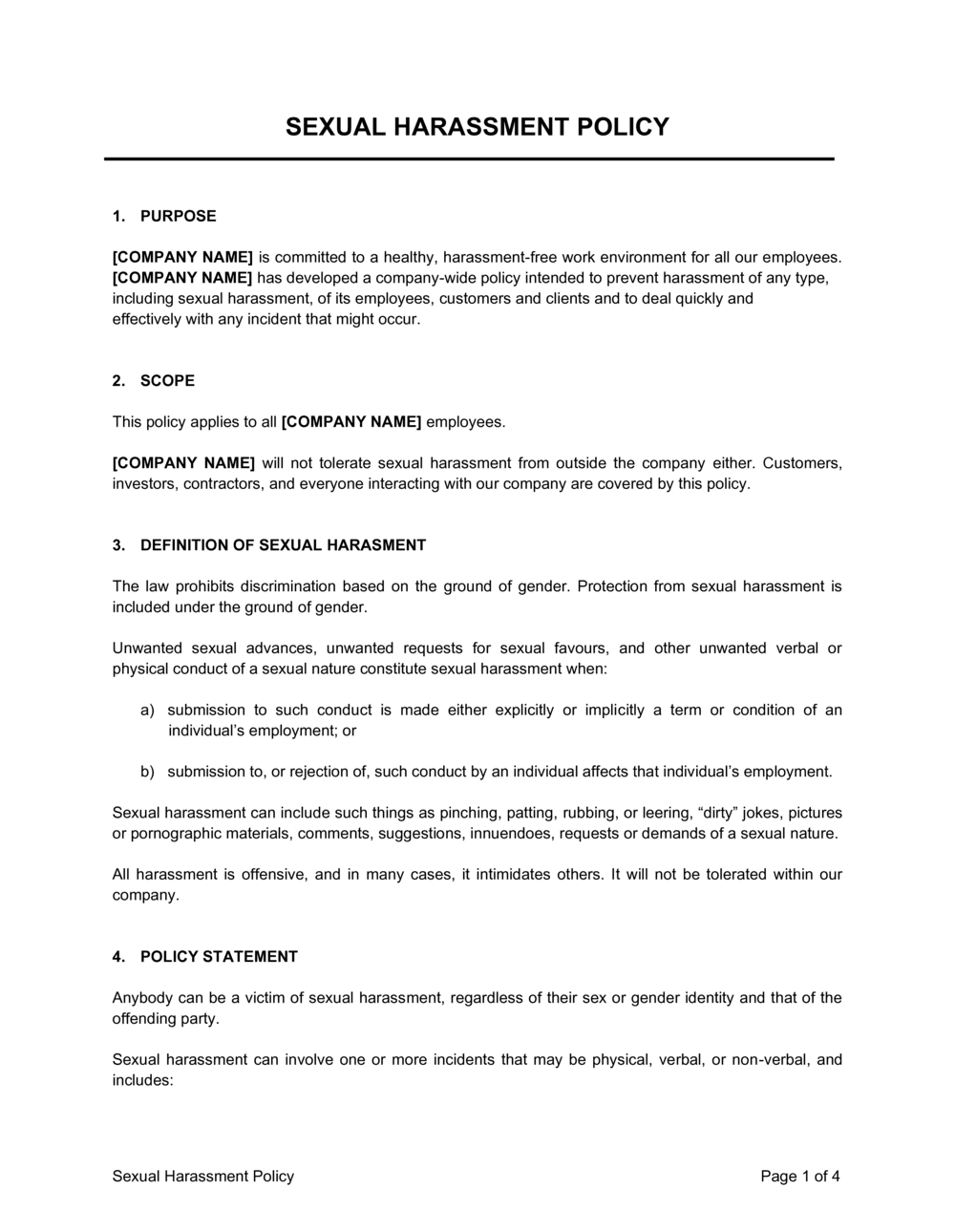
- Quid Pro Quo Harassment
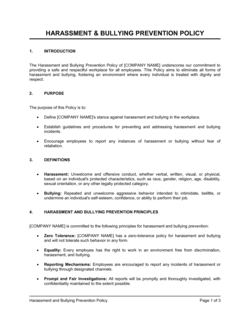
- Harassment where a person in authority conditions employment benefits — a promotion, raise, or continued employment — on the employee's acceptance of unwelcome sexual conduct.
- Hostile Work Environment
- A work environment made intimidating, offensive, or abusive by pervasive unwelcome conduct based on sex, even without a direct employment consequence.
- Complainant
- The person who files a harassment complaint or reports that they have experienced or witnessed prohibited conduct.
- Respondent
- The individual accused of engaging in the prohibited conduct described in a harassment complaint.
- Anti-Retaliation Provision
- A policy clause that prohibits adverse employment actions against anyone who reports harassment, participates in an investigation, or files a complaint in good faith.
- Reasonable Person Standard
- A legal test that asks whether a typical person in the complainant's position would find the conduct offensive, intimidating, or abusive — used to evaluate hostile environment claims.
- Duty to Report
- An obligation placed on managers and supervisors to escalate harassment complaints or observed conduct to HR or a designated officer, regardless of whether the affected employee files a formal complaint.
- Good Faith Complaint
- A complaint filed with a sincere belief that prohibited conduct occurred, even if the investigation does not confirm a violation — distinct from a deliberately false or malicious report.
- Third-Party Harassment
- Harassment of an employee by a vendor, contractor, client, or other person who is not a direct employee of the organization.
- Disciplinary Continuum
- A graduated scale of consequences — from a verbal warning to termination — applied based on the severity, frequency, and circumstances of a policy violation.