- Complainant
- The individual who files or submits a harassment complaint — the person reporting the alleged misconduct.
- Respondent
- The person against whom the harassment complaint has been made.
- Non-Retaliation Policy
- An employer rule prohibiting any adverse action against an employee for reporting harassment or participating in an investigation in good faith.
- Confidentiality (HR Context)
- The employer's obligation to limit disclosure of complaint details to those directly involved in the investigation — not an absolute promise of secrecy.
- Good Faith Complaint
- A harassment report made sincerely, based on a genuine belief that misconduct occurred, even if the investigation concludes otherwise.
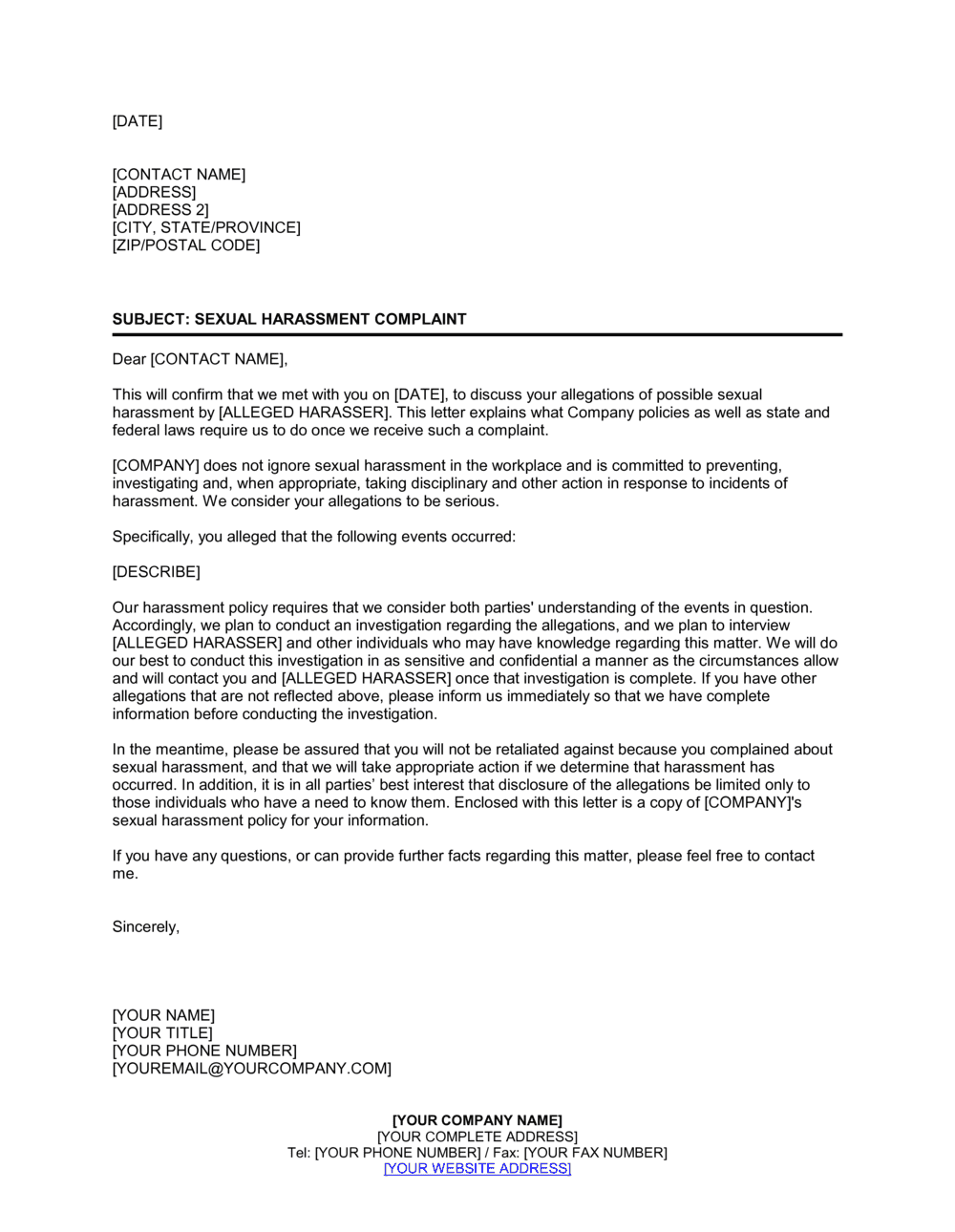
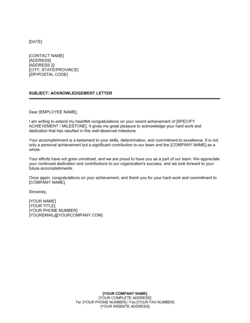
- Acknowledgment Letter
- A formal written notice confirming that a document, report, or complaint has been received and will be acted upon.
- Investigation Timeline
- The period — typically 10 to 30 business days — an employer commits to completing the fact-finding process after a complaint is received.
- Adverse Action
- Any negative employment consequence — demotion, termination, schedule change, or isolation — that could be perceived as punishment for filing a complaint.
- Point of Contact
- The named HR representative or investigator designated to handle questions and communications from the complainant during the investigation.
- Duty to Investigate
- An employer's legal and policy obligation to conduct a prompt, thorough, and impartial review of any harassment complaint it receives.