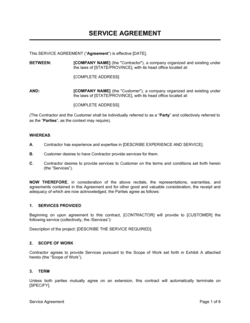
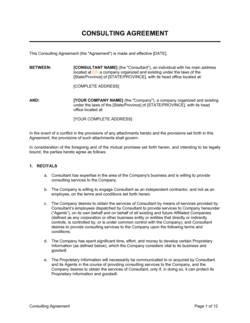
Goals For Coaching Template

Free Word download β€’ Edit online β€’ Save & share with Drive β€’ Export to PDF

1 pageβ€’20–30 min to fillβ€’Difficulty: Standardβ€’Signature requiredβ€’Legal review recommended
Learn more ↓
FreeGoals For Coaching Template

At a glance

What it is
A Goals For Coaching document is a legally structured agreement between a coach and a client that defines the specific objectives, measurable milestones, timelines, and accountability mechanisms for a coaching engagement. This free Word download gives coaches and clients a shared, signed record of what success looks like β€” reducing misalignment disputes and providing a reference point throughout the engagement.
When you need it
Use it at the start of any formal coaching engagement β€” executive, life, career, or business coaching β€” before sessions begin. It is particularly important when coaching is employer-sponsored, when fees are significant, or when the engagement runs longer than four sessions.
What's inside
Parties and engagement overview, defined coaching goals and priority ranking, measurable success criteria, session schedule and milestones, client commitments and responsibilities, confidentiality terms, limitation of liability, and signature block for both parties.

What is a Goals For Coaching document?

A Goals For Coaching document is a signed legal agreement between a professional coach and a client that defines the specific objectives, measurable success criteria, session milestones, and mutual accountability terms for a coaching engagement. Unlike an informal intake form or a verbal understanding, it creates binding obligations on both sides β€” documenting not just what the client wants to achieve, but how progress will be measured, what the client commits to doing between sessions, and where the coach's professional responsibility ends. It functions as both a strategic alignment tool at the start of an engagement and a reference document throughout, giving coach and client a shared, authoritative record of what success looks like.

Why You Need This Document

Without a documented goals agreement, coaching engagements routinely end in disputes over whether value was delivered β€” because neither party recorded what value meant at the outset. Clients who achieve ambiguous goals claim the coaching fell short; coaches who delivered excellent facilitation have no written record of the client's own accountability failures. The financial exposure is real: a client who attributes a significant career or business decision to coaching advice and later regrets it can pursue a claim without a liability cap in place. For employer-sponsored engagements, the absence of a tripartite confidentiality clause leaves coaches caught between conflicting demands from the client and the sponsoring HR function. This template gives coaches a legally structured starting point β€” complete with SMART goal documentation, a scope-of-coaching boundary, a liability cap, and a signed client responsibility clause β€” that protects both parties and focuses the entire engagement on measurable outcomes from Session 1.

Which variant fits your situation?

If your situation is…Use this template
Formal executive coaching engagement sponsored by an employerExecutive Coaching Agreement
One-on-one life or wellness coaching with a private clientLife Coaching Contract
Career coaching program with job-search milestonesCareer Coaching Agreement
Group coaching program with multiple participantsGroup Coaching Agreement
Short-term business coaching engagement (four sessions or fewer)Coaching Services Agreement
Ongoing retainer-based coaching with monthly check-insCoaching Retainer Agreement
Mentorship program with informal goal trackingMentorship Agreement

Common mistakes to avoid

❌ Defining goals without measurable indicators

Why it matters: Vague goals like 'become a better leader' or 'feel more confident' cannot be assessed at engagement end, making it impossible to demonstrate value delivered or defend against a refund claim.

Fix: Require at least one observable, measurable indicator per goal before both parties sign β€” link each goal to a metric, a promotion, a completed project, or a behavioral change others can observe.

❌ No client responsibility clause

Why it matters: When a client does no between-session work and then disputes the coaching's value, the coach has no documented basis to show the client failed to meet their own obligations.

Fix: Include a client commitments section listing specific between-session actions, attendance requirements, and the acknowledgment that results depend on client effort.

❌ Leaving tripartite confidentiality undefined

Why it matters: In employer-sponsored engagements, ambiguity about what the sponsor can request from the coach undermines client trust and can expose the coach to conflicting obligations.

Fix: State explicitly β€” and in writing agreed by all three parties β€” what the coach may share with the sponsor, typically limited to session attendance and completion status.

❌ No liability cap

Why it matters: Without a cap, a client who makes a significant business or personal decision influenced by coaching and suffers a loss can pursue a claim for the full value of that decision β€” far exceeding coaching fees.

Fix: Include a limitation of liability clause capping the coach's exposure at fees paid in the preceding three to six months and disclaim guarantees of specific results.

❌ Signing after the first session has already occurred

Why it matters: Advice given before the agreement is signed is not covered by the confidentiality, scope, or liability clauses. If a dispute arises from something discussed in Session 1, the coach has no contractual protection.

Fix: Make signing a prerequisite for booking the first session β€” send the agreement at intake and require execution before the calendar invite is confirmed.

❌ No goal amendment process

Why it matters: Goals frequently evolve during coaching. Without a documented amendment process, the original agreement becomes misaligned with the actual engagement, leaving both parties without clear expectations or legal grounding.

Fix: Include an amendments clause requiring written sign-off from both parties whenever goals are revised, and attach each revision as a numbered schedule to the original agreement.

The 10 key clauses, explained

Parties and engagement overview

In plain language: Identifies the coach and the client (or sponsoring organization) as legal parties and summarizes the nature, duration, and format of the coaching engagement.

Sample language
This Goals For Coaching Agreement is entered into on [DATE] between [COACH FULL NAME / BUSINESS NAME] ('Coach') and [CLIENT FULL NAME] ('Client'). The engagement covers [NUMBER] sessions over [DURATION], conducted via [FORMAT β€” in-person / video / phone], commencing [START DATE].

Common mistake: Naming only the individual coach rather than their business entity. If the coach operates through an LLC or corporation, the entity β€” not the individual β€” should be the contracting party to preserve liability protection.

Defined coaching goals

In plain language: Lists the specific, prioritized goals the client wants to achieve, written in SMART format so both parties have an unambiguous target.

Sample language
The Client's coaching goals for this engagement are: (1) [GOAL 1 β€” specific and measurable]; (2) [GOAL 2 β€” specific and measurable]; (3) [GOAL 3 β€” specific and measurable]. Goals are listed in order of priority as agreed on [DATE].

Common mistake: Listing vague aspirations such as 'improve confidence' without measurable indicators. When goals are not defined concretely, disputes arise at engagement end over whether the coaching delivered value.

Success criteria and measurement

In plain language: Defines the specific observable outcomes that will indicate each goal has been met, and the method by which progress will be tracked.

Sample language
Success for Goal 1 will be measured by [SPECIFIC INDICATOR β€” e.g., promotion to [ROLE] by [DATE] / completion of [CERTIFICATION] / reduction in [METRIC] from [X] to [Y]]. Progress will be reviewed at sessions [SESSION NUMBERS] and at the final session.

Common mistake: Omitting a measurement method entirely. Without agreed indicators, end-of-engagement disputes about whether goals were achieved have no objective basis for resolution.

Session schedule and milestones

In plain language: Sets out the number of sessions, their frequency, approximate dates, and the intermediate milestones that mark progress between sessions.

Sample language
Sessions will be held [FREQUENCY β€” e.g., bi-weekly] on [DAY/TIME]. Milestone checkpoints: Session [X] β€” [MILESTONE 1]; Session [Y] β€” [MILESTONE 2]; Final session β€” full goal review and engagement summary.

Common mistake: Not specifying what happens to unused sessions when a client disengages early. Without a clear policy, disputes over refunds or session carryover are common.

Client responsibilities and commitments

In plain language: Documents the actions the client commits to taking between sessions β€” completing exercises, implementing changes, or gathering data β€” and acknowledges that results depend on client effort.

Sample language
Client agrees to: (a) attend all scheduled sessions or provide [X hours'] notice of cancellation; (b) complete agreed between-session actions as documented after each session; (c) engage honestly and openly to enable effective coaching.

Common mistake: Omitting a client responsibility clause entirely. When a client does no between-session work and claims the coaching was ineffective, the coach has no documented record of the client's agreed obligations.

Scope of coaching and professional boundaries

In plain language: Defines explicitly what coaching does and does not include β€” particularly that it is not therapy, counseling, medical advice, or legal advice β€” and sets the referral protocol if those needs arise.

Sample language
Coaching is a forward-focused professional development relationship. It does not constitute psychotherapy, counseling, medical treatment, or legal advice. If Client presents needs that fall outside this scope, Coach will recommend referral to an appropriate licensed professional.

Common mistake: Leaving the boundary between coaching and therapy undefined. In jurisdictions that regulate therapy and counseling, a coach providing mental health support without a license faces regulatory and liability exposure.

Confidentiality and tripartite arrangements

In plain language: Restricts disclosure of session content by both parties and β€” where an employer is the sponsor β€” defines what information, if any, the coach may share with the sponsoring organization.

Sample language
All session content is confidential. Coach will not disclose Client's personal disclosures to any third party, including [SPONSOR ORGANIZATION], without Client's written consent, except as required by law. If requested by [SPONSOR], Coach may confirm participation and session completion only.

Common mistake: Failing to address the sponsor's information rights in employer-funded engagements. Without clarity, clients withhold candid disclosures, undermining the coaching's effectiveness, while employers assume they have reporting rights they were never granted.

Limitation of liability

In plain language: Caps the coach's financial liability for any claims arising from the engagement and disclaims responsibility for the client's results, which depend on the client's own actions.

Sample language
Coach's total liability for any claim arising from this engagement shall not exceed the total fees paid by Client in the [THREE / SIX] months preceding the claim. Coach makes no guarantee of specific outcomes. Results depend on Client's effort, circumstances, and commitment.

Common mistake: No liability cap at all. An uncapped liability clause exposes the coach to claims far exceeding their fee income if a client attributes a major business or personal decision to coaching advice.

Amendments and goal revision

In plain language: Establishes the process for updating or revising goals during the engagement, ensuring both parties agree in writing before objectives change.

Sample language
Goals may be revised by mutual written agreement. Either party may request a goal review at any session. Revised goals will be documented in a signed amendment to this Agreement and attached as Schedule [X].

Common mistake: Allowing goals to drift informally through verbal session discussions without a written amendment. When goals shift without documentation, the original agreement no longer reflects the actual engagement, creating liability gaps.

Governing law and dispute resolution

In plain language: Specifies which jurisdiction's law governs the agreement and how disagreements between coach and client will be resolved β€” mediation, arbitration, or court.

Sample language
This Agreement is governed by the laws of [STATE / PROVINCE / COUNTRY]. Any dispute arising under this Agreement shall first be submitted to non-binding mediation before either party initiates litigation or arbitration. Venue for any legal proceeding shall be [CITY, STATE].

Common mistake: Omitting governing law entirely when coach and client are in different states or countries. Without a choice-of-law clause, the applicable jurisdiction is contested, increasing dispute costs before the substance of the claim is even reached.

How to fill it out

  1. 1

    Identify the parties and engagement structure

    Enter the coach's legal entity name (not just their personal name), the client's full legal name, and β€” if employer-sponsored β€” the sponsoring organization. State the engagement format, duration, and start date.

    πŸ’‘ If you operate as an LLC or corporation, always contract in the entity's name to protect personal assets from any coaching-related claim.

  2. 2

    Define goals in SMART format with the client

    Complete the goals section collaboratively during the intake session, not in advance. Each goal should be specific enough to measure, with a named indicator and a target date. Aim for two to four goals maximum β€” more than four dilutes focus.

    πŸ’‘ Ask the client to rank goals by priority. When session time is limited, ranking ensures the most important objective gets the most attention.

  3. 3

    Agree on success criteria for each goal

    For each goal, write one sentence describing exactly what observable outcome will constitute success. Tie this to a metric, a completion event, or a behavioral change the client and coach can both observe.

    πŸ’‘ If the client struggles to define success, ask: 'At the end of our last session, how will you know this goal was achieved?' Their answer is usually your success criterion.

  4. 4

    Set the session schedule and milestone checkpoints

    Enter the agreed session frequency, the specific day and time if fixed, and the milestone topics for at least two checkpoint sessions. Include a final goal review as the last session by default.

    πŸ’‘ Build a goal review into Session 4 or the midpoint β€” catching misalignment halfway through is far less costly than discovering it at the final session.

  5. 5

    Document client responsibilities

    List the specific between-session commitments the client agrees to β€” exercises, reflection tasks, or behavioral experiments β€” and include the cancellation notice period and late-cancellation policy.

    πŸ’‘ Keep the client responsibility list to three to five items. A long list signals distrust and reduces the likelihood clients will sign without pushback.

  6. 6

    Complete the confidentiality and sponsor section

    If the engagement is employer-sponsored, explicitly state what the coach may and may not share with the sponsor. If there is no sponsor, include a standard mutual confidentiality clause covering both parties.

    πŸ’‘ For sponsored engagements, share the confidentiality clause with the sponsoring HR contact before the client signs β€” confirming the sponsor's agreed information rights prevents disputes mid-engagement.

  7. 7

    Set the liability cap and results disclaimer

    Enter the liability cap amount β€” typically fees paid in the preceding three to six months β€” and include the standard disclaimer that coaching outcomes depend on client effort.

    πŸ’‘ Set the cap at three months' fees as a baseline. For high-fee executive engagements, consider six months. Anything higher may be uninsurable under professional liability policies.

  8. 8

    Sign before the first session

    Both coach and client must sign and date the agreement before Session 1 begins. For employer-sponsored engagements, obtain the sponsor's signature or written acknowledgment as well.

    πŸ’‘ Use a digital signature platform to timestamp execution β€” this eliminates disputes about when the agreement was signed relative to advice given in early sessions.

Frequently asked questions

What is a goals for coaching document?

A goals for coaching document is a signed agreement between a coach and a client that defines the specific objectives, success criteria, session schedule, and accountability terms for a coaching engagement. It gives both parties a shared, written reference point for the entire engagement, reduces end-of-program disputes about value delivered, and provides the coach with documented protection in the event of a liability claim.

Is a goals for coaching document legally binding?

Yes, when properly executed β€” both parties sign, the agreement identifies the parties and states consideration (the coaching fees paid) β€” a goals for coaching document is generally enforceable as a contract in most jurisdictions. The confidentiality, limitation of liability, and client responsibility clauses are all binding once signed. Consider having a lawyer review the agreement before use in high-fee or employer-sponsored engagements.

What is the difference between a goals for coaching document and a coaching agreement?

A coaching agreement covers the full commercial relationship β€” fees, payment terms, cancellation policy, intellectual property, and governing law. A goals for coaching document focuses specifically on the client's objectives, success criteria, and accountability commitments for a particular engagement. In practice, many coaches combine both into a single document; others use the goals document as a schedule or addendum to the broader coaching agreement.

How many goals should be documented in a coaching engagement?

Two to four goals is the accepted standard for most coaching engagements. Fewer than two risks under-utilizing the engagement; more than four dilutes session focus and makes meaningful progress on any single goal difficult. Goals should be prioritized by importance so that, if session time runs short, the highest-priority objective receives the most attention.

Does a goals for coaching document protect the coach from liability?

A well-drafted document significantly reduces liability exposure by establishing clear scope boundaries (coaching is not therapy), capping financial liability at fees paid, disclaiming guaranteed outcomes, and documenting the client's own responsibility for results. It does not eliminate liability entirely. For higher-value engagements, coaches should also carry professional liability (errors and omissions) insurance.

Do I need a separate goals document if I already have a coaching contract?

Not necessarily β€” but a standalone goals document is useful when the engagement involves an employer sponsor who needs to see the objectives without accessing the full commercial contract, or when goals evolve significantly mid-engagement and you want a clean amendment record. Many coaches use the goals document as Schedule A to their main coaching contract, keeping commercial and substantive terms in separate sections.

Who signs a goals for coaching document in an employer-sponsored engagement?

Typically the coach and the individual client sign as the primary parties. The sponsoring employer may co-sign as an acknowledging party to confirm awareness of the goals and the confidentiality terms. The employer should not be a party to any clause covering session content β€” their role is confined to confirming participation and, in some arrangements, the achievement of agreed milestones.

Can coaching goals be changed after the document is signed?

Yes, with a written amendment signed by both parties. Goals frequently evolve as the coaching progresses and the client's situation changes. The key is to document each revision as a signed schedule rather than allowing goals to drift informally through verbal session discussions. Undocumented goal changes leave both parties without clear expectations and the original agreement without legal relevance.

What happens if the client does not achieve their coaching goals?

Non-achievement of goals does not automatically constitute a breach of contract by the coach, provided the coach delivered the agreed sessions in a professional manner. Coaching is not a guarantee of outcomes β€” it is a facilitative process whose results depend on client effort and circumstances. A well-drafted goals document includes an explicit disclaimer of results guarantees and documents the client's own responsibility for taking action between sessions.

How this compares to alternatives

vs Coaching agreement

A coaching agreement is the master commercial contract covering fees, payment terms, cancellation policy, intellectual property, and governing law for the entire coaching relationship. A goals for coaching document is the substantive schedule that defines what the engagement will achieve. Most engagements need both β€” the agreement sets the terms; the goals document defines the purpose.

vs Mentorship agreement

A mentorship agreement governs an advisory relationship where an experienced professional shares knowledge and guidance informally over time. A goals for coaching document governs a structured, outcome-focused engagement with defined milestones, accountability mechanisms, and a liability framework. Coaching is more directive and time-bounded; mentorship is typically open-ended and relationship-driven.

vs Performance improvement plan

A performance improvement plan is an employer-issued corrective document that sets mandatory performance targets under threat of disciplinary action. A goals for coaching document is a voluntary, client-led agreement with a professional coach. PIPs are one-sided employer directives; coaching goals documents are collaborative agreements between consenting parties with no employment consequences attached.

vs Consulting agreement

A consulting agreement engages an expert to deliver specific advice, recommendations, or deliverables that the client implements. A coaching engagement does not deliver advice β€” the coach facilitates the client's own thinking and decision-making. The liability, scope, and deliverable clauses differ significantly as a result, and conflating the two exposes the coach to consultant-level accountability for outcomes.

Industry-specific considerations

Corporate and executive development

Goals typically focus on leadership competency development, promotion readiness, and stakeholder management β€” often tied to formal performance review cycles and requiring tripartite confidentiality terms with the sponsoring HR function.

Technology / SaaS

Coaching goals frequently address first-time manager transitions, technical-to-leadership role changes, and scaling personal productivity β€” with milestone checkpoints tied to company OKR cycles.

Healthcare

Scope-of-coaching boundaries are especially critical here, given the regulatory line between coaching and therapy or clinical supervision β€” the document must explicitly exclude clinical guidance and reference the client's treating professionals.

Financial services

Confidentiality clauses must address the possibility that session disclosures touch on material non-public information or regulatory matters, and governing-law provisions should align with the client's regulated entity jurisdiction.

Jurisdictional notes

United States

No federal statute specifically regulates professional coaching, but coaches operating in the US should ensure the scope clause clearly excludes therapy and counseling, as unlicensed mental health practice is regulated at the state level. Limitation of liability clauses are generally enforceable in most states, though California courts scrutinize liability caps in consumer contracts. Non-compete clauses within coaching agreements are subject to state-specific rules.

Canada

Coaching is unregulated federally in Canada, but coaches in Quebec must ensure their agreements comply with the Consumer Protection Act if engaging consumers β€” including language requirements. Ontario's Employment Standards Act may affect coaching agreements embedded within employment arrangements. Privacy obligations under PIPEDA apply to any personal information collected during the engagement, and the confidentiality clause should reference applicable provincial privacy law.

United Kingdom

UK coaches must comply with GDPR as incorporated into UK law post-Brexit, meaning session notes and personal data collected during coaching require a lawful basis for processing and a stated retention period. The Consumer Rights Act 2015 applies where clients are individuals rather than businesses, requiring that services be provided with reasonable care and skill. Limitation of liability clauses must not contravene the Unfair Contract Terms Act 1977.

European Union

EU coaches handling personal data β€” including session notes and client assessments β€” must comply with GDPR, including providing clients with a privacy notice and lawful basis for data processing. Consumer protection directives in member states may restrict certain limitation of liability clauses when the client is a consumer. In Germany and France, professional services contracts may require specific notice periods for termination that override shorter contractual provisions.

Template vs lawyer β€” what fits your deal?

PathBest forCostTime
Use the templateIndependent coaches running standard individual or small-group engagements with private clientsFree20 minutes
Template + legal reviewEmployer-sponsored executive coaching, engagements over $5,000, or multi-party tripartite arrangements$300–$7001–3 days
Custom draftedCorporate coaching programs at scale, regulated industries (healthcare, financial services), or international multi-jurisdiction engagements$1,500–$4,000+1–2 weeks

Glossary

Coaching Engagement
The defined period and scope of a professional coaching relationship between a coach and a client, as agreed in writing.
SMART Goals
Goals that are Specific, Measurable, Achievable, Relevant, and Time-bound β€” the standard framework for defining coaching objectives that can be objectively assessed.
Success Criteria
The observable, measurable outcomes that both parties agree will indicate a goal has been achieved at the close of the engagement.
Milestone
An intermediate checkpoint within the coaching timeline that marks progress toward a larger goal, used to assess momentum and adjust approach.
Client Accountability
The client's documented commitment to complete agreed-upon actions β€” such as homework, reflective exercises, or behavior changes β€” between sessions.
Confidentiality Clause
A provision restricting both the coach and client from disclosing the content of sessions or shared personal information to third parties without consent.
Limitation of Liability
A clause capping the coach's financial exposure for claims arising from the engagement, typically limited to fees paid during a defined period.
Scope of Coaching
The explicit boundary defining what the coaching engagement covers and, equally important, what it does not cover β€” such as therapy, legal advice, or medical guidance.
Tripartite Coaching Arrangement
A coaching structure involving three parties β€” coach, client, and sponsoring employer β€” each with defined rights, obligations, and confidentiality protections.
Goal Review Session
A scheduled mid-engagement or end-of-engagement meeting where coach and client formally assess progress against the documented goals and adjust priorities if needed.

Part of your Business Operating System

This document is one of 3,000+ business & legal templates included in Business in a Box.

  • Fill-in-the-blanks β€” ready in minutes
  • 100% customizable Word document
  • Compatible with all office suites
  • Export to PDF and share electronically

Create your document in 3 simple steps.

From template to signed document β€” all inside one Business Operating System.
1
Download or open template

Access over 3,000+ business and legal templates for any business task, project or initiative.

2
Edit and fill in the blanks with AI

Customize your ready-made business document template and save it in the cloud.

3
Save, Share, Send, Sign

Share your files and folders with your team. Create a space of seamless collaboration.

Save time, save money, and create top-quality documents.

β˜…β˜…β˜…β˜…β˜…

"Fantastic value! I'm not sure how I'd do without it. It's worth its weight in gold and paid back for itself many times."

Managing Director Β· Mall Farm
Robert Whalley
Managing Director, Mall Farm Proprietary Limited
β˜…β˜…β˜…β˜…β˜…

"I have been using Business in a Box for years. It has been the most useful source of templates I have encountered. I recommend it to anyone."

Business Owner Β· 4+ years
Dr Michael John Freestone
Business Owner
β˜…β˜…β˜…β˜…β˜…

"It has been a life saver so many times I have lost count. Business in a Box has saved me so much time and as you know, time is money."

Owner Β· Upstate Web
David G. Moore Jr.
Owner, Upstate Web

Run your business with a system β€” not scattered tools

Stop downloading documents. Start operating with clarity. Business in a Box gives you the Business Operating System used by over 250,000 companies worldwide to structure, run, and grow their business.

Start freeΒ Β·Β No credit card required