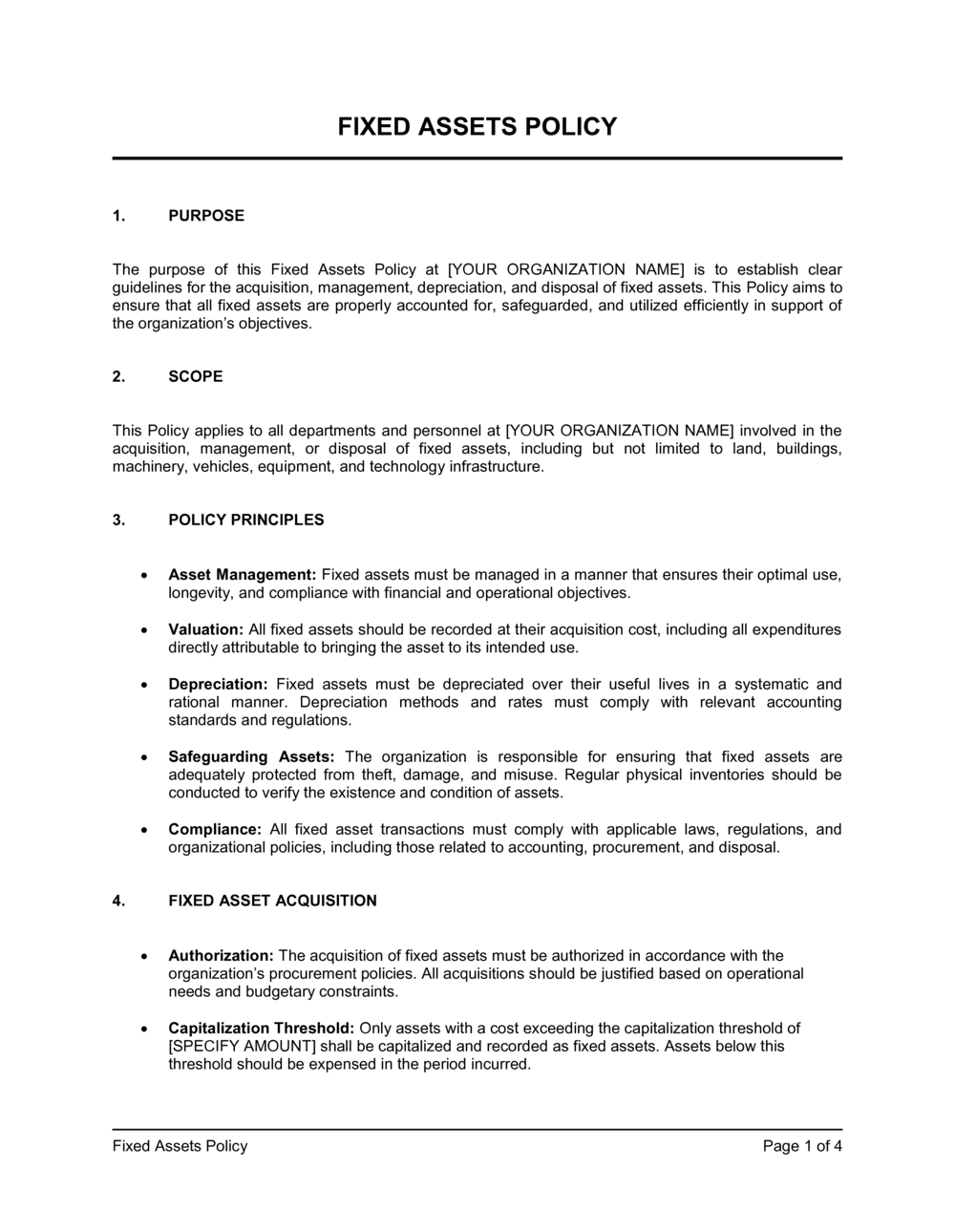
- Capitalization Threshold
- The minimum cost at which a purchase is recorded as a fixed asset on the balance sheet rather than expensed immediately on the income statement — commonly set between $1,000 and $5,000.
- Useful Life
- The estimated period over which a fixed asset is expected to generate economic benefit and be depreciated, expressed in years.
- Straight-Line Depreciation
- A method that spreads the cost of an asset evenly across its useful life by deducting an equal amount each year until the asset reaches its residual value.
- Accelerated Depreciation
- A method that front-loads depreciation expense so larger deductions are taken in the early years of an asset's life — common methods include double-declining balance.
- Residual Value
- The estimated amount an asset can be sold or scrapped for at the end of its useful life, subtracted from cost before depreciation is calculated.
- Impairment
- A reduction in the carrying value of an asset on the balance sheet when its recoverable amount falls below its net book value due to damage, obsolescence, or market decline.
- Net Book Value (NBV)
- The original cost of an asset minus accumulated depreciation — the amount at which the asset appears on the balance sheet at any point in time.
- Asset Register
- A detailed ledger listing every capitalized asset with its description, acquisition date, cost, location, assigned department, depreciation method, and current net book value.
- Fully Depreciated Asset
- An asset whose net book value has reached zero or its residual value but that may still be in active use — it remains on the asset register until physically disposed of.
- Disposal
- The removal of a fixed asset from the balance sheet through sale, scrapping, donation, or write-off, resulting in either a gain or loss recorded on the income statement.
- Capital Expenditure (CapEx)
- Spending on acquiring or improving fixed assets that meets the capitalization threshold and is recorded on the balance sheet rather than expensed in the period incurred.