1
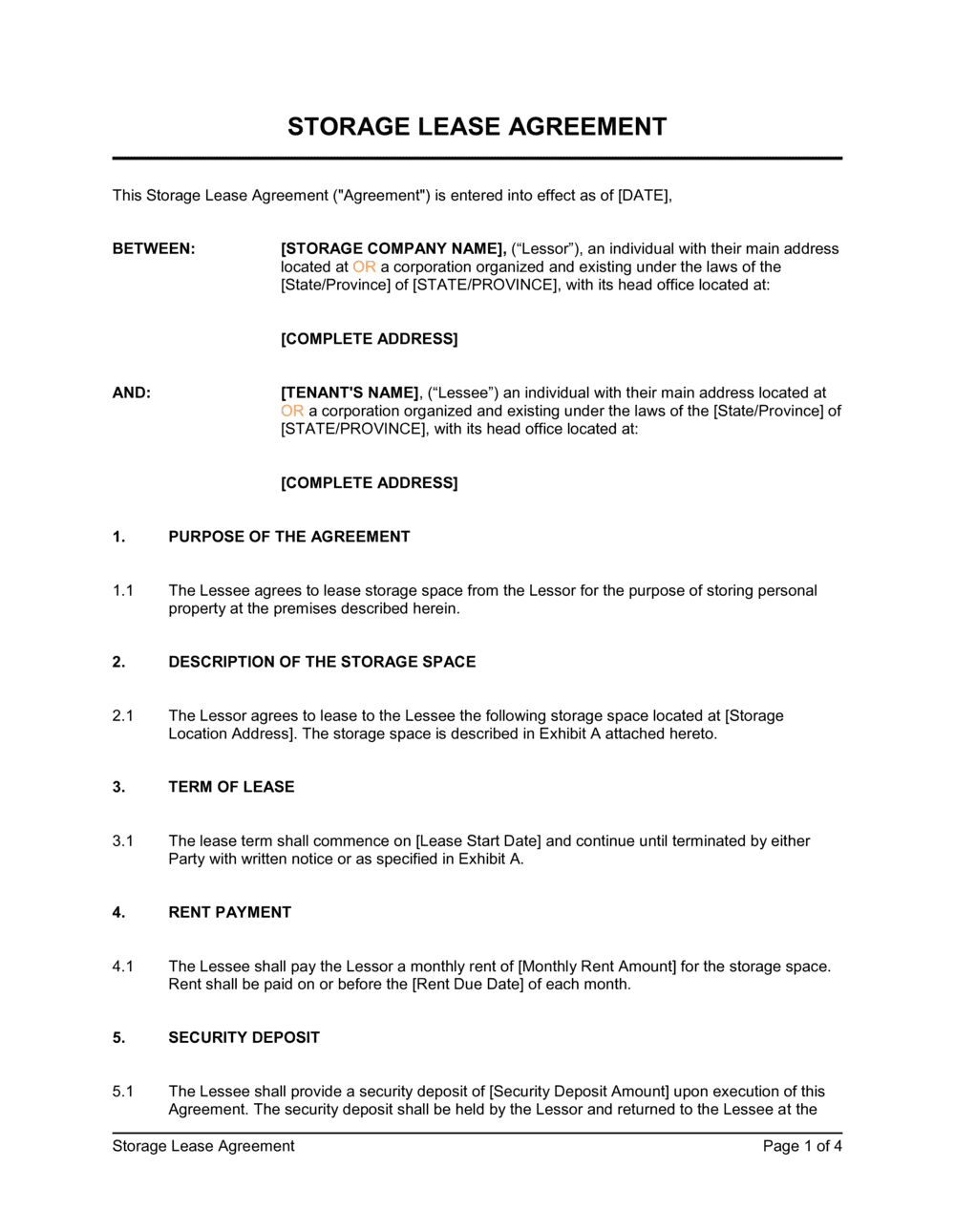
Identify the parties and the unit
Enter the full legal name of the facility operator or landlord entity — not a trade name — and the tenant's legal name as it appears on government-issued ID. Record the unit number, approximate square footage, and any distinguishing features such as climate control or drive-up access.
💡 If the tenant is a business entity, collect the full registered business name and a contact person's name so that lien notices can be addressed correctly.
2
Set the term and renewal conditions
Choose month-to-month or a fixed term with a defined end date. Write out the automatic-renewal provision and the notice period required to prevent renewal — typically 30 days. For commercial tenants, consider a fixed 6- or 12-month term with a structured renewal option.
💡 Month-to-month terms give operators flexibility to adjust pricing annually but require consistent notice tracking — use a calendar reminder tied to each tenant's agreement start date.
3
Enter rent, due date, and late fee terms
State the exact monthly rental amount, the day of the month it is due, the grace period before a late fee applies, and the late fee amount or formula. Specify all accepted payment methods — check, ACH, credit card, or online portal.
💡 Confirm that your late fee complies with the applicable state or provincial cap — several jurisdictions limit late fees to a fixed dollar maximum regardless of what the contract says.
4
Document the security deposit and return conditions
Enter the deposit amount collected at signing and the specific deduction conditions: unpaid rent, damage beyond normal wear and tear, and disposal costs for abandoned property. Set the return deadline — typically 14 to 30 days after vacating.
💡 Take timestamped photos of the unit at move-in and move-out and attach them to the agreement file. This single step eliminates most deposit disputes.
5
Define permitted use and prohibited items
List the specific types of property the tenant is allowed to store. Then enumerate prohibited categories explicitly: hazardous materials, flammables, perishables, living, animals, and illegal goods. Reference applicable federal or local hazardous-materials regulations where relevant.
💡 For commercial tenants, add a line requiring them to provide a general description of stored inventory so you can assess insurance and access risk at the outset.
6
Specify access hours and entry rights
State the facility's access hours clearly — days of the week, opening and closing times, and any 24-hour access provisions. Define the operator's right to enter for inspection with advance notice and for emergencies without notice.
💡 If your facility uses electronic access codes or key fobs, specify that the access credential is non-transferable and that sharing it with third parties voids the agreement.
7
Insert the lien rights clause with jurisdiction-specific references
Reference the self-storage lien statute by name for the state or province where the facility is located. Enter the exact notice period required before sale or disposal of liened goods. Confirm that your notice procedure — certified mail, email, or posted notice — matches the statutory requirement.
💡 Skipping the statutory citation is the most common operator error — if challenged, a generic lien clause without the correct statutory reference may be unenforceable, leaving you unable to recover unpaid rent.
8
Sign before the tenant takes possession
Both parties must sign and date the agreement before the tenant receives access credentials or moves in. Provide the tenant with a fully executed copy at or before the time of signing.
💡 Use a digital signature tool to timestamp execution and store the fully executed copy in a centralized file accessible to your facility manager — paper-only systems frequently result in missing agreements during disputes.