Employee Assistance Program Policy Template

Free Word download β€’ Edit online β€’ Save & share with Drive β€’ Export to PDF

3 pagesβ€’20–30 min to fillβ€’Difficulty: Standard
Learn more ↓
FreeEmployee Assistance Program Policy Template

At a glance

What it is
An Employee Assistance Program (EAP) Policy is a formal HR document that establishes the terms under which a company provides confidential counseling, mental health, financial, legal, and other support services to employees and their eligible dependents. This free Word download gives HR teams a structured, ready-to-edit policy they can tailor to their EAP provider and internal procedures, then publish in their employee handbook or intranet.
When you need it
Use it when launching a new EAP benefit, onboarding a new EAP provider, updating an existing policy to reflect expanded services, or standardizing written documentation ahead of an HR audit or employee handbook review.
What's inside
Program purpose and scope, employee and dependent eligibility, covered services, confidentiality protections, self-referral and supervisory referral procedures, cost and access instructions, and program administration responsibilities.

What is an Employee Assistance Program Policy?

An Employee Assistance Program (EAP) Policy is a formal HR document that defines how a company provides confidential counseling, mental health support, financial coaching, legal consultations, and work-life referral services to employees and their eligible dependents. It establishes who qualifies for the benefit, what services are covered, how employees access the program on their own initiative, and when and how managers can formally recommend or require participation. Unlike a general wellness program, an EAP policy specifically governs a contracted third-party provider relationship and the confidentiality protections that make employees willing to use it.

Why You Need This Document

Without a written EAP policy, employees don't know the benefit exists, managers don't know when or how to refer, and HR has no documented framework to administer the program consistently. An undocumented EAP is effectively an unused benefit β€” research consistently shows that utilization rates drop significantly when employees can't find clear information about access and confidentiality. A formal policy also protects the company: when a mandatory referral or fitness-for-duty situation arises, you need written procedures in place before the situation occurs, not after. This template gives HR teams a structured, provider-ready starting point that can be tailored to any EAP vendor contract and published in the employee handbook or intranet in under two hours.

Which variant fits your situation?

If your situation is…Use this template
Documenting EAP as part of a full employee handbookEmployee Handbook
Establishing a broader workplace mental health and wellness programWorkplace Wellness Program Policy
Formalizing a supervisor's role in referring employees to the EAPSupervisory Referral Form
Communicating EAP benefits during onboardingEmployee Onboarding Checklist
Setting expectations for employee conduct and performance alongside EAP supportEmployee Code of Conduct Policy
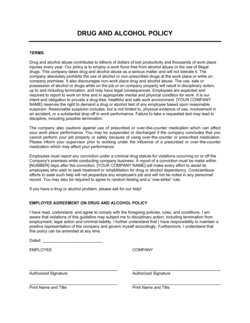
Addressing substance abuse and fitness for duty separately from general EAPDrug and Alcohol Policy
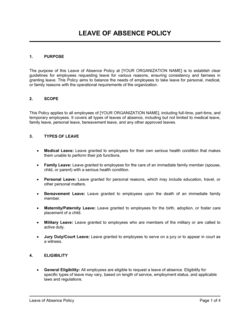
Documenting leave entitlements that interact with EAP referralsMedical Leave of Absence Policy

Common mistakes to avoid

❌ Policy promises more services than the EAP contract delivers

Why it matters: Employees who seek a service the policy lists but the provider doesn't actually cover lose trust in both HR and the benefit, and the company may face complaints or grievances.

Fix: Compare the policy's covered services section line-by-line against the vendor contract before publishing, and update it at every contract renewal.

❌ Stating confidentiality is absolute without noting legal exceptions

Why it matters: If a counselor later discloses information as legally required β€” such as a duty-to-warn situation β€” employees may claim the company misrepresented the program, creating reputational and legal exposure.

Fix: Include a clear sentence listing the standard exceptions: imminent risk of harm, mandatory child abuse reporting, and valid court orders.

❌ Listing a specific person's name and direct line as the HR contact

Why it matters: When that employee changes roles or leaves, the contact information becomes invalid and employees reaching out during a personal crisis hit a dead end.

Fix: Use a role title and a shared HR inbox or main HR phone number that will remain valid regardless of staffing changes.

❌ Publishing the policy without communicating it actively to employees

Why it matters: EAP utilization rates are consistently low β€” typically 3–10% β€” in part because employees don't know the benefit exists or how to access it. A policy buried in a handbook does not constitute effective communication.

Fix: Send a dedicated announcement when the policy is published, include EAP information in onboarding, and have managers mention it at least annually in team settings.

❌ Not training managers on the referral process before publishing

Why it matters: Managers who don't understand the difference between a supportive recommendation and a mandatory referral either over-refer (creating coercion concerns) or never refer at all.

Fix: Conduct a 30-minute manager briefing covering when to recommend the EAP, what language to use, and what not to ask about after an employee attends.

❌ Setting an annual review schedule with no assigned owner or calendar trigger

Why it matters: Without a clear owner and reminder, annual reviews don't happen β€” the policy drifts out of alignment with the EAP contract, and outdated session limits or contact details circulate for years.

Fix: Assign the review to a specific HR role and link the calendar trigger to the EAP contract renewal date so both are updated simultaneously.

The 10 key sections, explained

Policy purpose and scope

Eligibility

Covered services

Confidentiality protections

Self-referral process

Supervisory and mandatory referral procedures

Cost and access

Program administration and responsibilities

Manager training and awareness

Policy review and updates

How to fill it out

  1. 1

    Confirm your EAP provider's contract terms

    Before editing the template, pull your current EAP vendor agreement and note the exact eligibility rules, session limits, covered services, and confidentiality provisions. The policy must match the contract β€” not exceed it.

    πŸ’‘ Ask your EAP account manager for a one-page benefit summary you can use as a reference while completing the template.

  2. 2

    Define the scope and eligible population

    Complete the purpose and eligibility sections with your exact employee categories (full-time, part-time, temporary), the hours threshold for eligibility, and the definition of covered dependents matching your plan.

    πŸ’‘ Check whether your EAP contract covers employees from day one or requires a waiting period β€” this is one of the most common mismatches between policy and practice.

  3. 3

    List covered services and session limits accurately

    Enter the specific services your EAP provides and the exact session limit per issue or per year. If different services have different limits (e.g., 6 counseling sessions but unlimited financial calls), document each separately.

    πŸ’‘ Resist the urge to round up session counts or describe services more broadly than your contract allows.

  4. 4

    Write the confidentiality section with accurate exceptions

    State that EAP contacts are confidential, then list the narrow legal exceptions applicable in your jurisdiction β€” typically imminent risk of harm, child abuse reporting, and valid court orders.

    πŸ’‘ Your EAP provider can supply standard confidentiality language that matches their counselors' actual obligations β€” use it verbatim rather than paraphrasing.

  5. 5

    Add accurate contact and access information

    Insert the EAP provider's current phone number, website URL, and app name in the self-referral section. Verify these details directly with your provider before publishing.

    πŸ’‘ Create a calendar reminder to recheck contact information each time you renew the EAP contract.

  6. 6

    Define the supervisory referral process clearly

    Specify when a supervisory referral is appropriate, what written authorization is required for a mandatory referral, and confirm that managers will not receive session outcomes without a signed employee release.

    πŸ’‘ Add a brief example scenario (e.g., performance deterioration linked to a personal issue) to help managers understand when a referral is appropriate versus premature.

  7. 7

    Assign ownership and set a review schedule

    Name the HR role (not a specific individual) responsible for administering the policy and schedule an annual calendar reminder for the policy review. Document the notification process for employees when changes are made.

    πŸ’‘ Tie the annual policy review to your EAP contract renewal date so both are in sync.

  8. 8

    Publish and communicate to employees and managers

    Add the finalized policy to your employee handbook and intranet. Send a brief announcement highlighting the EAP benefit and how to access it β€” not just the policy document.

    πŸ’‘ A one-paragraph plain-language summary of EAP services communicated alongside the policy dramatically increases utilization compared to publishing the policy alone.

Frequently asked questions

What is an Employee Assistance Program policy?

An Employee Assistance Program policy is an HR document that formally establishes the terms under which a company provides EAP services to employees and their dependents. It defines who is eligible, what services are available, how employees access the program, how confidentiality is protected, and how supervisors can make referrals. The policy gives employees a reliable written reference for the benefit and gives HR and managers a consistent framework for administering it.

What services does an EAP typically cover?

Most EAPs offer short-term confidential counseling (typically 3–12 sessions per issue), financial coaching, legal consultations, child-care and elder-care referrals, and work-life assistance. Some programs also include critical incident response, wellness coaching, and substance abuse assessments. The specific services available depend on the employer's contract with the EAP provider β€” the policy should reflect exactly what the contract covers.

Is EAP use confidential?

In general, yes β€” the EAP provider is contractually and ethically obligated not to disclose that an employee contacted the program or share session content with the employer. Narrow exceptions apply when required by law: imminent risk of harm to self or others, mandatory child abuse reporting obligations, and valid court orders. Employers should document these exceptions clearly in the policy rather than stating confidentiality is absolute.

Can a manager require an employee to use the EAP?

Yes, in some circumstances. A mandatory EAP referral β€” typically used alongside a last-chance agreement or return-to-duty process β€” can be made a condition of continued employment. However, this must be authorized in writing by HR and documented carefully. Even in mandatory referrals, the employer does not receive the content of sessions unless the employee signs a written release with the EAP provider.

Do small businesses need an EAP policy?

Any employer that offers an EAP benefit β€” regardless of size β€” benefits from a written policy. A formal policy sets clear expectations, reduces confusion about eligibility and access, provides documentation for HR audits, and helps managers understand their role. Without a policy, the benefit is administered inconsistently, and employees are less likely to use a program they don't fully understand.

How does an EAP policy interact with FMLA or medical leave?

An EAP referral does not constitute a leave of absence, and participating in EAP counseling does not trigger FMLA protections on its own. However, if an EAP assessment leads to a recommendation for inpatient treatment or extended care, the employee may then qualify for FMLA or a medical leave of absence under a separate policy. The EAP policy should note this boundary and direct employees to HR for leave-related questions.

How often should an EAP policy be updated?

At minimum, the policy should be reviewed annually and updated whenever the EAP provider contract is renewed or changed. Key triggers for an immediate update include a change in provider, a change in session limits or covered services, a change in eligible dependent definitions, or an update to applicable privacy or reporting laws. Tying the policy review to the contract renewal date is the most reliable way to keep both in sync.

What is the difference between a self-referral and a supervisory referral?

A self-referral occurs when an employee contacts the EAP entirely on their own initiative β€” no manager or HR involvement, no notification to the employer. A supervisory referral occurs when a manager formally recommends the EAP to an employee, typically in response to a performance or conduct concern. A mandatory referral is a more formal version that conditions continued employment on EAP contact. In all cases, the employer does not learn the content of sessions without the employee's written consent.

How can HR increase EAP utilization?

Publishing the policy alone rarely drives utilization. Higher-utilization employers communicate the EAP benefit at onboarding, mention it in manager training, include it in annual benefits reminders, and promote it proactively around high-stress periods such as performance review cycles or organizational changes. Removing stigma β€” by framing EAP as a productivity and well-being tool rather than a crisis service β€” is consistently the single most effective driver of higher utilization rates.

How this compares to alternatives

vs Employee Handbook

An employee handbook covers the full range of workplace policies β€” conduct, leave, compensation, and benefits β€” in a single reference document. An EAP policy is a focused, standalone document covering only the assistance program. For most organizations, the EAP policy is written as a standalone and then incorporated by reference into the handbook rather than drafted directly inside it.

vs Workplace Wellness Program Policy

A wellness program policy governs a broader set of health promotion activities β€” fitness challenges, biometric screenings, smoking cessation, and nutrition programs. An EAP policy specifically covers confidential short-term counseling and referral services. The two policies are complementary; larger organizations maintain both, with the EAP policy handling clinical and crisis-related needs and the wellness policy covering preventive and lifestyle programs.

vs Drug and Alcohol Policy

A drug and alcohol policy governs testing, prohibited conduct, and consequences for substance use in the workplace. An EAP policy establishes the support benefit available to employees, including substance abuse assessment and counseling referrals. The two documents work together β€” the drug and alcohol policy defines the rules and consequences; the EAP policy defines the help available, which is often referenced in mandatory referral and last-chance agreement situations.

vs Leave of Absence Policy

A leave of absence policy covers the conditions under which employees may take extended time away from work β€” medical, personal, or family leave β€” including FMLA rights and pay continuation. An EAP policy covers short-term confidential support services that may precede a leave decision. When EAP counseling leads to a recommendation for inpatient treatment or extended recovery, the leave policy governs what happens next.

Industry-specific considerations

Healthcare

High-stress clinical environments mean EAP policies typically include critical incident response provisions and address secondary trauma and burnout alongside standard counseling services.

Manufacturing

Safety-sensitive roles make fitness-for-duty and mandatory referral procedures especially important; EAP policies often interact directly with drug and alcohol testing protocols and return-to-duty processes.

Professional Services

High-pressure billable-hours environments drive demand for financial coaching, legal consultation, and work-life balance services alongside traditional counseling.

Retail / Hospitality

High turnover and part-time workforces require clear eligibility rules defining the hours threshold for EAP access, and communication strategies that reach shift workers who don't check email regularly.

Technology / SaaS

Remote and distributed teams place greater emphasis on digital EAP access β€” app-based and online portal access, virtual counseling sessions, and asynchronous work-life resources.

Nonprofit

Compassion fatigue and high emotional labor make EAP particularly relevant; formal policies are often required by funders, accrediting bodies, or board governance standards.

Template vs pro β€” what fits your needs?

PathBest forCostTime
Use the templateHR teams with an existing EAP vendor contract who need a documented policy to publish in their handbook or intranetFree1–2 hours
Template + professional reviewOrganizations in regulated industries, those with mandatory referral programs, or those adding the policy to a union environment$200–$600 for an HR consultant or employment attorney review2–5 business days
Custom draftedLarge employers, multi-state or international workforces, or organizations building a comprehensive EAP program from scratch with a new vendor$800–$2,500 for a full HR policy suite development1–3 weeks

Glossary

Employee Assistance Program (EAP)
An employer-sponsored benefit providing employees and eligible dependents with free, confidential short-term counseling and referral services for personal or work-related issues.
Self-Referral
When an employee voluntarily contacts the EAP provider directly without any involvement from a manager or HR.
Supervisory Referral
A formal recommendation from a manager for an employee to use EAP services, typically triggered by a documented performance or conduct concern.
Mandatory Referral
A condition of continued employment that requires an employee to contact the EAP, often used in conjunction with a last-chance agreement or return-to-duty process.
Eligible Dependent
A spouse, domestic partner, or dependent child covered under the EAP benefit, as defined by the employer's plan terms.
Confidentiality
The EAP provider's obligation not to disclose that an employee contacted the program or share the content of any session with the employer, except as required by law.
Session Limit
The maximum number of free counseling sessions per issue or per year provided under the EAP, typically ranging from 3 to 12 sessions.
Work-Life Services
Non-clinical EAP supports such as financial coaching, legal consultations, child-care referrals, and elder-care assistance.
Critical Incident Response
EAP support deployed after a workplace trauma β€” such as an accident, death, or violent incident β€” to assist affected employees as a group.
Return-to-Duty
A process in which an employee who was removed from work for fitness-for-duty reasons must complete an EAP assessment and receive clearance before resuming regular duties.

Part of your Business Operating System

This document is one of 3,000+ business & legal templates included in Business in a Box.

  • Fill-in-the-blanks β€” ready in minutes
  • 100% customizable Word document
  • Compatible with all office suites
  • Export to PDF and share electronically

Create your document in 3 simple steps.

From template to signed document β€” all inside one Business Operating System.
1
Download or open template

Access over 3,000+ business and legal templates for any business task, project or initiative.

2
Edit and fill in the blanks with AI

Customize your ready-made business document template and save it in the cloud.

3
Save, Share, Send, Sign

Share your files and folders with your team. Create a space of seamless collaboration.

Save time, save money, and create top-quality documents.

β˜…β˜…β˜…β˜…β˜…

"Fantastic value! I'm not sure how I'd do without it. It's worth its weight in gold and paid back for itself many times."

Managing Director Β· Mall Farm
Robert Whalley
Managing Director, Mall Farm Proprietary Limited
β˜…β˜…β˜…β˜…β˜…

"I have been using Business in a Box for years. It has been the most useful source of templates I have encountered. I recommend it to anyone."

Business Owner Β· 4+ years
Dr Michael John Freestone
Business Owner
β˜…β˜…β˜…β˜…β˜…

"It has been a life saver so many times I have lost count. Business in a Box has saved me so much time and as you know, time is money."

Owner Β· Upstate Web
David G. Moore Jr.
Owner, Upstate Web

Run your business with a system β€” not scattered tools

Stop downloading documents. Start operating with clarity. Business in a Box gives you the Business Operating System used by over 250,000 companies worldwide to structure, run, and grow their business.

Start freeΒ Β·Β No credit card required