Employee Referral Form Template

Free Word download • Edit online • Save & share with Drive • Export to PDF

1 page15–20 min to fillDifficulty: Standard
Learn more ↓
FreeEmployee Referral Form Template

At a glance

What it is
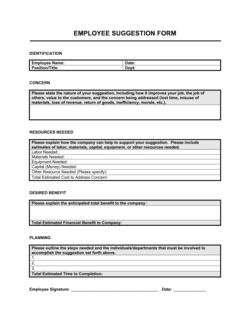
An Employee Referral Form is a structured document that employees submit to recommend a candidate for an open position at their company. This free Word download gives HR teams a consistent, trackable record of every referral — capturing the referred candidate's details, the referring employee's information, and the relevant open role — so nothing falls through the cracks during the hiring process.
When you need it
Use it any time you run a structured employee referral program and need a formal intake record for each candidate recommendation. It is especially useful when your company offers a referral bonus, since the completed form becomes the paper trail that supports bonus eligibility and payout decisions.
What's inside
Referring employee details, candidate contact information, the position being applied for, the employee's relationship to the candidate, a brief supporting statement, and an acknowledgment of program terms. Together these fields give HR everything needed to log, evaluate, and follow up on each referral without chasing down missing information.

What is an Employee Referral Form?

An Employee Referral Form is a structured intake document that a current employee submits to recommend a candidate for an open position at their company. It captures the referring employee's identity and department, the candidate's contact details, the specific role they are being recommended for, the nature of the relationship between the two parties, and a brief summary of the candidate's relevant qualifications. HR teams use completed forms to log each nomination, route it to the right hiring manager, and create the paper trail needed to administer referral bonus payments accurately.

Why You Need This Document

Without a standardized referral form, employee referral programs break down quickly. Nominations arrive by email, Slack message, or hallway conversation — with missing contact details, no position specified, and no submission date to anchor bonus eligibility. When a referred candidate is hired and a bonus dispute follows, there is no record to resolve it. A consistent referral form fixes all of these problems at once: every submission captures the same required fields, HR can process referrals without chasing down missing information, and the submission date creates a clear, defensible record if two employees claim credit for the same candidate. This template gives you a professional, ready-to-use form you can customize in minutes and distribute to your entire workforce today.

Which variant fits your situation?

If your situation is…Use this template
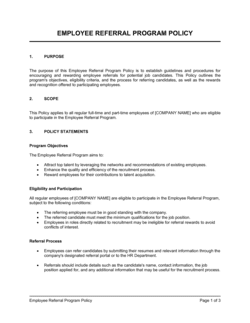
Tracking referral bonus eligibility and payout statusEmployee Referral Program Policy
Logging multiple referrals across open requisitions in a spreadsheetRecruitment Tracker
Collecting a full application from the referred candidate directlyJob Application Form
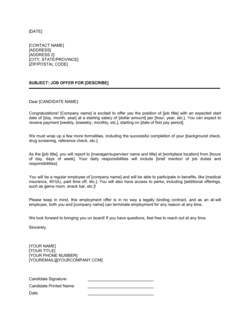
Formally requesting a professional reference for an existing candidateEmployment Reference Request Letter
Documenting the full hiring process from posting to offerRecruitment Plan
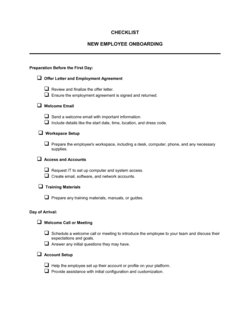
Onboarding a hired referral candidate on their first dayNew Employee Onboarding Checklist

Common mistakes to avoid

❌ Submitting without a specific open role

Why it matters: General nominations with no position attached sit in an inbox for weeks. HR cannot route or evaluate them without knowing which hiring manager to contact.

Fix: Always check the internal job board first and include the job title and requisition number before submitting the form.
❌ Not disclosing the relationship to the candidate

Why it matters: Undisclosed personal or family relationships are the leading cause of referral program disputes and fairness complaints from other employees.

Fix: Complete the relationship field honestly on every submission. HR uses it to flag recusals, not to reject the referral.

❌ Omitting a submission date

Why it matters: Without a date, you cannot prove the referral was made before the candidate applied independently — which is often the key condition for bonus eligibility.

Fix: Date every submission at the time of filing and confirm the date is recorded in the copy HR acknowledges receiving.

❌ Writing a vague skills endorsement

Why it matters: One-line endorsements like 'great person, highly recommend' give hiring managers no basis to prioritize the referral over other candidates in the pipeline.

Fix: Write three to five sentences linking the candidate's specific skills and experience to the requirements of the open position.

The 8 key fields, explained

Referring employee information

Position referred for

Candidate contact information

Relationship to candidate

Candidate's relevant experience and skills

Resume or LinkedIn profile attachment

Date of submission

Program terms acknowledgment

How to fill it out

  1. 1

    Identify the open position before submitting

    Look up the specific job title and requisition number on your company's internal job board or by asking HR. Referrals tied to a specific requisition are processed faster than general nominations.

    💡 Bookmark your company's internal job board so you can check open roles before recommending a contact.

  2. 2

    Enter your employee details accurately

    Fill in your full legal name, job title, department, and work email address. This information is used to verify your program eligibility and to route the bonus payment if the candidate is hired.

    💡 Use the same name that appears on your company payroll records to avoid a mismatch at bonus processing.

  3. 3

    Complete the candidate's contact information

    Provide the candidate's full name, personal email address, and phone number. Confirm with the candidate beforehand that they consent to being contacted by HR.

    💡 Get the candidate's permission before submitting the form — an unexpected call from an unknown employer can create a poor first impression.

  4. 4

    Describe your relationship to the candidate honestly

    Select or write the relationship type that most accurately describes how you know the candidate. Disclose any family or close personal relationship — HR uses this to manage conflict-of-interest review, not to disqualify the referral.

    💡 Honest disclosure protects both you and the candidate if questions arise later about the hiring process.

  5. 5

    Write a specific skills summary

    Summarize the candidate's most relevant experience, key skills, and one or two concrete achievements in three to five sentences. Tie their background directly to the requirements of the open role.

    💡 Reference specific skills from the job posting — matching your summary to the job description helps the hiring manager evaluate fit immediately.

  6. 6

    Attach a resume or provide a profile link

    Attach the candidate's current resume as a PDF or Word file, or paste a link to their LinkedIn profile. If the candidate hasn't shared a resume yet, note that one is forthcoming.

    💡 A PDF resume is preferred over Word — formatting stays intact and the file can be uploaded directly to most applicant tracking systems.

  7. 7

    Sign the program acknowledgment and submit

    Read the referral program terms, check the acknowledgment box or sign the signature line, record the submission date, and submit the completed form to HR via email or your internal HR portal.

    💡 Keep a copy of the submitted form for your own records in case a bonus eligibility question comes up months later.

Frequently asked questions

What is an employee referral form?

An employee referral form is a structured document that a current employee submits to recommend a candidate for an open position at their company. It captures the referring employee's details, the candidate's contact information, the specific role being applied for, and a summary of the candidate's relevant qualifications. HR uses the completed form to log the referral, route it to the hiring manager, and establish bonus eligibility if the candidate is hired.

Why do companies use employee referral programs?

Referred candidates typically take fewer days to hire, cost less to recruit, and stay longer than candidates sourced through job boards or agencies. Employees vouch for people they know personally or professionally, which acts as an informal pre-screen. A standardized referral form makes the program consistent, auditable, and fair — and gives HR the documentation needed to administer bonus payouts without disputes.

What information should an employee referral form include?

At minimum: the referring employee's name, title, and department; the open position and requisition number; the candidate's name, email, and phone; the employee's relationship to the candidate; a brief skills summary; a resume attachment or profile link; the submission date; and an acknowledgment of the program's eligibility terms. Missing any of these commonly delays processing or creates bonus disputes later.

Does an employee referral form need to be signed?

A formal signature is not legally required, but most HR teams include a program-terms acknowledgment that the employee signs or checks. This acknowledgment confirms the employee understands the tenure requirement for bonus payout and that the referral is their own submission — not a duplicate from another employee for the same candidate.

When does a referring employee receive their referral bonus?

Bonus timing depends entirely on your company's referral program policy. The most common structure pays the bonus in two installments: half at the referred hire's start date and half after the new hire completes a 90-day tenure period. The referral form's submission date is the anchor point for establishing eligibility, which is why dating the form accurately at submission matters.

Can an employee refer a family member?

Most referral programs allow family referrals but require the employee to disclose the relationship on the form. HR then ensures the referring employee is not involved in the hiring decision for that candidate. Failing to disclose a family relationship is typically grounds for forfeiting the bonus, even if the hire proceeds.

What happens if two employees refer the same candidate?

Most programs award the bonus to whichever employee submitted the referral form first — which is why the submission date is critical. Some policies split the bonus or award it only if neither employee is the candidate's direct supervisor. Your referral program policy document should define the tie-breaking rule explicitly to avoid disputes.

How long should HR retain completed referral forms?

Retain referral forms for at least as long as you retain other recruiting records — typically one to three years in the US, depending on applicable recordkeeping requirements. Forms tied to a bonus payout should be kept until the full bonus is paid and the relevant payroll period is closed. Store them alongside the candidate's application file for easy cross-reference.

How this compares to alternatives

vs Job Application Form

A job application form is completed by the candidate and captures their full work history, education, and self-reported qualifications. An employee referral form is completed by a current employee on the candidate's behalf and focuses on the endorsement and relationship context. Both are typically used together — the referral form triggers HR outreach; the application form follows once the candidate is contacted.

vs Recruitment Plan

A recruitment plan is a strategic document outlining how an organization will source, evaluate, and hire candidates for multiple open roles over a defined period. An employee referral form is a single transactional intake record for one candidate nomination. The referral form feeds into the broader process the recruitment plan describes.

vs Employment Reference Request Letter

An employment reference request letter is sent by HR to a third-party contact — former manager, colleague — to verify a candidate's background after they have already applied. An employee referral form is an internal document submitted before or alongside the application to introduce the candidate in the first place. References verify; referrals introduce.

vs New Employee Onboarding Checklist

An onboarding checklist is used after a hiring decision is made to prepare the new employee's first weeks. An employee referral form is used at the beginning of the recruiting funnel to introduce a candidate. The referral form starts the pipeline; the onboarding checklist closes it.

Industry-specific considerations

Technology / SaaS

High-volume hiring pipelines make referrals a primary sourcing channel; referral bonuses for engineering and product roles commonly range from $2,000 to $10,000.

Professional Services

Firms rely heavily on employee networks for culture-fit screening; referral forms often include a field for the candidate's billable-skills area or practice group.

Healthcare

Credentialing and licensing requirements make referrals from clinicians especially valuable; forms typically include a field for the candidate's license type and state.

Retail / Hospitality

High turnover makes referral programs a cost-effective sourcing tool; forms are often simplified to one page and available in multiple languages for diverse workforces.

Template vs pro — what fits your needs?

PathBest forCostTime
Use the templateAny company running an employee referral program that needs a consistent, ready-to-use intake formFree5 minutes to customize, 3 minutes per submission
Template + professional reviewCompanies adding custom bonus eligibility conditions, conflict-of-interest disclosures, or multi-language versions$0–$100 (HR advisor or legal counsel review)1–2 hours
Custom draftedLarge enterprises integrating the form into an ATS or HRIS with automated routing and bonus tracking$500–$2,000+ (HR tech configuration or custom development)1–2 weeks

Glossary

Referral Bonus
A cash or non-cash reward paid to an employee whose referred candidate is hired and completes a defined tenure period — typically 30 to 90 days.
Referring Employee
The current employee who recommends a candidate for an open position and submits the referral form on their behalf.
Requisition Number
A unique identifier assigned to an open job posting, used to match each referral to the correct vacancy in the applicant tracking system.
Relationship Disclosure
A field on the referral form where the employee describes how they know the candidate — former colleague, friend, family member — to flag potential conflicts of interest.
Tenure Requirement
The minimum number of days a referred hire must remain employed before the referring employee becomes eligible to receive the referral bonus.
Applicant Tracking System (ATS)
Software HR teams use to log, sort, and manage job applications and candidates throughout the recruiting pipeline.
Conflict of Interest
A situation where an employee's personal relationship with a candidate could improperly influence the hiring decision or create a perception of unfair advantage.
Internal Mobility
Movement of existing employees into new roles within the same organization, distinct from external referrals but sometimes managed through the same intake process.
Hiring Manager
The person responsible for the open role who evaluates referred candidates and makes the final hiring recommendation.

Part of your Business Operating System

This document is one of 3,000+ business & legal templates included in Business in a Box.

  • Fill-in-the-blanks — ready in minutes
  • 100% customizable Word document
  • Compatible with all office suites
  • Export to PDF and share electronically

Create your document in 3 simple steps.

From template to signed document — all inside one Business Operating System.
1
Download or open template

Access over 3,000+ business and legal templates for any business task, project or initiative.

2
Edit and fill in the blanks with AI

Customize your ready-made business document template and save it in the cloud.

3
Save, Share, Send, Sign

Share your files and folders with your team. Create a space of seamless collaboration.

Save time, save money, and create top-quality documents.

★★★★★

"Fantastic value! I'm not sure how I'd do without it. It's worth its weight in gold and paid back for itself many times."

Managing Director · Mall Farm
Robert Whalley
Managing Director, Mall Farm Proprietary Limited
★★★★★

"I have been using Business in a Box for years. It has been the most useful source of templates I have encountered. I recommend it to anyone."

Business Owner · 4+ years
Dr Michael John Freestone
Business Owner
★★★★★

"It has been a life saver so many times I have lost count. Business in a Box has saved me so much time and as you know, time is money."

Owner · Upstate Web
David G. Moore Jr.
Owner, Upstate Web

Run your business with a system — not scattered tools

Stop downloading documents. Start operating with clarity. Business in a Box gives you the Business Operating System used by over 250,000 companies worldwide to structure, run, and grow their business.

Start free · No credit card required