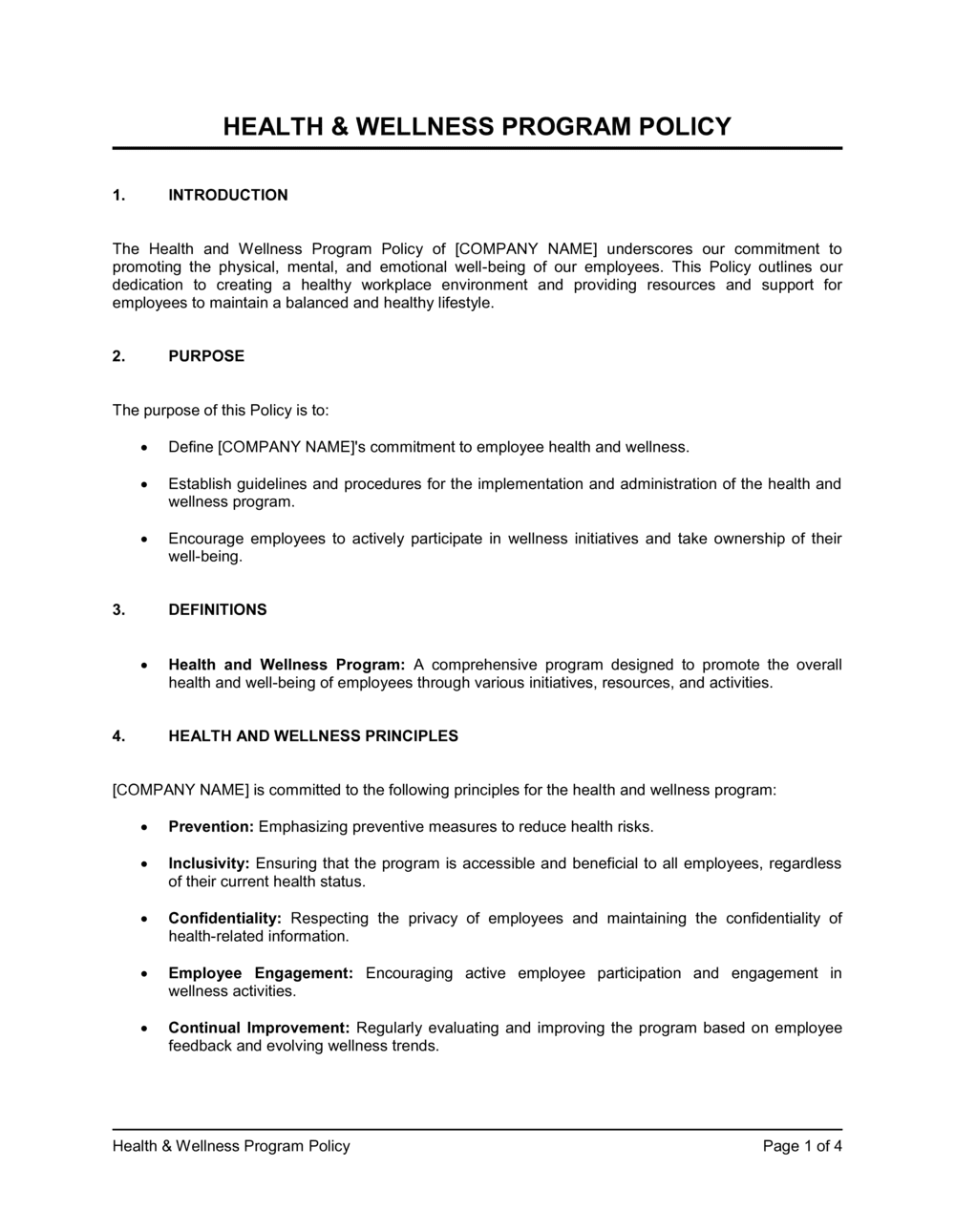
Health and Wellness Program Policy Template

Free Word download β€’ Edit online β€’ Save & share with Drive β€’ Export to PDF

4 pagesβ€’20–30 min to fillβ€’Difficulty: Standard
Learn more ↓
FreeHealth and Wellness Program Policy Template

At a glance

What it is
A Health and Wellness Program Policy is a formal written document that defines a company's commitment to supporting employee physical and mental well-being, outlines available programs and activities, and sets the rules governing participation and incentives. This free Word download gives you a structured, ready-to-customize starting point you can edit online and export as PDF for distribution to employees or inclusion in your employee handbook.
When you need it
Use it when launching a new workplace wellness initiative, formalizing informal wellness activities into a documented policy, or updating existing programs to reflect new benefit offerings, legal requirements, or organizational priorities.
What's inside
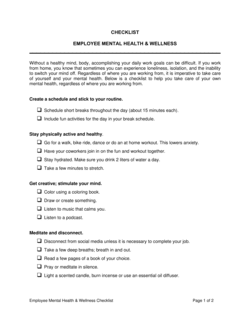
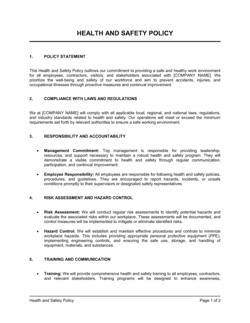
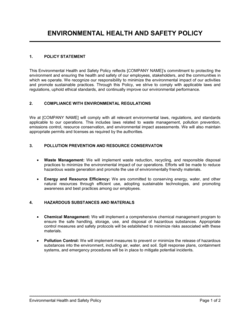
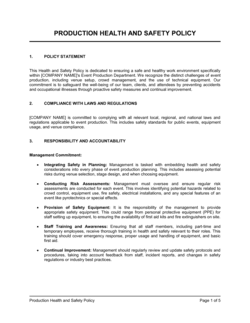
Policy purpose and objectives, eligibility criteria, program offerings (physical, mental, and financial wellness), incentive structure, confidentiality and privacy protections, manager and employee responsibilities, and program evaluation metrics.

What is a Health and Wellness Program Policy?

A Health and Wellness Program Policy is a formal written document that establishes an employer's commitment to supporting employee well-being and defines the framework for delivering, administering, and measuring workplace wellness initiatives. It specifies which employees are eligible, what activities and resources are available across physical, mental, and financial wellness categories, how incentives are structured and capped, and how personal health information is protected. Unlike a brief benefits summary, a full wellness policy creates enforceable rules for program administration, sets expectations for managers and employees alike, and provides the documentation required to demonstrate compliance with HIPAA nondiscrimination rules, ADA reasonable alternative requirements, and applicable IRS incentive guidelines.

Why You Need This Document

Without a written wellness program policy, even well-intentioned initiatives create legal and operational risk. Incentive programs that lack documented reasonable alternative standards expose employers to ADA and HIPAA discrimination complaints. Rewards processed without payroll coordination generate W-2 errors and potential tax penalties. Programs administered inconsistently across departments β€” because no one owns the policy β€” produce employee grievances and low participation rates. When leadership asks for ROI data at budget season, no policy means no baseline metrics to report. This template gives HR teams a structured, compliant starting point that closes those gaps in a few hours rather than weeks, making it the most efficient way to put a professionally administered wellness program on paper before the next open enrollment cycle.

Which variant fits your situation?

If your situation is…Use this template
Documenting a standalone mental health support programMental Health Policy
Setting rules for employee gym or fitness reimbursements onlyEmployee Expense Reimbursement Policy
Outlining the broader employee benefits packageEmployee Benefits Policy
Establishing a smoke-free or substance-free workplaceSubstance Abuse Policy
Creating a comprehensive employee handbook that includes wellnessEmployee Handbook
Tracking and reporting wellness program participation and outcomesHR Annual Report
Communicating a specific return-to-work or fitness-for-duty processReturn to Work Policy

Common mistakes to avoid

❌ Designing a health-contingent program without a reasonable alternative standard

Why it matters: Under HIPAA and the ADA, employees who cannot meet a health standard due to a medical condition must have an alternative way to earn the incentive. Missing this exposes the employer to discrimination complaints and potential agency investigations.

Fix: Add explicit reasonable alternative language to the incentives section and train HR on how to process accommodation requests before the program launches.

❌ Treating all wellness incentives as non-taxable

Why it matters: Cash rewards, gift cards, and premium reductions above IRS thresholds are taxable wages. Processing them outside payroll creates W-2 discrepancies and potential penalties.

Fix: Work with your payroll provider or CPA to classify each incentive type correctly before the program goes live, and route taxable rewards through payroll withholding.

❌ Publishing the policy without naming a program administrator

Why it matters: When no one is accountable, enrollment windows close without employee notification, vendor invoices go unpaid, and incentive redemptions are processed inconsistently.

Fix: Name a specific person or shared-inbox contact in the policy and include their responsibilities in their job description or performance objectives.

❌ Copying a wellness policy from another company without adapting the eligibility and incentive caps

Why it matters: Incentive caps under HIPAA are calculated as a percentage of your specific plan's premium cost β€” another company's dollar figures will be wrong for your plan. Using them verbatim can put you out of compliance.

Fix: Recalculate incentive limits using your actual premium rates each plan year, and have a benefits advisor confirm the figures before publishing.

❌ Collecting biometric or health data without a written privacy notice

Why it matters: Employees who are not clearly informed about how their health data is used, stored, and protected may file privacy complaints or refuse to participate, undermining program enrollment.

Fix: Add a confidentiality section that names the data custodian, the storage period, and the specific uses permitted β€” and require employees to sign a consent form before any data collection.

❌ Setting participation targets with no baseline data

Why it matters: Without knowing current participation or health trend baselines, you cannot tell whether the program is working or justify continued investment to leadership.

Fix: Conduct a brief employee health interest survey before launch to establish baseline data, and record it in the program evaluation section as the Year 1 benchmark.

The 9 key sections, explained

Purpose and objectives

Scope and eligibility

Program offerings

Incentives and rewards structure

Voluntary participation and reasonable alternatives

Confidentiality and privacy protections

Manager and employee responsibilities

Program administration and vendor management

Program evaluation and reporting

How to fill it out

  1. 1

    Define your program objectives before editing the template

    Before opening the document, write down two to four specific, measurable goals β€” for example, reducing average sick days by 10% in 12 months or achieving 60% employee participation in at least one wellness activity per quarter.

    πŸ’‘ Objectives you can measure at year-end are the only ones worth writing into a policy β€” vague goals produce vague accountability.

  2. 2

    Confirm eligibility criteria with payroll and legal

    Determine which employee classifications (full-time, part-time, contract) qualify for each program tier. Cross-reference with your existing benefits eligibility rules to ensure consistency.

    πŸ’‘ Misaligning wellness eligibility with health insurance eligibility creates employee confusion and potential discrimination claims β€” use the same classification definitions throughout.

  3. 3

    List all current and planned program offerings by category

    Group offerings into physical, mental, and financial wellness. Include current vendor names, benefit descriptions, and annual dollar values per employee.

    πŸ’‘ Reference vendors by category rather than by brand name in the policy body β€” this way, swapping vendors doesn't require a policy amendment.

  4. 4

    Set the incentive structure and cap

    Enter the specific reward for each qualifying activity, confirm the total annual incentive cap (typically 30% of employee-only premium under HIPAA rules for health-contingent programs), and flag any cash or gift-card rewards for payroll tax processing.

    πŸ’‘ Run your incentive design past a benefits attorney or CPA before publishing β€” the IRS and EEOC have specific rules on wellness incentive value that change periodically.

  5. 5

    Complete the confidentiality and privacy section with vendor details

    Insert your wellness vendor's data handling practices, storage duration, and the name of the internal data custodian. Confirm the vendor has a signed BAA or data processing agreement in place.

    πŸ’‘ If your vendor cannot provide a written description of their privacy practices, treat that as a red flag before signing a multi-year contract.

  6. 6

    Assign an internal program owner and update contact details

    Enter the name, title, email, and phone of the HR or benefits team member responsible for administering the program. This person becomes the point of contact for employee questions and reasonable alternative requests.

    πŸ’‘ Avoid listing a job title only β€” use a named individual or a role-based shared inbox (e.g., wellness@company.com) so inquiries don't go unanswered when staff changes.

  7. 7

    Set evaluation cadence and reporting schedule

    Enter the frequency of participation tracking (quarterly is recommended), the date of the annual program review, and the name of the leadership audience for the annual report.

    πŸ’‘ Schedule the annual review three months before open enrollment so findings can influence next year's benefit design before contracts are signed.

  8. 8

    Distribute and acknowledge

    Publish the completed policy in your HR system, employee handbook, and intranet. Collect signed or electronic acknowledgment from all eligible employees at rollout and during annual onboarding.

    πŸ’‘ A timestamped acknowledgment record protects the company if an employee later claims they were unaware of the program's rules or incentive deadlines.

Frequently asked questions

What is a health and wellness program policy?

A health and wellness program policy is a formal document that defines an employer's workplace wellness initiative β€” what activities and resources are offered, who is eligible, how incentives are earned, and how employee health data is protected. It gives employees a clear, authoritative reference for the program and gives HR a consistent framework for administering it across the organization.

Why should a company have a written wellness program policy?

A written policy protects the employer legally by documenting compliance with HIPAA nondiscrimination rules, ADA reasonable alternative requirements, and IRS incentive guidelines. It also sets clear expectations for employees and managers, reduces inconsistent program administration across departments, and provides the documentation needed to evaluate program ROI at year-end.

Are employee wellness programs required by law?

No federal or state law requires employers to offer a wellness program. However, if a program collects health information or ties rewards to health outcomes, it must comply with HIPAA nondiscrimination rules, the ADA, and GINA (Genetic Information Nondiscrimination Act). Voluntary, participatory programs face fewer regulatory requirements than health-contingent ones.

What is the difference between a participatory and a health-contingent wellness program?

A participatory program rewards employees for taking part in an activity β€” completing a health risk assessment or attending a nutrition webinar β€” regardless of outcome. A health-contingent program ties the reward to achieving a specific health standard, such as a target blood pressure reading or body weight. Health-contingent programs face stricter HIPAA and ADA requirements, including a mandatory reasonable alternative standard for employees who cannot meet the health target.

How much can a company offer in wellness incentives?

For health-contingent programs subject to HIPAA rules, incentives typically cannot exceed 30% of the total cost of employee-only health coverage (50% for programs related to tobacco cessation). Participatory programs have no HIPAA incentive cap, but cash and gift-card rewards above IRS de minimis thresholds are taxable wages regardless of program type. Confirm specific dollar limits with a benefits advisor each plan year, as they change with premium rates.

How do we protect employee health information collected through the wellness program?

Health data collected through biometric screenings or health risk assessments should be handled by a qualified third-party vendor under a signed data processing agreement or Business Associate Agreement. The policy should state that individual health data is never shared with managers or used in employment decisions. Aggregate, de-identified data may be used for program evaluation purposes only.

Can we require employees to participate in our wellness program?

Participation must be voluntary β€” employers cannot penalize employees for declining to participate, beyond forfeiting the associated incentive. Mandatory participation that requires medical disclosures or biometric testing risks ADA and GINA violations. Design the program so the reward for participating is attractive enough to drive high voluntary enrollment rather than making non-participation costly.

How often should a wellness program policy be reviewed and updated?

Review the policy annually, aligned with the benefits open enrollment cycle. Trigger an off-cycle review whenever vendor contracts change, new program components are added, relevant legislation is updated, or participation data reveals a significant gap between policy intent and actual program outcomes. Each revision should be dated, distributed to employees, and re-acknowledged.

What metrics should we track to measure wellness program effectiveness?

Track participation rates by program component, incentive redemption rates, employee satisfaction scores from post-activity surveys, absenteeism trends, and β€” where available through aggregate insurer data β€” healthcare utilization changes year over year. Reporting these metrics annually to leadership justifies program spend and identifies which components drive the most engagement.

How this compares to alternatives

vs Employee Handbook

An employee handbook is a comprehensive reference covering all HR policies β€” conduct, leave, compensation, and benefits. A health and wellness program policy is a standalone document covering the wellness program in the depth the handbook cannot. The wellness policy is typically incorporated by reference into the handbook rather than duplicated within it.

vs Substance Abuse Policy

A substance abuse policy governs prohibited conduct related to alcohol and drug use in the workplace and sets out testing and disciplinary procedures. A wellness program policy is a benefit-oriented document focused on voluntary programs and incentives. The two are complementary β€” substance abuse policies set boundaries; wellness policies offer support resources.

vs Leave of Absence Policy

A leave of absence policy governs the terms under which employees may take extended time away from work for medical, family, or personal reasons. A wellness program policy addresses proactive health support to prevent the need for extended leave. Both policies should reference the EAP as a shared resource available in either context.

vs Remote Work Policy

A remote work policy governs where employees work, equipment provisions, and communication expectations. A wellness program policy addresses how wellness benefits extend to remote workers β€” virtual fitness access, home ergonomics support, and digital mental health tools. For distributed teams, the wellness policy should explicitly confirm that all eligible employees can access the full program regardless of work location.

Industry-specific considerations

Technology / SaaS

Remote-work wellness provisions, mental health app stipends, and virtual fitness challenges are common program components given distributed team structures.

Healthcare

Shift-work scheduling considerations, clinical staff burnout prevention initiatives, and stricter HIPAA data handling standards apply to wellness programs in healthcare organizations.

Manufacturing

Ergonomics training, on-site occupational health screenings, and injury-prevention programs are wellness priorities alongside traditional mental health offerings.

Professional Services

High-billable-hour environments benefit from stress management resources, financial wellness programs, and flexible scheduling as key wellness components to address burnout risk.

Template vs pro β€” what fits your needs?

PathBest forCostTime
Use the templateSmall to mid-size businesses launching a participatory wellness program with straightforward incentivesFree2–4 hours
Template + professional reviewEmployers offering health-contingent incentives, biometric screenings, or programs tied to group health plan premiums$300–$800 for a benefits attorney or HR consultant review3–5 business days
Custom draftedLarge employers, self-insured health plans, or organizations in regulated industries requiring full HIPAA, ADA, and GINA compliance documentation$1,500–$5,000+2–4 weeks

Glossary

Wellness Program
A structured set of employer-sponsored activities, resources, and incentives designed to improve employees' physical, mental, and financial health.
Participatory Wellness Program
A program that rewards employees simply for participating in activities β€” such as completing a health survey β€” without requiring them to meet a health outcome.
Health-Contingent Wellness Program
A program that ties rewards or penalties to achieving a specific health standard, such as a target BMI or cholesterol level, and is subject to stricter regulatory requirements.
Incentive Cap
The maximum value of rewards an employer may offer under a wellness program, often expressed as a percentage of the total cost of employee health coverage.
Reasonable Alternative Standard
An alternative way for employees who cannot meet a health-contingent requirement β€” due to a medical condition β€” to still qualify for a wellness incentive.
EAP (Employee Assistance Program)
An employer-funded benefit providing confidential counseling, mental health support, financial advice, and referrals to employees at no cost to them.
Biometric Screening
A voluntary health assessment that measures physical indicators such as blood pressure, cholesterol, glucose levels, and body mass index.
ADA (Americans with Disabilities Act)
A US federal law that prohibits discrimination against employees with disabilities and limits the degree to which wellness programs may require medical disclosures.
HIPAA Nondiscrimination Rules
Federal regulations requiring group health plans to treat all similarly situated individuals the same and governing the use of incentives in health-contingent wellness programs.
Voluntary Participation
The principle that wellness program activities are offered on an opt-in basis, with no penalty for non-participation beyond forfeiting the associated incentive.

Part of your Business Operating System

This document is one of 3,000+ business & legal templates included in Business in a Box.

  • Fill-in-the-blanks β€” ready in minutes
  • 100% customizable Word document
  • Compatible with all office suites
  • Export to PDF and share electronically

Create your document in 3 simple steps.

From template to signed document β€” all inside one Business Operating System.
1
Download or open template

Access over 3,000+ business and legal templates for any business task, project or initiative.

2
Edit and fill in the blanks with AI

Customize your ready-made business document template and save it in the cloud.

3
Save, Share, Send, Sign

Share your files and folders with your team. Create a space of seamless collaboration.

Save time, save money, and create top-quality documents.

β˜…β˜…β˜…β˜…β˜…

"Fantastic value! I'm not sure how I'd do without it. It's worth its weight in gold and paid back for itself many times."

Managing Director Β· Mall Farm
Robert Whalley
Managing Director, Mall Farm Proprietary Limited
β˜…β˜…β˜…β˜…β˜…

"I have been using Business in a Box for years. It has been the most useful source of templates I have encountered. I recommend it to anyone."

Business Owner Β· 4+ years
Dr Michael John Freestone
Business Owner
β˜…β˜…β˜…β˜…β˜…

"It has been a life saver so many times I have lost count. Business in a Box has saved me so much time and as you know, time is money."

Owner Β· Upstate Web
David G. Moore Jr.
Owner, Upstate Web

Run your business with a system β€” not scattered tools

Stop downloading documents. Start operating with clarity. Business in a Box gives you the Business Operating System used by over 250,000 companies worldwide to structure, run, and grow their business.

Start freeΒ Β·Β No credit card required