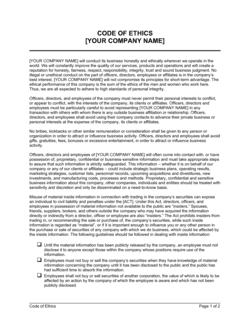
Diversity Supplier Program Policy Template

Free Word download β€’ Edit online β€’ Save & share with Drive β€’ Export to PDF

3 pagesβ€’20–25 min to fillβ€’Difficulty: Standard
Learn more ↓
FreeDiversity Supplier Program Policy Template

At a glance

What it is
A Diversity Supplier Program Policy is a formal operational document that defines an organization's commitment to sourcing goods and services from businesses owned by minorities, women, veterans, persons with disabilities, and LGBTQ+ individuals. This free Word download gives procurement and supplier diversity teams a structured, editable starting point they can tailor to their spend categories, certification requirements, and annual targets, then export as PDF for internal approval or external publication.
When you need it
Use it when establishing a new supplier diversity initiative, updating an informal commitment into a documented policy, or responding to a customer, government agency, or prime contractor that requires a formal diverse spend program as a condition of doing business.
What's inside
Policy scope and purpose, definitions of qualifying diverse supplier categories, certification and verification standards, annual spend targets and KPIs, sourcing and procurement process requirements, supplier development and mentorship provisions, reporting cadence, and roles and responsibilities for program governance.

What is a Diversity Supplier Program Policy?

A Diversity Supplier Program Policy is a formal operational document that establishes an organization's commitment to sourcing goods and services from businesses owned by minorities, women, veterans, service-disabled veterans, persons with disabilities, and LGBTQ+ individuals. It defines which supplier categories qualify, which third-party certifications are accepted, what annual spend targets the organization is committing to, and how procurement, business unit leaders, and an executive sponsor are each held accountable. Unlike an informal pledge, a written policy creates measurable obligations, an audit trail, and a governance structure that makes the program repeatable year over year.

Why You Need This Document

Without a documented supplier diversity policy, informal commitments cannot be audited, diverse spend figures cannot be verified, and the program loses credibility with the customers, government agencies, and ESG investors who increasingly require one as a condition of doing business. Federal contractors above $750,000 face a legal obligation to submit a formal subcontracting plan; corporate customers routinely ask for written policies before awarding preferred supplier status. Internally, a policy without defined targets and named owners produces no behavioral change β€” procurement teams under time pressure will default to the same approved vendor list without documented rules requiring otherwise. This template gives procurement and supplier diversity teams the structure they need to turn a commitment into a program that generates measurable, reportable results.

Which variant fits your situation?

If your situation is…Use this template
Establishing a brand-new supplier diversity program from scratchDiversity Supplier Program Policy
Meeting a federal subcontracting plan requirement (FAR 52.219)Small Business Subcontracting Plan
Documenting diverse spend for an ESG or sustainability reportCorporate Sustainability Report
Formalizing procurement rules across all spend categoriesProcurement Policy
Screening and onboarding new diverse suppliersVendor Onboarding Checklist
Tracking diverse spend performance against annual targetsSupplier Diversity Scorecard
Managing preferred vendor relationships and tier classificationsPreferred Vendor Agreement

Common mistakes to avoid

❌ Accepting supplier self-certification without third-party verification

Why it matters: Self-attested diverse status cannot be audited and is frequently challenged by customers, government agencies, and ESG rating firms. A single high-value contract counted on fraudulent certification can invalidate an entire year's diverse spend figures.

Fix: Require active certification from a recognized third-party body β€” NMSDC, WBENC, SBA, NVBDC, or equivalent β€” and verify status in the certifying body's public registry before contract award.

❌ Setting a single aggregate spend target with no Tier 1 / Tier 2 split

Why it matters: Without separating direct and supply-chain spend, there is no way to diagnose whether shortfalls are in your own sourcing decisions or in your prime suppliers' subcontracting practices.

Fix: Set distinct annual targets for Tier 1 and Tier 2 spend, track them separately, and report both in quarterly reviews.

❌ No documented exception process for bids with no diverse supplier

Why it matters: Without a formal exception requirement, procurement staff routinely skip the diverse bidder inclusion rule when under time pressure, and there is no audit trail to assess whether sourcing behavior is changing.

Fix: Require a written exception memo for any competitive solicitation above the policy threshold that does not include a certified diverse supplier, with approval from a named senior procurement officer.

❌ Omitting Tier 2 reporting requirements for prime suppliers

Why it matters: For most large organizations, Tier 2 spend represents 30–60% of total diverse spend. Ignoring it significantly understates program performance and misses the leverage that prime supplier relationships provide.

Fix: Include a contractual Tier 2 reporting requirement in all prime supplier agreements above a defined annual spend threshold, and provide a standard reporting template to remove barriers to compliance.

❌ Publishing the policy without a named executive sponsor

Why it matters: Supplier diversity programs without executive accountability consistently fail to hit targets β€” procurement teams cannot override sourcing decisions made by business unit leaders who outrank them.

Fix: Identify a C-suite sponsor before the policy is finalized, document their accountability in the roles section, and include diverse spend performance in their annual goals.

❌ No annual review date or amendment process

Why it matters: Certification body requirements, regulatory standards, and the organization's own spend structure change year to year. A policy with no review cycle becomes misaligned within two years and creates compliance gaps.

Fix: Designate a specific review month, a named reviewer, and an approval authority for amendments. Calendar the review in the procurement team's annual operating plan.

The 9 key sections, explained

Policy Purpose and Scope

Definitions of Qualifying Supplier Categories

Certification and Verification Standards

Annual Spend Targets and KPIs

Sourcing and Procurement Process Requirements

Supplier Development and Mentorship

Reporting and Data Governance

Roles and Responsibilities

Policy Review and Amendment

How to fill it out

  1. 1

    Define the policy scope and applicable spend

    Identify which business units, geographies, and spend categories the policy covers. Determine your total addressable spend by excluding categories β€” such as utilities or government-mandated sole-source contracts β€” where no diverse supplier market exists.

    πŸ’‘ Run a spend analysis by UNSPSC or cost category before setting targets β€” scope surprises are the most common reason first-year diverse spend goals are missed.

  2. 2

    Select the recognized certifying bodies you will accept

    List the specific third-party certifying organizations β€” NMSDC, WBENC, SBA, NVBDC, NGLCC, or relevant state agencies β€” whose certifications you will accept for each diverse supplier category. Decide whether you will also accept non-US certifications for global programs.

    πŸ’‘ Check each certifying body's public registry to confirm it offers a searchable, real-time database β€” this is what your procurement team will use to verify certification status before contract award.

  3. 3

    Set annual Tier 1 and Tier 2 spend targets

    Establish a percentage target for direct (Tier 1) spend with certified diverse suppliers and a separate target for Tier 2 spend reported by prime suppliers. Base targets on your current diverse spend baseline plus a realistic year-over-year growth rate.

    πŸ’‘ A 2–3 percentage point annual increase is achievable for most organizations; a jump from 3% to 15% in Year 1 without a sourcing pipeline to support it sets the program up for immediate failure.

  4. 4

    Draft the sourcing process requirements

    Write the specific rule for when diverse suppliers must be included in competitive bid slates. Define the dollar threshold, the minimum number of diverse bidders required, and the documentation requirement for any exception.

    πŸ’‘ Tie the exception process to a named approver β€” exceptions documented by the same person requesting them are rarely rejected, which defeats the purpose.

  5. 5

    Define supplier development offerings

    Specify any concrete support the company will provide to diverse suppliers β€” early payment terms, mentor assignments, workshops, or preferred access to pilot contracts. Assign a budget line or owner to each commitment.

    πŸ’‘ Even one tangible benefit β€” such as Net 15 payment for invoices under $50,000 β€” signals genuine commitment and is frequently cited by diverse suppliers as more valuable than aspirational language.

  6. 6

    Establish the reporting data standard

    Define exactly what data business units must submit each quarter β€” supplier name, certification type, certifying body, contract number, spend amount β€” and the format (standard template, ERP field, or procurement system field).

    πŸ’‘ Lock the data standard before the policy launches; retrofitting reporting categories after two quarters of inconsistent data is significantly more time-consuming than defining them upfront.

  7. 7

    Assign roles and get executive sponsor sign-off

    Name the Supplier Diversity Manager, CPO, and executive sponsor in the policy. Confirm the executive sponsor's acceptance of accountability for annual goal achievement before publishing.

    πŸ’‘ A policy with no named executive sponsor is rarely enforced past the first year β€” identify a C-suite champion before the document leaves draft status.

  8. 8

    Set the annual review date and publish

    Enter the annual review month, the approver for amendments, and the communication protocol for policy changes. Distribute the final policy to all procurement staff and post it to the supplier portal or company intranet.

    πŸ’‘ Send the policy directly to your top 20 prime suppliers with a cover note explaining Tier 2 reporting expectations β€” most Tier 2 reporting failures happen because prime suppliers were never told it was required.

Frequently asked questions

What is a diversity supplier program policy?

A diversity supplier program policy is a formal document that defines an organization's commitment to purchasing goods and services from businesses owned by minorities, women, veterans, persons with disabilities, or LGBTQ+ individuals. It establishes the categories of qualifying diverse suppliers, the certification standards required, annual spend targets, and the governance processes that hold the organization accountable to those goals.

Why do companies need a formal supplier diversity policy?

Many corporations require a documented supplier diversity policy from their vendors as a condition of doing business. Federal and state government contractors are often required to submit formal subcontracting plans demonstrating diverse spend commitments. Beyond compliance, a documented policy makes informal commitments measurable, assigns accountability, and provides the audit trail needed for ESG reporting and customer due diligence.

What certifications should a supplier diversity policy recognize?

The most widely recognized US certifications are NMSDC (minority-owned), WBENC (women-owned), SBA 8(a) and HUBZone (disadvantaged and historically underutilized businesses), NVBDC and SBA VOSB/SDVOSB (veteran and service-disabled veteran-owned), and NGLCC (LGBTQ+-owned). State and local certifying agencies are also commonly accepted. Policies should specify which bodies they recognize to avoid inconsistent verification practices across procurement teams.

What is the difference between Tier 1 and Tier 2 diverse spend?

Tier 1 diverse spend is money your organization pays directly to certified diverse suppliers. Tier 2 diverse spend is money your non-diverse prime suppliers pay to certified diverse subcontractors or sub-suppliers, which they report back to you. Both tiers count toward total diverse spend goals and are tracked separately because they reflect different levers β€” your own sourcing decisions versus your supply chain's subcontracting behavior.

How do companies set realistic diverse spend targets?

Start with a spend analysis to identify total addressable spend β€” excluding sole-source, regulated, or utility categories where no diverse supplier market exists. Benchmark your current diverse spend percentage against that addressable base. A realistic first-year target is typically 2–3 percentage points above baseline, with a stated multi-year trajectory. Targets set without a sourcing pipeline to support them are routinely missed and damage program credibility.

Is a diversity supplier program policy legally required?

There is no single federal law requiring all companies to maintain a supplier diversity policy. However, companies bidding on federal contracts above $750,000 (construction: $1.5M) are required to submit a Small Business Subcontracting Plan under FAR 52.219-9. Many state governments, utilities, and large corporations require supplier diversity policies from their vendors as a contractual condition. In practice, the requirement is driven by customer and contract mandates more than statute.

How often should a supplier diversity policy be reviewed?

An annual review aligned to the fiscal year planning cycle is standard practice. The review should check that recognized certifying bodies and their requirements have not changed, that spend targets reflect the current addressable spend base, and that roles and reporting structures are still accurate. Programs that go more than 18 months without a review frequently find their certification standards or spend definitions are out of alignment with what customers and auditors expect.

What should a supplier diversity policy say about self-certification?

Most well-designed policies explicitly prohibit counting self-certified diverse suppliers toward spend goals unless the self-attestation is backed by a recognized third-party certification. Self-certification is unverifiable, frequently inaccurate, and rejected by corporate diversity program auditors and government agencies alike. The policy should name the acceptable certifying bodies and require procurement to check active status in the certifying body's registry before contract award.

Can a small business publish a supplier diversity policy?

Yes, and increasingly small businesses are required to do so by their corporate or government customers. A small business policy can be simpler than a large enterprise version β€” it may cover a narrower supplier base and set more modest spend targets β€” but it should still define qualifying categories, specify accepted certifications, and assign a named owner. A well-constructed small business supplier diversity policy is often a competitive differentiator when bidding on contracts with major corporations.

How this compares to alternatives

vs Procurement Policy

A procurement policy governs how all purchasing decisions are made β€” sourcing thresholds, approval hierarchies, vendor evaluation criteria, and contract requirements. A diversity supplier program policy is a focused overlay that adds specific rules and targets for diverse supplier inclusion within that broader procurement framework. Both documents should be in place and cross-referenced.

vs Vendor Code of Conduct

A vendor code of conduct sets the ethical, labor, environmental, and compliance standards all suppliers must meet to do business with the company. A supplier diversity policy defines which suppliers are actively sought and prioritized based on ownership characteristics. They address different questions β€” the code of conduct governs behavior; the diversity policy governs sourcing.

vs Small Business Subcontracting Plan

A small business subcontracting plan is a specific document required by the FAR when bidding on federal contracts above a defined threshold. It details dollar and percentage commitments to small and disadvantaged businesses. A diversity supplier program policy is a broader internal governance document that may inform a subcontracting plan but has a wider scope covering all company procurement, not just federal contract obligations.

vs ESG / Sustainability Report

An ESG report is an external disclosure document that communicates social, environmental, and governance performance to investors and stakeholders. A supplier diversity program policy is an internal governance document that generates the diverse spend data that the ESG report discloses. The policy creates the program; the ESG report publishes the results.

Industry-specific considerations

Government contracting

Federal contracts above $750,000 require a formal Small Business Subcontracting Plan; supplier diversity policy language must align with FAR 52.219-9 and SBA certification categories.

Financial services

Banks and asset managers face investor and regulatory pressure to disclose diverse spend as part of ESG reporting; Tier 2 reporting from prime vendors is a standard program component.

Manufacturing

Complex multi-tier supply chains make Tier 2 reporting both more important and more difficult; diverse supplier development programs often include capacity-building support for smaller MBE suppliers.

Retail and consumer goods

Major retailers publish annual diverse spend reports tied to ESG commitments; supplier diversity programs often extend to marketing and media spend, not just physical goods procurement.

Template vs pro β€” what fits your needs?

PathBest forCostTime
Use the templateSmall to mid-size businesses establishing a first supplier diversity program or updating an informal commitment to a documented policyFree2–4 hours
Template + professional reviewCompanies responding to a customer or government requirement with specific certification or reporting standards$300–$800 for a procurement consultant or supplier diversity advisor review1–3 days
Custom draftedLarge enterprises with multi-tier supply chains, federal contractor subcontracting plan obligations, or public ESG reporting commitments$2,000–$8,000 for a supplier diversity program consultant2–6 weeks

Glossary

Diverse Supplier
A business that is at least 51% owned, operated, and controlled by individuals from a socially or economically disadvantaged group, including minorities, women, veterans, persons with disabilities, or LGBTQ+ individuals.
MBE (Minority Business Enterprise)
A business certified as at least 51% owned and controlled by one or more minority individuals, typically through a recognized certifying body such as NMSDC.
WBE (Women-Owned Business Enterprise)
A business certified as at least 51% owned and controlled by one or more women, as verified by WBENC or a state certifying agency.
VOSB / SDVOSB
Veteran-Owned Small Business or Service-Disabled Veteran-Owned Small Business β€” categories recognized by the SBA and required in many federal procurement programs.
Tier 1 Spend
Procurement dollars spent directly by the organization with certified diverse suppliers in a given measurement period.
Tier 2 Spend
Procurement dollars spent by the organization's prime (non-diverse) suppliers with certified diverse sub-suppliers, reported upward to the buyer.
Certification
Third-party verification that a supplier meets the ownership, control, and size standards required to qualify as a diverse business under a specific category.
NMSDC
National Minority Supplier Development Council β€” the primary certifying organization for minority-owned businesses in the United States.
WBENC
Women's Business Enterprise National Council β€” the largest certifier of women-owned businesses in the US, recognized by major corporations and government agencies.
Diverse Spend Goal
A numerical target β€” expressed as a percentage of total addressable spend β€” that the organization commits to directing toward certified diverse suppliers in a defined period.
Subcontracting Plan
A formal document submitted with a federal contract bid that details the prime contractor's commitments to award subcontract work to small and disadvantaged businesses.
Total Addressable Spend
The portion of an organization's total procurement expenditure that could realistically be awarded to diverse suppliers, excluding spend categories with no viable diverse supplier market.

Part of your Business Operating System

This document is one of 3,000+ business & legal templates included in Business in a Box.

  • Fill-in-the-blanks β€” ready in minutes
  • 100% customizable Word document
  • Compatible with all office suites
  • Export to PDF and share electronically

Create your document in 3 simple steps.

From template to signed document β€” all inside one Business Operating System.
1
Download or open template

Access over 3,000+ business and legal templates for any business task, project or initiative.

2
Edit and fill in the blanks with AI

Customize your ready-made business document template and save it in the cloud.

3
Save, Share, Send, Sign

Share your files and folders with your team. Create a space of seamless collaboration.

Save time, save money, and create top-quality documents.

β˜…β˜…β˜…β˜…β˜…

"Fantastic value! I'm not sure how I'd do without it. It's worth its weight in gold and paid back for itself many times."

Managing Director Β· Mall Farm
Robert Whalley
Managing Director, Mall Farm Proprietary Limited
β˜…β˜…β˜…β˜…β˜…

"I have been using Business in a Box for years. It has been the most useful source of templates I have encountered. I recommend it to anyone."

Business Owner Β· 4+ years
Dr Michael John Freestone
Business Owner
β˜…β˜…β˜…β˜…β˜…

"It has been a life saver so many times I have lost count. Business in a Box has saved me so much time and as you know, time is money."

Owner Β· Upstate Web
David G. Moore Jr.
Owner, Upstate Web

Run your business with a system β€” not scattered tools

Stop downloading documents. Start operating with clarity. Business in a Box gives you the Business Operating System used by over 250,000 companies worldwide to structure, run, and grow their business.

Free Forever PlanΒ Β·Β No credit card required