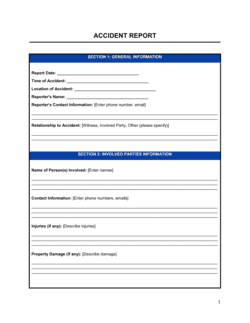
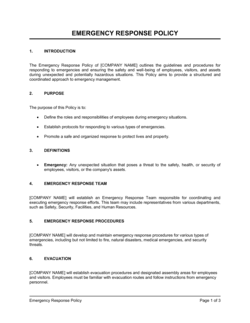
Emergency Response and Evacuation Policy Template

Free Word download • Edit online • Save & share with Drive • Export to PDF

3 pages20–30 min to fillDifficulty: Standard
Learn more ↓
FreeEmergency Response and Evacuation Policy Template

At a glance

What it is
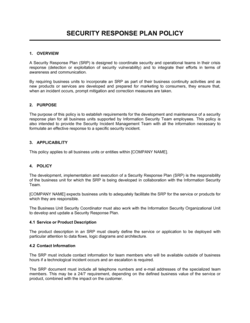
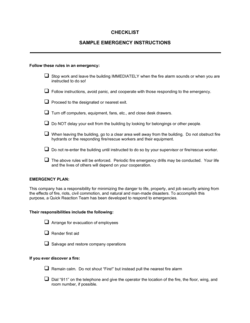
An Emergency Response and Evacuation Policy is a formal workplace document that defines procedures, roles, and communication protocols to follow when an emergency — fire, natural disaster, chemical spill, or security threat — requires employees to evacuate or shelter in place. This free Word download gives you a structured, compliance-ready starting point you can edit online and export as PDF to distribute to staff, post on notice boards, or submit to regulatory inspectors.
When you need it
Use it when setting up a new office or facility, updating outdated safety procedures, onboarding a new safety officer, or responding to a regulatory audit or insurance requirement. OSHA, local fire codes, and most commercial lease agreements require a documented emergency response plan for any workplace with employees.
What's inside
Purpose and scope, emergency contact directory, evacuation routes and assembly points, designated roles and responsibilities, communication procedures, shelter-in-place protocols, procedures for employees with disabilities, training and drill requirements, and an incident reporting and post-emergency review process.

What is an Emergency Response and Evacuation Policy?

An Emergency Response and Evacuation Policy is a formal workplace document that establishes the procedures, roles, and communication protocols all employees must follow when an emergency — fire, severe weather, chemical release, medical crisis, or security threat — requires immediate evacuation or shelter in place. It maps the specific exit routes and assembly points for your facility, names the individuals responsible for directing the response, and sets the training and drill schedule that keeps those procedures current. Unlike a general health and safety policy, an evacuation policy is procedural and scenario-specific: it tells every person in the building exactly what to do, in what order, the moment an alarm sounds.

Why You Need This Document

Without a documented evacuation policy, employees fall back on instinct during an emergency — and instinct produces bottlenecks at the wrong exits, forgotten colleagues in bathrooms and server rooms, and no one accountable for the headcount at the assembly point. The consequences are not only human: OSHA's Emergency Action Plan standard requires a written plan for any US workplace with more than 10 employees, and similar obligations exist under UK fire safety law, Canadian provincial occupational health and safety codes, and most commercial property insurance policies. A missing or outdated policy is one of the first things an insurance adjuster or regulatory inspector requests after an incident, and the absence of one can void a claim or trigger a fine. This template gives you a compliant, site-ready starting point in hours rather than weeks — so the first drill you run is documented, the first inspection you face is covered, and every employee knows exactly where to go before they ever need to.

Which variant fits your situation?

If your situation is…Use this template
Single-floor office with fewer than 20 employeesEmergency Response and Evacuation Policy
Multi-story or multi-building facility with stairwells and elevatorsMulti-Site Evacuation Plan
Manufacturing plant or warehouse with hazardous materialsChemical Emergency Response Plan
School, childcare center, or institution with vulnerable populationsSchool Emergency Response Plan
Healthcare facility requiring shelter-in-place and patient proceduresHealthcare Emergency Operations Plan
Remote or field-based workforce without a fixed office locationField Worker Safety and Emergency Policy
Comprehensive business-continuity planning beyond physical evacuationBusiness Continuity Plan

Common mistakes to avoid

❌ Using a generic template without site-specific routes

Why it matters: A policy that describes a hypothetical building rather than your actual floor plan gives employees nothing actionable. During an evacuation, vague instructions cause hesitation and bottlenecks at exits.

Fix: Replace all placeholder locations with your actual exit doors, stairwells, and assembly-point addresses before the policy is published.

❌ Naming only one person per emergency role with no backup

Why it matters: If the sole Emergency Coordinator or floor warden is travelling, on leave, or is the injured party during an incident, the role goes unfilled and the response falls apart.

Fix: Assign at least one named deputy for every role in the policy. List both primary and backup in the contacts section.

❌ Skipping Personal Emergency Evacuation Plans for employees with disabilities

Why it matters: Failure to accommodate employees with disabilities during an evacuation can result in injury, regulatory fines, and ADA or accessibility-law liability.

Fix: Proactively ask all employees about evacuation assistance needs during onboarding and at each annual review, and document PEEPs for anyone who requires one.

❌ Conducting drills without measuring evacuation time or recording results

Why it matters: An undocumented drill provides no evidence of compliance for regulators or insurers, and gives you no data to identify bottlenecks between exercises.

Fix: Appoint a timekeeper for every drill, record the elapsed time from alarm to full assembly-point headcount, note any issues, and retain the record for at least three years.

❌ Reviewing the policy only after an incident

Why it matters: A policy last updated after a 2019 fire drill will not reflect staff changes, layout renovations, or new hazards introduced since then — rendering roles and routes inaccurate.

Fix: Schedule an annual policy review on a fixed calendar date regardless of whether an incident has occurred, and update it immediately whenever headcount, floor plans, or roles change.

❌ Relying on the building fire alarm as the only notification method

Why it matters: Fire alarms do not convey whether employees should evacuate or shelter in place, and may not activate during security threats, chemical releases, or power failures affecting the alarm panel.

Fix: Implement a secondary mass-notification channel — SMS broadcast, PA announcement, or a two-way radio system — that can deliver scenario-specific instructions to all staff within two minutes.

The 10 key sections, explained

Purpose and scope

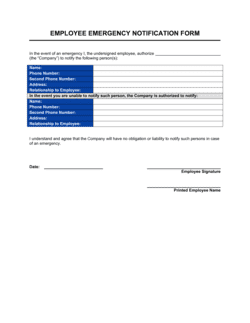
Emergency contacts and notification directory

Types of emergencies covered

Roles and responsibilities

Evacuation procedures

Shelter-in-place procedures

Procedures for employees needing assistance

Communication and alarm systems

Training and drill requirements

Incident reporting and post-emergency review

How to fill it out

  1. 1

    Identify all sites and employee populations in scope

    List every physical location the policy covers and any special populations — remote workers, shift workers, contractors, or visitors — who need specific procedures.

    💡 If you have multiple sites with different hazards (e.g., an office and a warehouse), create a site-specific annex for each rather than forcing one procedure to cover both.

  2. 2

    Assign and document all emergency roles

    Name the Emergency Coordinator, all floor wardens, and their designated backups. Confirm each person has accepted their role and knows their responsibilities before the policy is published.

    💡 Keep the named list in a separate, easily updated annex so you can swap names without re-issuing the full policy when staff changes occur.

  3. 3

    Map and verify evacuation routes for every zone

    Walk each exit route yourself to confirm it is clear of obstructions, properly lit, and leads to the correct assembly point. Note any routes that are blocked during certain times (loading docks, locked after hours).

    💡 Photograph each route and embed the images in the policy or annex — visual confirmation is faster than text descriptions in a real emergency.

  4. 4

    Define a distinct shelter-in-place room for each hazard type

    Select and label the shelter-in-place location for chemical releases (sealed interior room), severe weather (lowest interior floor), and active threats (lockable room, no street-facing windows) separately.

    💡 Post laminated cards inside each shelter-in-place room listing the procedure specific to that room — employees arriving under stress need instructions immediately available.

  5. 5

    Collect and document Personal Emergency Evacuation Plans

    Proactively ask all employees whether they require assistance during an emergency — do not wait for them to self-identify. Complete a PEEP form for any employee who does, assign a buddy, and designate their area of refuge.

    💡 Review PEEPs at the start of each calendar year and whenever an employee's mobility or health status changes.

  6. 6

    Set up a mass notification system and test it

    Configure your SMS, email, or PA mass-notification system with a current employee contact list. Send a test message to confirm delivery rates before publishing the policy.

    💡 Include personal mobile numbers, not just work email addresses — employees may not have workplace devices when an incident occurs outside business hours.

  7. 7

    Schedule the first drill and record baseline metrics

    Run a full evacuation drill within 30 days of publishing the policy. Record the total evacuation time and any headcount discrepancies, then set improvement targets for the next drill.

    💡 Announce the first drill in advance to reduce anxiety; subsequent drills can be unannounced to produce a realistic performance baseline.

  8. 8

    Obtain employee acknowledgment and store signed copies

    Have every employee sign or electronically acknowledge the policy. Retain acknowledgment records alongside drill logs for the period required by your jurisdiction's occupational safety regulations.

    💡 Include policy acknowledgment in your standard onboarding checklist so new hires are covered before their first day on site.

Frequently asked questions

What is an emergency response and evacuation policy?

An emergency response and evacuation policy is a formal workplace document that defines the procedures, roles, and communication steps employees must follow when an emergency — fire, natural disaster, chemical release, or security threat — requires evacuation or shelter in place. It names responsible persons, maps exit routes and assembly points, and sets drill requirements. Most jurisdictions require employers to have a written emergency action plan, and this policy satisfies that obligation.

Is an emergency evacuation policy legally required?

In the United States, OSHA's Emergency Action Plan standard (29 CFR 1910.38) requires a written plan for any workplace with more than 10 employees. Local fire codes, commercial lease agreements, and sector-specific regulations (healthcare, education, construction) impose additional requirements. In the UK, the Regulatory Reform (Fire Safety) Order 2005 requires a written fire risk assessment and emergency plan. Most jurisdictions impose similar obligations — check the applicable standard for your location and industry.

How often should evacuation drills be conducted?

OSHA does not specify a mandatory drill frequency for most general-industry workplaces, but twice per year is the widely accepted best practice and is required by many local fire codes. High-hazard environments — chemical plants, healthcare facilities, schools — typically require quarterly or more frequent drills. Every drill should be documented with evacuation time and headcount results; those records must be retained for inspection.

What is the difference between evacuation and shelter in place?

Evacuation moves everyone out of the building to an external assembly point. Shelter in place keeps employees inside in a designated safe area. The correct response depends on the hazard: fires and gas leaks require evacuation; tornado warnings, hazardous material releases outdoors, and active threats typically require shelter in place. Your policy should specify which procedure applies to each emergency type so employees do not have to decide under pressure.

Who should be named as the emergency coordinator?

Typically the most senior on-site manager or facilities manager, with an operational deputy who is regularly present. The coordinator must have the authority to activate the plan, contact emergency services, and order re-entry. For multi-site organizations, each site needs its own coordinator. Names and direct mobile numbers should be in the policy and posted at every emergency exit.

What is a Personal Emergency Evacuation Plan (PEEP) and who needs one?

A PEEP is an individualized plan for any employee whose disability, temporary injury, or medical condition means they cannot evacuate using the standard route and procedure unaided. This includes employees who use wheelchairs, have visual or hearing impairments, or are recovering from surgery. Each PEEP designates an evacuation buddy, an area of refuge on each floor, and the method by which emergency services will be notified of their location. Proactively ask all employees — do not wait for self-disclosure.

How do I keep the policy current as staff and layouts change?

Schedule a formal annual review on a fixed calendar date and assign ownership to a named person — typically the safety officer or HR manager. Additionally, trigger an immediate update whenever: named role-holders leave or change positions, floor plans are renovated, new hazards are introduced (new chemicals, new equipment), or a drill or incident reveals a procedural gap. Store the current version centrally and remove or archive superseded versions.

Does this policy need to be signed by employees?

While signatures are not typically required by law for a safety policy, obtaining a written or electronic acknowledgment from each employee demonstrates they have received, read, and understood the procedures. This record is valuable in the event of an injury claim, regulatory inspection, or insurance audit. Include policy acknowledgment in your onboarding checklist and re-collect it whenever the policy is materially updated.

Can a small business use this template without a dedicated safety officer?

Yes. For businesses without a dedicated safety officer, the Emergency Coordinator role is typically filled by the owner, office manager, or most senior on-site employee. The template walks through each section in plain language. For sites with fewer than 10 employees in a single-story office, completing the template and conducting one drill per year is generally sufficient to meet basic regulatory and insurance requirements. Larger sites or high-hazard environments benefit from a brief review by an occupational safety consultant.

How this compares to alternatives

vs Business Continuity Plan

An emergency response and evacuation policy addresses immediate life-safety actions during and directly after an incident — getting people out safely. A business continuity plan addresses how the organization resumes operations after the immediate threat has passed. Both are necessary; the evacuation policy is the first document activated in a crisis, the continuity plan is the second.

vs Workplace Health and Safety Policy

A workplace health and safety policy sets the broad framework for preventing workplace injuries and illnesses across all operations. An emergency response and evacuation policy is a specific, procedural sub-document that activates when prevention has failed and a threat is imminent. Most organizations need both: the safety policy governs day-to-day risk management; the evacuation policy governs crisis response.

vs Incident Report Form

An incident report form is a record completed after an emergency or injury has occurred, capturing facts for regulatory reporting and insurance purposes. The evacuation policy is the operational procedure followed during the event. The policy generates the need for the form; the form documents what the policy was used for.

vs Fire Safety Checklist

A fire safety checklist is a periodic inspection tool used to verify that extinguishers, alarms, exits, and signage are in working order. An evacuation policy is a procedural document that governs employee behavior during an emergency. The checklist ensures the physical environment is ready; the policy ensures people know what to do.

Industry-specific considerations

Manufacturing and warehousing

Hazardous material storage, forklift routes that intersect evacuation paths, and shift-change handover of warden responsibilities require site-specific procedures beyond a standard office plan.

Healthcare

Patient mobility limitations, life-critical equipment that cannot be abandoned, and joint-commission accreditation standards mean healthcare facilities require a phased evacuation sequence distinct from employee-only workplaces.

Retail and hospitality

High customer-to-staff ratios and frequent public access mean staff must be trained to direct unfamiliar visitors to exits, and assembly points must accommodate variable crowd sizes.

Construction and field operations

No fixed building layout, daily changes to site access routes, and co-located subcontractors mean muster lists must be updated each morning and evacuation routes re-briefed at every toolbox talk.

Template vs pro — what fits your needs?

PathBest forCostTime
Use the templateSmall to mid-size offices and single-site businesses without complex hazardsFree2–4 hours to complete and tailor to your site
Template + professional reviewMulti-site operations, high-hazard environments, or businesses subject to sector-specific safety regulations$300–$1,500 for a review by an occupational safety consultant3–5 business days
Custom draftedLarge facilities, healthcare or industrial sites with regulated hazardous materials, or organizations requiring a full emergency management program$2,000–$8,000+ for a professional safety consultant engagement2–6 weeks

Glossary

Assembly Point
A pre-designated outdoor location where all evacuated employees gather so headcounts can be taken and everyone accounted for.
Emergency Warden
A designated employee responsible for directing evacuation in their assigned area, conducting headcounts, and liaising with emergency services.
Shelter-in-Place
A procedure in which employees remain inside the building in a designated safe area rather than evacuating — used for hazardous material releases, severe weather, or active-threat situations.
Evacuation Route
A mapped path from any point in a building to the nearest emergency exit and on to the assembly point, posted on building floor plans.
Muster List
A real-time register of all employees, contractors, and visitors present on-site on any given day, used to verify full evacuation at the assembly point.
Emergency Coordinator
The senior person responsible for activating the emergency response plan, communicating with emergency services, and making decisions on shelter-in-place versus evacuation.
OSHA Emergency Action Plan (EAP)
A federally mandated written plan (required in the US for employers with more than 10 employees) covering evacuation routes, alarm procedures, and employee responsibilities.
Personal Emergency Evacuation Plan (PEEP)
An individualized evacuation plan for an employee whose disability or medical condition requires assistance during an emergency.
All-Clear Signal
An official notification from the emergency coordinator or emergency services that the hazard has passed and employees may safely re-enter the building.
Incident Log
A written record of what occurred during an emergency event, including time of alarm, evacuation time, headcount results, injuries, and actions taken — used for post-incident review and regulatory reporting.

Part of your Business Operating System

This document is one of 3,000+ business & legal templates included in Business in a Box.

  • Fill-in-the-blanks — ready in minutes
  • 100% customizable Word document
  • Compatible with all office suites
  • Export to PDF and share electronically

Create your document in 3 simple steps.

From template to signed document — all inside one Business Operating System.
1
Download or open template

Access over 3,000+ business and legal templates for any business task, project or initiative.

2
Edit and fill in the blanks with AI

Customize your ready-made business document template and save it in the cloud.

3
Save, Share, Send, Sign

Share your files and folders with your team. Create a space of seamless collaboration.

Save time, save money, and create top-quality documents.

★★★★★

"Fantastic value! I'm not sure how I'd do without it. It's worth its weight in gold and paid back for itself many times."

Managing Director · Mall Farm
Robert Whalley
Managing Director, Mall Farm Proprietary Limited
★★★★★

"I have been using Business in a Box for years. It has been the most useful source of templates I have encountered. I recommend it to anyone."

Business Owner · 4+ years
Dr Michael John Freestone
Business Owner
★★★★★

"It has been a life saver so many times I have lost count. Business in a Box has saved me so much time and as you know, time is money."

Owner · Upstate Web
David G. Moore Jr.
Owner, Upstate Web

Run your business with a system — not scattered tools

Stop downloading documents. Start operating with clarity. Business in a Box gives you the Business Operating System used by over 250,000 companies worldwide to structure, run, and grow their business.

Free Forever Plan · No credit card required