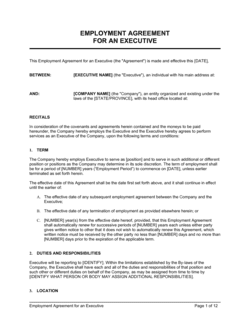
Earnout Clauses Agreement Template

Free Word download • Edit online • Save & share with Drive • Export to PDF

3 pages25–35 min to fillDifficulty: ComplexSignature requiredLegal review recommended
Learn more ↓
FreeEarnout Clauses Agreement Template

At a glance

What it is
An Earnout Clauses Agreement is a legally binding document used in mergers and acquisitions that ties a portion of the purchase price to the target company's post-closing financial or operational performance. This free Word download gives buyers and sellers a structured, attorney-ready starting point they can edit online and export as PDF — covering performance metrics, measurement periods, payment schedules, seller protections, and dispute resolution in a single document.
When you need it
Use it when a buyer and seller cannot agree on a single upfront valuation — typically because the target business has uncertain future revenue, recent rapid growth, or unproven products. It is also commonly used to retain key seller management post-closing by aligning their compensation with results.
What's inside
Performance metric definitions, measurement periods, earnout payment schedule, buyer operational covenants protecting the seller's ability to hit targets, accounting methodology, dispute resolution procedures, and acceleration or forfeiture triggers.

What is an Earnout Clauses Agreement?

An Earnout Clauses Agreement is a legally binding document used in mergers and acquisitions that makes a portion of the purchase price contingent on the acquired business's post-closing financial or operational performance. Rather than settling the full valuation dispute upfront, the buyer and seller agree that if the target meets defined performance thresholds — typically revenue, EBITDA, or gross profit targets — during a specified period after closing, the seller receives additional consideration. The document defines those metrics precisely, establishes the buyer's obligations to operate the business fairly during the measurement period, and creates a binding process for calculating, auditing, and resolving disputes over each payment.

Earnouts are typically used when the buyer and seller are more than 10–15% apart on valuation — a gap that commonly arises when the target has a short operating history, recent rapid growth, or a product pending regulatory approval. By deferring a portion of the price, both parties share the risk and reward of post-closing performance rather than forcing one side to accept the other's valuation assumption at a fixed point in time.

Why You Need This Document

Without a written earnout agreement, the deferred consideration in an acquisition is unenforceable. A buyer who verbally agrees to pay more if the business performs well faces no legal obligation to do so unless the terms — metric definitions, payment thresholds, measurement dates, and audit rights — are documented and signed. Sellers who skip a formal earnout agreement routinely receive nothing on the contingent portion of their deal, because the buyer's post-closing management decisions — shifting customers to affiliates, loading overhead, or changing accounting methods — can legally reduce the measured metric to zero with no remedy available.

Even a well-intentioned buyer needs this document to protect itself: a properly drafted earnout with a payment cap and clear forfeiture triggers prevents an unanticipated obligation from materializing years after closing. For both sides, the cost of not having a precise, signed earnout agreement is absorbing the full economic risk of the other party's valuation assumptions — which is exactly what the earnout structure is designed to avoid. This template gives buyers and sellers a structured, attorney-ready foundation that covers every material term, reducing drafting time and the risk of the ambiguity that drives earnout litigation.

Which variant fits your situation?

If your situation is…Use this template
Acquiring a SaaS or subscription business with unpredictable churnEarnout Clauses Agreement (Revenue-Based)
Seller remaining as CEO post-closing with full operational controlEarnout Clauses Agreement with Employment Addendum
Acquisition of a pharma or biotech asset pending regulatory approvalMilestone-Based Earnout Agreement
Full business acquisition including all earnout and purchase price termsBusiness Purchase Agreement
Buyer acquiring only specific assets, not the full entityAsset Purchase Agreement
Seller retaining equity stake post-closing alongside earnoutStock Purchase Agreement with Earnout
Short-form earnout covering a single fiscal year metricEarnout Side Letter

Common mistakes to avoid

❌ Defining the metric too broadly

Why it matters: A metric defined as 'revenue' without exclusions allows the buyer to count intercompany transfers, one-time gains, or post-closing acquisitions — inflating or suppressing the number depending on their interest.

Fix: Define every inclusion and exclusion explicitly, and test the definition against at least two years of historical financials before signing.

❌ Omitting operational covenants for the seller

Why it matters: Without covenants preventing the buyer from diverting customers, loading overhead, or eliminating key personnel, the buyer can legally reduce the earnout metric to zero through ordinary post-closing management decisions.

Fix: Include a named list of prohibited actions and attach a Schedule of protected key employees whose departure triggers either earnout acceleration or forfeiture depending on the cause.

❌ No audit right for the seller

Why it matters: Buyer-prepared earnout statements are unverifiable without audit access — sellers routinely receive payments significantly below what a full audit would support.

Fix: Grant the seller a 30-day right to audit all books and records relevant to the earnout calculation after receiving each annual statement, at the seller's cost unless the audit reveals an underpayment exceeding a defined threshold.

❌ Earnout period exceeding 36 months

Why it matters: Long earnout periods increase the probability of post-closing relationship breakdown, management changes, market shifts, and accounting disputes — all of which tend to reduce the earnout paid rather than increase it.

Fix: Limit the earnout to 12 to 24 months. If a longer period is unavoidable, include quarterly milestones and interim payment mechanisms to reduce the lump-sum risk at the end.

❌ No acceleration clause for a second sale of the business

Why it matters: If the buyer sells the acquired business mid-earnout to a third party who has no earnout obligations, the seller may lose the entire remaining deferred consideration with no remedy.

Fix: Include an explicit acceleration clause triggering full payment of the unpaid earnout upon any sale, transfer, or change of control of the acquired business or the buyer itself.

❌ Choosing litigation as the sole dispute resolution mechanism

Why it matters: Earnout disputes require accounting expertise — judges rarely have it, litigation takes 18 to 36 months, and legal fees routinely exceed the disputed amount for earnouts under $5 million.

Fix: Specify binding independent accountant determination as the primary mechanism, with litigation reserved only for non-accounting questions such as breach of operational covenants.

The 10 key clauses, explained

Parties and Recitals

In plain language: Identifies the buyer, seller, and acquired entity by full legal name and ties the earnout agreement to the underlying acquisition document.

Sample language
This Earnout Agreement ('Agreement') is entered into as of [CLOSING DATE] by and between [BUYER LEGAL NAME] ('Buyer') and [SELLER LEGAL NAME] ('Seller') in connection with the acquisition of [TARGET COMPANY NAME] pursuant to the [PURCHASE AGREEMENT] dated [DATE].

Common mistake: Failing to cross-reference the parent acquisition agreement. Without an explicit tie-in, courts may treat the earnout as a standalone obligation disconnected from the deal's other conditions and representations.

Performance Metric Definition

In plain language: Specifies exactly which financial or operational figure will be measured — revenue, EBITDA, gross profit, units sold, or a non-financial milestone — and how it is calculated.

Sample language
'Earnout Revenue' means the consolidated net revenue of the Business for the applicable Earnout Year, calculated in accordance with GAAP, excluding (i) intercompany transactions with Buyer's affiliates, (ii) revenue from acquisitions made by Buyer post-Closing, and (iii) any revenue attributable to discontinued product lines.

Common mistake: Using a broad term like 'revenue' without defining inclusions and exclusions. Post-closing disputes almost always center on what the buyer counted or excluded — specificity eliminates the ambiguity that drives litigation.

Earnout Period and Measurement Schedule

In plain language: States the start and end dates of each measurement period, how many periods exist, and when calculations and payments are due after each period closes.

Sample language
The Earnout Period shall consist of [TWO] annual measurement periods: (i) Year 1: [DATE] through [DATE]; and (ii) Year 2: [DATE] through [DATE]. Buyer shall deliver an Earnout Statement within [45] days following the end of each Earnout Year.

Common mistake: Setting an earnout period longer than 36 months. Multi-year earnouts dramatically increase the likelihood of management conflict, accounting disputes, and litigation — most practitioners recommend 12 to 24 months.

Earnout Payment Schedule and Thresholds

In plain language: Sets the dollar amounts or formulas payable at each performance tier — floor, target, and stretch — and the maximum earnout cap.

Sample language
Buyer shall pay Seller an Earnout Amount for each Earnout Year calculated as follows: (i) if Earnout Revenue is below $[FLOOR], $0; (ii) if Earnout Revenue is between $[FLOOR] and $[TARGET], $[X] per $[Y] of revenue; (iii) if Earnout Revenue equals or exceeds $[TARGET], $[MAXIMUM EARNOUT AMOUNT].

Common mistake: No payment floor and no cap. Without a floor, the seller bears all downside risk; without a cap, the buyer faces uncapped liability. Both extremes make the deal economically unpredictable and are harder to get approved by boards or lenders.

Accounting Methodology

In plain language: Specifies the accounting standards, treatment elections, and consistency requirements that govern how the performance metrics are calculated each period.

Sample language
All calculations under this Agreement shall be made in accordance with GAAP applied on a basis consistent with the Company's historical accounting practices in effect for the 12-month period prior to Closing. Buyer shall not change any accounting policy, method, or election that would have the effect of reducing the Earnout Amount without Seller's prior written consent.

Common mistake: Allowing the buyer to adopt new accounting standards or change revenue recognition methods mid-earnout without seller consent. A shift from cash-basis to accrual — or vice versa — can move the earnout metric by 10–20% without any real change in business performance.

Buyer Operational Covenants (Anti-Dilution Protections)

In plain language: Obligates the buyer to operate the acquired business in a manner that gives the seller a reasonable opportunity to earn the earnout — prohibiting actions that would artificially suppress the metrics.

Sample language
During the Earnout Period, Buyer shall: (i) operate the Business as a separate accounting unit; (ii) not allocate corporate overhead to the Business in excess of [X]% of revenue; (iii) not divert customers, contracts, or revenue-generating opportunities from the Business to Buyer's affiliates; and (iv) maintain the Business's key employees listed in Schedule A.

Common mistake: Omitting operational covenants entirely. Without them, a buyer can legitimately restructure the business, shift customers to affiliates, load overhead, or change the product mix in ways that legally destroy the earnout — leaving the seller with no remedy.

Earnout Statement and Audit Rights

In plain language: Requires the buyer to deliver a detailed earnout calculation within a defined period after each measurement year and gives the seller the right to audit the underlying books.

Sample language
Buyer shall deliver to Seller an Earnout Statement within [45] days after the end of each Earnout Year, setting out the calculation of the Earnout Amount in reasonable detail. Seller shall have [30] days to review and may, at its expense, audit the relevant books and records of the Business. If Seller does not object within such period, the statement becomes final and binding.

Common mistake: No audit right for the seller. A buyer-prepared earnout statement with no audit mechanism is effectively unverifiable — sellers who waive audit rights routinely receive lower earnout payments than the actual results would support.

Dispute Resolution

In plain language: Defines the process for resolving disagreements over earnout calculations — typically a negotiation period followed by referral to an independent accountant whose determination is binding.

Sample language
If Seller objects to the Earnout Statement, the parties shall negotiate in good faith for [20] Business Days. If unresolved, either party may refer the dispute to [ACCOUNTING FIRM / JAMS], whose determination shall be final, binding, and non-appealable. Costs shall be borne by the party whose position deviates furthest from the expert's determination.

Common mistake: Specifying court litigation as the only dispute mechanism. Earnout disputes involve complex accounting questions — litigation is expensive, slow, and decided by judges without accounting expertise. Independent accountant determination resolves 80–90% of earnout disputes faster and at a fraction of the cost.

Acceleration and Forfeiture Triggers

In plain language: Specifies events that cause the full remaining earnout to become immediately due (acceleration) or permanently forfeited — such as a second sale of the business, material breach, or seller's voluntary departure.

Sample language
The entire unpaid Earnout Amount shall immediately accelerate and become due if Buyer (i) sells or transfers more than 50% of the equity or assets of the Business to a third party, (ii) materially breaches this Agreement and fails to cure within [30] days of written notice, or (iii) causes a Change of Control of Buyer. Seller forfeits any unpaid Earnout Amount if Seller voluntarily terminates employment with the Business within [12] months of Closing without Good Reason.

Common mistake: Failing to define 'Change of Control' and 'Good Reason' precisely. Ambiguous triggers generate the most earnout litigation — courts have split on whether a private equity recapitalization, minority sale, or IPO constitutes a change of control triggering acceleration.

Governing Law and Entire Agreement

In plain language: Specifies the jurisdiction whose law governs the agreement, confirms that this document and the parent acquisition agreement constitute the complete understanding of the parties on earnout matters.

Sample language
This Agreement shall be governed by and construed in accordance with the laws of [STATE / PROVINCE / COUNTRY], without regard to conflict-of-law principles. This Agreement, together with the [PURCHASE AGREEMENT], constitutes the entire agreement of the parties with respect to the subject matter hereof and supersedes all prior representations, negotiations, and understandings.

Common mistake: Choosing a governing jurisdiction that differs from the parent acquisition agreement. Conflicting governing law clauses require courts to resolve which document controls — a preventable ambiguity that adds cost and uncertainty to any dispute.

How to fill it out

  1. 1

    Identify the parties and link to the parent acquisition agreement

    Enter the full registered legal names of the buyer, seller, and target entity. Include the date and name of the underlying purchase agreement so the earnout is unambiguously tied to the deal.

    💡 Confirm that the entity names exactly match the signatory names in the parent acquisition agreement — a mismatch creates an enforcement gap.

  2. 2

    Define the performance metric with precise inclusions and exclusions

    Choose one primary metric — revenue, EBITDA, gross profit, or a non-financial milestone — and write a definition that explicitly lists what is included and what is excluded from the calculation.

    💡 If in doubt, model the metric against three historical years of financials to test whether the definition produces the result both parties expect.

  3. 3

    Set the earnout period and measurement calendar

    Define the start date (typically the closing date), the number of annual or quarterly measurement periods, and the deadline by which the buyer must deliver each earnout statement.

    💡 Keep the earnout period to 24 months or less — every additional year multiplies the probability of management conflict and metric manipulation.

  4. 4

    Build the payment threshold table

    Enter the floor below which no payment is owed, the target level at which the agreed consideration is paid, and the maximum cap. For EBITDA-based earnouts, include a percentage formula between floor and target rather than a binary on/off payment.

    💡 A linear sliding scale between floor and target aligns incentives better than a cliff-edge threshold where missing by $1 means losing the entire earnout.

  5. 5

    Draft the buyer's operational covenants

    List the specific actions the buyer is prohibited from taking during the earnout period — affiliate revenue diversion, excess overhead allocation, key employee terminations, and material product changes. Attach a list of protected key employees as Schedule A.

    💡 Negotiate covenants during the LOI stage, not at closing — buyers are more willing to accept seller protections before the deal is fully signed.

  6. 6

    Confirm the accounting methodology and change restrictions

    State that calculations follow GAAP (or IFRS for UK/EU deals) applied consistently with the company's pre-closing historical practices. Add a clause requiring seller consent for any accounting policy change that would reduce the earnout metric by more than a defined threshold.

    💡 Attach the company's most recent audited financial statements as the accounting baseline to eliminate ambiguity about what 'consistent historical practice' means.

  7. 7

    Include audit rights and a dispute resolution mechanism

    Grant the seller the right to audit earnout calculations within 30 days of receiving each statement. Define a 20-business-day negotiation period followed by referral to a named independent accounting firm whose determination is binding and non-appealable.

    💡 Name a specific accounting firm or arbitration body — leaving the choice open creates another dispute before the underlying one is even resolved.

  8. 8

    Execute before or simultaneously with closing

    Both parties must sign the earnout agreement on or before the closing date of the acquisition. Post-closing execution raises fresh-consideration issues and may void seller protections in common-law jurisdictions.

    💡 Use a counterparts and electronic signature clause to allow simultaneous signing across multiple time zones at closing.

Frequently asked questions

What is an earnout clause in an acquisition agreement?

An earnout clause is a contractual provision in a merger or acquisition agreement that ties a portion of the purchase price to the target company's post-closing performance. Rather than paying the full price upfront, the buyer pays an additional amount — the earnout — if the business meets specified revenue, EBITDA, or milestone targets during the earnout period, typically one to three years after closing. It is commonly used to bridge a valuation gap when buyer and seller cannot agree on a single upfront price.

When should a buyer or seller use an earnout agreement?

Earnouts are most appropriate when there is significant uncertainty about the target's future performance — for example, a startup with a short revenue history, a company with a product awaiting regulatory approval, or a business whose results depend heavily on the continued involvement of the seller post-closing. Sellers accept earnouts to secure a higher total potential price; buyers use them to limit upfront risk. They are less suitable when the seller exits completely and has no influence over post-closing operations.

What performance metrics are most commonly used in earnout agreements?

Revenue and EBITDA are the two most common earnout metrics in M&A transactions. Revenue is simpler to measure but easier for a buyer to manipulate through intercompany transactions or customer diversion. EBITDA is more aligned with value creation but susceptible to accounting policy changes and overhead allocation. Gross profit is a middle ground used in product businesses. Non-financial milestones — regulatory approvals, contract signings, or customer retention rates — are common in pharma, SaaS, and professional services acquisitions.

How long should an earnout period last?

Most M&A practitioners recommend earnout periods of 12 to 24 months. Periods exceeding 36 months significantly increase the probability of management conflict, post-closing relationship breakdown, and accounting disputes. The longer the earnout period, the more the seller's payment depends on the buyer's management decisions rather than the seller's original performance — which is the opposite of what earnouts are designed to achieve.

What protections should a seller insist on in an earnout agreement?

Sellers should insist on at minimum four protections: operational covenants prohibiting the buyer from diverting customers, loading overhead, or eliminating key employees; audit rights over each earnout calculation; an acceleration clause triggered by a second sale of the business; and a binding independent accountant dispute resolution mechanism. Without these, the buyer can legally manage the acquired business in ways that reduce the earnout to zero while fully complying with the contract.

Are earnout payments taxable?

In most jurisdictions, earnout payments are taxable, but the character of the tax depends on how they are structured. Payments treated as additional purchase price are typically subject to capital gains tax. Payments tied to the seller's continued employment are generally treated as ordinary income. In the US, the IRS scrutinizes earnouts closely when the seller remains an employee, often seeking to reclassify capital gain earnout payments as compensation income. Consult a tax advisor before finalizing the earnout structure.

Can an earnout clause be enforced if the buyer intentionally prevents the seller from hitting the targets?

In most jurisdictions, courts imply a duty of good faith on the buyer not to deliberately prevent the seller from earning the earnout. In the US, the Delaware Court of Chancery has consistently held that buyers breach their implied covenant of good faith when they take actions specifically designed to suppress earnout metrics. However, relying on implied duties is far weaker protection than explicit contractual covenants — sellers should always negotiate specific operational prohibitions rather than depending on implied good-faith obligations alone.

What is the difference between an earnout and a purchase price adjustment?

A purchase price adjustment — typically based on closing-date working capital, net debt, or cash balances — corrects the agreed price for conditions that existed at closing but were not fully known until the books were closed. An earnout is forward-looking, contingent on post-closing performance that has not yet occurred. Both may appear in the same acquisition agreement, but they serve fundamentally different functions and are calculated on entirely different timelines.

Do I need a lawyer to draft an earnout agreement?

For most M&A transactions, yes. Earnout agreements involve complex accounting definitions, post-closing behavioral obligations, and multi-year payment mechanisms that interact with employment agreements, tax structures, and the parent acquisition agreement. A well-completed template is a strong starting point that reduces drafting time and legal cost, but attorney review is strongly recommended — particularly for deals above $500K or involving non-financial milestones, multi-year periods, or cross-border considerations.

How this compares to alternatives

vs Business Purchase Agreement

A Business Purchase Agreement governs the full acquisition transaction — representations, warranties, indemnities, closing conditions, and purchase price. An Earnout Clauses Agreement is a companion document or addendum that handles only the contingent payment mechanism. Most M&A deals use both: the purchase agreement sets the fixed consideration and deal structure, while the earnout agreement defines how deferred performance-based consideration is measured, paid, and disputed.

vs Asset Purchase Agreement

An Asset Purchase Agreement transfers specific business assets — equipment, contracts, IP, and customer lists — rather than the equity of the company. Earnout provisions can be embedded in either an asset or equity purchase, but asset deals require careful drafting to define which entity's post-closing operations generate the earnout metrics, since the seller entity retains its legal existence after the assets transfer.

vs Stock Purchase Agreement

A Stock Purchase Agreement transfers equity ownership of the target company. Because the target's legal entity continues unchanged, stock deals typically simplify earnout accounting — the acquired company's own books serve as the measurement base. Earnout clauses in stock deals focus primarily on preventing buyer manipulation of the target's post-closing financials through intercompany transactions or overhead loading.

vs Letter of Intent (LOI)

A Letter of Intent outlines the proposed deal structure — including whether an earnout will be used — but is typically non-binding on financial terms. The earnout mechanism described in an LOI is a framework only; the binding definition of metrics, covenants, audit rights, and dispute procedures appears in the final Earnout Clauses Agreement executed at closing. The LOI is the negotiation document; the earnout agreement is the enforceable one.

Industry-specific considerations

Technology / SaaS

ARR or MRR-based earnout metrics with specific churn exclusions, product milestone triggers, and retention covenants for engineering and sales leadership.

Healthcare and Pharmaceuticals

Non-financial milestone earnouts tied to FDA approval stages, clinical trial completion, or reimbursement code assignments — with extended periods up to 36 months.

Professional Services

Client retention rates and revenue-per-engagement metrics with anti-solicitation covenants protecting the earnout against client diversion by the buyer.

Manufacturing

Gross profit earnouts adjusted for raw material cost pass-throughs, with specific exclusions for buyer-mandated capital expenditures that reduce EBITDA.

Jurisdictional notes

United States

Delaware courts — which govern most US M&A transactions — apply a strong implied covenant of good faith to buyer conduct during earnout periods, but sellers cannot rely on this alone. The IRS closely scrutinizes earnout payments to selling shareholders who remain as employees, frequently seeking to reclassify capital-gain earnout receipts as ordinary compensation income under IRC §83. State-specific non-compete and trade secret laws also interact with earnout protections for seller key employees.

Canada

Canadian courts in Ontario and British Columbia have enforced earnout clauses where the metric definitions and buyer obligations are clearly drafted, but have voided provisions found to be ambiguous in favor of the buyer as the document's drafter. Quebec's Civil Code applies different interpretive rules than common-law provinces and requires extra care in metric and covenant language. Earnout payments to selling shareholders who remain as employees may be recharacterized as employment income under the Income Tax Act, triggering CPP obligations and higher marginal rates.

United Kingdom

English courts do not imply a general duty of good faith in commercial contracts — meaning a buyer who reduces the earnout metric through entirely lawful management decisions faces no implied liability unless specific covenants are breached. Sellers in UK transactions must negotiate explicit behavioral obligations. HMRC may apply Employment-Related Securities rules if earnout payments are linked to the seller's continued service, treating payments as employment income subject to PAYE and NICs rather than capital gains.

European Union

EU member states vary significantly in their treatment of contingent purchase price obligations. German law (BGB §242) implies a general duty of good faith, offering sellers stronger implied protection than UK law. French courts have similarly implied seller protections in earnout disputes. IFRS revenue recognition standards govern metric calculations for EU-listed entities and may produce different earnout results than US GAAP — requiring explicit accounting standard elections in cross-border deals. VAT treatment of earnout payments also varies by member state.

Template vs lawyer — what fits your deal?

PathBest forCostTime
Use the templateSimple single-metric earnouts on deals under $500K with a defined 12-month period and seller remaining as an employeeFree2–4 hours to complete the template
Template + legal reviewDeals between $500K and $5M, multi-year periods, or EBITDA-based metrics requiring accounting policy alignment$800–$2,500 for attorney review and redline3–7 business days
Custom draftedTransactions above $5M, cross-border acquisitions, pharma milestone earnouts, or earnouts tied to complex financial instruments$5,000–$25,000+2–6 weeks

Glossary

Earnout
A contractual mechanism where a portion of the acquisition price is paid to the seller after closing, contingent on the target meeting defined performance thresholds.
Earnout Period
The defined post-closing window — typically 12 to 36 months — during which performance is measured and earnout payments are calculated.
Performance Metric
The specific, measurable target — such as EBITDA, revenue, gross profit, or a non-financial milestone — that triggers an earnout payment when achieved.
EBITDA
Earnings Before Interest, Taxes, Depreciation, and Amortization — a common earnout metric because it approximates operating cash generation and is harder to manipulate than net income.
Acceleration Clause
A provision that makes the full remaining earnout immediately payable to the seller if the buyer triggers a specified event, such as a change of control or material breach.
Clawback
A provision allowing the buyer to recover previously paid earnout amounts if the performance figures are later restated or found to be inaccurate.
Anti-Dilution Covenant
A seller protection requiring the buyer to operate the acquired business in a manner that does not artificially suppress the earnout metrics — for example, by shifting revenue to affiliated entities.
Closing Date
The date on which the acquisition transaction is completed and legal ownership transfers to the buyer — the typical start date for the earnout measurement period.
Escrow
A third-party holding arrangement sometimes used in earnouts to ring-fence buyer funds against future earnout payment obligations.
Purchase Price Adjustment
A separate mechanism — distinct from an earnout — that adjusts the acquisition price based on working capital, net debt, or similar closing-date balance sheet items.
Good Faith Operation Covenant
A contractual obligation requiring the buyer to operate the acquired business in a commercially reasonable manner to give the seller a fair opportunity to achieve the earnout.
Dispute Resolution Expert
An independent accountant or financial expert appointed to resolve disagreements over earnout calculations when the parties cannot agree within a defined negotiation window.

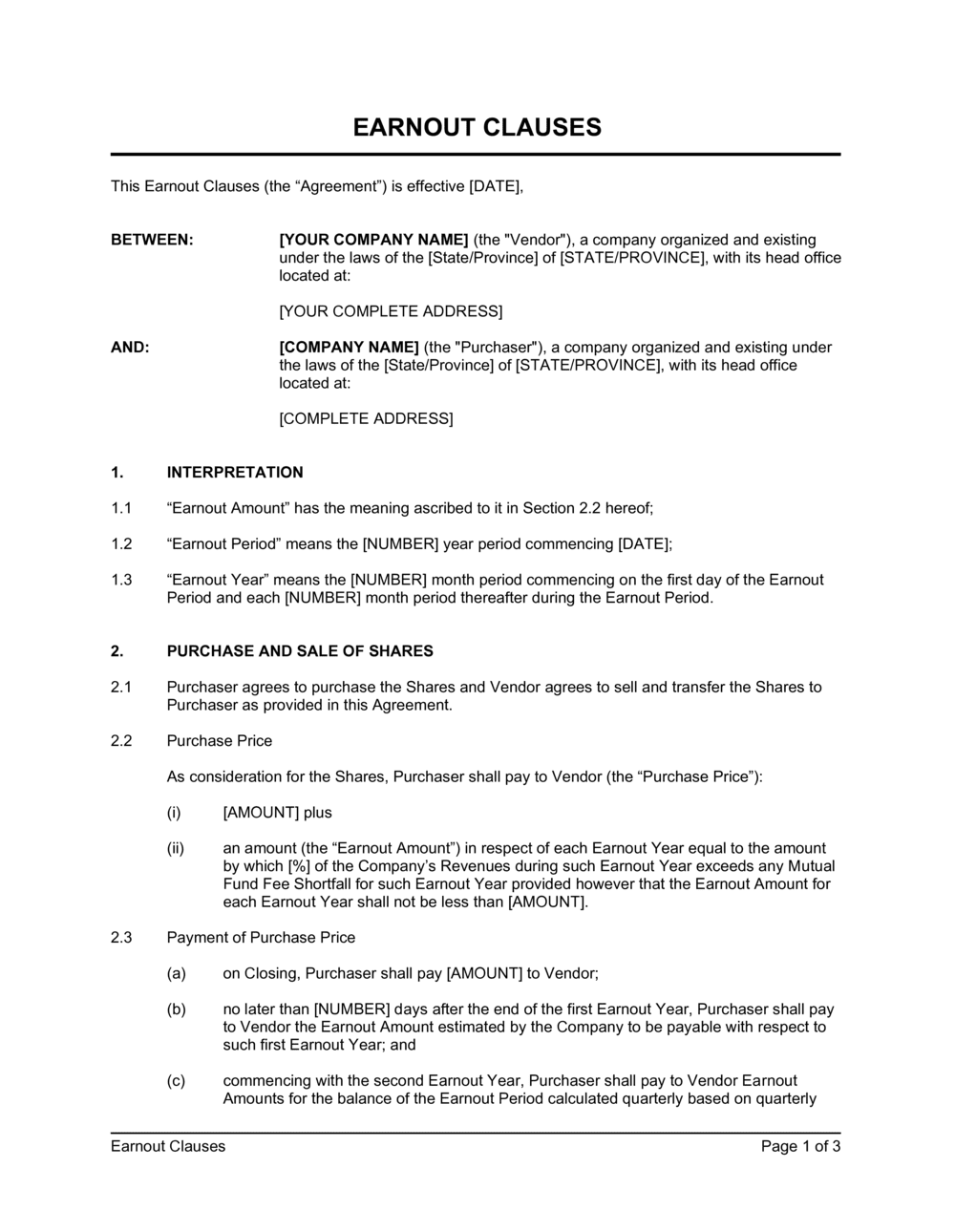
Part of your Business Operating System

This document is one of 3,000+ business & legal templates included in Business in a Box.

  • Fill-in-the-blanks — ready in minutes
  • 100% customizable Word document
  • Compatible with all office suites
  • Export to PDF and share electronically

Create your document in 3 simple steps.

From template to signed document — all inside one Business Operating System.
1
Download or open template

Access over 3,000+ business and legal templates for any business task, project or initiative.

2
Edit and fill in the blanks with AI

Customize your ready-made business document template and save it in the cloud.

3
Save, Share, Send, Sign

Share your files and folders with your team. Create a space of seamless collaboration.

Save time, save money, and create top-quality documents.

★★★★★

"Fantastic value! I'm not sure how I'd do without it. It's worth its weight in gold and paid back for itself many times."

Managing Director · Mall Farm
Robert Whalley
Managing Director, Mall Farm Proprietary Limited
★★★★★

"I have been using Business in a Box for years. It has been the most useful source of templates I have encountered. I recommend it to anyone."

Business Owner · 4+ years
Dr Michael John Freestone
Business Owner
★★★★★

"It has been a life saver so many times I have lost count. Business in a Box has saved me so much time and as you know, time is money."

Owner · Upstate Web
David G. Moore Jr.
Owner, Upstate Web

Run your business with a system — not scattered tools

Stop downloading documents. Start operating with clarity. Business in a Box gives you the Business Operating System used by over 250,000 companies worldwide to structure, run, and grow their business.

Free Forever Plan · No credit card required