- Work Ethic Policy
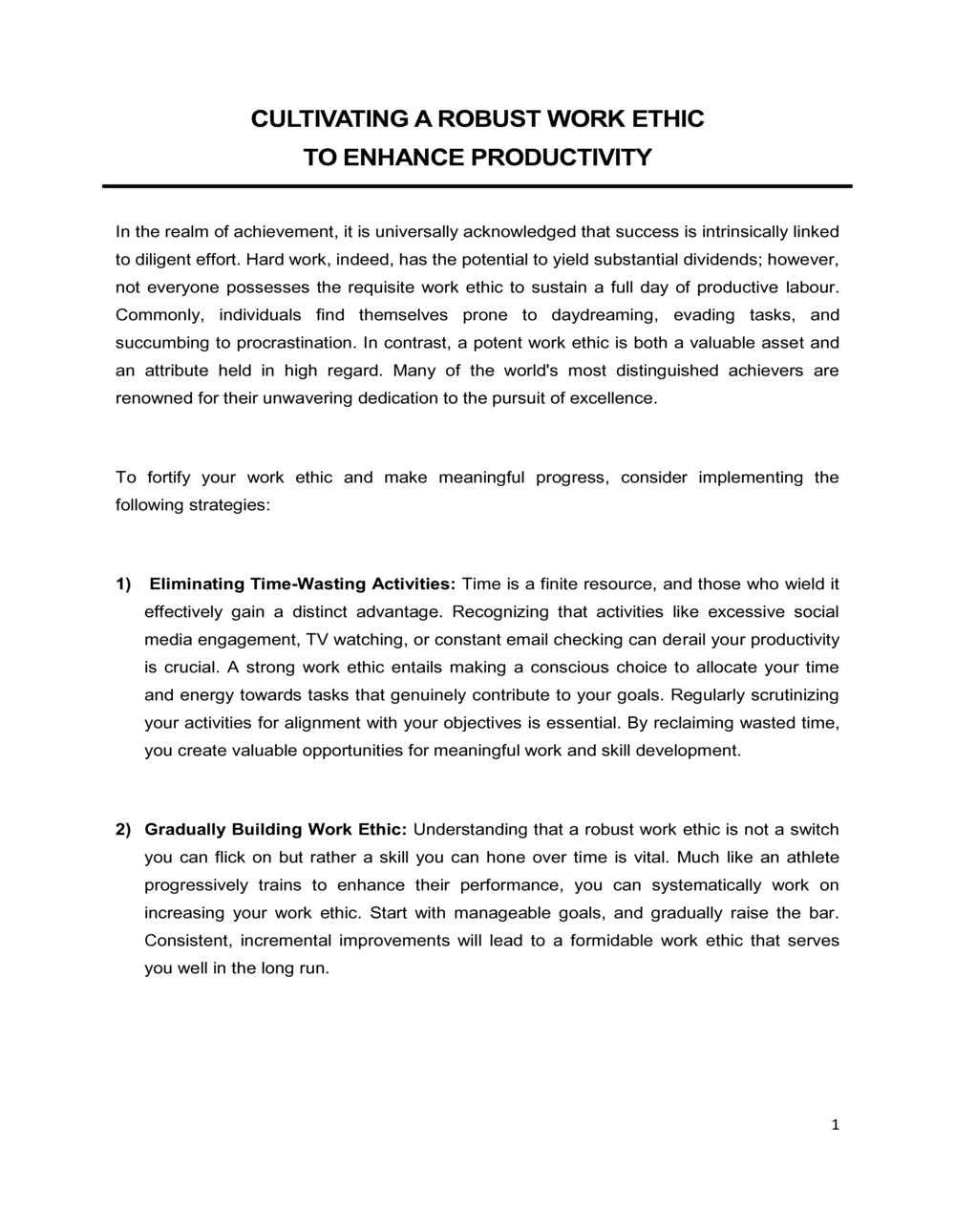
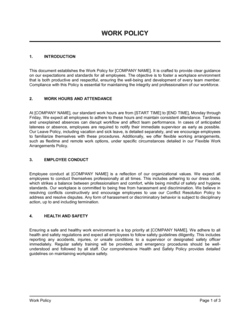
- A formal employer document that defines the conduct, diligence, and professional standards expected of all employees as a condition of employment.
- Acknowledgment Clause
- A signed statement by the employee confirming they have read, understood, and agreed to be bound by the terms of the policy.
- Progressive Discipline
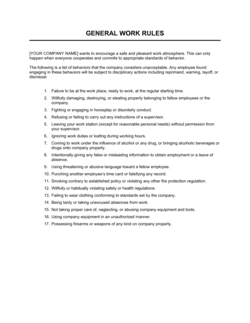
- A structured escalation process for addressing misconduct — typically moving from verbal warning to written warning to suspension to termination.
- At-Will Employment
- An employment arrangement in which either party may end the relationship at any time for any lawful reason — the policy does not convert at-will status to cause-based termination.
- Performance Standard
- A defined, measurable expectation of output quality, quantity, or behavior against which an employee's performance is evaluated.
- Insubordination
- A deliberate refusal to follow a reasonable, lawful directive from a supervisor or manager — typically grounds for formal disciplinary action.
- Probationary Period
- A defined initial period — typically 30 to 90 days — during which the employer evaluates whether the employee meets conduct and performance standards.
- Gross Misconduct
- Severe workplace behavior — such as theft, harassment, or falsification of records — that typically justifies immediate termination without a progressive discipline process.
- Constructive Feedback
- Formal or informal communication from a manager that identifies a performance gap and provides specific, actionable guidance for improvement.
- Policy Waiver
- A deliberate employer decision not to enforce a specific policy provision in a particular instance — which, if habitual, can undermine the policy's enforceability.
- Duty of Good Faith
- An implied obligation in many employment relationships requiring both parties to act honestly and not undermine the other's reasonable expectations.