1
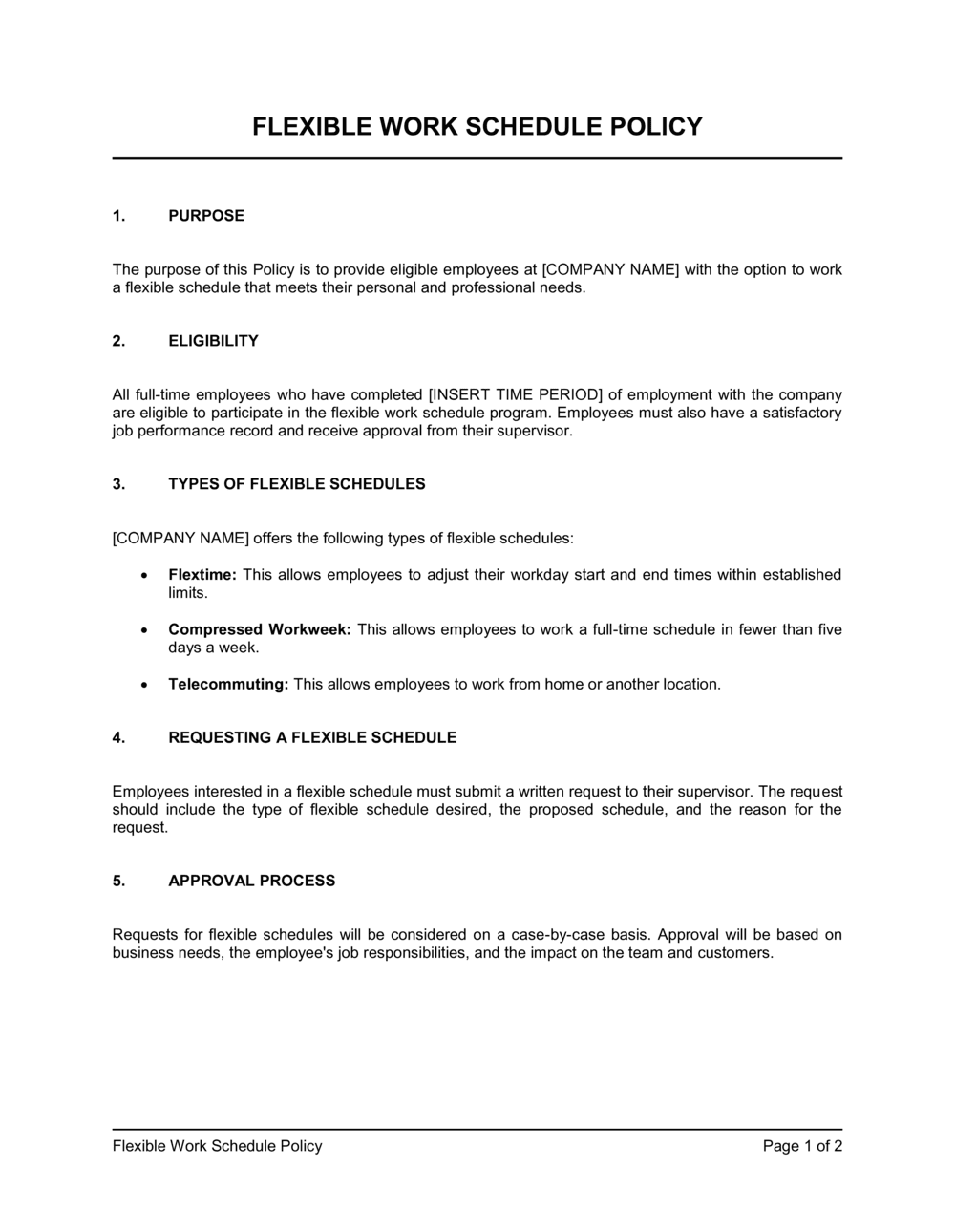
Define the policy's scope and covered employees
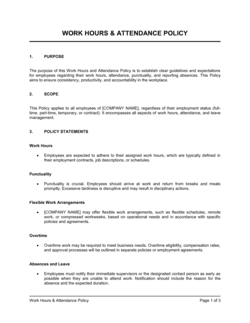
Specify which employee classifications the policy covers — full-time, part-time, salaried, hourly — and explicitly exclude contractors, temps, or probationary staff if intended.
💡 Cross-reference your existing job classifications in your HRIS to ensure every group is either included or explicitly excluded.
2
Set eligibility thresholds
Enter the minimum tenure (e.g., 6 months of continuous service) and the performance floor (e.g., 'Meets Expectations' on the most recent annual review) required before an employee may apply.
💡 Align the eligibility period with the end of your standard probationary period so new hires cannot apply before their first formal evaluation.
3
Catalog the specific arrangement types you will permit
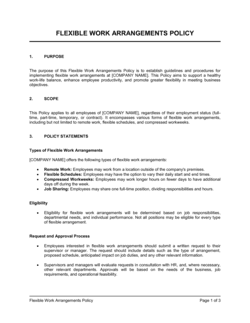
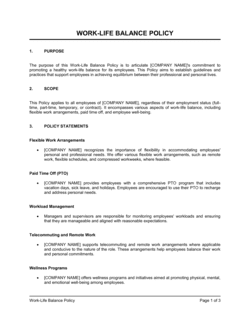
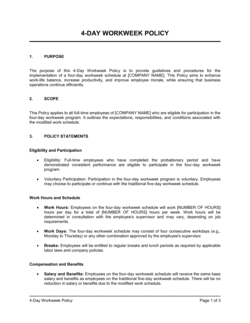
List each arrangement type your organization will formally support — compressed workweek, staggered hours, remote, hybrid, job sharing — and add constraints (maximum remote days, start-time window) for each.
💡 Limit the approved list to arrangements your current IT infrastructure and management practices can actually support — adding options you cannot operationalize creates expectations you cannot meet.
4
Document the application and approval workflow
Specify the form employees must submit, who receives it, the decision deadline (e.g., 7 business days), and the documented grounds for denial. Attach or reference a Request Form in an appendix.
💡 A standardized request form that captures the proposed schedule, coverage plan, and communication commitments cuts manager review time significantly.
5
Define core hours and response-time standards
Set the minimum daily window when all flex employees must be reachable — typically a 4–5 hour band in the middle of the business day — and specify the expected response time for emails and messages.
💡 Tie core hours to your busiest internal meeting window so the overlap requirement is self-enforcing.
6
Write the performance and revocation standards
Specify the metrics used to evaluate performance under a flexible arrangement and the conditions — missed deadlines, performance ratings, coverage failures — that trigger a 30-day warning or immediate revocation.
💡 Use the same KPIs from your standard performance review process so employees cannot argue they are being held to a different standard because of their schedule.
7
Specify equipment, expenses, and security requirements
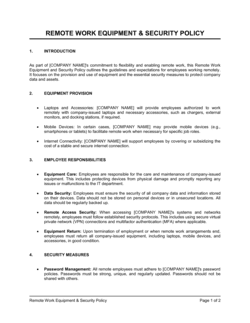
State whether the company provides equipment, which expenses are reimbursable and up to what dollar amount, and the minimum home-office security standards (VPN use, password policy, secure Wi-Fi).
💡 Cap reimbursable expenses at a monthly ceiling and require receipts — open-ended commitments create budget surprises at scale.
8
Set the review cycle and publish to employees
Assign policy ownership to a named HR role, set the annual review month, and specify how updates will be communicated and with how many days' advance notice before taking effect.
💡 Calendar the annual review in your HR task management tool on the day you publish the policy — it is easy to skip a review when the reminder is buried in email.