Cosmetics Manufacturing Business Plan Template

Free Word download β€’ Edit online β€’ Save & share with Drive β€’ Export to PDF

29 pagesβ€’2h 30m – 3h 20m to fillβ€’Difficulty: Expert
Learn more ↓
FreeCosmetics Manufacturing Business Plan Template

At a glance

What it is
A Cosmetics Manufacturing Business Plan is a structured document that maps your beauty or personal care manufacturing venture β€” covering product formulation strategy, regulatory compliance, production capacity, supply chain, go-to-market approach, and 3–5 year financial projections. This free Word download gives you an industry-specific starting point you can edit online and export as PDF to share with investors, lenders, or co-founders.
When you need it
Use it when launching a cosmetics or personal care manufacturing operation, raising capital from investors or applying for a business loan, or entering a private-label or contract manufacturing agreement that requires a formal operating plan.
What's inside
Executive summary, company overview, market and competitive analysis, product and formulation strategy, regulatory and compliance framework, manufacturing operations, marketing and sales plan, management team profiles, and a full financial model including P&L, cash flow, and startup cost schedule.

What is a Cosmetics Manufacturing Business Plan?

A Cosmetics Manufacturing Business Plan is a structured planning document that maps every critical dimension of a beauty or personal care manufacturing venture β€” from product formulation strategy and ingredient sourcing through regulatory compliance, production capacity, supply chain, and 3–5 year financial projections. Unlike a generic business plan, it addresses industry-specific requirements including GMP certification (ISO 22716), FDA MoCRA registration, EU Cosmetics Regulation notification, and the unit economics of batch manufacturing, making it the authoritative document for raising capital, securing bank financing, or entering contract manufacturing agreements.

Why You Need This Document

Without a formal cosmetics manufacturing business plan, capital conversations stall the moment an investor asks about your regulatory compliance timeline or your gross margin at scale β€” and in this industry, they always ask. Banks and SBA lenders require a complete plan before approving manufacturing facility loans. Contract retail partners and private-label clients expect a formal operations overview before committing to supply agreements. Beyond external audiences, the discipline of building a complete plan forces you to stress-test formulation costs, yield rates, and certification timelines before you commit capital to equipment and inventory. This template gives you the industry-specific structure to produce a credible, investor-ready plan in weeks rather than months.

Which variant fits your situation?

If your situation is…Use this template
Launching a direct-to-consumer skincare brand with in-house productionSkincare Manufacturing Business Plan
Setting up a contract or private-label manufacturing facilityContract Manufacturing Business Plan
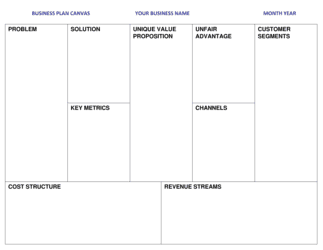
Quick internal planning before a full plan is developedOne-Page Business Plan
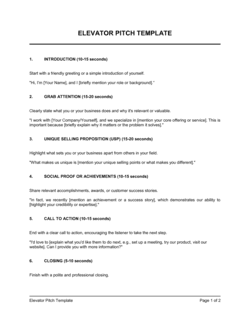
Raising venture capital with a deck-first approachElevator Pitch Template
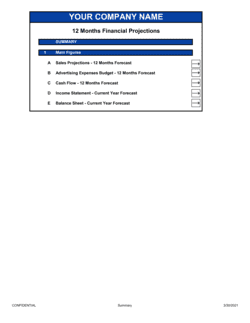
Projecting monthly revenue and costs for the first operating yearFinancial Projections β€” 12 Months
Mapping competitive positioning and product portfolio strategyMarketing Plan
Planning a new product line launch within an existing operationProduct Launch Plan

Common mistakes to avoid

❌ Ignoring MoCRA and EU regulatory timelines in the financial model

Why it matters: FDA facility registration, product listing, and safety substantiation each have separate deadlines and costs under MoCRA. Missing them can delay a US market launch by 6–12 months and trigger enforcement action.

Fix: Add a dedicated regulatory compliance schedule to the plan with milestone dates, responsible parties, and cost estimates for each market you intend to sell in.

❌ Projecting gross margins without accounting for yield loss

Why it matters: Batch yield rates of 90–97% are normal in cosmetics manufacturing β€” the gap between gross units produced and sellable finished goods directly reduces your effective margin.

Fix: Build yield loss (typically 3–8%) and rework rates into your COGS calculation alongside raw materials, packaging, labor, and overhead.

❌ Listing only branded competitors while ignoring contract manufacturers

Why it matters: For a cosmetics manufacturer, contract and toll manufacturers are direct competitive alternatives for your B2B customers β€” omitting them makes the competitive analysis appear incomplete to sophisticated readers.

Fix: Include at least two contract or private-label manufacturers in your competitive matrix alongside any branded comparables.

❌ Single-sourcing a key active ingredient without a contingency

Why it matters: Supply disruptions for exotic or imported actives can halt production entirely β€” an investor who spots a single-sourced ingredient with no backup plan will treat it as a material business risk.

Fix: For every critical ingredient, identify at least one alternative supplier and document the lead time and cost differential in the operations section.

The 10 key sections, explained

Executive Summary

Company Overview

Market Analysis

Competitive Analysis

Product and Formulation Strategy

Regulatory and Compliance Framework

Manufacturing Operations Plan

Marketing and Sales Strategy

Management Team

Financial Projections and Funding Requirements

How to fill it out

  1. 1

    Define your manufacturing model and facility scope

    Decide upfront whether you are building an in-house facility, operating as a toll manufacturer, or using a hybrid model. Document your facility size, ownership structure, and target GMP certification standard.

    πŸ’‘ Your manufacturing model determines the entire capital structure of the plan β€” lock this decision before writing any other section.

  2. 2

    Research your target market with category-level data

    Identify the specific cosmetics category (skincare, color, haircare, bodycare) and geography you are entering. Use industry reports from sources like Euromonitor, Statista, or Grand View Research to support your TAM and SAM figures.

    πŸ’‘ Cross-validate top-down market data with a bottom-up calculation: number of reachable retail doors or B2B accounts multiplied by average annual order value.

  3. 3

    Document your product portfolio and formulation status

    List every SKU in your initial portfolio with its development stage β€” concept, prototype, stability-tested, or production-ready. Note certifications being pursued and the name of the cosmetic chemist or contract lab responsible for each formula.

    πŸ’‘ Flag any formulations that depend on a single-source or imported active ingredient and include a backup sourcing note β€” this directly addresses a common investor risk question.

  4. 4

    Map out your regulatory compliance timeline

    List every market you plan to sell in and the corresponding regulatory requirement β€” FDA MoCRA registration, EU CPNP notification, Health Canada notification, or others. Assign a target completion date and responsible party to each.

    πŸ’‘ Build regulatory milestones into your financial model as cost line items β€” safety assessments, lab testing, and regulatory consulting fees are often underestimated and can run $15,000–$60,000 for a multi-market launch.

  5. 5

    Build the manufacturing operations section from capacity up

    State your daily or monthly production capacity in kilograms or units per line. Then calculate how that capacity maps to revenue at your target price and gross margin, and identify the capital investment required to reach the next capacity tier.

    πŸ’‘ Include a simple capacity utilization table showing Year 1 at 40–60% utilization, scaling to 75–85% by Year 3 β€” unrealistic 100% utilization projections are a common red flag.

  6. 6

    Build financial projections from unit economics

    Start with COGS per unit (raw materials + packaging + labor + overhead), then apply your target margin to derive a minimum viable selling price. Build the P&L from units produced upward β€” never from a revenue target downward.

    πŸ’‘ Run a separate scenario at 70% of projected revenue to show investors you have stress-tested the downside case.

  7. 7

    State the funding ask with a specific use-of-funds table

    Break your capital requirement into at least four buckets: equipment and facility, regulatory and compliance, working capital (inventory and receivables), and sales and marketing. Assign a dollar amount and percentage to each.

    πŸ’‘ Tie each spending bucket to a measurable milestone β€” e.g., '$150,000 equipment investment enables 500 kg/day capacity and supports $[X]M Year 2 revenue target.'

  8. 8

    Write the executive summary last

    Pull the single most compelling data point from each section and compress them into one to two pages. The summary should cover the problem, solution, market size, competitive advantage, team credentials, financial milestones, and funding ask.

    πŸ’‘ If your executive summary exceeds two pages, cut it β€” investors read the summary and financial projections first, and length signals an inability to prioritize.

Frequently asked questions

What is a cosmetics manufacturing business plan?

A cosmetics manufacturing business plan is a structured document that outlines every dimension of a beauty or personal care manufacturing venture β€” product portfolio and formulation strategy, target market, regulatory compliance roadmap, production capacity, supply chain, go-to-market approach, and 3–5 year financial projections. It functions as both an internal operating guide and an external document for raising capital from investors or lenders.

What makes a cosmetics business plan different from a general business plan?

A cosmetics manufacturing plan requires three sections that most general business plans omit: a product formulation and ingredient sourcing strategy, a regulatory compliance framework covering FDA MoCRA, EU Cosmetics Regulation, and applicable GMP standards, and a manufacturing operations section that addresses production capacity, yield rates, and quality control protocols. These elements are critical to credibility with industry-specific investors and lenders.

Do I need FDA registration to start a cosmetics manufacturing business?

Under the FDA Modernization of Cosmetics Regulation Act (MoCRA), signed into law in December 2022, most cosmetics manufacturers and facilities that market products in the United States are required to register their facilities and list their products with the FDA. Deadlines varied by company size β€” small businesses had until July 2024. Consult a regulatory affairs professional to confirm your specific obligations and current compliance status.

What financial projections should a cosmetics manufacturing business plan include?

A complete financial section includes a startup cost schedule, monthly P&L for Year 1, annual P&L for Years 2–5, a cash flow statement on the same cadence, and a projected balance sheet. Key metrics to highlight include gross margin per SKU, COGS breakdown by raw materials and packaging, production capacity utilization by year, and a funding requirements schedule with use-of-funds allocation.

What gross margin should I target in a cosmetics manufacturing business?

Gross margins in cosmetics manufacturing typically range from 40–70% depending on category, channel, and positioning. Premium skincare and color cosmetics sold DTC tend toward 60–70%. Private-label and contract manufacturing operations typically run 35–50% given the absence of brand premium. Clean and certified-organic formulations often carry 15–25% higher input costs, which compresses margin unless offset by pricing.

How long should a cosmetics manufacturing business plan be?

A plan intended for investors or bank lenders should run 20–35 pages plus a financial model appendix. Internal operating plans can run longer. A one-page plan is sufficient for early ideation but is not adequate for capital raises. The regulatory and manufacturing operations sections typically require more depth than equivalent sections in a retail or service business plan, so budget additional pages there.

What certifications are most important to include in a cosmetics manufacturing business plan?

The certifications most relevant to investors and retail buyers are ISO 22716 (GMP for cosmetics), COSMOS or ECOCERT (organic and natural standards), Leaping Bunny or PETA (cruelty-free), and USDA Organic for applicable formulations. Including a certification roadmap with target dates and estimated costs signals operational maturity and opens distribution channels that require them.

Can I use this template for a private-label cosmetics business?

Yes. The template covers both branded manufacturing and private-label or contract manufacturing business models. In the company overview and manufacturing operations sections, specify your model clearly β€” private-label plans will emphasize MOQ flexibility, formulation library depth, and turnaround time as competitive differentiators rather than brand equity or DTC customer acquisition costs.

Do I need a cosmetic chemist before writing my business plan?

You do not need finalized formulations to begin the plan, but you should have at least a preliminary product concept and a clear sense of your ingredient sourcing philosophy. If your formulations are still conceptual, note this explicitly in the product section and include a budget line for formulation development and stability testing. Investors expect to see that the cost and timeline of formulation are accounted for.

How this compares to alternatives

vs General Business Plan

A general business plan template covers strategy, market analysis, and financials in a format applicable to any industry. A cosmetics manufacturing business plan adds formulation and ingredient strategy, GMP and regulatory compliance frameworks, production capacity and yield modeling, and certification roadmaps β€” all of which are essential for industry-specific investors and lenders. Use the general template only if your cosmetics operation is still at the ideation stage.

vs One-Page Business Plan

A one-page plan is a rapid-alignment tool useful for early ideation or internal team discussions. It lacks the financial depth, regulatory detail, and operational specificity that investors, banks, and contract partners require from a cosmetics manufacturer. Use it to crystallize your concept, then build the full plan before any external capital or partnership conversation.

vs Marketing Plan

A marketing plan focuses exclusively on customer acquisition channels, brand positioning, pricing strategy, and campaign execution. A cosmetics manufacturing business plan includes a marketing section but also covers formulation, operations, regulatory compliance, and full financial projections. Use a standalone marketing plan to go deeper on channel strategy after the business plan is complete.

vs Financial Projections β€” 12 Months

A 12-month financial projection is a standalone cash flow and P&L model without the strategic narrative, market analysis, or operational context that investors and lenders require. A full business plan embeds financial projections within the broader story of why the numbers are credible. Build the business plan first, then use the financial projections template to model monthly detail for Year 1.

Industry-specific considerations

Skincare and Dermocosmetics

Clinical efficacy claims require stability and dermatological testing documentation; ingredient concentration limits under EU Annex III and FDA monographs must be reflected in formulation strategy.

Color Cosmetics

Colorant approval lists differ by market β€” FDA-approved color additives differ from EU-permitted pigments, requiring market-specific formulation variants and separate regulatory filings.

Haircare and Personal Care

Products containing certain actives (e.g., minoxidil, dandruff agents) may be classified as OTC drugs in the US, triggering a separate FDA regulatory pathway distinct from cosmetics.

Natural, Organic, and Clean Beauty

COSMOS and USDA Organic certification timelines (typically 6–18 months) and the cost premium of certified-organic raw materials must be built into both the operations plan and the financial model.

Template vs pro β€” what fits your needs?

PathBest forCostTime
Use the templateEarly-stage founders, internal planning, SBA loans under $500K, and first-round investor decksFree3–5 weeks (50–80 hours)
Template + professional reviewSeed raises up to $1M, first bank loan, or contract manufacturing partnership proposals requiring a formal plan$1,000–$3,500 for a cosmetics industry advisor or financial model review4–6 weeks
Custom draftedSeries A raises, institutional lenders, multi-market regulatory compliance planning, or large-scale facility buildouts$4,000–$12,000 for a specialist beauty industry business plan writer6–10 weeks

Glossary

INCI Name
International Nomenclature of Cosmetic Ingredients β€” the standardized scientific names used on ingredient labels required by regulators in the US, EU, and most markets.
Good Manufacturing Practice (GMP)
A set of manufacturing and quality control standards β€” such as ISO 22716 β€” that ensure cosmetics are consistently produced and controlled to meet safety and quality requirements.
Contract Manufacturer
A third-party facility that produces cosmetic products to a brand's specifications, handling formulation, filling, and packaging on the brand's behalf.
Private Label
A manufacturing model where a producer makes a standardized or semi-custom product that another company sells under its own brand name.
Minimum Order Quantity (MOQ)
The smallest batch size a manufacturer will produce in a single production run, which directly affects startup inventory costs and cash flow.
Cost of Goods Sold (COGS)
The direct costs of producing a unit of finished product β€” raw materials, packaging, labor, and manufacturing overhead β€” before any sales or administrative expenses.
Regulatory Dossier
A compiled set of safety, stability, and efficacy documentation required to register or notify a cosmetic product with a regulatory authority such as the FDA or EU Cosmetics Regulation body.
Stability Testing
A series of tests that expose a cosmetic formulation to controlled temperature and humidity conditions to confirm it maintains safety, performance, and appearance over its intended shelf life.
Gross Margin
Revenue minus COGS, expressed as a percentage of revenue β€” the primary profitability metric for evaluating a cosmetics manufacturing operation.
Toll Manufacturing
An arrangement where a brand supplies raw materials and a toll manufacturer performs the processing and filling for a fee per unit produced.

Part of your Business Operating System

This document is one of 3,000+ business & legal templates included in Business in a Box.

  • Fill-in-the-blanks β€” ready in minutes
  • 100% customizable Word document
  • Compatible with all office suites
  • Export to PDF and share electronically

Create your document in 3 simple steps.

From template to signed document β€” all inside one Business Operating System.
1
Download or open template

Access over 3,000+ business and legal templates for any business task, project or initiative.

2
Edit and fill in the blanks with AI

Customize your ready-made business document template and save it in the cloud.

3
Save, Share, Send, Sign

Share your files and folders with your team. Create a space of seamless collaboration.

Save time, save money, and create top-quality documents.

β˜…β˜…β˜…β˜…β˜…

"Fantastic value! I'm not sure how I'd do without it. It's worth its weight in gold and paid back for itself many times."

Managing Director Β· Mall Farm
Robert Whalley
Managing Director, Mall Farm Proprietary Limited
β˜…β˜…β˜…β˜…β˜…

"I have been using Business in a Box for years. It has been the most useful source of templates I have encountered. I recommend it to anyone."

Business Owner Β· 4+ years
Dr Michael John Freestone
Business Owner
β˜…β˜…β˜…β˜…β˜…

"It has been a life saver so many times I have lost count. Business in a Box has saved me so much time and as you know, time is money."

Owner Β· Upstate Web
David G. Moore Jr.
Owner, Upstate Web

Run your business with a system β€” not scattered tools

Stop downloading documents. Start operating with clarity. Business in a Box gives you the Business Operating System used by over 250,000 companies worldwide to structure, run, and grow their business.

Start freeΒ Β·Β No credit card required