Beauty Supply Business Plan Template

Free Word download β€’ Edit online β€’ Save & share with Drive β€’ Export to PDF

32 pagesβ€’2h 40m – 3h 35m to fillβ€’Difficulty: Expert
Learn more ↓
FreeBeauty Supply Business Plan Template

At a glance

What it is
A Beauty Supply Business Plan is a structured document that maps the strategy, market opportunity, product mix, operations, and financial projections for a beauty supply store or cosmetics retail business. This free Word download gives you a fully editable, investor-ready starting point you can customize for your specific product categories and target customers, then export as PDF to share with lenders, investors, or partners.
When you need it
Use it when launching a new beauty supply store, applying for a small business loan or SBA financing, pitching angel investors, or establishing a clear operating strategy for an existing beauty retail business entering a new market or product category.
What's inside
Executive summary, company overview, market and customer analysis, competitive landscape, product and service offering, marketing and sales strategy, retail operations plan, management team profiles, and three-year financial projections including P&L, cash flow, and startup cost breakdown.

What is a Beauty Supply Business Plan?

A Beauty Supply Business Plan is a structured document that defines the strategy, market opportunity, product assortment, retail operations model, and financial projections for a beauty supply store or cosmetics retail business. It covers everything from competitive positioning and category management to staffing, supplier relationships, and three-year P&L projections β€” giving owners, lenders, and investors a complete picture of how the business will operate and generate returns. Unlike a general retail plan, it addresses beauty-specific considerations such as professional licensing channels, multicultural product assortment strategy, distributor margin structures, and the gross margin benchmarks that characterize the beauty supply category.

Why You Need This Document

Without a written business plan, beauty supply loan applications stall at the first underwriting review, franchise territory requests are declined for missing market analysis, and opening inventory budgets are routinely underestimated β€” leading to stockouts in the first weeks of operation. A lender evaluating an SBA loan for a beauty supply store will examine your trade area demographics, your gross margin assumptions, and your working capital plan before approving a single dollar. A well-structured plan forces you to validate local demand, stress-test your supplier terms and inventory model, and map a realistic path to breakeven before you sign a lease. This template gives you the framework to produce a credible, complete plan β€” one that holds up to scrutiny from a bank underwriter, a franchisor's development team, or a local angel investor β€” without starting from a blank page.

Which variant fits your situation?

If your situation is…Use this template
Opening a full-service brick-and-mortar beauty supply storeBeauty Supply Business Plan
Launching a beauty e-commerce store or online shopE-Commerce Business Plan
Starting a hair salon with an attached retail sectionHair Salon Business Plan
Opening a nail or beauty spa with product retailNail Salon Business Plan
Launching a cosmetics or skincare product lineProduct Launch Plan
Rapid internal planning or early-stage concept validationOne-Page Business Plan
Raising angel or seed capital for a beauty retail conceptInvestor Pitch Deck

Common mistakes to avoid

❌ Under-budgeting opening inventory

Why it matters: A beauty supply store with thin initial inventory runs stockouts in the first weeks, trains customers to expect empty shelves, and misses the sales volume needed to service loan payments.

Fix: Budget at least 3–4 months of projected COGS as your opening inventory investment, and confirm distributor reorder lead times before finalizing the number.

❌ Using national market size as a proxy for local demand

Why it matters: Citing a $50B global beauty market tells a local lender nothing about whether your specific trade area can support a new store β€” it signals weak market research.

Fix: Build a bottom-up local demand estimate using trade area demographics, average per-capita beauty spend, and a realistic capture rate based on your location and competition.

❌ Projecting gross margins above 50% without a private-label justification

Why it matters: Standard beauty supply retail runs 40–50% gross margins. Projecting higher without explaining a private-label or exclusive brand strategy signals that the financial model is not grounded in industry reality.

Fix: Benchmark your margin assumptions against published beauty retail industry data and explicitly note any private-label, exclusive brand, or service revenue that justifies a premium.

❌ Ignoring e-commerce and online competitors in the competitive analysis

Why it matters: Amazon, Ulta Beauty, and Sally Beauty have significant online market share in beauty supply. A plan that only analyzes local brick-and-mortar competition understates the competitive environment.

Fix: Include at least two online competitors in your competitive analysis, note their pricing and fulfillment advantages, and explain specifically why your in-store experience and product expertise justify the purchase in-store.

❌ Relying entirely on walk-in foot traffic for Year 1 revenue

Why it matters: A new beauty supply store in a non-anchor location will not generate meaningful organic foot traffic in the first 3–6 months without active marketing β€” projections built on passive traffic routinely miss by 40–60%.

Fix: Build a proactive pre-launch and launch marketing plan β€” grand opening events, local salon partnerships, Google Business Profile optimization, and Instagram outreach β€” and tie those activities to specific monthly revenue ramps in Year 1.

❌ Omitting a professional or stylist sales channel

Why it matters: Licensed cosmetologists and salon owners are a high-value repeat-purchase segment that most successful beauty supply stores serve through a wholesale or professional pricing tier β€” leaving this out understates both revenue potential and competitive differentiation.

Fix: Add a professional accounts section to your marketing strategy with a target number of accounts, a professional pricing structure, and an outreach plan to local salons and freelance stylists.

The 10 key sections, explained

Executive Summary

Company Overview

Market Analysis

Competitive Analysis

Products and Services

Marketing and Sales Strategy

Retail Operations Plan

Management Team

Financial Projections

Funding Requirements and Use of Funds

How to fill it out

  1. 1

    Complete the company overview and mission

    Enter your legal business name, entity type, founding date, and location. Write a one-sentence mission that identifies your customer, your product focus, and the experience you deliver.

    πŸ’‘ Register your business entity before completing this section β€” the legal name on the plan must match your registration documents for any loan application.

  2. 2

    Research your local beauty retail market

    Use IBISWorld, Statista, or trade association data for national figures, then estimate local demand using census demographic data and competitor foot-traffic estimates for your specific trade area.

    πŸ’‘ A 1–3 mile radius analysis is the standard trade area for a standalone beauty supply store. Pull demographic data at that radius from the US Census Bureau's American Community Survey.

  3. 3

    Map your competitive landscape

    Identify every beauty supply option within a 5-mile radius β€” including drugstores, department store beauty counters, and the top five online competitors. Note each competitor's price tier, key product categories, and visible weaknesses.

    πŸ’‘ Visit each competitor as a shopper before writing this section. Observational notes on store condition, staff knowledge, and product gaps are more credible than assumptions.

  4. 4

    Define your product category strategy and key brands

    List your planned product categories with target SKU counts and gross margin goals per category. Identify your anchor brands and any exclusive or specialty brands that differentiate your assortment.

    πŸ’‘ Aim for a focused initial assortment of 500–800 SKUs rather than trying to stock everything. Depth in key categories beats breadth with thin inventory.

  5. 5

    Build your marketing and professional outreach plan

    Identify your top three acquisition channels, estimate cost per customer for each, and outline your loyalty or professional program structure. Tie channel spend directly to your Year 1 revenue projections.

    πŸ’‘ Building relationships with 10–20 local salon owners before opening generates immediate professional account revenue and word-of-mouth referrals from stylists to their clients.

  6. 6

    Detail your retail operations model

    Specify store square footage, planogram strategy by category, staffing levels and schedules, POS and inventory system, and your primary distributor relationships including payment terms.

    πŸ’‘ Negotiate net-30 or net-60 terms with at least two distributors before finalizing your working capital projections β€” supplier payment timing directly determines how much cash you need at launch.

  7. 7

    Build the three-statement financial model

    Model startup costs, monthly P&L for Year 1, and annual P&L for Years 2–3. Anchor your revenue projections to daily transaction count estimates multiplied by average transaction value, not a top-down market-share percentage.

    πŸ’‘ Target gross margins of 40–50% for a standard beauty supply assortment. If your model shows margins above 55%, document which private-label or exclusive products justify the premium.

  8. 8

    Write the executive summary last

    After completing all other sections, condense the plan into 1–2 pages covering the concept, market opportunity, competitive advantage, team, and funding ask.

    πŸ’‘ A lender or investor will read the executive summary and financials first. If those two sections are not self-sufficient, the rest of the plan will not be read.

Frequently asked questions

What is a beauty supply business plan?

A beauty supply business plan is a structured document that defines the strategy, market opportunity, product assortment, retail operations, and financial projections for a beauty supply store or cosmetics retail business. It serves as both an internal operating roadmap and an external document for securing loans, attracting investors, or meeting franchisor requirements.

What sections should a beauty supply business plan include?

A complete beauty supply business plan covers ten core sections: executive summary, company overview, market analysis, competitive analysis, products and services, marketing and sales strategy, retail operations plan, management team, financial projections, and funding requirements with use of funds. A standard plan runs 20–30 pages plus a financial model appendix.

How much does it cost to open a beauty supply store?

Startup costs for a beauty supply store typically range from $75,000 to $250,000 depending on location, square footage, and initial inventory depth. The largest line items are usually leasehold improvements and fixtures ($20,000–$80,000), opening inventory ($30,000–$100,000), and working capital reserve ($15,000–$40,000). Franchise concepts carry additional franchise fees on top of these figures.

Do I need a business plan to get a loan for a beauty supply store?

Yes β€” virtually every SBA lender and commercial bank requires a written business plan as part of the loan application package for a new retail business. The plan must include a market analysis, operating plan, management background, and three-year financial projections. Applications submitted without a formal plan are typically declined at the initial review stage.

What gross margin should I project for a beauty supply store?

Standard beauty supply retail gross margins run 40–50% depending on product mix. Mass-market hair care and cosmetics typically yield 35–45%, while professional products, tools, and accessories can reach 50–55%. Private-label or exclusive brand products can push margins higher, but these require manufacturer relationships and minimum order commitments that should be explicitly addressed in the plan.

How do I analyze the competition for a beauty supply store?

Map every beauty supply option within a 5-mile radius β€” including independent stores, chain retailers like Sally Beauty, drugstore beauty aisles, and the top online competitors. For each, note their price tier, primary customer segment, key product strengths, and visible gaps. Then write a specific paragraph explaining which gap your store fills and why your location, assortment, or service level wins customers from each competitor.

Should I include a professional or wholesale sales channel in my plan?

Yes. Licensed cosmetologists and salon owners are typically the highest-value repeat-purchase segment for a beauty supply store. Most successful independent beauty supply retailers operate a professional tier with discounted pricing for licensed buyers. Including this channel in your plan adds revenue depth and demonstrates market sophistication to lenders and investors reviewing the document.

How long does it take to write a beauty supply business plan?

Most first-time business owners spend 20–40 hours over 2–3 weeks on a complete beauty supply business plan. The market research and financial model are the most time-intensive components, typically requiring 8–15 hours combined. Using a structured template reduces the formatting and structural work significantly, allowing you to focus time on the local market data and financial assumptions that require original research.

What financial projections should a beauty supply business plan include?

The financial section should include a startup cost breakdown, monthly P&L for Year 1, annual P&L for Years 2–3, a cash flow statement on the same cadence, and a funding requirements summary with use-of-funds allocation. Key assumptions to document include daily transaction count, average transaction value, gross margin by category, staffing costs, and rent as a percentage of revenue.

How this compares to alternatives

vs Hair Salon Business Plan

A hair salon business plan centers on service revenue β€” chair rental, stylist staffing, appointment booking, and treatment menus. A beauty supply business plan is a retail document focused on product assortment, inventory management, gross margin by category, and distributor relationships. If you operate both a salon and a retail floor, you need elements of both templates.

vs One-Page Business Plan

A one-page business plan is a rapid alignment tool for internal ideation β€” it lacks the market data, financial depth, and operational detail that lenders and investors require. Use it to test your concept quickly, then build the full beauty supply business plan before any loan application or investor meeting.

vs Retail Store Business Plan

A general retail business plan covers the same structural sections but does not address beauty-specific considerations such as professional licensing requirements, multicultural product assortment strategy, cosmetologist wholesale channels, or the gross margin benchmarks specific to beauty supply. The beauty supply template includes industry-specific language, sample figures, and competitive context tailored to this category.

vs Product Launch Plan

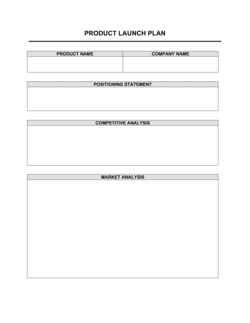
A product launch plan focuses on bringing a single product or product line to market β€” covering positioning, messaging, channel strategy, and launch milestones. A beauty supply business plan is a full company-level document covering all products, store operations, staffing, and multi-year financials. Use a product launch plan when introducing a new brand or SKU within an existing business, not to plan the business itself.

Industry-specific considerations

Beauty and Personal Care Retail

Planogram strategy, multicultural product assortment, professional pricing tiers, and high-velocity consumable replenishment cycles distinguish beauty supply from general retail.

Salon and Cosmetology Services

Salons adding a retail section use the plan to formalize product selection, staff sales training, and the transition from service-only to blended revenue model.

E-Commerce and Direct-to-Consumer

Online beauty retailers entering brick-and-mortar need the plan to address physical location economics, foot-traffic forecasting, and in-store experience differentiation from their digital channel.

Franchise and Multi-Unit Retail

Franchise applicants must demonstrate local market demand, real estate selection rationale, and operator experience in a format that meets the franchisor's approval criteria.

Template vs pro β€” what fits your needs?

PathBest forCostTime
Use the templateFirst-time beauty retail owners applying for SBA loans under $350K or structuring an internal operating planFree2–3 weeks (20–40 hours)
Template + professional reviewLoan applications above $350K, franchise territory approvals, or plans reviewed by an SBA lender or SCORE advisor$500–$2,000 for a business advisor or accountant review3–4 weeks
Custom draftedMulti-unit expansion plans, equity investment raises above $500K, or complex franchise development agreements$3,000–$8,000 for a professional business plan writer with retail industry experience4–6 weeks

Glossary

SKU (Stock Keeping Unit)
A unique identifier assigned to each distinct product variant β€” size, color, or formulation β€” for inventory tracking and reordering purposes.
Gross Margin
Revenue minus the cost of goods sold, expressed as a percentage of revenue β€” the primary profitability metric for retail businesses.
Planogram
A visual diagram specifying exactly where each product category and SKU should be placed on shelves to maximize sales and shopper flow.
Open-to-Buy
The dollar amount a retailer is budgeted to spend on new inventory in a given period, calculated from sales projections minus current stock levels.
Shrinkage
Inventory loss from theft, damage, or administrative error β€” typically expressed as a percentage of total retail sales.
Foot Traffic
The number of customers who physically enter a retail location during a given period, a primary driver of sales forecasting for brick-and-mortar stores.
Average Transaction Value (ATV)
Total revenue divided by the number of transactions in a period β€” a key metric for tracking upsell and cross-sell effectiveness.
Category Management
The practice of grouping related products into categories and managing each as a strategic business unit with its own sales, margin, and inventory targets.
Distributor Margin
The percentage markup a wholesale distributor adds between the manufacturer's cost and the price charged to the retailer.
Customer Lifetime Value (CLV)
The total gross profit a beauty retailer expects to earn from a single customer across all repeat purchases over their entire relationship with the store.

Part of your Business Operating System

This document is one of 3,000+ business & legal templates included in Business in a Box.

  • Fill-in-the-blanks β€” ready in minutes
  • 100% customizable Word document
  • Compatible with all office suites
  • Export to PDF and share electronically

Create your document in 3 simple steps.

From template to signed document β€” all inside one Business Operating System.
1
Download or open template

Access over 3,000+ business and legal templates for any business task, project or initiative.

2
Edit and fill in the blanks with AI

Customize your ready-made business document template and save it in the cloud.

3
Save, Share, Send, Sign

Share your files and folders with your team. Create a space of seamless collaboration.

Save time, save money, and create top-quality documents.

β˜…β˜…β˜…β˜…β˜…

"Fantastic value! I'm not sure how I'd do without it. It's worth its weight in gold and paid back for itself many times."

Managing Director Β· Mall Farm
Robert Whalley
Managing Director, Mall Farm Proprietary Limited
β˜…β˜…β˜…β˜…β˜…

"I have been using Business in a Box for years. It has been the most useful source of templates I have encountered. I recommend it to anyone."

Business Owner Β· 4+ years
Dr Michael John Freestone
Business Owner
β˜…β˜…β˜…β˜…β˜…

"It has been a life saver so many times I have lost count. Business in a Box has saved me so much time and as you know, time is money."

Owner Β· Upstate Web
David G. Moore Jr.
Owner, Upstate Web

Run your business with a system β€” not scattered tools

Stop downloading documents. Start operating with clarity. Business in a Box gives you the Business Operating System used by over 250,000 companies worldwide to structure, run, and grow their business.

Start freeΒ Β·Β No credit card required