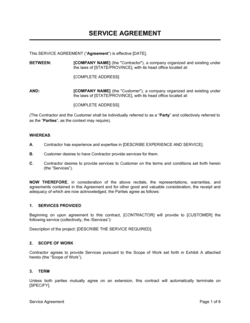
Conversion Rate Optimization Template

Free Word download β€’ Edit online β€’ Save & share with Drive β€’ Export to PDF

11 pagesβ€’25–35 min to fillβ€’Difficulty: Complexβ€’Signature requiredβ€’Legal review recommended
Learn more ↓
FreeConversion Rate Optimization Template

At a glance

What it is
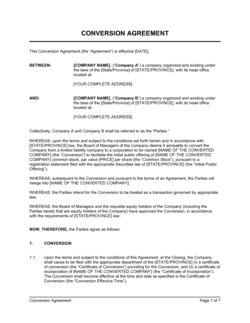
A Conversion Rate Optimization Agreement is a legally binding contract between a CRO agency or consultant and a client that governs the delivery of systematic testing, analytics, and site improvement services aimed at increasing the percentage of visitors who complete a defined action. This free Word download lets you define scope, deliverables, testing methodology, KPIs, fees, and IP ownership in a single enforceable document you can edit online and export as PDF.
When you need it
Use it before a CRO agency or consultant begins any audit, A/B test, or landing page redesign engagement where the scope, success metrics, and compensation structure need to be agreed in writing. It is equally necessary when a client requires access to analytics platforms, CMS systems, or advertising accounts as part of the engagement.
What's inside
Scope of services and testing methodology, key performance indicators and baseline metrics, deliverables schedule, fees and performance-based compensation, access and data-sharing obligations, intellectual property assignment, confidentiality, limitation of liability, and termination conditions.

What is a Conversion Rate Optimization Agreement?

A Conversion Rate Optimization Agreement is a legally binding contract between a CRO agency or consultant (the Provider) and a business client that governs the full scope of a conversion testing and optimization engagement. It documents the agreed baseline conversion rate before any work begins, defines the specific pages and funnels in scope, sets the testing methodology and tools, establishes deliverable schedules, and creates enforceable payment obligations β€” including any performance fee tied to measured lift. Unlike a general marketing services contract, a CRO agreement addresses the unique evidentiary and attribution challenges of data-driven testing work, where success is probabilistic and outcomes are influenced by variables both parties must agree to account for in writing.

Why You Need This Document

Without a written CRO agreement, four problems become nearly inevitable. First, disputes over whether any lift was achieved are irresolvable without a documented baseline β€” each party cites different analytics reports and different date ranges. Second, scope creep erodes Provider margins and strains the relationship when a client interprets "optimize the site" as covering every page, campaign, and email they own. Third, IP ownership of the test designs, copy variants, and analytics configurations produced during the engagement defaults to jurisdiction-specific rules that almost universally favor the creator β€” meaning the Provider, not the Client, owns the work unless a written assignment says otherwise. Fourth, a terminated engagement with live A/B tests running can leave the site serving an unvalidated variant to all traffic, silently damaging the conversion rate the client hired the Provider to improve. This template closes all four gaps before work begins, for the cost of 30 minutes and a legal review where the engagement size warrants it.

Which variant fits your situation?

If your situation is…Use this template
Ongoing monthly CRO retainer with regular testing cyclesConversion Rate Optimization Agreement (Retainer)
One-time CRO audit with a written findings report and recommendationsCRO Audit and Consulting Agreement
Performance-only engagement where fees are tied to lift achievedPerformance Marketing Agreement
Full digital marketing engagement including SEO, paid, and CRODigital Marketing Services Agreement
Hiring an in-house CRO specialist as a contractor, not an employeeIndependent Contractor Agreement
Sharing proprietary funnel data with a vendor before signing a full contractNon-Disclosure Agreement
Agency subcontracting CRO work to a specialist third partySubcontractor Agreement

Common mistakes to avoid

❌ No documented baseline in the contract

Why it matters: Without a written baseline, every dispute about whether lift was achieved becomes a contest between incompatible analytics reports, with no authoritative reference point.

Fix: Attach a signed exhibit showing the agreed baseline conversion rate, the analytics platform it was pulled from, and the date range used β€” and reference it in the KPI clause.

❌ Vague scope language covering 'the entire website'

Why it matters: Open-ended scope triggers unlimited revision requests, causes budget overruns, and makes it impossible to determine what the Provider is contractually required to deliver.

Fix: List specific URLs or funnel stages in scope and add an explicit exclusion clause covering services β€” paid media, SEO, development β€” that are not included.

❌ Performance fee with no attribution method defined

Why it matters: Revenue changes caused by seasonal traffic, a new ad campaign, or a product price change will be claimed as CRO lift by one party and denied as such by the other, creating irresolvable payment disputes.

Fix: Define attribution in the contract: specify the analytics goal, the measurement window, and how external confounding events (promotions, traffic-source shifts) are handled.

❌ No access-revocation obligation on termination

Why it matters: A former Provider with lingering admin access to a client's CMS or analytics account can accidentally β€” or deliberately β€” affect live pages or access confidential conversion data.

Fix: Include a clause requiring the Client to revoke all Provider access within 5 business days of termination and the Provider to confirm deletion of downloaded credentials.

❌ Omitting the no-guarantee clause

Why it matters: A Client who expected a specific conversion lift will argue the contract implied a performance warranty, leading to refund demands, chargebacks, or small-claims litigation.

Fix: Include explicit language stating that conversion outcomes depend on factors outside the Provider's control and that no specific improvement is guaranteed regardless of the methodology used.

❌ No provision for in-flight tests at termination

Why it matters: Terminating a live A/B test mid-run permanently corrupts the result and may leave the site serving an unvalidated variant to 100% of traffic, silently damaging conversion rates.

Fix: Add a wind-down clause specifying that on notice of termination, all active tests are either completed to significance or reverted to the control variant within a defined number of days.

The 10 key clauses, explained

Parties, Recitals, and Effective Date

In plain language: Identifies the CRO provider and the client as legal entities, states the effective date, and briefly describes the purpose of the engagement.

Sample language
This Conversion Rate Optimization Agreement ('Agreement') is entered into as of [DATE] between [AGENCY LEGAL NAME], a [STATE] [ENTITY TYPE] ('Provider'), and [CLIENT LEGAL NAME], a [STATE] [ENTITY TYPE] ('Client').

Common mistake: Using a trade name instead of the registered legal entity name. If the Provider entity name does not match invoicing records, enforcing payment or IP clauses against the correct entity becomes difficult.

Scope of Services and Testing Methodology

In plain language: Defines exactly which pages, funnels, or campaigns are in scope, the testing tools to be used, the number of tests per cycle, and what is explicitly excluded.

Sample language
Provider shall deliver [X] A/B tests per calendar month on the following pages: [LANDING PAGE URLS]. Testing shall be conducted using [TOOL NAME]. Services exclude paid media management, SEO, and development work beyond HTML/CSS changes.

Common mistake: Leaving scope open-ended with language like 'Provider will improve conversions across the site.' Vague scope leads to endless revision requests and scope-creep disputes.

Key Performance Indicators and Baseline

In plain language: Records the agreed baseline conversion rate before work begins and defines the specific KPIs β€” conversion rate, revenue per visitor, cost per acquisition β€” that will measure success.

Sample language
Baseline conversion rate as of [DATE]: [X]% (Source: [ANALYTICS PLATFORM], date range [START DATE] to [END DATE]). Primary KPI: checkout conversion rate. Secondary KPIs: add-to-cart rate and average order value.

Common mistake: Not documenting the baseline in the contract. Without a written baseline, disputes over whether lift was achieved are irresolvable β€” each party references different data.

Deliverables and Timeline

In plain language: Lists the specific outputs the Provider will produce β€” test plans, reports, wireframes, final recommendations β€” with due dates or a cadence schedule.

Sample language
Provider shall deliver: (a) an initial audit report within [14] days of the Effective Date; (b) a monthly test plan by the [1st] business day of each month; (c) a results report within [5] business days of each test concluding at statistical significance.

Common mistake: Listing deliverables without due dates or a review-and-approval window. Undefined timelines make it impossible to establish when the Provider is in breach.

Fees, Payment Terms, and Performance Compensation

In plain language: States the base retainer or project fee, the payment schedule, any performance fee formula, and the conditions under which performance fees are earned and paid.

Sample language
Client shall pay a monthly retainer of $[X], due on the [1st] of each month. In addition, Provider shall earn a performance fee of [X]% of incremental monthly revenue attributable to confirmed lift, calculated against the Baseline, paid within [30] days of month-end.

Common mistake: Leaving the performance fee attribution method undefined. Disputes over whether revenue lift is attributable to CRO changes versus seasonality, ad spend, or product changes are the most common source of payment conflicts in CRO engagements.

Access, Data, and Platform Credentials

In plain language: Sets out which analytics, CMS, and advertising accounts the Client must grant Provider access to, the access level required (view vs. edit), and the obligation to revoke access on termination.

Sample language
Client shall grant Provider [editor / analyst] access to [ANALYTICS PLATFORM], [CMS], and [TESTING TOOL ACCOUNT] within [5] business days of the Effective Date. Provider shall not transfer credentials to third parties. Client shall revoke all access within [5] business days of termination.

Common mistake: No access-revocation clause. Former CRO vendors with lingering platform access can unintentionally β€” or intentionally β€” affect live tests or access confidential traffic and revenue data.

Intellectual Property Ownership

In plain language: Specifies who owns the work product β€” test designs, copy variants, wireframes, analytics configurations β€” produced during the engagement, and any license granted to the other party.

Sample language
Upon receipt of full payment, all Work Product produced by Provider specifically for Client under this Agreement is hereby assigned to Client. Provider retains ownership of its pre-existing methodologies, frameworks, and tools ('Provider IP'), and grants Client a non-exclusive license to use Provider IP solely for the purposes of this Agreement.

Common mistake: No IP clause at all, leaving ownership governed by jurisdiction-specific defaults β€” which in many countries vest ownership in the creator (the Provider), not the commissioning Client.

Confidentiality

In plain language: Prohibits both parties from disclosing the other's confidential information β€” traffic data, conversion benchmarks, pricing, and proprietary methodologies β€” during and after the engagement.

Sample language
Each party agrees to hold the other's Confidential Information in strict confidence and not to disclose it to any third party without prior written consent. 'Confidential Information' includes, without limitation, analytics data, test results, pricing, and proprietary methodologies.

Common mistake: A one-sided confidentiality clause that only protects the Client. Provider methodology, test frameworks, and benchmark data are equally sensitive and should be protected symmetrically.

Limitation of Liability and No-Guarantee Clause

In plain language: Caps the Provider's total financial exposure β€” typically to fees paid in the prior 3–6 months β€” and explicitly states that no specific conversion improvement is guaranteed.

Sample language
Provider's total liability under this Agreement shall not exceed the fees paid by Client in the [3] months preceding the claim. Provider makes no guarantee of specific conversion rate improvement. Testing outcomes depend on variables outside Provider's control, including traffic quality, seasonality, and product changes.

Common mistake: Omitting the no-guarantee clause. Without it, a Client who expected a specific lift can argue the contract implied a performance warranty β€” leading to refund demands or litigation.

Term, Termination, and Wind-Down

In plain language: Sets the contract duration, the notice period required to terminate for convenience or cause, what happens to in-flight tests on termination, and final deliverable obligations.

Sample language
This Agreement commences on the Effective Date and continues for [3] months, renewing monthly unless either party provides [30] days' written notice. On termination, Provider shall deliver all completed test data and reports within [10] business days. Any in-flight tests shall be concluded or paused at Client's election.

Common mistake: No provision for in-flight tests at termination. Stopping a live A/B test mid-run corrupts the data and can permanently skew the site toward an unvalidated variant β€” the contract should specify who decides and how.

How to fill it out

  1. 1

    Enter the parties' full legal names and effective date

    Use each party's registered legal entity name β€” not a brand or trading name. Record the specific date on which the agreement takes effect, which should be on or before any work begins.

    πŸ’‘ Cross-reference the entity name against your corporate registry or invoicing system to avoid a mismatch that complicates enforcement.

  2. 2

    Define scope with specific pages, tools, and exclusions

    List every URL, funnel, or campaign in scope and name the testing tools to be used. Add an explicit exclusion list β€” paid media management, back-end development, or SEO β€” to prevent scope creep.

    πŸ’‘ If the scope may expand over time, add a change-order clause stating that any new pages or campaigns require a written amendment with agreed additional fees.

  3. 3

    Record the baseline metrics from a named analytics source

    Pull the current conversion rate and any secondary KPIs from a single, agreed analytics platform. Record the exact data range used to calculate the baseline and attach a screenshot as an exhibit if possible.

    πŸ’‘ Use a minimum 60-day baseline window to smooth out seasonal fluctuations β€” a 7- or 14-day baseline will produce disputed lift calculations.

  4. 4

    Specify deliverables with explicit due dates or cadence

    List every output β€” audit reports, monthly test plans, post-test results summaries β€” with a specific due date or a recurring delivery cadence (e.g., 'by the 3rd business day of each month').

    πŸ’‘ Include a Client review-and-approval window of 5–7 business days per deliverable so the Provider is not in breach while waiting for Client feedback.

  5. 5

    Complete the fees block including the performance fee attribution method

    Enter the base retainer amount, payment due date, and any performance fee percentage. Define precisely how incremental revenue will be attributed β€” for example, using the analytics platform's revenue goal for the specific conversion event in scope.

    πŸ’‘ Agree in writing on how to handle confounding variables β€” a major promotional event or traffic-source change β€” that could artificially inflate or suppress the measured lift.

  6. 6

    List all platforms and access levels required

    Name every analytics, CMS, testing, and advertising platform the Provider needs, specify the access level (view, edit, or admin), and set the deadline for granting access after signing.

    πŸ’‘ Include a clause requiring the Client to notify the Provider before making any changes to the platforms in scope β€” unannounced changes are a leading cause of test data corruption.

  7. 7

    Confirm IP ownership and the Provider IP license

    Decide whether all work product transfers to the Client on full payment, or whether the Provider retains ownership and grants a license. Document the Provider's pre-existing IP separately to avoid it being accidentally swept up in the assignment.

    πŸ’‘ If the Provider uses a proprietary testing framework or reporting template, name it explicitly as retained Provider IP so there is no ambiguity at the end of the engagement.

  8. 8

    Set the term, notice period, and termination wind-down obligations

    Choose the initial contract term (typically 3 or 6 months for CRO engagements to allow enough test cycles), the rolling renewal cadence, and the notice period for termination without cause.

    πŸ’‘ A minimum initial term of 3 months protects the Provider's setup investment and gives the Client enough test cycles to evaluate results fairly.

Frequently asked questions

What is a conversion rate optimization agreement?

A conversion rate optimization agreement is a binding contract between a CRO agency or consultant and a client that governs the delivery of testing, analytics, and site improvement services designed to increase the percentage of visitors who complete a target action. It defines scope, baseline metrics, KPIs, deliverables, fees, IP ownership, confidentiality, and termination β€” creating enforceable obligations on both sides and a clear framework for measuring success.

Why does a CRO engagement need a written contract?

CRO engagements are uniquely prone to disputes because outcomes are probabilistic, attribution is contested, and methodology is proprietary. Without a written agreement, there is no agreed baseline to measure lift against, no defined scope to limit revision requests, and no IP clause to determine who owns the test designs and copy variants produced. A contract closes all four gaps before work begins.

What should a CRO agreement include?

At minimum: parties and effective date, scope of services with named pages and tools, baseline metrics from an agreed source, deliverables with due dates, fee structure including any performance fee attribution method, platform access obligations and revocation on termination, IP ownership, confidentiality, a no-guarantee clause, limitation of liability, and term and termination with wind-down provisions for in-flight tests.

How should performance fees be structured in a CRO contract?

Performance fees are typically a percentage of incremental revenue attributable to confirmed lift above the documented baseline, paid monthly or quarterly after a reconciliation period. The contract must define the analytics goal used for measurement, the minimum statistical significance threshold for a test to count, and how confounding events β€” seasonal promotions, traffic-source changes, price adjustments β€” are handled. Leaving attribution undefined is the single most common cause of CRO payment disputes.

Who owns the work product created during a CRO engagement?

Ownership depends on what the contract says β€” jurisdiction-specific defaults vary significantly. In the US, work product created by an independent contractor typically belongs to the contractor unless there is a written assignment. In the UK and EU, copyright generally vests in the creator. A well-drafted CRO agreement assigns all client-specific work product to the client on full payment, while carving out the Provider's pre-existing methodologies and tools as retained Provider IP.

Is a CRO agreement the same as a digital marketing services agreement?

No. A digital marketing services agreement typically covers a broad bundle of services β€” SEO, paid media, social, email, and content β€” at a high level. A CRO agreement is a specialized contract focused entirely on testing, analytics, and conversion improvement, with KPI definitions, baseline documentation, test methodology standards, and performance fee structures that a general marketing contract does not address. Use a CRO-specific agreement when conversion testing is the primary or sole service being contracted.

What happens to live A/B tests if the contract is terminated early?

Without a contract clause addressing this, terminating mid-test leaves the site potentially serving an unvalidated variant to 100% of traffic, which can silently hurt conversion rates for weeks. A well-drafted termination clause specifies that on receipt of a termination notice, all active tests are either run to statistical significance or reverted to the control variant within a defined number of days, and that the Provider delivers all test data as a final deliverable.

Do I need a lawyer to review a CRO agreement?

For standard retainer engagements up to $5,000 per month with a domestic Provider, a high-quality template is typically sufficient. Engage a lawyer when the engagement involves a material performance fee tied to significant revenue, when the client is sharing sensitive customer data that may trigger GDPR or CCPA obligations, or when the contract involves cross-border parties with different IP default rules. A 1–2 hour template review typically costs $300–$600 and is worthwhile for any engagement where performance fees could exceed the base retainer.

How does GDPR affect a CRO agreement?

CRO engagements routinely involve the Provider accessing analytics data, session recordings, and heatmaps that may constitute personal data under GDPR. If the Provider is processing personal data on behalf of the Client, the contract must include a Data Processing Agreement (DPA) or equivalent data processing clauses covering lawful basis, retention limits, sub-processor disclosure, and breach notification obligations. Failing to include a DPA where required exposes both parties to regulatory fines.

How this compares to alternatives

vs Digital Marketing Services Agreement

A digital marketing services agreement covers a broad bundle of channels β€” SEO, paid media, social, and email β€” under a single contract with general deliverable language. A CRO agreement is a specialized contract focused exclusively on conversion testing, with documented baselines, KPI definitions, test methodology standards, and performance fee attribution. Use a CRO agreement whenever testing and conversion improvement is the primary scope.

vs Independent Contractor Agreement

An independent contractor agreement establishes the general legal relationship between a business and a self-employed individual β€” covering payment, IP assignment, and termination. It does not address CRO-specific terms such as baseline documentation, test methodology, statistical significance thresholds, or performance fee attribution. A freelance CRO consultant needs both: a contractor agreement for the legal relationship and a CRO-specific scope of work or agreement for the engagement terms.

vs Non-Disclosure Agreement

An NDA protects confidential information shared during preliminary discussions before a contract is signed. A CRO agreement contains its own confidentiality clause that governs the full engagement β€” including analytics data, test results, and methodology. Use an NDA before contract execution to protect initial discovery conversations, then rely on the CRO agreement's confidentiality clause for the duration of the engagement.

vs Service Level Agreement

A service level agreement defines minimum performance standards β€” uptime, response times, and support tiers β€” for ongoing operational services. A CRO agreement governs a testing and optimization engagement where deliverables are discrete outputs rather than continuous service thresholds. The two documents address different types of obligations and are not interchangeable, though a CRO agreement may incorporate SLA-style response time commitments as an addendum.

Industry-specific considerations

E-commerce and retail

Checkout funnel optimization, product page testing, and cart abandonment reduction β€” with performance fees commonly tied to revenue per visitor or checkout conversion rate.

SaaS and technology

Trial signup, onboarding, and upgrade funnel testing β€” KPIs typically focus on trial-to-paid conversion rate and feature activation milestones rather than direct revenue.

Financial services and fintech

Lead capture and application completion optimization β€” with heightened data-access sensitivity requiring explicit GDPR or CCPA compliance clauses and limited analytics permissions.

Professional services and B2B

Lead generation form and demo-request funnel optimization β€” performance fees are typically tied to qualified lead volume rather than direct revenue, requiring a clear lead-qualification definition in the contract.

Jurisdictional notes

United States

US federal law does not mandate a written CRO services contract, but written agreements are essential to establish IP ownership β€” under US copyright law, work created by an independent contractor belongs to the contractor unless there is a written assignment. CCPA obligations apply if the Provider accesses personal data of California residents through analytics tools. Non-compete and non-solicitation clauses in the contract are subject to state-level enforceability rules, with California and Minnesota banning most post-engagement restrictions.

Canada

Canadian copyright law vests ownership in the creator by default, making a written IP assignment clause critical for any client seeking to own the work product. PIPEDA (and Quebec's Law 25 for provincial matters) governs personal data accessed through analytics platforms β€” if the Provider processes personal data on behalf of the Client, a data processing schedule is advisable. Quebec contracts for provincially regulated entities should be bilingual or in French.

United Kingdom

Under UK copyright law, work created by a contractor vests in the contractor unless expressly assigned in writing β€” a written IP assignment is therefore essential. UK GDPR requires a Data Processing Agreement where the Provider accesses personal data through analytics or session recording tools, including lawful basis, retention periods, and sub-processor disclosure. Post-engagement restrictive covenants are enforceable if reasonable in scope and duration.

European Union

GDPR Article 28 requires a written Data Processing Agreement whenever a Provider accesses personal data on behalf of a Client β€” analytics platform access, session recordings, and heatmaps routinely qualify. IP ownership defaults vary by member state, so an explicit assignment clause is essential. Performance fee structures should be reviewed for compliance with local commercial agency or service provider regulations, which differ materially between Germany, France, and the Netherlands.

Template vs lawyer β€” what fits your deal?

PathBest forCostTime
Use the templateStandard domestic CRO retainers up to $5,000 per month with no material performance fee componentFree30 minutes
Template + legal reviewEngagements with performance fees, cross-border parties, or access to personal analytics data triggering GDPR or CCPA$300–$6001–3 days
Custom draftedEnterprise CRO engagements with material revenue-share fees, regulated industries, or multi-jurisdiction data processing obligations$1,500–$4,000+1–2 weeks

Glossary

Conversion Rate
The percentage of website visitors or users who complete a defined goal action β€” such as a purchase, form submission, or trial signup β€” within a given period.
A/B Test
A controlled experiment that splits traffic between two variants of a page or element to determine which produces a higher conversion rate at statistical significance.
Baseline Metric
The pre-engagement conversion rate or performance figure used as the reference point against which improvements are measured.
Statistical Significance
A threshold β€” typically 95% confidence β€” at which a test result is unlikely to have occurred by chance, making the outcome reliable enough to act on.
Multivariate Testing
A testing method that simultaneously varies multiple page elements to identify which combination produces the best conversion outcome.
Funnel Analysis
The process of mapping and measuring each step a user takes from entry to conversion, identifying where drop-off is highest.
Click-Through Rate (CTR)
The ratio of users who click a specific link or call-to-action to the total number of users who viewed it, expressed as a percentage.
Lift
The percentage improvement in conversion rate achieved by the winning test variant compared to the control, used to calculate performance fees.
Performance Fee
A variable fee component paid to the CRO provider based on a pre-agreed formula tied to measurable conversion improvement above the baseline.
Work Product
Any output created by the CRO provider during the engagement β€” test designs, copy variants, wireframes, analytics configurations, and reports.
Holdout Group
A segment of users intentionally excluded from all tests to provide a long-term control for measuring the cumulative impact of CRO changes.
Heatmap
A visual data overlay that shows where users click, scroll, and hover on a page, used by CRO practitioners to identify friction and opportunity areas.

Part of your Business Operating System

This document is one of 3,000+ business & legal templates included in Business in a Box.

  • Fill-in-the-blanks β€” ready in minutes
  • 100% customizable Word document
  • Compatible with all office suites
  • Export to PDF and share electronically

Create your document in 3 simple steps.

From template to signed document β€” all inside one Business Operating System.
1
Download or open template

Access over 3,000+ business and legal templates for any business task, project or initiative.

2
Edit and fill in the blanks with AI

Customize your ready-made business document template and save it in the cloud.

3
Save, Share, Send, Sign

Share your files and folders with your team. Create a space of seamless collaboration.

Save time, save money, and create top-quality documents.

β˜…β˜…β˜…β˜…β˜…

"Fantastic value! I'm not sure how I'd do without it. It's worth its weight in gold and paid back for itself many times."

Managing Director Β· Mall Farm
Robert Whalley
Managing Director, Mall Farm Proprietary Limited
β˜…β˜…β˜…β˜…β˜…

"I have been using Business in a Box for years. It has been the most useful source of templates I have encountered. I recommend it to anyone."

Business Owner Β· 4+ years
Dr Michael John Freestone
Business Owner
β˜…β˜…β˜…β˜…β˜…

"It has been a life saver so many times I have lost count. Business in a Box has saved me so much time and as you know, time is money."

Owner Β· Upstate Web
David G. Moore Jr.
Owner, Upstate Web

Run your business with a system β€” not scattered tools

Stop downloading documents. Start operating with clarity. Business in a Box gives you the Business Operating System used by over 250,000 companies worldwide to structure, run, and grow their business.

Start freeΒ Β·Β No credit card required