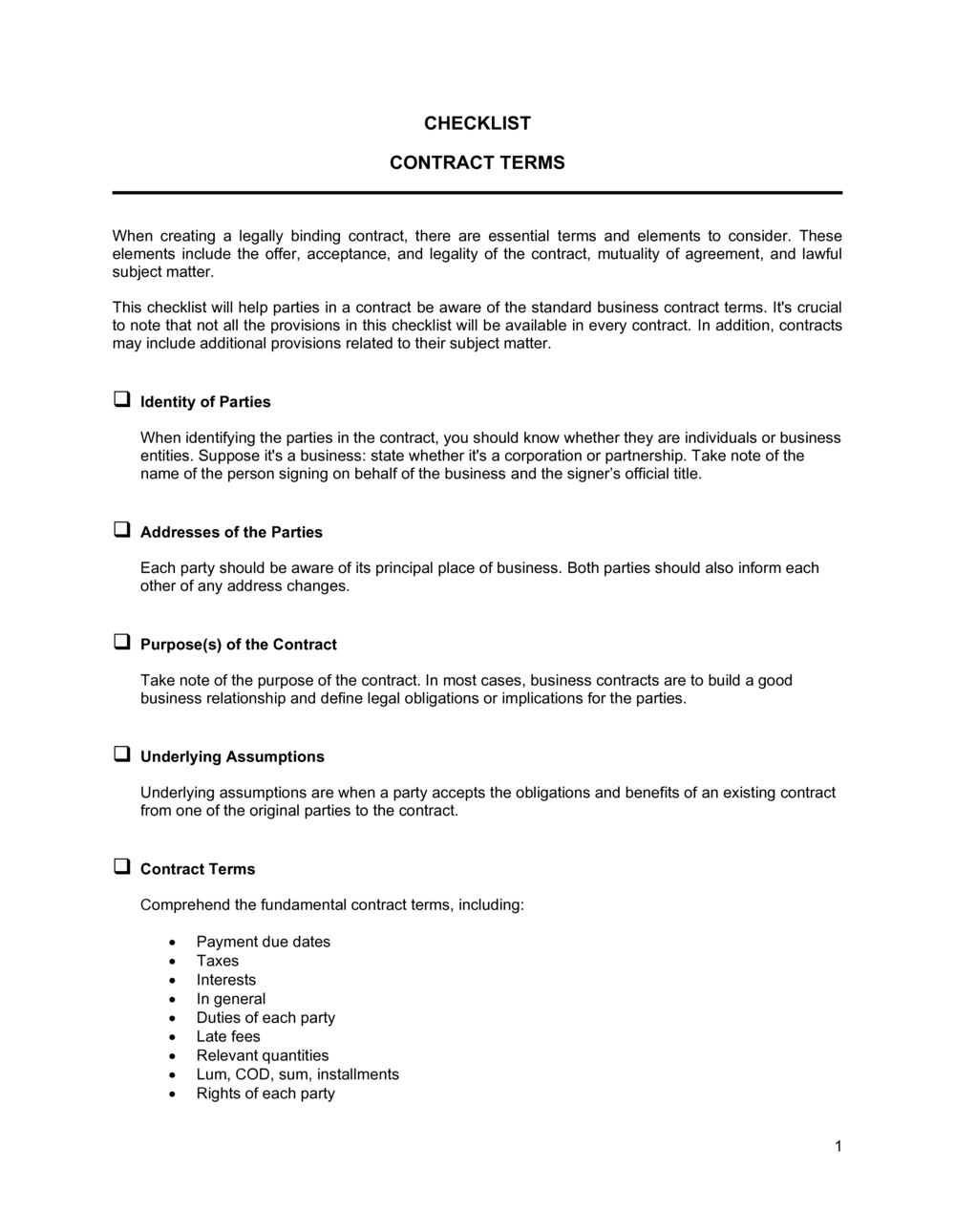
Contract Terms Checklist

Free download β€’ Use as a template β€’ Print or share

6 pagesβ€’20–30 min to useβ€’Difficulty: Standard
Learn more ↓
FreeContract Terms Checklist Template

At a glance

What it is
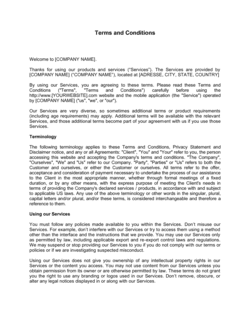
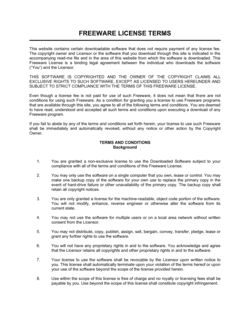
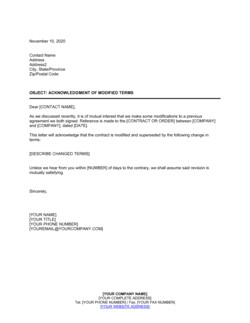
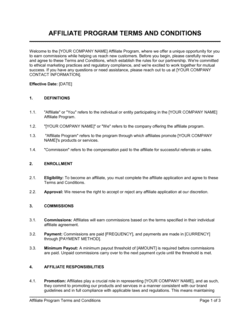
A Contract Terms Checklist is a structured review form used to verify that every critical provision has been identified, assessed, and flagged before a business agreement is signed. This free Word download walks you through the key clauses β€” parties, scope, payment, IP, confidentiality, liability, and termination β€” so nothing gets overlooked at the signing stage.
When you need it
Use it any time you receive a contract for review β€” vendor agreements, client service contracts, partnership deals, or supplier terms β€” before signing on behalf of your business. It is equally useful when you are issuing a contract and want to confirm all standard provisions are present.
What's inside
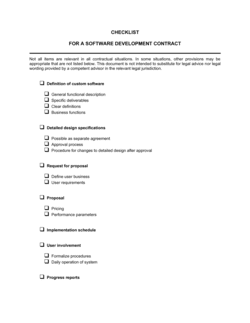
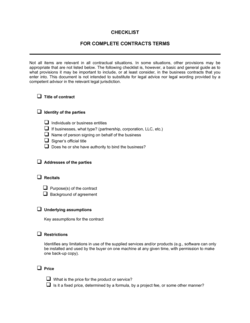
Checklist rows for each key contract section with columns to mark presence, note the specific terms found, flag concerns, and record follow-up actions. A summary block at the end captures overall assessment and next steps.

What is a Contract Terms Checklist?

A Contract Terms Checklist is a structured review form that guides a business through the key provisions of any commercial agreement β€” parties, scope, payment, intellectual property, confidentiality, liability, termination, and governing law β€” before anyone signs. It works as a systematic pass over an inbound or outgoing contract, row by row, confirming that each critical clause is present, recording the specific terms found, and flagging anything that is missing, one-sided, or outside acceptable risk parameters. The result is a documented review record with a clear recommended action: sign as-is, negotiate, seek legal review, or decline.

Why You Need This Document

Signing a contract without a structured review is how businesses end up locked into auto-renewing agreements, unlimited liability exposure, or arrangements where the counterparty owns all the intellectual property. The consequences are rarely visible at signing β€” they surface months later when an invoice goes unpaid under Net 60 terms you didn't notice, or when a departing vendor claims ownership of work your team paid for. A contract terms checklist makes the review process repeatable and auditable, so the same rigor applies to every agreement regardless of who on your team handles it. This template gives you a ready-to-use starting point that covers the ten provisions that matter most in any standard commercial contract.

Which variant fits your situation?

If your situation is…Use this template
Reviewing an inbound vendor or supplier contractContract Terms Checklist
Issuing a contract for a client engagementService Agreement
Tracking all active contracts and renewal datesContract Register
Evaluating a non-disclosure agreement specificallyNDA Review Checklist
Conducting a full legal audit of business contractsLegal Due Diligence Checklist
Managing ongoing contract obligations and deliverablesContract Management Plan

Common mistakes to avoid

❌ Using a binary yes/no without recording the actual terms

Why it matters: Marking a payment clause 'present' without noting that it requires Net 60 payment means the cash-flow impact is invisible until the first invoice is late.

Fix: Record the specific value, duration, or condition found for each clause, not just whether it exists.
❌ Skipping sections that appear standard

Why it matters: Auto-renewal clauses, governing law selections, and assignment rights are routinely buried in boilerplate β€” skipping them is how businesses end up locked into unwanted terms.

Fix: Complete every row of the checklist for every contract, regardless of how routine the agreement appears.

❌ Not assigning a recommended action at the end

Why it matters: A completed checklist with no clear conclusion leaves the decision to whoever reaches the signature line β€” without the context the reviewer collected.

Fix: Always populate the overall assessment block with a specific recommended next step before routing the checklist for approval.

❌ Treating the checklist as a substitute for legal review on high-value contracts

Why it matters: A checklist identifies what is present or absent; it cannot assess whether specific language is enforceable or adequate in your jurisdiction.

Fix: Use the completed checklist as a briefing document for legal counsel on any contract above your business's risk threshold β€” it cuts lawyer time and cost.

The 10 key fields, explained

Parties and authority

Effective date and term

Scope of work and deliverables

Payment terms and invoicing

Intellectual property ownership

Confidentiality obligations

Indemnification and liability cap

Termination rights and notice

Dispute resolution and governing law

Overall assessment and follow-up

How to fill it out

  1. 1

    Enter the contract and parties information

    Fill in the contract title, the counterparty's full legal entity name, the signatory name and title, and the date you are conducting the review.

    πŸ’‘ Search the counterparty's registered name in the relevant corporate registry before starting β€” trade names are not the same as legal entities.

  2. 2

    Work through each checklist row in order

    For each field, mark whether the provision is present, absent, or unclear. In the notes column, record the exact page and clause number where you found it.

    πŸ’‘ Use Ctrl+F to search the contract PDF for keywords β€” 'terminat', 'indemn', 'confiden' β€” before marking any row as absent.

  3. 3

    Flag every absent or one-sided provision

    Mark any clause that is missing or that imposes obligations on only one party. Note the business risk in plain language β€” do not leave the concern column blank.

    πŸ’‘ A one-sided indemnification or unlimited liability clause is worth flagging even if the rest of the contract looks standard.

  4. 4

    Record the specific terms found, not just yes or no

    Write the actual payment amount, notice period length, or liability cap value in the notes column β€” not just 'present.' Specific numbers make negotiation and comparison faster.

    πŸ’‘ Contracts with Net 60+ payment terms or auto-renewing terms longer than 12 months should be flagged for negotiation by default.

  5. 5

    Assign a risk rating to each section

    Use a simple three-tier scale β€” Low, Medium, High β€” to indicate the business impact of accepting each provision as written.

    πŸ’‘ Rate anything that transfers unlimited financial liability to your business as High regardless of how the counterparty frames it.

  6. 6

    Complete the overall assessment block

    Summarize all flagged items, assign an overall risk rating, and record a clear recommended action: sign as-is, negotiate specific terms, seek legal review, or decline.

    πŸ’‘ If more than two rows are rated High risk, the default recommendation should be legal review before signing β€” not negotiation alone.

Frequently asked questions

What is a contract terms checklist?

A contract terms checklist is a structured review form that guides you through the key provisions of any business agreement β€” parties, scope, payment, IP, confidentiality, liability, and termination β€” before you sign. It helps ensure that nothing critical is missing, one-sided clauses are flagged, and a clear recommended action is recorded for whoever has signing authority.

When should I use a contract terms checklist?

Use it every time you receive a contract for review on behalf of your business. It is most valuable for vendor agreements, client service contracts, partnership deals, and supplier terms where the stakes of missing a clause are financial or operational. It is equally useful when issuing a contract to confirm all standard provisions are present before sending.

Does completing this checklist replace a lawyer review?

No. A checklist identifies what is present or absent; it cannot determine whether specific language is legally enforceable, adequate under applicable law, or strategically appropriate for your situation. For contracts above your organization's risk threshold β€” typically $25K+ or any agreement with unlimited liability exposure β€” use the completed checklist as a briefing document for legal counsel rather than a substitute for one.

What contract clauses are most commonly missing?

The provisions most frequently absent from business contracts are: a limitation of liability cap, a termination-for-convenience right, a defined cure period before termination for breach, an explicit IP ownership assignment, and a specific dispute resolution mechanism. Missing any one of these typically defaults to whatever the governing jurisdiction's law provides β€” which is often unfavorable to the party that did not draft the contract.

How is a contract terms checklist different from a contract itself?

A contract is the binding legal agreement between parties. A contract terms checklist is an internal review tool used to evaluate that agreement before signing β€” it is never shared with the counterparty and creates no legal obligations of its own. Think of it as the quality-control step between receiving a contract and executing it.

Can I use this checklist for any type of business contract?

Yes. The core provisions covered β€” parties, scope, payment, IP, confidentiality, liability, termination, and governing law β€” appear in virtually every commercial agreement. For specialized contracts such as real estate leases, loan agreements, or employment contracts, supplement the standard checklist with document-specific rows covering the unique provisions those agreement types require.

How long does a contract review using this checklist take?

For a straightforward 5–10 page service agreement, a thorough review using the checklist takes 20–45 minutes. Longer or more complex contracts β€” multi-party agreements, licensing deals, or construction contracts β€” typically take 1–3 hours. The checklist reduces review time on repeat contract types because reviewers build pattern recognition across the same structured rows.

How this compares to alternatives

vs Non-Disclosure Agreement

An NDA is a standalone binding contract that creates confidentiality obligations between parties. A contract terms checklist is an internal review tool used to verify that confidentiality and other key provisions are adequately addressed in any agreement β€” including an NDA. The checklist evaluates the NDA; it does not replace it.

vs Due Diligence Checklist

A due diligence checklist covers the broad review of a company's legal, financial, and operational status β€” typically in an M&A or investment context. A contract terms checklist focuses narrowly on the provisions of a single agreement. Due diligence may include reviewing many contracts; the contract terms checklist is the tool used for each one.

vs Service Agreement

A service agreement is the binding contract governing a client engagement. A contract terms checklist is what you use to review the service agreement before signing β€” confirming scope, payment, IP, and termination terms are acceptable. The two documents serve opposite sides of the same transaction.

vs Legal Review Request Form

A legal review request form routes a contract to in-house or outside counsel for formal review. A contract terms checklist is completed before that step β€” it identifies the specific provisions that need legal attention and provides counsel with a structured briefing. Using both together reduces legal turnaround time significantly.

Industry-specific considerations

Professional Services

Reviews client engagement letters and subcontractor agreements for IP ownership, liability caps, and scope-creep protections before each engagement.

Technology / SaaS

Evaluates vendor and partner agreements for data ownership, SLA obligations, auto-renewal traps, and limitation of liability provisions covering software failures.

Construction and Trades

Checks subcontractor and supplier contracts for payment milestone triggers, lien waiver requirements, indemnification scope, and termination-for-convenience rights.

Retail and E-commerce

Reviews supplier and logistics contracts for exclusivity terms, minimum purchase obligations, pricing adjustment clauses, and force majeure coverage.

Template vs pro β€” what fits your needs?

PathBest forCostTime
Use the templateSmall businesses, freelancers, and operations teams reviewing standard commercial contracts under $25KFree20–45 minutes per contract
Template + professional reviewMid-size businesses reviewing contracts with material liability exposure or unfamiliar governing law$150–$400 for a one-hour lawyer review using the completed checklist as a briefing1–2 days
Custom draftedEnterprises building a contract management program with standardized intake, risk rating, and approval workflows$1,000–$5,000 for a legal operations consultant to design the process2–4 weeks

Glossary

Indemnification Clause
A provision requiring one party to compensate the other for specified losses, damages, or legal costs arising from the agreement.
Limitation of Liability
A clause capping the maximum financial exposure of one or both parties in the event of a breach or loss.
Force Majeure
A clause excusing non-performance when an unforeseeable event β€” such as a natural disaster or government action β€” makes it impossible to fulfill obligations.
Governing Law
The jurisdiction whose laws determine how the contract is interpreted and enforced if a dispute arises.
Scope of Work
The specific deliverables, tasks, or services one party has agreed to perform under the contract.
Termination for Convenience
A right allowing either party to end the agreement without cause, typically with a defined notice period.
Assignment Clause
A provision controlling whether either party may transfer their rights or obligations under the contract to a third party.
Dispute Resolution
The process β€” arbitration, mediation, or litigation β€” the parties have agreed to use when a disagreement cannot be resolved informally.
Representations and Warranties
Statements of fact made by each party at signing that, if false, can form the basis of a breach of contract claim.
Counterparts Clause
A provision confirming that the contract may be signed in separate copies β€” including electronically β€” each of which is equally valid.

Part of your Business Operating System

This document is one of 3,000+ business & legal templates included in Business in a Box.

  • Fill-in-the-blanks β€” ready in minutes
  • 100% customizable Word document
  • Compatible with all office suites
  • Export to PDF and share electronically

Create your document in 3 simple steps.

From template to signed document β€” all inside one Business Operating System.
1
Download or open template

Access over 3,000+ business and legal templates for any business task, project or initiative.

2
Edit and fill in the blanks with AI

Customize your ready-made business document template and save it in the cloud.

3
Save, Share, Send, Sign

Share your files and folders with your team. Create a space of seamless collaboration.

Save time, save money, and create top-quality documents.

β˜…β˜…β˜…β˜…β˜…

"Fantastic value! I'm not sure how I'd do without it. It's worth its weight in gold and paid back for itself many times."

Managing Director Β· Mall Farm
Robert Whalley
Managing Director, Mall Farm Proprietary Limited
β˜…β˜…β˜…β˜…β˜…

"I have been using Business in a Box for years. It has been the most useful source of templates I have encountered. I recommend it to anyone."

Business Owner Β· 4+ years
Dr Michael John Freestone
Business Owner
β˜…β˜…β˜…β˜…β˜…

"It has been a life saver so many times I have lost count. Business in a Box has saved me so much time and as you know, time is money."

Owner Β· Upstate Web
David G. Moore Jr.
Owner, Upstate Web

Run your business with a system β€” not scattered tools

Stop downloading documents. Start operating with clarity. Business in a Box gives you the Business Operating System used by over 250,000 companies worldwide to structure, run, and grow their business.

Start freeΒ Β·Β No credit card required