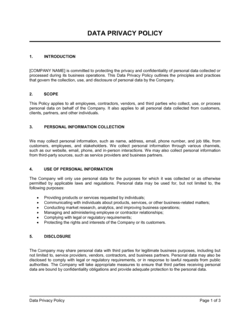
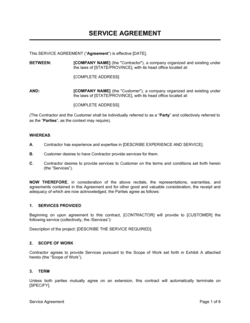
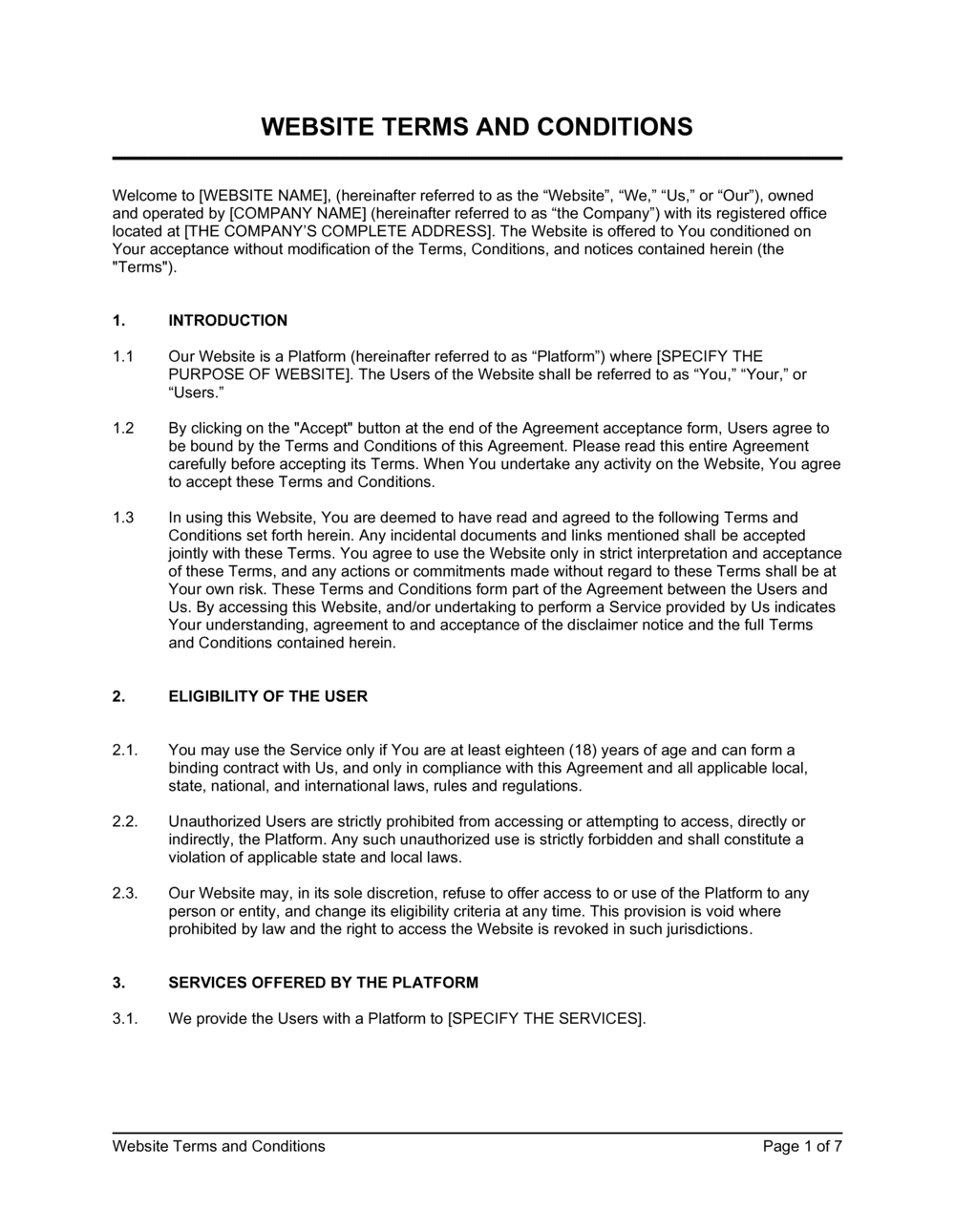
Website Terms and Conditions Template

Free Word download β€’ Edit online β€’ Save & share with Drive β€’ Export to PDF

7 pagesβ€’25–35 min to fillβ€’Difficulty: Complexβ€’Signature requiredβ€’Legal review recommended
Learn more ↓
FreeWebsite Terms and Conditions Template

At a glance

What it is
A Website Terms and Conditions is a legally binding agreement between a website or app owner and every user who accesses the site. This free Word download covers acceptable use, intellectual property ownership, liability limitations, disclaimers, account rules, and governing law β€” giving you a professionally structured starting point you can edit online and publish directly to your site or export as PDF.
When you need it
Use it before launching any public-facing website, web application, SaaS platform, or e-commerce store. It is equally critical when adding new features β€” user accounts, payment processing, user-generated content β€” that create additional legal exposure.
What's inside
Acceptance of terms, permitted and prohibited uses, intellectual property ownership, user account responsibilities, content disclaimers, limitation of liability, indemnification, dispute resolution, modifications clause, and governing law with jurisdiction selection.

What is a Website Terms and Conditions?

Website Terms and Conditions β€” also called terms of service or terms of use β€” is a legally binding agreement between a website or application owner and every user who accesses or uses the site. It defines the rules users must follow, asserts the operator's ownership of content and intellectual property, limits the operator's financial liability for user claims, and establishes which jurisdiction's laws govern disputes. Unlike a privacy policy, which addresses data handling, terms and conditions govern the full scope of the user relationship: what users can and cannot do, what the operator promises or explicitly does not promise, and what happens when things go wrong.

Why You Need This Document

Operating a website without published terms and conditions exposes you to four categories of concrete legal and financial risk simultaneously. Without an IP ownership clause, users can reproduce your content, code, and branding without clear legal consequence. Without a limitation of liability clause, a single user claim for a site outage, a data error, or a failed transaction can be pursued for the full value of the user's alleged damages β€” uncapped. Without acceptable-use rules, you have no contractual basis to suspend or terminate abusive accounts, leaving you reliant on discretion rather than enforceable obligations. And without a dispute-resolution clause, litigation defaults to the user's home jurisdiction, which may be thousands of miles away and governed by consumer-protection law far more favorable to the claimant. A properly structured Website Terms and Conditions template closes all four gaps before your first user signs up β€” and the cost of getting it right is a fraction of the cost of a single dispute without it.

Which variant fits your situation?

If your situation is…Use this template
Running a standard informational or blog websiteWebsite Terms and Conditions
Operating a SaaS or subscription software platformSaaS Terms of Service
Running an e-commerce store that sells physical or digital goodsE-Commerce Terms and Conditions
Collecting personal data and needing to address user privacy rightsPrivacy Policy
Operating a two-sided marketplace with buyers and sellersMarketplace Terms of Service
Offering a mobile app in addition to a web platformMobile App Terms and Conditions
Allowing user-generated content such as reviews or forum postsUser-Generated Content Policy

Common mistakes to avoid

❌ Using a competitor's terms verbatim

Why it matters: Copy-pasting terms from another site leaves you with clauses that reference the wrong company name, incorrect jurisdiction, and features your site does not have β€” creating contradictions courts may use to void key protections.

Fix: Start from a properly structured template and customize every placeholder. At minimum, verify that all entity names, URLs, jurisdictions, and feature-specific clauses match your actual product.

❌ No clickwrap acceptance on account creation or checkout

Why it matters: Browsewrap terms β€” linked only in a footer β€” have been invalidated by US, UK, and EU courts in numerous cases where users had no clear notice they were agreeing to anything.

Fix: Add an explicit 'I agree to the Terms and Conditions' checkbox at every signup and checkout flow, and log the timestamp of each acceptance in your user database.

❌ Omitting a user-generated content clause on sites that accept submissions

Why it matters: Without a UGC license grant, you technically need individual permission to display, moderate, or remove each piece of user-submitted content β€” reviews, photos, comments β€” creating operational and legal exposure.

Fix: Add a UGC clause granting a worldwide, royalty-free license to use, display, and moderate any content submitted to the platform.

❌ Setting the liability cap at zero or using a complete exclusion

Why it matters: A total exclusion of liability is unenforceable in most jurisdictions for personal injury, fraud, and gross negligence β€” and courts in several jurisdictions will void the entire limitation clause rather than reduce it.

Fix: Set a specific dollar cap (fees paid in the prior 12 months or a fixed amount) and carve out exclusions only for fraud and intentional misconduct, which most jurisdictions already prohibit excluding anyway.

❌ Never updating terms after new features launch

Why it matters: Terms that do not address payment processing, AI-generated output, API access, or third-party integrations leave those features legally ungoverned β€” meaning disputes fall back on jurisdiction-specific defaults, which rarely favor the platform operator.

Fix: Establish a change-management trigger: any new feature that involves money, user data, or third-party services automatically kicks off a terms review before launch.

❌ Choosing a governing law with no connection to the business

Why it matters: Selecting a favorable jurisdiction like Delaware or the Cayman Islands when your users and operations are in California or the EU does not insulate you from local consumer-protection law, which applies regardless of the choice-of-law clause.

Fix: Select the jurisdiction where your principal place of business is located, and add a separate compliance addendum for users in heavily regulated regions such as the EU or California.

The 10 key clauses, explained

Acceptance of terms

In plain language: Establishes how and when a user becomes legally bound by the terms β€” by clicking 'Agree', creating an account, or simply using the site.

Sample language
By accessing or using [WEBSITE URL] ('Site'), you agree to be bound by these Terms and Conditions ('Terms'). If you do not agree, you must immediately cease use of the Site.

Common mistake: Relying solely on browsewrap acceptance (a footer link) without any active acknowledgment. Courts in the US and UK have invalidated browsewrap terms where users had no clear notice of their existence.

Permitted and prohibited uses

In plain language: Defines what users are allowed to do on the site and expressly lists behaviors that are banned β€” scraping, hacking, impersonation, and spam.

Sample language
You may use the Site solely for [PERMITTED PURPOSE]. You may not: (a) scrape, crawl, or harvest data; (b) transmit unsolicited communications; (c) impersonate any person or entity; or (d) upload malicious code.

Common mistake: Listing only technical prohibitions and omitting conduct rules such as harassment, false reviews, or fraudulent transactions β€” leaving gaps that allow abusive behavior with no contractual basis for account termination.

Intellectual property ownership

In plain language: Asserts the site owner's ownership of all content, branding, code, and data on the site, and restricts users from reproducing or distributing it without permission.

Sample language
All content on the Site β€” including text, graphics, logos, and software β€” is the exclusive property of [COMPANY NAME] or its licensors and is protected by applicable intellectual property laws. No content may be reproduced without prior written consent.

Common mistake: Failing to address third-party licensed content separately. Asserting blanket ownership over licensed stock images or open-source components can expose the operator to infringement claims.

User accounts and credentials

In plain language: Sets rules for account creation, password security, and who is responsible for activity under a given account.

Sample language
You are responsible for maintaining the confidentiality of your account credentials and for all activity that occurs under your account. You must notify [COMPANY NAME] immediately at [EMAIL] if you suspect unauthorized access.

Common mistake: No clause addressing what happens to the account on death or incapacity of the user, or on business dissolution β€” creating disputes about data access and ownership long after the relationship ends.

User-generated content license

In plain language: Grants the site owner a license to display, modify, and distribute content submitted by users β€” reviews, comments, images β€” without requiring individual permission each time.

Sample language
By submitting content to the Site, you grant [COMPANY NAME] a worldwide, royalty-free, perpetual license to use, reproduce, modify, publish, and distribute such content in connection with the Site and its marketing.

Common mistake: Omitting a UGC clause entirely on sites that accept comments, reviews, or file uploads. Without it, the operator technically needs separate permission to display each piece of user content.

Disclaimers and warranties

In plain language: States that the site and its content are provided 'as is' with no guarantees of accuracy, availability, or fitness for a particular purpose.

Sample language
The Site is provided 'AS IS' and 'AS AVAILABLE' without warranties of any kind, express or implied. [COMPANY NAME] does not warrant that the Site will be uninterrupted, error-free, or free of viruses.

Common mistake: Using overly vague disclaimer language that courts in consumer-facing jurisdictions (EU, UK, Australia) routinely refuse to enforce against individual users because it violates consumer protection statutes.

Limitation of liability

In plain language: Caps the maximum financial damages the site owner can face if users suffer losses related to use of the site, typically limiting liability to fees paid or a fixed ceiling.

Sample language
To the maximum extent permitted by law, [COMPANY NAME]'s total liability for any claim arising from your use of the Site shall not exceed the greater of (a) amounts paid by you in the [12] months preceding the claim or (b) $[100].

Common mistake: Setting the liability cap at zero dollars. Courts in many jurisdictions refuse to enforce a complete exclusion of liability for personal injury, fraud, or gross negligence β€” rendering the entire clause void rather than just the offending part.

Indemnification

In plain language: Requires users to reimburse the site owner for legal costs, settlements, and damages arising from the user's misuse of the site or violation of the terms.

Sample language
You agree to indemnify, defend, and hold harmless [COMPANY NAME] and its officers, directors, and employees from any claim, liability, or expense β€” including reasonable attorney's fees β€” arising from your use of the Site or breach of these Terms.

Common mistake: Drafting the indemnification clause to cover claims caused by the site owner's own negligence. Courts strike these provisions, and their inclusion weakens the enforceability of the clause for legitimate user-caused claims.

Dispute resolution and governing law

In plain language: Specifies the jurisdiction whose laws apply, the forum where disputes are heard, and whether arbitration replaces litigation.

Sample language
These Terms are governed by the laws of [STATE / PROVINCE / COUNTRY]. Any dispute shall be resolved by binding arbitration under [AAA / JAMS] rules in [CITY], except that either party may seek injunctive relief in a court of competent jurisdiction.

Common mistake: Selecting a governing law with no connection to where the business operates or where users are located. Jurisdictions like California and the EU apply local consumer-protection law regardless of a choice-of-law clause.

Modifications and termination

In plain language: Reserves the site owner's right to update the terms at any time and describes how users will be notified, along with the owner's right to suspend or terminate access.

Sample language
[COMPANY NAME] may modify these Terms at any time. Changes take effect [30] days after posting, except for material changes which require [14] days' advance notice via email to registered users. Continued use constitutes acceptance. [COMPANY NAME] may terminate access for any violation of these Terms.

Common mistake: No advance-notice requirement for material changes. Several jurisdictions, including EU member states under the Digital Services Act, require meaningful prior notice before substantive term changes take effect.

How to fill it out

  1. 1

    Identify your legal entity and website URL

    Enter your full registered business name β€” not a brand name or trading name β€” and the exact URL of the site these terms govern. If the terms cover multiple domains or subdomains, list each one explicitly.

    πŸ’‘ Cross-reference your business registration certificate to confirm the exact legal name. Mismatches between the entity in the terms and the entity in your contracts create enforcement gaps.

  2. 2

    Choose your acceptance mechanism

    Decide whether users will accept via clickwrap (a checkbox at account creation or checkout) or browsewrap (a notice in the site footer). Clickwrap is more reliably enforceable and is required for SaaS, e-commerce, and any site collecting personal data.

    πŸ’‘ Log and timestamp clickwrap acceptances in your database. If a user disputes ever agreeing to the terms, that record is your primary evidence.

  3. 3

    Define permitted and prohibited uses for your specific site

    Replace the generic prohibited-use list with language tailored to your actual risk profile. A marketplace needs rules on fraudulent listings; a SaaS platform needs rules on reverse engineering and API abuse; a blog needs rules on content scraping.

    πŸ’‘ Review your support ticket history and terms-violation incidents from the past 12 months β€” they reveal the specific abuses your terms need to address.

  4. 4

    Assert IP ownership and address licensed content

    Confirm you own β€” or have a license to β€” every asset you are claiming in the IP clause. List any open-source components under their applicable licenses separately so the blanket ownership assertion does not overclaim.

    πŸ’‘ Run a content audit before publishing. Asserting ownership over stock photography or licensed fonts you do not own exposes you to third-party infringement claims.

  5. 5

    Set the limitation of liability cap

    Choose a specific dollar amount or fee-based formula for the liability cap. Common choices: fees paid in the prior 12 months, a fixed amount of $100–$1,000, or the value of the specific transaction at issue.

    πŸ’‘ Never set the cap at zero. Courts in most jurisdictions refuse to enforce a complete liability exclusion, which can void the entire clause rather than just reduce it.

  6. 6

    Select governing law and dispute resolution

    Choose the jurisdiction where your business is incorporated or headquartered. If you have users in the EU, UK, or California, verify that your choice-of-law selection does not contradict mandatory consumer-protection rules in those regions.

    πŸ’‘ If more than 20% of your users are in the EU, consider a separate EU-facing terms addendum that complies with the Digital Services Act and consumer contract regulations.

  7. 7

    Publish and link the terms prominently

    Post the finalized terms at a stable URL (e.g., /terms) and link to it in your site footer, at account registration, at checkout, and in your onboarding emails. The link must be visible without scrolling on signup and checkout pages.

    πŸ’‘ Version-control your terms with an effective date in the document title. When you update them, archive the previous version at a dated URL so you can produce it if a dispute arises over older terms.

  8. 8

    Schedule annual reviews and update when features change

    Review the terms at least once per year and immediately whenever you add new features β€” payment processing, user accounts, AI-generated content, or third-party integrations β€” that create new legal exposure.

    πŸ’‘ Tie your terms review to your annual privacy policy review so both documents stay synchronized and internally consistent.

Frequently asked questions

What are website terms and conditions?

Website terms and conditions β€” also called terms of service or terms of use β€” are a legally binding agreement between a website or app owner and every person who accesses the site. They set the rules for permitted use, assert IP ownership, limit the operator's liability, and establish the governing law for disputes. Without them, a site operator has no contractual basis to remove abusive users, protect proprietary content, or cap financial exposure from user claims.

Are website terms and conditions legally required?

No single law universally mandates terms and conditions, but several regulations effectively require specific clauses. The EU's Digital Services Act requires platforms to publish clear content-moderation rules. COPPA in the US requires sites directed at children to address parental consent. E-commerce regulations in the UK and EU require pre-contractual disclosures that are typically embedded in terms. Even where not strictly required, operating without terms leaves the site owner legally exposed in ways that are both avoidable and costly.

What is the difference between terms and conditions and a privacy policy?

Terms and conditions govern the rules of using the site β€” acceptable behavior, IP ownership, liability, and dispute resolution. A privacy policy governs how the site collects, uses, stores, and shares personal data. They are separate legal documents serving different purposes. Most sites need both, and they should cross-reference each other. Combining them into a single document is generally discouraged because privacy regulations in the EU, California, and Canada require the privacy policy to be easily accessible and clearly labeled.

Do users actually have to agree to terms and conditions?

Enforceability depends on how agreement is obtained. Clickwrap acceptance β€” where the user actively checks a box or clicks 'I Agree' β€” is consistently upheld by courts in the US, UK, EU, and Canada. Browsewrap β€” where a footer link is the only notice β€” has been invalidated in numerous cases because users had no clear notice they were agreeing to anything. For any site where enforcement matters, clickwrap at account creation or checkout is the minimum standard.

Can I copy terms and conditions from another website?

Copying another site's terms is copyright infringement and creates practical problems: the copied terms reference the wrong company, wrong jurisdiction, and features your site does not have. Courts have used internal inconsistencies β€” a company name that does not match, a feature that does not exist β€” to void key clauses. Use a properly structured template and customize every placeholder to match your actual business.

What should a limitation of liability clause include?

A limitation of liability clause should specify the maximum dollar amount the site owner can be held responsible for β€” typically fees paid by the user in the prior 12 months or a fixed amount such as $100. It should exclude liability for consequential, indirect, and punitive damages. It should not attempt to exclude liability for fraud, personal injury, or gross negligence β€” courts in most jurisdictions refuse to enforce those exclusions and may void the entire clause as a result.

How often should website terms and conditions be updated?

At minimum, review them annually. Update them immediately whenever you add features that change your legal exposure β€” payment processing, user accounts, AI-generated content, API access, or third-party integrations. In the EU, material changes to terms for registered users require advance notice under the Digital Services Act. Archive each version with its effective date so you can produce the governing version if a dispute arises over older conduct.

Do terms and conditions protect against GDPR or CCPA obligations?

No. Terms and conditions govern the user relationship, but GDPR and CCPA obligations are fulfilled primarily through a separate privacy policy and a consent management platform. However, your terms should cross-reference the privacy policy and should not contain provisions that contradict it β€” for example, claiming to own user data in the terms while promising not to sell it in the privacy policy.

Does a website terms and conditions template need a lawyer?

For a standard informational site or small e-commerce store, a high-quality template is typically sufficient with careful customization. Engage a lawyer when the platform processes payments, hosts user-generated content at scale, operates in multiple jurisdictions, or targets consumers in the EU or California β€” where consumer-protection overrides are most aggressive. A 1–2 hour legal review typically costs $300–$800 and is worthwhile before any significant public launch.

How this compares to alternatives

vs Privacy Policy

A privacy policy specifically addresses how the site collects, uses, stores, and shares personal data β€” required by GDPR, CCPA, and PIPEDA. Terms and conditions govern the broader user relationship: acceptable use, IP, liability, and dispute resolution. Both documents are needed for most commercial websites and must not contradict each other.

vs End User License Agreement (EULA)

A EULA governs the licensing of software installed on a user's device β€” it restricts copying, reverse engineering, and redistribution of the application itself. Website terms and conditions govern the online service relationship. SaaS products typically need both: a EULA for any downloadable client app and terms of service for the web platform.

vs Cookie Policy

A cookie policy discloses what tracking technologies the site uses and obtains the consent required under GDPR and ePrivacy regulations. It is a separate, narrower document that is typically linked from both the terms and the privacy policy. Terms and conditions do not substitute for a standalone cookie policy in jurisdictions that require explicit cookie consent.

vs Acceptable Use Policy

An acceptable use policy is a detailed standalone document listing permitted and prohibited user behaviors, often incorporated by reference into the main terms. For large platforms or enterprise SaaS products, a standalone AUP provides more operational detail β€” content standards, API abuse rules, and enforcement procedures β€” than is practical to embed in standard terms.

Industry-specific considerations

SaaS / Technology

API usage limits, reverse-engineering prohibitions, uptime disclaimers, data-processing addendums, and subscription auto-renewal disclosures are essential clauses for software platforms.

E-commerce / Retail

Product listing accuracy disclaimers, pricing-error policies, return and refund procedures, and state-by-state sales tax disclosures must be addressed alongside the standard terms.

Media and Publishing

Copyright assertion over original content, DMCA takedown procedures, affiliate disclosure obligations, and syndication licensing restrictions are central to media site terms.

Healthcare / MedTech

Medical disclaimer language, prohibition on reliance for clinical decisions, HIPAA interaction notices, and enhanced liability limitations are non-negotiable for health-related sites.

Jurisdictional notes

United States

Federal law does not mandate terms and conditions, but sector-specific rules β€” COPPA for sites targeting children under 13, FTCA unfair practices rules, and the CFPB for financial services β€” impose content requirements. California's consumer contract law (Civil Code Β§1750+) imposes additional disclosure obligations for e-commerce. Arbitration clauses with class-action waivers are commonly used but subject to ongoing FTC scrutiny.

Canada

PIPEDA and provincial privacy laws (Quebec Law 25 in particular) require that terms cross-reference a compliant privacy policy. Quebec's Consumer Protection Act imposes strict disclosure obligations on e-commerce merchants including cancellation rights and automatic-renewal disclosures. Arbitration clauses that waive class proceedings are generally unenforceable in Quebec against consumers.

United Kingdom

The Consumer Rights Act 2015 requires terms with consumers to be fair and transparent; unfair terms are not binding even if the user accepted them. The Digital Services Act equivalent provisions and the Online Safety Act 2023 impose content-moderation obligations on larger platforms. PECR requires cookie consent in addition to terms and privacy documentation.

European Union

The EU Digital Services Act requires platforms to publish clear, accessible terms in all languages of member states where they operate, with advance notice of material changes for registered users. The Unfair Contract Terms Directive voids terms that create a significant imbalance to the consumer's detriment. GDPR requires that data-processing terms in ToS be consistent with the separate privacy policy and DPA.

Template vs lawyer β€” what fits your deal?

PathBest forCostTime
Use the templateStandard informational websites, blogs, and small e-commerce stores with domestic usersFree30–60 minutes
Template + legal reviewSaaS platforms, marketplaces, or any site with EU or California users, UGC, or payment processing$300–$8002–5 days
Custom draftedEnterprise platforms, heavily regulated industries (healthcare, fintech), or multi-jurisdiction operations with material liability exposure$2,000–$8,000+2–4 weeks

Glossary

Terms and Conditions
A legally binding agreement that governs the rules users must follow to access and use a website or application.
Acceptance of Terms
The mechanism β€” clickwrap, browsewrap, or explicit sign-up β€” by which a user agrees to be bound by the terms before using the site.
Clickwrap Agreement
A form of digital consent where the user actively checks a box or clicks 'I Agree' to confirm acceptance of the terms.
Browsewrap Agreement
An arrangement where continued use of a website constitutes acceptance of the terms, without requiring an explicit click β€” less reliably enforceable than clickwrap.
Limitation of Liability
A clause capping the maximum amount the site owner can be held financially responsible for if something goes wrong, typically limited to fees paid or a fixed dollar amount.
Intellectual Property (IP)
Creations of the mind β€” text, code, graphics, logos, and data β€” owned by the website operator and protected from unauthorized reproduction or distribution.
Indemnification
A clause requiring the user to cover the site owner's legal costs and damages if the user's actions cause a third-party claim against the owner.
Governing Law
The jurisdiction whose laws apply to interpret and enforce the agreement, typically the state or country where the business is incorporated or headquartered.
Dispute Resolution
The agreed process for resolving disagreements β€” arbitration, mediation, or litigation β€” including the venue and applicable rules.
Severability Clause
A provision stating that if one part of the agreement is found unenforceable, the remaining clauses continue in full force.
User-Generated Content (UGC)
Any content β€” reviews, comments, images, or posts β€” submitted by users to the platform, raising questions of ownership, licensing, and moderation liability.
Force Majeure
A clause excusing a party's non-performance due to extraordinary events outside its control, such as natural disasters or government actions.

Part of your Business Operating System

This document is one of 3,000+ business & legal templates included in Business in a Box.

  • Fill-in-the-blanks β€” ready in minutes
  • 100% customizable Word document
  • Compatible with all office suites
  • Export to PDF and share electronically

Create your document in 3 simple steps.

From template to signed document β€” all inside one Business Operating System.
1
Download or open template

Access over 3,000+ business and legal templates for any business task, project or initiative.

2
Edit and fill in the blanks with AI

Customize your ready-made business document template and save it in the cloud.

3
Save, Share, Send, Sign

Share your files and folders with your team. Create a space of seamless collaboration.

Save time, save money, and create top-quality documents.

β˜…β˜…β˜…β˜…β˜…

"Fantastic value! I'm not sure how I'd do without it. It's worth its weight in gold and paid back for itself many times."

Managing Director Β· Mall Farm
Robert Whalley
Managing Director, Mall Farm Proprietary Limited
β˜…β˜…β˜…β˜…β˜…

"I have been using Business in a Box for years. It has been the most useful source of templates I have encountered. I recommend it to anyone."

Business Owner Β· 4+ years
Dr Michael John Freestone
Business Owner
β˜…β˜…β˜…β˜…β˜…

"It has been a life saver so many times I have lost count. Business in a Box has saved me so much time and as you know, time is money."

Owner Β· Upstate Web
David G. Moore Jr.
Owner, Upstate Web

Run your business with a system β€” not scattered tools

Stop downloading documents. Start operating with clarity. Business in a Box gives you the Business Operating System used by over 250,000 companies worldwide to structure, run, and grow their business.

Start freeΒ Β·Β No credit card required