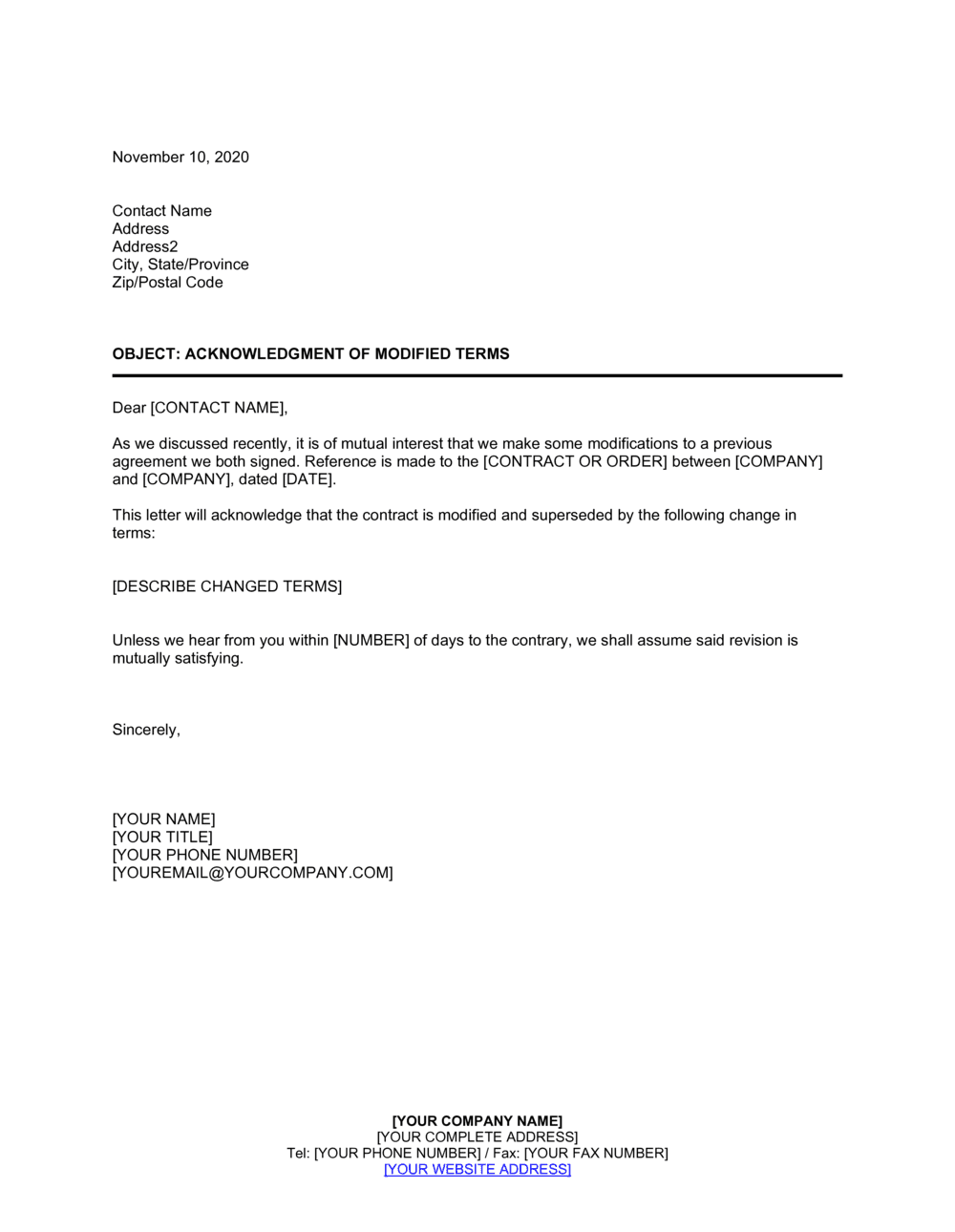
Acknowledgment of Modified Terms Template

Free Word download β€’ Edit online β€’ Save & share with Drive β€’ Export to PDF

1 pageβ€’15–25 min to fillβ€’Difficulty: Standard
Learn more ↓
FreeAcknowledgment of Modified Terms Template

At a glance

What it is
An Acknowledgment of Modified Terms is a formal business letter one party sends to another to confirm that they have received, reviewed, and accepted changes to the terms of an existing agreement, contract, or business relationship. This template is a free Word download you can edit online and export as PDF β€” creating a clear written record of consent to modified conditions in minutes.
When you need it
Use it when a supplier, client, lender, landlord, or service provider has notified you of updated terms β€” such as revised pricing, payment schedules, delivery conditions, or service scope β€” and you need to formally confirm your acceptance in writing before the changes take effect.
What's inside
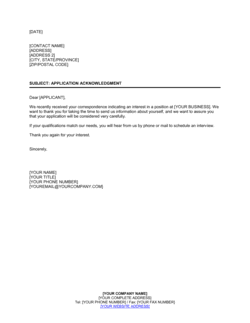
Sender and recipient details, a reference to the original agreement and the specific modification notice received, a clear statement of acceptance, the effective date of the modified terms, any conditions or reservations attached to acceptance, and a closing that preserves the remainder of the original agreement.

What is an Acknowledgment of Modified Terms?

An Acknowledgment of Modified Terms is a formal business letter one party sends to another to confirm that they have received, reviewed, and accepted changes to the conditions of an existing agreement or commercial relationship. It documents β€” in writing, with a specific date β€” the accepting party's consent to modifications such as revised pricing, updated payment schedules, amended delivery conditions, or altered service scope. Unlike a contract amendment, which requires both parties to sign a revised document, this letter is a unilateral written response that closes the loop on a modification notice the other party has already issued.

Why You Need This Document

Verbal or implied acceptance of changed terms is one of the most common sources of billing disputes and contract disagreements in everyday business. Without a written acknowledgment, the scope of what was accepted, the date acceptance took effect, and any conditions attached to it become matters of conflicting memory. If a supplier later invoices at a rate you believed was different from what you agreed, or a client claims a scope change was never formally accepted, the absence of a written record puts you in a weak position. A properly completed acknowledgment of modified terms creates a timestamped reference point both parties can rely on β€” protecting you if the relationship sours and simplifying accounting, auditing, and contract management when it does not.

Which variant fits your situation?

If your situation is…Use this template
Accepting a supplier's updated pricing effective on a future dateAcknowledgment Of Modified Terms
Formally amending a contract with both parties signing the changeContract Amendment Agreement
Rejecting proposed changes and countering with different termsCounter Offer Letter
Notifying the other party of a change to your own termsNotice of Change in Terms
Confirming agreement to a new payment schedule with a creditorPayment Plan Agreement
Acknowledging receipt of a contract modification without accepting itLetter of Acknowledgment of Receipt

Common mistakes to avoid

❌ Using ambiguous acceptance language

Why it matters: Phrases like 'noted' or 'we are aware of the changes' do not constitute clear acceptance and may leave the other party uncertain whether the modified terms are binding.

Fix: Use an explicit acceptance statement: '[COMPANY NAME] hereby accepts the modified terms as set out in the notice dated [DATE], effective [DATE].'

❌ Omitting the effective date of the modified terms

Why it matters: Without a stated effective date, both parties may apply the changes from different starting points, creating billing or performance discrepancies that are difficult to resolve after the fact.

Fix: State the effective date in the acceptance clause and confirm it matches the date specified in the modification notice.

❌ Failing to summarize the specific terms being accepted

Why it matters: Accepting 'the modified terms' by reference only means that if the notice contained an error, no independent written record exists of what you believed you were agreeing to.

Fix: Add a short bulleted or lettered list of the key changes β€” price, deadline, scope β€” so both parties share an unambiguous written summary.

❌ Not retaining a copy alongside the original agreement

Why it matters: An acknowledgment letter stored separately from the original contract becomes hard to locate during a dispute, and its context is lost without the surrounding documents.

Fix: File the acknowledgment letter immediately with the original agreement and the modification notice in the same folder, digital or physical, labeled with the contract reference number.

The 9 key clauses, explained

Header and date

In plain language: The sender's name, address, and contact details at the top of the letter, followed by the date on which the letter is written.

Sample language
[SENDER NAME] | [SENDER ADDRESS] | [CITY, STATE, ZIP] | [DATE]

Common mistake: Using an approximate or omitted date. Without a precise date, there is no clear record of when acceptance was communicated, which creates ambiguity if a dispute arises over the effective date.

Recipient details

In plain language: The full name, title, company, and address of the person or organization whose modification notice is being acknowledged.

Sample language
[RECIPIENT NAME] | [TITLE] | [COMPANY NAME] | [ADDRESS]

Common mistake: Addressing the letter to a general department rather than the named contact. Letters addressed to 'Accounts Payable' or 'Customer Service' are frequently misfiled and may not reach the person with authority to act on the acknowledgment.

Reference line

In plain language: A brief line identifying the original agreement and the specific modification notice to which this letter responds.

Sample language
Re: Acknowledgment of Modified Terms β€” [ORIGINAL AGREEMENT NAME], dated [ORIGINAL DATE], as amended by [MODIFICATION NOTICE], dated [NOTICE DATE]

Common mistake: Referencing only the original agreement without citing the modification notice. This makes it unclear which version of the terms is being accepted.

Opening statement of receipt

In plain language: Confirms that the sender received and reviewed the modification notice on a specific date.

Sample language
We write to confirm that [SENDER NAME] received and reviewed your notice of modified terms dated [NOTICE DATE] regarding the [AGREEMENT NAME] entered into on [ORIGINAL DATE].

Common mistake: Omitting the receipt date. Without it, the other party cannot confirm that the acknowledgment was timely and that the modified terms were reviewed before taking effect.

Statement of acceptance

In plain language: Clearly and unambiguously states that the sender accepts the modified terms as described in the notice.

Sample language
[SENDER NAME] hereby acknowledges and accepts the modified terms as set out in your notice dated [NOTICE DATE], effective [EFFECTIVE DATE].

Common mistake: Using hedging language such as 'we note' or 'we are aware of' instead of an explicit acceptance statement. Ambiguous language can leave the other party uncertain whether a binding acceptance was given.

Summary of key modified terms

In plain language: Briefly restates the specific changes being accepted β€” such as a new price, revised deadline, or amended service condition β€” to confirm mutual understanding.

Sample language
The modified terms accepted herein include: (a) a revised unit price of $[AMOUNT] per [UNIT], effective [DATE]; (b) updated payment terms of Net [X] days from invoice date; and (c) [ANY OTHER CHANGE].

Common mistake: Skipping this summary and relying solely on a reference to the other party's notice. If the notice contained an error, the absence of a summary means no written record exists of what the accepting party believed they were agreeing to.

Conditions or reservations (if any)

In plain language: States any limitations, qualifications, or objections the sender attaches to their acceptance β€” for example, acceptance conditional on a corrected invoice or a specific start date.

Sample language
This acceptance is conditional upon [CONDITION, e.g., receipt of a revised invoice reflecting the agreed unit price]. If [CONDITION] is not fulfilled by [DATE], this acknowledgment shall be deemed withdrawn.

Common mistake: Omitting this clause entirely when the sender does have reservations, then raising them later in a dispute. Any qualification to acceptance should appear in the acknowledgment itself, not in a subsequent email.

Preservation of original agreement terms

In plain language: Confirms that all terms of the original agreement not specifically modified by the notice remain unchanged and continue in full force.

Sample language
All other terms and conditions of the [AGREEMENT NAME] dated [ORIGINAL DATE] that are not expressly modified by the notice dated [NOTICE DATE] remain in full force and effect.

Common mistake: Failing to include this clause, which can create uncertainty about whether acceptance of one change implicitly alters other parts of the original agreement.

Closing and contact details

In plain language: A professional closing sentence inviting the recipient to raise any questions, followed by the sender's name, title, and contact information.

Sample language
Please do not hesitate to contact us at [EMAIL / PHONE] if you have any questions regarding this acknowledgment. Sincerely, [SENDER NAME] | [TITLE] | [COMPANY NAME]

Common mistake: Closing without providing contact details. If the recipient has a question about the acknowledgment, the absence of a direct contact delays resolution and can stall the underlying transaction.

How to fill it out

  1. 1

    Enter the sender and recipient details

    Fill in the sender's full name, company, and address at the top of the letter, then complete the recipient's name, title, company, and address. Use the legal entity names that appear on the original agreement.

    πŸ’‘ Confirm the recipient's current mailing address β€” companies frequently change office locations, and a letter sent to an outdated address may not create a reliable record of delivery.

  2. 2

    Add the date and reference line

    Enter today's date and complete the reference line with the original agreement name and date, plus the modification notice name and date.

    πŸ’‘ Keep the reference line format consistent with your internal filing system so you can locate the letter quickly if a dispute arises later.

  3. 3

    State the date you received the modification notice

    In the opening paragraph, enter the exact date you received or reviewed the other party's modification notice.

    πŸ’‘ If the notice arrived by email, note the email timestamp. If by post, note the postmark or delivery date β€” this detail matters if timeliness of acceptance is ever questioned.

  4. 4

    Write the acceptance statement

    Use clear, unambiguous language to confirm acceptance of the modified terms and state the effective date on which they apply.

    πŸ’‘ Avoid qualifiers like 'we believe we accept' or 'we tentatively agree.' One direct sentence β€” 'X hereby accepts the modified terms effective Y' β€” is legally cleaner than a paragraph of hedged language.

  5. 5

    Summarize the specific changes you are accepting

    List each material change β€” new price, revised deadline, amended scope β€” in a short numbered or lettered list so both parties share a written record of what was agreed.

    πŸ’‘ Cross-reference each item against the modification notice to catch any discrepancy before you send the letter.

  6. 6

    Add any conditions or reservations

    If your acceptance is conditional on a corrected document, a specific payment, or another prerequisite, state the condition clearly and include a deadline by which it must be met.

    πŸ’‘ If you have no reservations, delete this clause entirely rather than leaving it blank β€” a blank condition clause creates confusion about whether a condition was intended.

  7. 7

    Include the preservation-of-original-terms clause

    Confirm that all other terms of the original agreement remain unchanged. This protects both parties from unintended scope creep caused by the modification.

    πŸ’‘ Name the original agreement and its date explicitly in this clause β€” 'all other terms of the Service Agreement dated [DATE]' is clearer than 'all other terms.'

  8. 8

    Send and retain a copy

    Send the completed letter by the same channel the modification notice was delivered (email, post, or courier), and retain a copy with your records alongside the original agreement and the modification notice.

    πŸ’‘ Request a read receipt or delivery confirmation when sending by email, or use tracked post β€” proof of delivery strengthens your record if the acceptance is ever disputed.

Frequently asked questions

What is an acknowledgment of modified terms?

An acknowledgment of modified terms is a formal written letter confirming that one party has received, reviewed, and accepted changes to an existing agreement or business arrangement. It creates a dated written record of consent to the new conditions β€” such as revised pricing, updated payment schedules, or amended service scope β€” before those changes take effect. It differs from a contract amendment in that it is a unilateral confirmation rather than a bilaterally signed document.

When should I send an acknowledgment of modified terms?

Send it promptly after receiving a modification notice from a supplier, client, lender, landlord, or service provider β€” ideally before the stated effective date of the changes. Sending before the effective date establishes that acceptance was timely. It is also appropriate when a verbal agreement to modified terms has already been reached and you need to create a written record of that acceptance.

Does an acknowledgment of modified terms need to be signed?

A signature is not legally required for this type of letter to be effective in most contexts. The written, dated letter sent from a recognized email address or company letterhead typically constitutes sufficient written evidence of acceptance. However, adding a signature block adds a layer of formality that some counterparties β€” particularly larger organizations and lenders β€” prefer to have on file.

What is the difference between an acknowledgment of modified terms and a contract amendment?

A contract amendment is a bilateral document that both parties sign, formally incorporating the change into the original agreement as a new binding term. An acknowledgment of modified terms is a unilateral letter from the receiving party confirming acceptance of changes the other party has proposed. Amendments are more formal and more commonly used when changes are significant or when the original contract required written amendments signed by both parties.

What happens if I accept modified terms without getting them in writing?

Verbal or implied acceptance creates risk: without a written record, the scope of what was accepted, the effective date, and any conditions attached to acceptance become matters of disputed recollection. A written acknowledgment eliminates that ambiguity and gives both parties a consistent reference point if a billing dispute, delivery disagreement, or service complaint arises later.

Can I accept some modified terms but not others in the same letter?

Yes. Use the summary-of-accepted-terms clause to list only the changes you are accepting, and use the conditions-or-reservations clause to note which proposed changes you are not accepting or wish to negotiate further. Be explicit β€” stating 'we accept items (a) and (b) but do not accept item (c)' is clearer than a general acceptance with a buried qualification.

How long should I keep an acknowledgment of modified terms on file?

Retain it for at least as long as the underlying agreement remains active, plus the applicable statute of limitations for contract disputes in your jurisdiction β€” typically 3 to 6 years in most US states and Canadian provinces. File it with the original agreement and the modification notice so the full document trail is available if needed.

Do I need a lawyer to write an acknowledgment of modified terms?

For routine changes to standard commercial terms β€” revised pricing, updated payment schedules, or minor scope adjustments β€” a high-quality template is sufficient. Consider involving a lawyer when the modified terms are materially adverse, when the original contract required formal amendment procedures, or when accepting the changes could waive rights you want to preserve.

How this compares to alternatives

vs Contract Amendment Agreement

A contract amendment is a bilaterally signed document that formally rewrites a specific clause of the original agreement and becomes part of it. An acknowledgment of modified terms is a unilateral letter confirming the receiving party's acceptance of changes proposed by the other side. Use a contract amendment when both parties are actively negotiating the language of the change; use an acknowledgment when one party has issued a notice and the other is simply confirming acceptance.

vs Letter of Acknowledgment of Receipt

A letter of acknowledgment of receipt confirms only that a document or notice was received β€” it does not constitute acceptance of the contents. An acknowledgment of modified terms goes further by explicitly accepting the changes described. Use a receipt acknowledgment when you want to confirm delivery without committing to acceptance; use a modified-terms acknowledgment when you are ready to accept the proposed changes.

vs Counter Offer Letter

A counter offer letter rejects the proposed modification and proposes alternative terms in its place. An acknowledgment of modified terms accepts the proposed changes as stated. Use a counter offer when the proposed modifications are unacceptable and you want to negotiate; use an acknowledgment when you have reviewed the changes and are prepared to accept them without further negotiation.

vs Notice of Change in Terms

A notice of change in terms is sent by the party proposing the modification β€” it initiates the change. An acknowledgment of modified terms is sent by the receiving party in response β€” it closes the loop by confirming acceptance. Both documents together form a complete written record of the modification and its acceptance.

Industry-specific considerations

Wholesale and Distribution

Suppliers frequently revise unit pricing, minimum order quantities, and lead times; a written acknowledgment protects buyers from billing disputes when invoices reflect the new rates.

Professional Services

Consultants and agencies use acknowledgment letters when clients revise project scope, retainer amounts, or billing cycles mid-engagement to document consent before new invoices are issued.

Real Estate and Property Management

Tenants acknowledge modified lease terms β€” rent increases, updated maintenance obligations, or revised renewal conditions β€” in writing ahead of the next lease period.

Financial Services

Borrowers and account holders acknowledge changes to loan repayment schedules, interest rates, or fee structures when lenders issue modification notices.

Template vs pro β€” what fits your needs?

PathBest forCostTime
Use the templateRoutine commercial acknowledgments β€” revised pricing, updated payment terms, or minor scope changes between established business partnersFree10–15 minutes
Template + professional reviewAcknowledgments involving materially adverse changes, significant financial exposure, or conditions attached to acceptance$100–$300 (brief solicitor or paralegal review)1–2 business days
Custom draftedComplex multi-party agreements, regulated industries, or situations where accepting modified terms may waive rights under the original contract$300–$8002–5 business days

Glossary

Modified Terms
Changes to the conditions of an existing agreement, such as revised pricing, adjusted deadlines, or altered service scope.
Acknowledgment
A written statement confirming that a party has received and understood a document, notice, or set of conditions.
Effective Date
The specific calendar date on which the modified terms come into force and replace or supplement the original agreement.
Original Agreement
The existing contract or arrangement between the parties that is being partially changed by the modification notice.
Acceptance
A party's express agreement to be bound by proposed or revised terms, which completes a modification of the original arrangement.
Reservation of Rights
A statement in the acknowledgment that preserves the sender's ability to raise objections or claims not specifically addressed in the letter.
Material Change
A modification significant enough to affect the core obligations or economics of the original agreement β€” such as a price increase above a defined threshold.
Without Prejudice
Language indicating that the acceptance or communication cannot be used as an admission against the sender's interests in any future dispute.
Counterpart
One of two or more copies of a letter or agreement, each signed by a different party, that together constitute a single binding document.
In Full Force and Effect
Standard closing language confirming that all terms of the original agreement not addressed by the modification remain unchanged and binding.

Part of your Business Operating System

This document is one of 3,000+ business & legal templates included in Business in a Box.

  • Fill-in-the-blanks β€” ready in minutes
  • 100% customizable Word document
  • Compatible with all office suites
  • Export to PDF and share electronically

Create your document in 3 simple steps.

From template to signed document β€” all inside one Business Operating System.
1
Download or open template

Access over 3,000+ business and legal templates for any business task, project or initiative.

2
Edit and fill in the blanks with AI

Customize your ready-made business document template and save it in the cloud.

3
Save, Share, Send, Sign

Share your files and folders with your team. Create a space of seamless collaboration.

Save time, save money, and create top-quality documents.

β˜…β˜…β˜…β˜…β˜…

"Fantastic value! I'm not sure how I'd do without it. It's worth its weight in gold and paid back for itself many times."

Managing Director Β· Mall Farm
Robert Whalley
Managing Director, Mall Farm Proprietary Limited
β˜…β˜…β˜…β˜…β˜…

"I have been using Business in a Box for years. It has been the most useful source of templates I have encountered. I recommend it to anyone."

Business Owner Β· 4+ years
Dr Michael John Freestone
Business Owner
β˜…β˜…β˜…β˜…β˜…

"It has been a life saver so many times I have lost count. Business in a Box has saved me so much time and as you know, time is money."

Owner Β· Upstate Web
David G. Moore Jr.
Owner, Upstate Web

Run your business with a system β€” not scattered tools

Stop downloading documents. Start operating with clarity. Business in a Box gives you the Business Operating System used by over 250,000 companies worldwide to structure, run, and grow their business.

Start freeΒ Β·Β No credit card required