- Outstanding Balance
- The total unpaid amount owed by the debtor, including principal, accrued interest, and any documented fees as of the letter date.
- Accrued Interest
- Interest that has accumulated on an unpaid debt from the original due date to the date of the collection letter, calculated at the agreed or statutory rate.
- Dunning
- The structured process of sending a sequence of increasingly urgent payment demand communications to a debtor who has not paid.
- Charge-Off
- An accounting action where a creditor writes off an uncollectable debt as a loss — typically after 90 to 180 days past due — while retaining the legal right to collect.
- FDCPA
- The US Fair Debt Collection Practices Act, which regulates how third-party debt collectors may contact debtors and prohibits harassment, false statements, and unfair practices.
- Statute of Limitations
- The legally defined maximum period after a debt becomes due within which a creditor may file a lawsuit to collect — after which the debt is time-barred.
- Judgment
- A court order confirming that a debtor owes a specific amount to a creditor, enabling enforcement actions such as wage garnishment or asset liens.
- Wage Garnishment
- A court-ordered process by which a portion of a debtor's wages is withheld by their employer and paid directly to the creditor to satisfy a judgment.
- Credit Reporting
- The act of notifying a credit bureau (Equifax, Experian, TransUnion) of a delinquent account, which can negatively affect the debtor's credit score for up to seven years.
- Cease and Desist
- A written request from a debtor instructing a collector to stop all contact — which, when received, limits the collector to one final communication under the FDCPA.
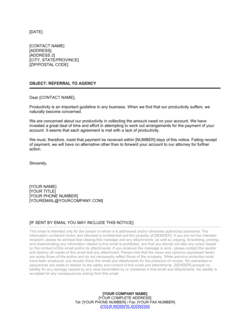
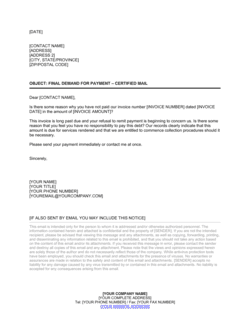
- Demand Letter
- A formal written notice requiring the recipient to take a specific action — typically pay a sum of money — within a defined timeframe or face legal consequences.