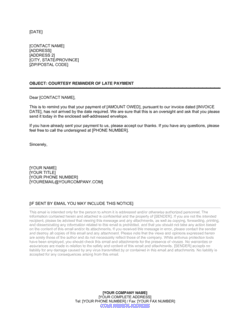
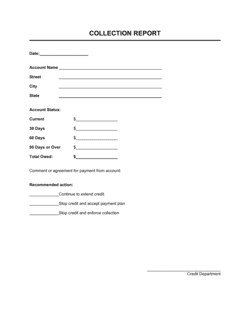
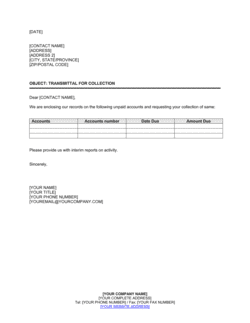
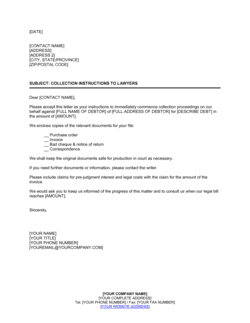
Collection Letter_Final Template

Free Word download • Edit online • Save & share with Drive • Export to PDF

1 page20–30 min to fillDifficulty: StandardSignature requiredLegal review recommended
Learn more ↓
FreeCollection Letter_Final Template

At a glance

What it is
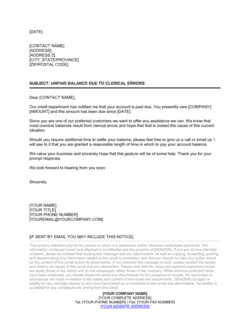
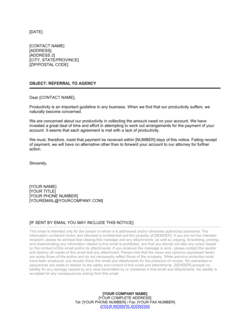
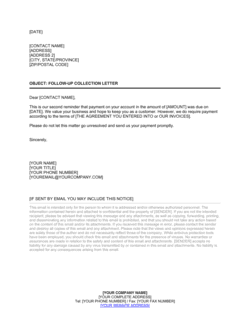
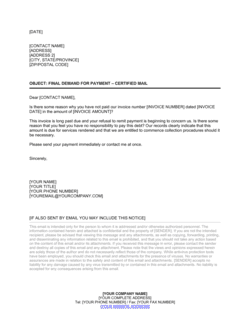
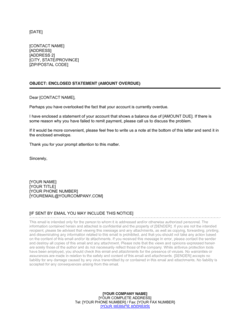
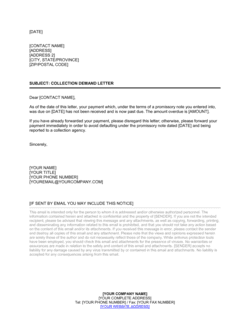
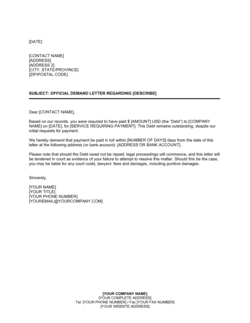
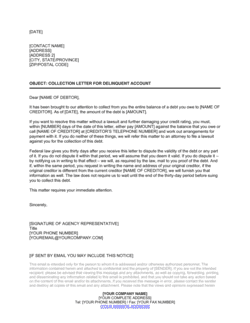
A Collection Letter Final is a formal written demand sent by a creditor to a debtor as the last step before legal escalation or referral to a collections agency. This free Word download gives you a professionally structured final notice that you can edit online and export as PDF — covering the outstanding balance, original due date, accrued interest or fees, a firm payment deadline, and a clear statement of consequences for non-payment.
When you need it
Use it after one or more earlier collection notices have gone unanswered or unresolved — typically the third or final communication in a structured collection sequence. It signals to the debtor that you are prepared to pursue legal remedies, file a claim, or engage a collections agency if payment is not received by a specific date.
What's inside
Creditor and debtor identification, a precise statement of the outstanding balance including original invoice references and accrued fees, a firm final payment deadline, a list of consequences for non-payment (litigation, collections referral, credit reporting), and a professional closing that preserves the option to settle.

What is a Collection Letter Final?

A Collection Letter Final is a formal written demand sent by a creditor to a debtor as the conclusive step in a structured collections sequence, issued after one or more prior notices have gone unanswered. It states the precise outstanding balance — including any accrued interest or late fees — sets a specific non-negotiable payment deadline, and explicitly identifies the legal and financial consequences of continued non-payment, including potential litigation, collections agency referral, or negative credit reporting. Unlike earlier collection notices, which invite resolution through professional courtesy, the final collection letter creates a documented legal record that the creditor has exhausted pre-litigation steps and is prepared to escalate immediately.

Why You Need This Document

Without a formally documented final demand, you lose on two fronts at once. Practically, debtors who have ignored prior reminders are far more likely to act when confronted with a specific deadline and specific consequences in writing. Legally, courts in most jurisdictions expect to see evidence that a creditor gave the debtor clear written notice and a reasonable opportunity to pay before filing suit or pursuing enforcement — a creditor who cannot produce that record risks having claims for attorney's fees or court costs denied. Referral to a collections agency or credit bureau reporting without a prior written final demand also exposes creditors to regulatory challenges under consumer protection statutes in the US, Canada, and the UK. This template gives you a professionally structured, jurisdiction-aware final notice that documents your entire escalation process, closes procedural gaps, and maximizes your recovery options — all in under 30 minutes.

Which variant fits your situation?

If your situation is…Use this template
First reminder to a client who has missed a payment deadlineCollection Letter — First Notice
Second notice after the first collection letter went unansweredCollection Letter — Second Notice
Formal legal demand by an attorney prior to filing a lawsuitDemand Letter
Notifying a debtor that their account has been referred to a collections agencyCollections Referral Notice
Offering a structured payment arrangement instead of immediate full paymentPayment Plan Agreement
Documenting a negotiated partial settlement on an outstanding debtDebt Settlement Agreement
Following up after a bounced or returned paymentReturned Check Letter

Common mistakes to avoid

❌ Threatening consequences you cannot or will not carry out

Why it matters: Threatening criminal prosecution for a civil debt, or promising actions you have no legal authority to take, exposes you to liability under the FDCPA, TCPA, and equivalent consumer protection statutes in other jurisdictions.

Fix: List only the remedies you are legally entitled to and genuinely prepared to pursue. If you are unsure of your rights, consult a collections attorney before sending.

❌ Sending without proof of delivery

Why it matters: If the matter proceeds to court, you need documented evidence that the final demand was received. An undelivered or unprovable notice weakens your legal position significantly.

Fix: Send via certified mail with return receipt requested and simultaneously via email with read-receipt or delivery confirmation enabled. Retain copies of both.

❌ Using an approximate or unitemized balance

Why it matters: A debtor can challenge a vague demand on the grounds that the amount is unverifiable, stalling the process and undermining your claim in small claims or civil court.

Fix: Itemize every component of the balance — original invoice, accrued interest calculated to the letter date, and any contractually permitted fees — with the precise total stated in figures and, for large amounts, in words.

❌ Setting a deadline shorter than applicable statutory minimums

Why it matters: Consumer protection laws in many jurisdictions require minimum notice periods before certain escalation steps — credit reporting, collections referral, or legal action. A deadline that violates these rules can expose you to regulatory penalties.

Fix: Research the minimum notice requirements for the debtor's location and the type of debt before setting the deadline. A 10–14 day window is defensible in most commercial contexts.

❌ Omitting the dispute and contact mechanism

Why it matters: Failing to give the debtor a clear path to dispute the amount or arrange payment can be characterized as coercive and may void certain collection rights under consumer protection law.

Fix: Include a named contact, phone number, and email address with a specific window — at least 5 business days — for the debtor to raise a dispute or propose a payment arrangement.

❌ Accepting a partial payment after sending the final letter without reserving rights

Why it matters: If the debtor sends a check marked 'payment in full' for a lesser amount and you deposit it, courts in several jurisdictions treat this as accord and satisfaction — extinguishing the remaining balance.

Fix: Include a reservation-of-rights clause in the letter. If you receive a partial payment, return it with a written notice that it is not accepted as full settlement, or consult a lawyer before depositing.

The 10 key clauses, explained

Creditor and Debtor Identification

In plain language: Identifies the party demanding payment and the party who owes it — including full legal names, addresses, and contact information.

Sample language
This Final Collection Notice is issued by [CREDITOR COMPANY NAME], located at [CREDITOR ADDRESS], to [DEBTOR FULL NAME / COMPANY NAME], located at [DEBTOR ADDRESS].

Common mistake: Using a trade name instead of the registered legal entity name. If the matter proceeds to court, the filing must match the entity name on the letter — a mismatch can delay or complicate enforcement.

Reference to Prior Notices

In plain language: Cites the dates and reference numbers of earlier collection letters sent, establishing that the debtor had prior notice and the creditor followed a reasonable escalation process.

Sample language
Previous notices were sent on [DATE OF FIRST NOTICE] (Ref: [REF NUMBER]) and [DATE OF SECOND NOTICE] (Ref: [REF NUMBER]). As of the date of this letter, no payment has been received.

Common mistake: Omitting reference to prior correspondence. Without it, the letter appears to be a first notice rather than a final demand, weakening its legal and practical force.

Outstanding Balance Statement

In plain language: States the precise amount owed, itemized to show the original invoice amount, any accrued late fees or interest, and the total currently due.

Sample language
As of [DATE], the total outstanding balance is [TOTAL AMOUNT], comprising: original invoice amount of [INVOICE AMOUNT] (Invoice #[NUMBER], due [ORIGINAL DUE DATE]), plus accrued late fees of [FEE AMOUNT] at [RATE]% per month.

Common mistake: Stating a rounded or approximate balance without itemization. A debtor can challenge an unitemized demand, and courts expect precise accounting before awarding a judgment.

Final Payment Deadline

In plain language: Sets a specific calendar date by which full payment must be received, giving the debtor a clear and non-negotiable window to act.

Sample language
You are hereby required to remit full payment of [TOTAL AMOUNT] on or before [FINAL DEADLINE DATE], which is [X] days from the date of this letter.

Common mistake: Setting an unreasonably short deadline — fewer than 7 days — that could be challenged as oppressive or that fails to meet statutory minimum notice periods in some jurisdictions.

Consequences of Non-Payment

In plain language: Lists the specific actions the creditor will take if payment is not received by the deadline, such as filing a lawsuit, engaging a collections agency, or reporting to credit bureaus.

Sample language
If payment is not received by [FINAL DEADLINE DATE], [CREDITOR NAME] reserves the right to: (a) initiate legal proceedings to recover the outstanding balance, court costs, and attorney fees; (b) refer your account to a third-party collections agency; and (c) report the delinquency to applicable credit reporting agencies.

Common mistake: Threatening consequences the creditor has no genuine intention or legal right to carry out — such as criminal prosecution for a civil debt. This can expose the creditor to claims of harassment or violations under consumer protection laws.

Payment Instructions

In plain language: Specifies exactly how and where payment must be sent — bank transfer details, check payable to, online portal, or certified mail — to remove any procedural excuse for non-payment.

Sample language
Payment may be remitted via: (a) bank transfer to [BANK NAME], Account: [ACCOUNT NUMBER], Routing: [ROUTING NUMBER], Reference: Invoice #[NUMBER]; or (b) certified check payable to [CREDITOR NAME] mailed to [ADDRESS].

Common mistake: Providing payment instructions only in the body of an accompanying email and not in the letter itself. The letter is the legal record — if it goes to court or a collections agency, the payment path must be on the document.

Dispute or Contact Instructions

In plain language: Invites the debtor to contact the creditor within a defined window if they believe the amount is incorrect, preserving good faith and reducing the risk of spurious disputes arising later.

Sample language
If you believe this amount is incorrect, or if you wish to discuss a payment arrangement, you must contact [CONTACT NAME] at [PHONE / EMAIL] no later than [DATE]. Failure to contact us by this date will be treated as acceptance of the stated balance.

Common mistake: Omitting a dispute mechanism entirely. Courts and regulators view an opportunity to dispute as a basic procedural fairness requirement, and its absence can undermine the letter's enforceability.

Reservation of Rights

In plain language: Preserves all of the creditor's legal and contractual remedies regardless of any delay in enforcement or any partial payment accepted.

Sample language
Nothing in this letter constitutes a waiver of any right, remedy, or claim [CREDITOR NAME] may have under the applicable agreement, applicable law, or otherwise. Acceptance of any partial payment does not waive [CREDITOR NAME]'s right to the full outstanding balance.

Common mistake: Accepting a partial payment without a reservation of rights clause. In some jurisdictions, accepting a partial payment can be construed as satisfaction of the full debt if the debtor has explicitly marked it as such.

Governing Law

In plain language: States which jurisdiction's law governs the debt and this letter, which matters if the debtor disputes the amount or the creditor files suit.

Sample language
This notice and the underlying obligation are governed by the laws of [STATE / PROVINCE / COUNTRY]. Any legal proceedings arising from this matter shall be brought in the courts of [JURISDICTION].

Common mistake: Specifying a governing jurisdiction that has no connection to where the debtor lives or the transaction occurred. Courts may refuse to accept jurisdiction, and consumer protection laws in the debtor's location often apply regardless.

Signature and Date

In plain language: Signed by an authorized representative of the creditor, establishing authenticity and dating the demand for statute-of-limitations and escalation-timing purposes.

Sample language
Issued by: [AUTHORIZED SIGNATORY NAME], [TITLE], [CREDITOR COMPANY NAME]. Date: [DATE].

Common mistake: Sending the letter without a named, authorized signature. An unsigned or generically signed final demand letter carries less evidentiary weight and signals to the debtor that the threat of escalation may not be credible.

How to fill it out

  1. 1

    Enter the creditor's and debtor's full legal details

    Add the full registered legal name and address of your business as the creditor, and the debtor's full legal name, company name if applicable, and last known billing address.

    💡 Use the exact name and address from your original contract or invoice — inconsistencies can create enforcement difficulties if the matter reaches court.

  2. 2

    Reference all prior collection notices with dates and reference numbers

    List the dates and reference or tracking numbers of every prior collection notice sent. This establishes the escalation history and confirms the debtor had ample opportunity to pay.

    💡 Keep copies of all prior notices on file with proof of delivery — email receipts, certified mail tracking numbers, or courier confirmation — before sending the final letter.

  3. 3

    State the outstanding balance with full itemization

    Enter the original invoice number and amount, the original due date, any accrued interest or late fees calculated at the contracted rate, and the current total due. Confirm the math is exact.

    💡 If interest has accrued daily, calculate it to the date of the letter and note the per-diem rate so the debtor can calculate any additional amount owed if they pay late.

  4. 4

    Set a firm, specific final payment deadline

    Choose a deadline that gives the debtor a reasonable but firm window — typically 7 to 14 days from the letter date. State the exact calendar date, not a relative term like 'within two weeks.'

    💡 In some jurisdictions, consumer debt collection laws require a minimum notice period before referral to a collections agency or credit reporting. Check applicable rules before setting a deadline under 7 days.

  5. 5

    List the specific consequences of non-payment

    State clearly and only what you actually intend to do if the deadline passes — litigation, collections agency referral, or credit bureau reporting. Do not include consequences you have no authority or intention to pursue.

    💡 If your original contract or service agreement includes an attorney's fees clause, reference it here — it significantly increases the debtor's financial incentive to pay before you file.

  6. 6

    Provide complete payment instructions

    Include at least two payment methods — bank transfer with routing and account numbers, certified check with mailing address, or a direct payment portal link — directly in the body of the letter.

    💡 Assign the original invoice number as the payment reference so the funds are matched to the correct account immediately upon receipt.

  7. 7

    Sign and date the letter before sending

    Have an authorized signatory — owner, CFO, or legal representative — sign the letter by name and title. Add the date of issuance, which starts the clock on the debtor's response window.

    💡 Send the final letter via at least two methods — certified mail with return receipt and email with read receipt — so you have documented proof of delivery for any subsequent legal filing.

  8. 8

    Log the letter and set a follow-up trigger

    Record the letter date, delivery confirmation, and deadline date in your accounts receivable system. Set a calendar reminder one business day after the deadline to initiate the next action immediately if payment has not been received.

    💡 Do not extend the deadline after sending unless the debtor has reached out and agreed to a documented payment arrangement. Repeated deadline extensions undermine the credibility of future demands.

Frequently asked questions

What is a final collection letter?

A final collection letter is a formal written demand sent by a creditor to a debtor as the last step in a collections sequence before legal action or referral to a collections agency. It states the exact amount owed, sets a firm deadline for payment, and specifies the consequences of non-payment — including potential litigation, credit reporting, or agency referral. It is the most serious and legally significant letter in a dunning series.

How is a final collection letter different from a first or second notice?

A first and second collection notice are reminders — typically professional in tone and focused on resolving the matter amicably. A final collection letter escalates the language, references all prior unanswered notices, and explicitly states the legal and financial consequences of continued non-payment. The final letter creates a documented record that the creditor exhausted reasonable pre-litigation steps, which courts and collections agencies expect to see.

Do I need a lawyer to send a final collection letter?

For most commercial B2B debts, a well-drafted template is sufficient. Engaging a lawyer is advisable when the amount exceeds $10,000, when the debtor is a consumer (triggering FDCPA compliance requirements in the US), when the debt is in dispute, or when you anticipate immediate litigation. A lawyer-signed letter also carries greater deterrent effect and is typically required before filing in certain courts.

How much time should I give the debtor to pay in a final notice?

In most commercial contexts, 7 to 14 days is the accepted range for a final payment deadline. Consumer debt collection laws in many jurisdictions impose minimum notice periods before escalation steps such as credit reporting or collections referral — the US FDCPA requires 30 days for a validation notice on consumer debts. Confirm the applicable minimum for the debtor's location and debt type before setting a deadline.

Can I charge interest and fees in a final collection letter?

You can include interest and fees that are expressly permitted by the original contract, invoice terms, or applicable law. Most commercial contracts specify a late payment rate — commonly 1.5% per month. If your original agreement does not include a late fee provision, adding fees unilaterally in the collection letter may be challenged. Always reference the contractual basis for any charges included in the demand.

What happens after I send a final collection letter?

If the debtor pays by the deadline, close the account and issue a receipt or paid-in-full confirmation. If the debtor does not respond, you have three primary options: file a claim in small claims court (for smaller amounts, typically under $10,000–$25,000 depending on jurisdiction), engage a collections agency, or refer the matter to a litigation attorney. The documented final letter strengthens your position in all three paths.

Does a final collection letter protect me legally?

Yes — a properly documented final collection letter establishes that you gave the debtor clear notice, a reasonable opportunity to pay, and a specific warning of consequences. This record is generally required before a court will award attorney's fees or costs in addition to the principal amount, and it demonstrates good faith that is generally expected before filing suit. It also starts the clock on any contractual or statutory deadlines tied to formal demand.

Can I send a final collection letter to a consumer debtor?

In the US, collection letters sent to consumer debtors are governed by the Fair Debt Collection Practices Act (FDCPA) if sent by a third-party collector, and by state analogs. Certain mandatory disclosures, validation rights, and prohibited practices apply. Business creditors collecting their own debts directly from consumers are subject to FTC Act unfair practices standards. In other jurisdictions, equivalent consumer protection laws apply. Always review the applicable rules before sending to a consumer.

What should I do if the debtor disputes the amount after receiving the final letter?

Take the dispute seriously, even at this late stage. Respond in writing within a reasonable time — typically 5 to 10 business days — either confirming the balance with supporting documentation or adjusting it if the dispute reveals an error. Suspending collections activity during a bona fide dispute is generally required under consumer protection statutes and is good practice in commercial collections as well. If the dispute is not resolved, the matter is likely heading to litigation.

How this compares to alternatives

vs Collection Letter — First Notice

A first collection notice is a polite reminder issued shortly after a payment is missed. It assumes good faith and invites the debtor to pay or contact the creditor. A final collection letter is the last step in the sequence — it references all prior unanswered notices, sets a firm non-negotiable deadline, and lists specific legal consequences. The tone and legal weight are fundamentally different.

vs Demand Letter

A demand letter is a formal legal document typically drafted or signed by an attorney demanding a specific action — payment, performance, or cessation of an activity — as a precursor to filing suit. A final collection letter is a creditor-issued business document focused specifically on recovering a debt. When the amount is large or litigation is imminent, a lawyer-drafted demand letter is the stronger instrument.

vs Payment Plan Agreement

A payment plan agreement is used when the debtor acknowledges the debt but cannot pay in full immediately — it documents an agreed schedule of installment payments. A final collection letter demands full payment by a deadline. If the debtor responds to the final letter with a proposal to pay in installments, formalizing that arrangement with a payment plan agreement is the appropriate next document.

vs Debt Settlement Agreement

A debt settlement agreement documents a negotiated resolution in which the creditor accepts less than the full amount owed in exchange for immediate or near-term payment. A final collection letter demands the full balance. If the debtor responds with a settlement offer after receiving the final letter and the creditor chooses to accept, a written settlement agreement should be executed before any funds are transferred.

Industry-specific considerations

Professional Services

Final demands for unpaid project invoices or retainer balances, with reference to the signed service agreement and applicable late-fee terms.

Construction and Trades

Final collection letters for unpaid progress billings or final invoices, often coupled with a notice of intent to file a mechanic's lien if permitted by jurisdiction.

Healthcare

Final patient billing notices subject to HIPAA minimum-necessary rules and state-specific consumer protection requirements before collections referral.

Retail and E-commerce

Final demand letters for chargebacks, unfulfilled payment plans, or commercial wholesale account arrears before agency referral or legal filing.

Jurisdictional notes

United States

Third-party debt collectors are subject to the Fair Debt Collection Practices Act (FDCPA), which mandates a 30-day validation notice for consumer debts, prohibits threatening actions the collector cannot legally take, and restricts contact methods and timing. First-party creditors collecting their own debts are not directly covered by the FDCPA but are subject to FTC Act unfair-practices standards and state analogs in California, New York, and several other states. State usury laws cap permissible late-fee and interest rates, which vary significantly.

Canada

Debt collection is primarily regulated at the provincial level. Ontario's Collection and Debt Settlement Services Act, British Columbia's Business Practices and Consumer Protection Act, and equivalent statutes in other provinces impose licensing requirements on third-party collectors, restrict the frequency and method of contact, and require specific disclosures. Quebec has additional requirements under the Consumer Protection Act and the Act Respecting the Collection of Certain Debts. Limitation periods for commencing a debt action are generally two years from the date of default in most provinces.

United Kingdom

The Financial Conduct Authority (FCA) regulates consumer credit and debt collection activity in the UK. The FCA's Consumer Duty and CONC sourcebook require fair treatment of debtors, prohibit misleading or oppressive communications, and set standards for collections practices. For commercial debts, the Late Payment of Commercial Debts (Interest) Act 1998 entitles creditors to statutory interest at 8% over the Bank of England base rate, plus a fixed debt recovery cost of £40–£100 depending on the debt size, without needing a contractual interest clause.

European Union

Debt collection practices vary by EU member state, but the EU Late Payment Directive (2011/7/EU) entitles business creditors to interest at 8% above the ECB reference rate and a minimum €40 recovery fee for commercial transactions without a contractual clause. GDPR applies to any personal data processed in connection with collections activity, requiring a lawful basis and appropriate data handling. Member states including Germany, France, and the Netherlands have additional national regulations governing collection letters, mandatory cooling-off periods, and consumer notification requirements.

Template vs lawyer — what fits your deal?

PathBest forCostTime
Use the templateCommercial B2B debts under $10,000 where prior notices have been sent and the creditor is prepared to escalateFree15–30 minutes
Template + legal reviewDebts between $10,000 and $50,000, any consumer debt, or situations where the debtor has already disputed the amount$150–$400 for a one-hour attorney review1–2 business days
Custom draftedDebts over $50,000, cross-border collections, regulated industries, or cases where litigation is the immediate next step$400–$1,500 for attorney-drafted and signed demand2–5 business days

Glossary

Final Demand
The last formal written request for payment before a creditor initiates legal action or refers the debt to a collections agency.
Accounts Receivable
Money owed to a business by customers or clients for goods or services that have been delivered but not yet paid for.
Dunning
The process of progressively escalating written communications sent to a debtor to recover an overdue balance — from a first reminder through a final demand.
Statute of Limitations
The maximum period of time after a debt becomes due during which a creditor can bring a legal claim to collect it — varying by jurisdiction and debt type.
Default
Failure by a debtor to pay an obligation by the agreed due date, triggering contractual remedies such as late fees, interest, or legal action.
Collections Agency
A third-party firm engaged to recover debts on behalf of a creditor, typically charging a percentage of the recovered amount as a fee.
Credit Reporting
The process of notifying one or more credit bureaus about a debtor's failure to pay, which can negatively affect the debtor's credit score.
Late Payment Fee
A charge added to the outstanding balance when payment is not received by the agreed due date, as specified in the original contract or invoice.
Judgment
A court order confirming that a debtor owes a specified amount to a creditor, enabling the creditor to pursue enforcement remedies such as wage garnishment or asset seizure.
Cease and Desist (collections context)
A written instruction from a consumer debtor directing a collector to stop contacting them — recognized under the FDCPA in the United States and similar statutes elsewhere.

Part of your Business Operating System

This document is one of 3,000+ business & legal templates included in Business in a Box.

  • Fill-in-the-blanks — ready in minutes
  • 100% customizable Word document
  • Compatible with all office suites
  • Export to PDF and share electronically

Create your document in 3 simple steps.

From template to signed document — all inside one Business Operating System.
1
Download or open template

Access over 3,000+ business and legal templates for any business task, project or initiative.

2
Edit and fill in the blanks with AI

Customize your ready-made business document template and save it in the cloud.

3
Save, Share, Send, Sign

Share your files and folders with your team. Create a space of seamless collaboration.

Save time, save money, and create top-quality documents.

★★★★★

"Fantastic value! I'm not sure how I'd do without it. It's worth its weight in gold and paid back for itself many times."

Managing Director · Mall Farm
Robert Whalley
Managing Director, Mall Farm Proprietary Limited
★★★★★

"I have been using Business in a Box for years. It has been the most useful source of templates I have encountered. I recommend it to anyone."

Business Owner · 4+ years
Dr Michael John Freestone
Business Owner
★★★★★

"It has been a life saver so many times I have lost count. Business in a Box has saved me so much time and as you know, time is money."

Owner · Upstate Web
David G. Moore Jr.
Owner, Upstate Web

Run your business with a system — not scattered tools

Stop downloading documents. Start operating with clarity. Business in a Box gives you the Business Operating System used by over 250,000 companies worldwide to structure, run, and grow their business.

Free Forever Plan · No credit card required