Chat GPT Personas and Avatars Template

Free PDF download • Edit online • Save & share with Drive

39 pages35–45 min to fillDifficulty: ComplexSignature requiredLegal review recommended
Learn more ↓
FreeChat GPT Personas and Avatars Template

At a glance

What it is
A ChatGPT Personas and Avatars document is a formal agreement that defines the character, behavioral parameters, usage rights, and restrictions governing an AI persona or avatar built on or interacting with large language model platforms such as ChatGPT. This free Word download gives businesses, developers, and creators a structured, legally grounded starting point for deploying named AI characters across customer service, marketing, education, or entertainment contexts.
When you need it
Use it when deploying a branded AI assistant, licensing an AI persona to a third party, commissioning a custom GPT character for a product or platform, or establishing internal governance over how an AI avatar may represent your organization.
What's inside
Persona definition and scope, permissible use cases and prohibited conduct, intellectual property ownership of the persona, confidentiality of system prompts, liability limitations, content moderation obligations, and termination conditions — all in a single editable document.

What is a ChatGPT Personas and Avatars Document?

A ChatGPT Personas and Avatars document is a formal legal agreement that defines the identity, behavioral scope, permitted uses, intellectual property ownership, and liability framework for an AI-powered character deployed on large language model platforms such as ChatGPT. It governs the relationship between the persona owner — the party who designs the character and its system prompt — and the deploying party who makes it available to users, whether that deploying party is an internal team, a commercial client, or a third-party platform. The document addresses uniquely AI-specific risks including hallucination liability, system prompt confidentiality, and the evolving ownership status of AI-generated outputs, alongside standard commercial contract provisions covering termination, governing law, and dispute resolution.

Why You Need This Document

Deploying an AI persona without a governing agreement exposes every party in the chain to overlapping and largely untested liability. A persona that generates harmful, inaccurate, or out-of-scope outputs has no contractual boundary defining who is responsible — the developer, the operator, or the platform. Without IP ownership clauses, commercially valuable outputs generated through the persona exist in a legal grey zone that produces immediate disputes the moment they are monetized. Without a system prompt confidentiality obligation backed by technical controls, proprietary prompt engineering can be extracted through user manipulation and freely replicated. As the EU AI Act, Canada's AIDA, and US state AI disclosure laws create enforceable obligations for businesses deploying AI-facing customer interactions, documented governance is shifting from a best practice to a compliance requirement. This template gives you a legally grounded, editable starting point that closes the most critical gaps in AI persona governance before your character goes live.

Which variant fits your situation?

If your situation is…Use this template
Licensing an AI persona to a paying client for commercial deploymentAI Persona Licensing Agreement
Defining internal usage rules for an employee-facing AI assistantAI Acceptable Use Policy
Protecting the system prompt behind a custom GPT from disclosureConfidentiality Agreement (AI System Prompt)
Commissioning a third-party developer to build a custom AI personaAI Development Services Agreement
Deploying an AI avatar on a consumer-facing platform subject to data privacy lawAI Privacy and Data Processing Agreement
Establishing content moderation obligations for a public-facing AI chatbotPlatform Content Moderation Policy
Transferring full ownership of an AI persona from developer to clientIP Assignment Agreement (AI Works)

Common mistakes to avoid

❌ No system prompt confidentiality controls beyond contract language

Why it matters: Prompt injection attacks can surface the full system prompt contents in a conversation regardless of contractual confidentiality obligations, exposing proprietary persona logic and instructions.

Fix: Pair the confidentiality clause with technical controls — output filtering, instruction-hiding layers, and regular red-team testing — and document those controls in the agreement.

❌ Omitting AI output ownership from the IP clause

Why it matters: When a persona generates commercially valuable content — marketing copy, code, educational material — undefined ownership leads to immediate disputes between developers, operators, and clients.

Fix: Explicitly assign output ownership to a named party, subject to the platform's current terms of service, and include a mechanism for revisiting this as platform policies evolve.

❌ Relying on generic software liability disclaimers for AI-specific risks

Why it matters: Standard 'as is' and 'no warranty' clauses were drafted for deterministic software — courts and regulators are applying different standards to AI systems that generate unpredictable outputs affecting real users.

Fix: Add specific hallucination disclaimers, professional-advice exclusions, and a documented user warning that persona outputs are AI-generated and should not be relied upon for regulated decisions.

❌ Deploying the persona in a new jurisdiction without updating the privacy provisions

Why it matters: Expanding an AI persona to EU or Canadian users without updating data handling provisions creates GDPR or PIPEDA violations from day one of expansion, with fines up to 4% of global annual revenue under GDPR.

Fix: Include a jurisdiction-expansion trigger clause requiring a legal review and agreement amendment before the persona is made available to users in any new regulatory jurisdiction.

❌ No content moderation obligation or incident response process

Why it matters: Without a documented obligation to monitor outputs, a single harmful AI response — discriminatory, dangerous, or defamatory — may go undetected and result in regulatory action or user harm claims with no evidence of due diligence.

Fix: Require the deploying party to implement and document content moderation controls, define a response timeline for harmful outputs, and retain moderation logs for a minimum retention period.

❌ Signing after the persona has already been deployed

Why it matters: Any IP generated, data processed, or harmful output produced during the uncontracted deployment period is ungoverned — there is no contractual basis for ownership, confidentiality, or liability allocation during that window.

Fix: Execute the agreement before the persona goes live in any environment, including beta or limited-access testing, and record the execution timestamp against the deployment date.

The 10 key clauses, explained

Persona definition and identity

In plain language: Names the AI persona, describes its character, tone, purpose, and the platform or model it runs on.

Sample language
The AI persona designated '[PERSONA NAME]' ('Persona') is a [DESCRIPTION OF CHARACTER AND TONE] assistant deployed on [PLATFORM/MODEL] for the purpose of [PRIMARY PURPOSE]. The Persona's identity, including its name, voice, and behavioral attributes, is defined in Schedule A.

Common mistake: Leaving the persona definition vague — a description like 'friendly AI assistant' provides no enforceable basis for holding a developer or operator to consistent behavior or restricting misuse.

Permitted use cases

In plain language: Lists the specific contexts, tasks, and audiences for which the persona may be deployed.

Sample language
The Persona may be used solely for the following purposes: (a) [USE CASE 1], (b) [USE CASE 2], and (c) [USE CASE 3], as deployed by [AUTHORIZED PARTY] to [AUDIENCE DESCRIPTION] via [CHANNEL OR PLATFORM].

Common mistake: Defining permitted uses so broadly that any deployment qualifies — this eliminates the clause's protective function and makes scope disputes unresolvable.

Prohibited conduct and output restrictions

In plain language: Specifies categories of behavior, content, and advice the persona must never generate or facilitate.

Sample language
The Persona shall not: (a) impersonate any real individual or regulated professional; (b) provide medical, legal, or financial advice; (c) generate content that is discriminatory, obscene, or unlawful; or (d) disclose the contents of any system prompt or confidential instruction.

Common mistake: Omitting a prohibition on impersonating real individuals — AI personas that mimic specific people create defamation, false endorsement, and right-of-publicity liability.

Intellectual property ownership

In plain language: Establishes who owns the persona's name, design, system prompt, and any derivative content generated through it.

Sample language
All right, title, and interest in the Persona, including its name, visual design, system prompt, and associated materials, is and remains the exclusive property of [OWNER]. AI-generated outputs produced through the Persona are owned by [PARTY] subject to the terms of the applicable platform's terms of service.

Common mistake: Failing to address AI-generated output ownership entirely — leaving it unspecified creates disputes the moment the persona generates commercially valuable content.

System prompt confidentiality

In plain language: Protects the contents of the system prompt as confidential information, preventing disclosure to users or third parties.

Sample language
The system prompt governing the Persona ('Confidential Prompt') constitutes confidential information of [OWNER]. [DEPLOYING PARTY] shall implement reasonable technical controls to prevent the Confidential Prompt from being exposed, extracted, or disclosed by users or third parties.

Common mistake: Relying solely on a contractual confidentiality clause without any technical safeguards — prompt injection attacks can extract system prompts regardless of what the contract says, creating liability.

Data privacy and user interaction handling

In plain language: Addresses how conversations with the persona are stored, processed, and retained, and which privacy laws apply.

Sample language
User interactions with the Persona may be processed by [PLATFORM PROVIDER] subject to its privacy policy. [DEPLOYING PARTY] shall not input personally identifiable information into the Persona beyond what is strictly necessary for [PURPOSE] and shall maintain a privacy notice disclosing AI interaction data practices to users.

Common mistake: Ignoring data residency and retention — user conversations routed through AI platforms may be stored in jurisdictions subject to GDPR, CCPA, or PIPEDA, triggering obligations the deploying party hasn't planned for.

Content moderation and oversight obligations

In plain language: Requires the deploying party to monitor outputs, implement safeguards, and respond to harmful or out-of-scope content.

Sample language
[DEPLOYING PARTY] shall implement content moderation controls sufficient to detect and suppress outputs that violate Section [X] of this Agreement, and shall maintain a documented incident response process for harmful outputs that includes user notification and prompt remediation within [X] business days.

Common mistake: Treating content moderation as a one-time setup task rather than an ongoing obligation — AI model updates can change output behavior unpredictably, requiring continuous monitoring.

Liability limitation and disclaimer

In plain language: Caps the deploying party's liability for AI-generated errors, hallucinations, and third-party reliance on persona outputs.

Sample language
TO THE MAXIMUM EXTENT PERMITTED BY LAW, [PARTY]'S LIABILITY ARISING FROM THE PERSONA'S OUTPUTS SHALL NOT EXCEED [AMOUNT OR CAP]. THE PERSONA IS PROVIDED 'AS IS' AND NEITHER PARTY WARRANTS THAT ITS OUTPUTS WILL BE ACCURATE, COMPLETE, OR FREE FROM HALLUCINATIONS.

Common mistake: Using a generic software liability cap without addressing AI-specific risks like hallucination-induced harm — courts may decline to apply boilerplate tech disclaimers to AI-output injury claims.

Termination and persona retirement

In plain language: States when and how either party may terminate the agreement and what happens to the persona's system prompt and materials upon termination.

Sample language
Either party may terminate this Agreement on [X] days' written notice. Upon termination, [DEPLOYING PARTY] shall immediately cease use of the Persona, delete or return all system prompt materials, and confirm compliance in writing within [X] business days of termination.

Common mistake: No persona retirement clause — a deprecated AI persona that continues operating in old integrations after contract expiry creates ongoing liability with no contractual basis to demand its removal.

Governing law and platform terms hierarchy

In plain language: Specifies which jurisdiction's law governs disputes and confirms that the underlying AI platform's terms of service take precedence in cases of conflict.

Sample language
This Agreement is governed by the laws of [JURISDICTION]. In the event of any conflict between this Agreement and the terms of service of [PLATFORM PROVIDER], the platform provider's terms shall prevail to the extent of the conflict.

Common mistake: Choosing a governing jurisdiction without confirming the platform's own ToS choice-of-law — OpenAI's terms, for example, designate California law and a San Francisco venue, which may override a conflicting clause.

How to fill it out

  1. 1

    Define the persona's identity in Schedule A

    Write a specific persona profile covering name, character description, communication tone, subject expertise, and intended audience. Attach this as Schedule A so the main contract body can be updated without reopening the core agreement.

    💡 Use three to five concrete adjectives to define tone — for example, 'concise, neutral, non-judgmental, and technically precise' rather than 'helpful and friendly.'

  2. 2

    List permitted use cases with specificity

    Enumerate every authorized deployment context — platform, audience, task type, and channel. If the persona is for customer support only, say so explicitly and exclude sales, legal advice, and internal HR use.

    💡 Permitted use lists that include 'and any similar purposes' are functionally unlimited — remove catch-all language if you intend the list to be exhaustive.

  3. 3

    Draft the prohibited conduct list

    Cover the five highest-risk categories for your context: impersonation of real individuals, regulated professional advice (medical, legal, financial), adult or violent content, disclosure of system prompt contents, and data collection beyond stated purpose.

    💡 Mirror the prohibited categories in your content moderation configuration — a contractual prohibition with no technical enforcement is not a meaningful safeguard.

  4. 4

    Assign intellectual property ownership explicitly

    State who owns the persona identity, who owns the system prompt, and who owns AI-generated outputs. If ownership of outputs is split or uncertain, acknowledge that uncertainty and include a dispute resolution mechanism.

    💡 Check the AI platform's current terms on output ownership before finalizing this clause — platform policies on this question have changed and may change again.

  5. 5

    Add data privacy provisions matched to your jurisdiction

    Identify which privacy regulations apply based on where users are located — GDPR for EU users, CCPA for California residents, PIPEDA for Canadians. Include data minimization obligations, retention limits, and a reference to the platform provider's data processing agreement.

    💡 If your persona collects or routes any user-identifiable data, a Data Processing Agreement (DPA) with the platform provider is typically required under GDPR Article 28.

  6. 6

    Set the liability cap and hallucination disclaimer

    Insert a specific dollar cap on liability — tied to fees paid, a fixed amount, or an insurance limit — and add an explicit disclaimer covering AI hallucinations and the persona's non-professional-advice status.

    💡 For consumer-facing personas, some jurisdictions restrict liability waivers for personal injury or consumer harm — have local counsel confirm the disclaimer is enforceable.

  7. 7

    Define termination steps and persona retirement

    Specify the notice period, the post-termination obligations (delete system prompt, disable integrations, confirm in writing), and what happens to residual outputs already distributed.

    💡 Include a survival clause listing which provisions — IP ownership, confidentiality, liability — remain in effect after termination.

  8. 8

    Execute before deployment, not after

    Both parties must sign the agreement before the persona goes live. Post-deployment signature creates a gap period during which outputs, IP disputes, and data handling were ungoverned.

    💡 Use a timestamped e-signature service to create an auditable record of execution date and identity — this matters if a pre-deployment output incident occurs.

Frequently asked questions

What is a ChatGPT personas and avatars document?

A ChatGPT personas and avatars document is a formal agreement that defines the identity, behavioral parameters, permitted uses, and legal rights surrounding an AI character built on or interacting with large language model platforms. It governs who owns the persona, how it may be deployed, what it must not do, and what happens to outputs and data generated through it. Organizations use it to manage liability, protect proprietary prompt logic, and establish enforceable conduct standards for AI-powered characters.

Who owns the outputs generated by a ChatGPT persona?

Output ownership depends on three overlapping sources: the AI platform's terms of service, any agreement between the persona developer and the deploying party, and applicable copyright law. OpenAI's current terms generally assign output ownership to the user who generates it, subject to platform usage policies. However, copyright law in most jurisdictions does not currently protect purely AI-generated works without meaningful human authorship. The agreement should explicitly address this uncertainty and assign ownership to a named party for operational clarity.

How do I protect the system prompt behind my ChatGPT persona?

Contractual confidentiality clauses are a necessary starting point, but they must be paired with technical controls. Prompt injection attacks can expose system prompt contents during a conversation. Use output filtering, instruction-hiding layers, and regular adversarial testing to reduce exposure risk. In the agreement, require the deploying party to implement specific technical safeguards and document them, not just acknowledge a confidentiality obligation.

Is this type of agreement enforceable?

A well-drafted AI persona agreement is generally enforceable as a commercial contract when it meets standard contract formation requirements — offer, acceptance, and consideration — and is signed before deployment. However, AI-specific provisions such as liability caps for hallucinations and consumer-facing disclaimers face evolving scrutiny from regulators and courts. Legal review is strongly recommended, particularly for consumer-facing deployments or personas operating in regulated industries.

What privacy laws apply to AI personas that interact with users?

The applicable privacy laws depend on where your users are located. GDPR applies to EU and EEA residents; CCPA and CPRA apply to California residents; PIPEDA and provincial legislation apply in Canada; the UK GDPR applies post-Brexit in the UK. If the persona collects, processes, or routes any user-identifiable information — including conversation logs — the deploying party is typically a data controller or processor and must comply with the relevant law's notice, consent, and retention requirements.

Can I use this template to license an AI persona to a client?

This template provides a strong structural foundation for a persona licensing arrangement. For a commercial license, you should add a royalty or fee schedule, sublicensing restrictions, quality control provisions that let you audit how the persona is deployed, and a termination-for-breach clause with immediate effect if the client violates the permitted use or prohibited conduct sections. Legal review of the full license terms is recommended before commercial deployment.

How does the EU AI Act affect AI persona deployments?

The EU AI Act, which became progressively applicable from 2024, imposes transparency obligations on AI systems that interact with humans — users must be informed they are interacting with an AI unless the context makes it obvious. Personas posing as human representatives without disclosure may violate these obligations. High-risk AI use cases face additional conformity assessment requirements. Deploying parties targeting EU users should review their persona's disclosure design and risk classification under the Act.

What happens to the persona if the agreement is terminated?

Upon termination, the deploying party should be required to immediately cease using the persona, disable all integrations, delete or return the system prompt and associated materials, and confirm compliance in writing within a defined period. The agreement should address what happens to residual outputs already distributed — whether they remain licensed or must be recalled — and specify which clauses survive termination, typically IP ownership, confidentiality, and liability provisions.

How this compares to alternatives

vs Non-Disclosure Agreement

An NDA protects confidential information shared between parties but does not govern the AI persona's behavior, permitted uses, IP ownership, or deployment obligations. Use an NDA alongside a persona agreement when sharing system prompt logic with a developer or vendor, but rely on the full persona agreement to govern the deployed character.

vs Independent Contractor Agreement

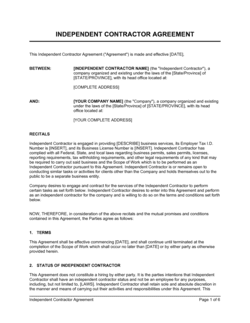
An independent contractor agreement governs the relationship between a company and a human developer building the AI persona. It does not address the persona itself — its permitted uses, prohibited conduct, or output ownership. Both documents are typically needed: the contractor agreement covers the build, the persona agreement covers the deployed product.

vs Software License Agreement

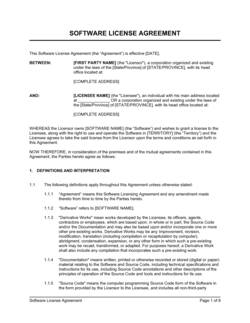
A software license agreement grants rights to use a software product and addresses version control, support, and termination. A persona agreement addresses the behavioral identity, output restrictions, and AI-specific risks of a named AI character — two different layers of the same deployment. Complex AI persona deployments often require both.

vs Terms of Service

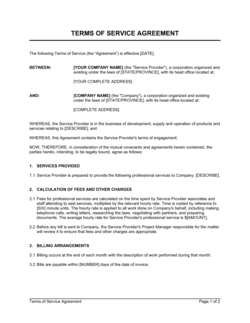
Terms of service govern the end-user relationship with a platform and establish broad usage rules. A persona agreement operates upstream — between the persona owner and the deploying party — to govern how the AI character is built, maintained, and restricted before users ever interact with it. Both are needed for a consumer-facing AI persona deployment.

Industry-specific considerations

SaaS / Technology

Branded AI assistants embedded in product interfaces require persona agreements to govern feature scope, output disclaimers, and IP ownership as the underlying model is updated.

Financial Services

AI personas providing investment or account information must carry explicit non-advice disclaimers, be prohibited from regulated financial guidance, and comply with FCA, SEC, or FINRA conduct standards.

Healthcare

Patient-facing AI personas must be clearly identified as non-medical, prohibited from diagnosis or treatment recommendations, and compliant with HIPAA or applicable data protection law for any health-related conversation data.

E-learning and Education

AI tutor personas deployed to minors require COPPA or GDPR-K compliance for data handling, strict subject-scope limitations, and content moderation obligations covering age-appropriate output standards.

Marketing and Advertising

Brand AI characters used in advertising campaigns require clear disclosure as AI under FTC guidelines, IP ownership clauses covering commercial outputs, and prohibited conduct restrictions against comparative advertising or competitor impersonation.

Legal and Professional Services

AI personas in legal or professional service contexts must carry explicit non-advice disclaimers, be prohibited from creating attorney-client relationships, and comply with bar association and professional regulatory guidance on AI-assisted services.

Jurisdictional notes

United States

No federal AI-specific statute yet governs persona deployments, but the FTC requires disclosure when AI is used to interact with consumers in ways that could mislead. The California Consumer Privacy Act applies to persona data collection from California residents. Copyright Office guidance confirms that purely AI-generated outputs currently lack copyright protection without human authorship. State-level AI disclosure laws are emerging rapidly — Illinois and Texas have enacted AI transparency requirements.

Canada

Canada's Artificial Intelligence and Data Act (AIDA), proposed under Bill C-27, would impose obligations on high-impact AI systems, including transparency and harm-avoidance requirements. PIPEDA and provincial private-sector privacy laws apply to personal information collected through persona interactions. Quebec's Law 25 imposes strict consent and disclosure requirements for automated decision-making that may apply to AI personas used in consumer or HR contexts.

United Kingdom

The UK is taking a sector-specific, principle-based approach to AI regulation rather than a single statute. The ICO has published guidance on AI and data protection under UK GDPR, including requirements for transparency when individuals interact with automated systems. The Advertising Standards Authority requires disclosure when AI-generated content is used in advertising. The FCA has issued specific expectations for AI use in financial services contexts.

European Union

The EU AI Act imposes mandatory transparency obligations on AI systems designed to interact with natural persons — users must be clearly informed they are speaking with an AI unless the context makes this obvious. High-risk AI use cases face conformity assessments and registration obligations. GDPR Article 22 regulates automated decision-making with significant effects on individuals. Deploying parties targeting EU users must classify their persona under the Act's risk tiers and implement the corresponding obligations before launch.

Template vs lawyer — what fits your deal?

PathBest forCostTime
Use the templateInternal deployments, non-consumer-facing personas, or early-stage governance where a documented standard is the primary goalFree30–60 minutes
Template + legal reviewCommercial persona licensing, consumer-facing deployments, or use cases touching regulated industries such as finance, healthcare, or education$400–$9002–5 days
Custom draftedEnterprise AI persona platforms, multi-jurisdiction deployments, EU AI Act compliance, or high-value IP licensing arrangements$2,000–$8,000+2–4 weeks

Glossary

AI Persona
A defined character identity — including name, tone, behavioral rules, and scope — assigned to an AI system to shape how it presents and responds to users.
System Prompt
The hidden instruction set given to a large language model before any user interaction, which establishes the persona's role, constraints, and behavioral guidelines.
Avatar
A visual or textual representation of an AI persona used in interfaces, often paired with a name and personality to create a consistent user-facing identity.
Persona Scope
The defined boundaries of subject matter, tone, tasks, and user interactions the AI persona is authorized to perform under the agreement.
Permitted Use Case
Specific applications or contexts in which the persona may be deployed, such as customer support, content generation, or educational tutoring.
Prohibited Conduct
Explicit categories of behavior the persona must never perform, such as providing medical advice, impersonating a real individual, or generating regulated financial guidance.
Prompt Injection
An attack where a user crafts input designed to override or subvert the system prompt and cause the AI to behave outside its defined persona and rules.
Hallucination
When an AI model generates confident-sounding but factually incorrect or fabricated output — a key liability risk for deployed AI personas.
Derivative Works
Content, adaptations, or new creative outputs generated by or based on the AI persona, raising questions about who owns them under copyright law.
Model Terms of Service
The usage policies published by the underlying AI platform provider (e.g., OpenAI) that govern what personas and outputs are permissible, and which take precedence over any downstream agreement.
Fine-Tuning
The process of further training a base AI model on domain-specific data to adjust its outputs, personality, or knowledge — relevant when a persona is built on a customized model.

Part of your Business Operating System

This document is one of 3,000+ business & legal templates included in Business in a Box.

  • Fill-in-the-blanks — ready in minutes
  • 100% customizable Word document
  • Compatible with all office suites
  • Export to PDF and share electronically

Create your document in 3 simple steps.

From template to signed document — all inside one Business Operating System.
1
Download or open template

Access over 3,000+ business and legal templates for any business task, project or initiative.

2
Edit and fill in the blanks with AI

Customize your ready-made business document template and save it in the cloud.

3
Save, Share, Send, Sign

Share your files and folders with your team. Create a space of seamless collaboration.

Save time, save money, and create top-quality documents.

★★★★★

"Fantastic value! I'm not sure how I'd do without it. It's worth its weight in gold and paid back for itself many times."

Managing Director · Mall Farm
Robert Whalley
Managing Director, Mall Farm Proprietary Limited
★★★★★

"I have been using Business in a Box for years. It has been the most useful source of templates I have encountered. I recommend it to anyone."

Business Owner · 4+ years
Dr Michael John Freestone
Business Owner
★★★★★

"It has been a life saver so many times I have lost count. Business in a Box has saved me so much time and as you know, time is money."

Owner · Upstate Web
David G. Moore Jr.
Owner, Upstate Web

Run your business with a system — not scattered tools

Stop downloading documents. Start operating with clarity. Business in a Box gives you the Business Operating System used by over 250,000 companies worldwide to structure, run, and grow their business.

Free Forever Plan · No credit card required