1
Identify the vehicle and both parties
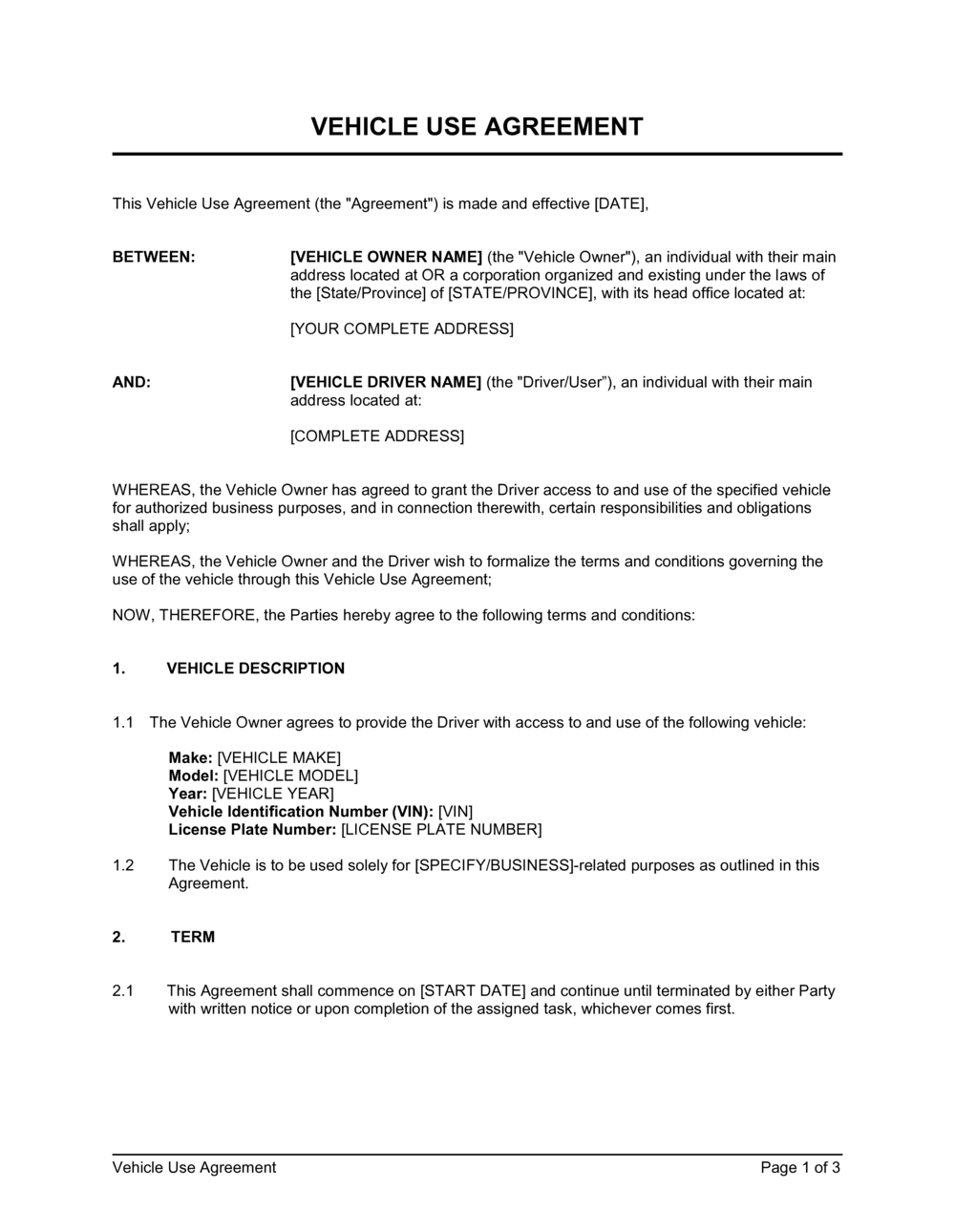
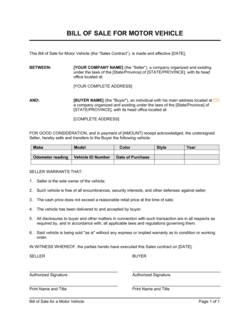
Enter the owner's full legal name and address, the user's full legal name and driver's license number, and the vehicle's complete details — year, make, model, color, VIN, license plate, and registration state or province.
💡 Photograph the driver's license and current insurance card of the user before the term begins and attach them to your copy of the signed agreement.
2
Define the permitted use and geographic limits
Write a specific purpose — 'transportation to and from [CITY] for a family event' or 'delivery of goods within [COUNTY]' — and specify any geographic boundaries. Explicitly list prohibited uses such as rideshare, racing, or cross-border travel.
💡 The more specific the permitted use, the clearer the coverage boundary for your insurer. Vague language creates gaps you bear as the registered owner.
3
Set the term and return details
Enter a precise start and end date and time, the return address, and the required fuel level at return. Document the current fuel level, mileage, and vehicle condition before handover.
💡 Walk around the vehicle with the user and take time-stamped photos of all four sides plus the interior before the term starts — this is your condition baseline.
4
Complete the insurance section
List the owner's policy number, insurer, and coverage limits. Require the user to provide their own policy number and minimum liability limits, and specify that they must notify you immediately of any lapse in coverage.
💡 Call your insurer before executing the agreement to confirm that a named permissive user is covered under your policy — do not assume personal-auto coverage extends to all third-party drivers.
5
Specify fuel, maintenance, and cost responsibilities
State the fuel level at delivery, confirm who covers fuel costs during the term, and clarify that pre-existing scheduled maintenance remains the owner's responsibility while in-term operating costs belong to the user.
💡 Take a photo of the fuel gauge at handover and include it in your records alongside the signed agreement.
6
Set the accident and damage reporting timeline
Enter the reporting window — 24 hours is recommended — and the owner's contact information for emergency notice. Confirm that the user must cooperate with all insurer investigations and bear costs for damage attributable to their negligence.
💡 Include both a phone number and an email address for incident reporting so there is no ambiguity about how to reach you in an emergency.
7
Review the indemnification and termination clauses
Confirm that the indemnification clause covers third-party claims, attorney's fees, and costs — not just direct damages. Confirm that the termination clause includes insurance lapse, unauthorized use, and failure to report an accident as immediate termination triggers.
💡 If the user pushes back on the indemnification clause, that is a signal to consult a lawyer before proceeding — not a reason to remove it.
8
Execute before handing over the keys
Both parties must sign and date the agreement before the term begins. Provide each party with a fully executed copy. For higher-value vehicles or longer terms, consider having signatures witnessed.
💡 Use an e-signature tool to timestamp execution and automatically distribute executed copies — this eliminates 'I never received a copy' disputes.