1
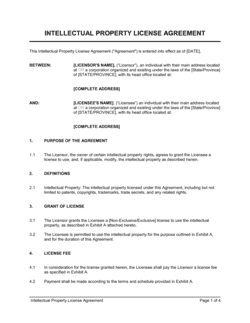
Identify and describe the licensed asset precisely
Enter the full legal names of both parties and draft a precise, unambiguous description of the IP being licensed — include version numbers, registration numbers, or exhibit references as appropriate.
💡 Attach a technical specification or asset inventory as Exhibit A rather than cramming the description into the body clause — this keeps the main agreement readable while preserving specificity.
2
Decide on exclusivity and sublicensing rights
Choose exclusive or non-exclusive grant language. If exclusive, confirm whether the licensor itself retains use rights. Decide explicitly whether the licensee may sublicense and, if so, under what conditions.
💡 Exclusive licenses typically command a significant fee premium — if you are granting exclusivity, make sure the economics are reflected in the royalty rate or upfront fee.
3
Define territory and field of use
Enter the geographic territory where the licensee may use the IP. If the license is restricted to certain industries or applications, specify the field of use precisely.
💡 For digital products distributed over the internet, 'worldwide' territory is common — but confirm you have registered IP rights or enforcement mechanisms in the key markets where the licensee operates.
4
Set fees, royalties, and the payment schedule
Enter the upfront license fee, the royalty rate and base (gross revenue, net revenue, units sold), payment frequency, and the grace period before a missed payment constitutes a breach.
💡 Define every deduction from gross revenue that is permitted in calculating the royalty base — returns, chargebacks, taxes, and third-party platform fees are the most common sources of royalty disputes.
5
Draft the restrictions and prohibited-use list
List every use the licensee is not permitted to make of the IP — reverse engineering, modification, sublicensing, competitive use, and removal of IP notices are the core prohibitions for most license types.
💡 Review the licensee's business model before finalizing restrictions — overly broad prohibitions that interfere with the licensee's normal operations will generate immediate pushback or non-compliance.
6
Confirm IP ownership and address derivative works
Include the ownership reservation clause and add explicit language addressing whether the licensee may create derivative works, and if so, who owns them.
💡 If the licensee will build products on top of your platform or content, a 'licensor owns all derivatives' clause protects your IP but may deter licensees — a 'licensee owns its own additions, licensor owns the underlying IP' split is often more commercially viable.
7
Set the term and post-termination obligations
Enter the start date and end date or duration. Include cure periods for breach, immediate termination triggers for IP misuse, and a specific obligation to cease use and certify destruction upon termination.
💡 Add a survival clause listing which provisions remain in effect after termination — IP ownership, confidentiality, and payment obligations for accrued royalties should always survive.
8
Execute before any use of the licensed asset begins
Both parties must sign before the licensee accesses or uses the IP. Retroactive license agreements are difficult to enforce and raise questions about what rights existed during the unlicensed period.
💡 Use a countersignature requirement — the agreement is not effective until both parties have signed — to prevent a licensee from claiming the license was in effect from the date they received the draft.