1
Define the scope and eligible employees
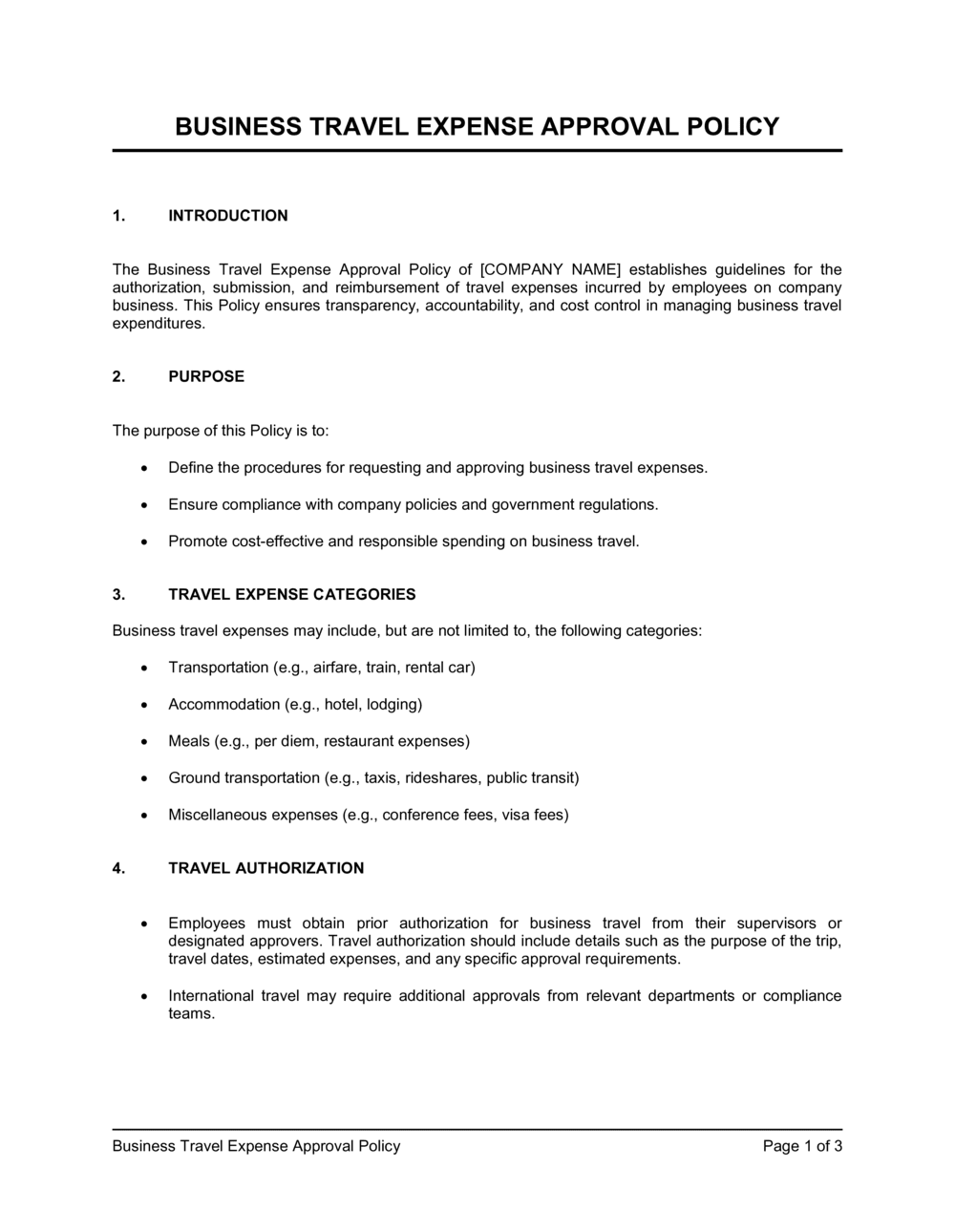
Specify which workforce categories the policy covers — full-time, part-time, contractors, and officers. State whether the policy applies to domestic travel only or includes international trips.
💡 If your contractor population is significant, include them explicitly — ambiguity here generates reimbursement disputes and tax classification complications.
2
Set the pre-authorization threshold and approval chain
Choose a dollar amount above which pre-trip approval is required. Map the approval chain: direct manager first, then finance for amounts above a secondary threshold. Document this in the policy and in your expense-management system.
💡 A $500 pre-authorization threshold catches the vast majority of trips without adding bureaucracy for local, low-cost travel.
3
Fill in spending limits by category
Enter specific dollar caps for airfare class, nightly hotel rates by city tier, daily meal allowances, and car rental class. Reference current IRS standard mileage rates for personal vehicle reimbursement.
💡 Check the GSA per-diem tables annually — rates are updated each October and using outdated figures creates under- or over-payment issues.
4
List your preferred vendors and booking platforms
Name any contracted airlines, hotel chains, or car rental companies employees should prioritize. Specify the booking platform or travel management company to use for reservations.
💡 Even if you have no formal contracts yet, naming two or three preferred hotel chains signals the expectation of cost-consciousness and helps employees make faster decisions.
5
Write out the non-reimbursable expense list
Be specific: personal entertainment, companion travel, alcohol above the defined limit, room upgrades, and any expense without a receipt. The more specific the list, the fewer disputed claims your finance team handles.
💡 Review your last 12 months of expense reports for the five most commonly disputed line items — those belong on the non-reimbursable list.
6
Define documentation and submission requirements
State the required receipt format (original, digital image, or PDF), the minimum dollar amount that triggers a receipt requirement, and the number of business days after trip completion that employees have to submit their expense report.
💡 A 5-business-day submission window from return date is a widely used standard that balances employee convenience with monthly close requirements.
7
Set the reimbursement timeline and payment method
Commit to a specific processing window — for example, reimbursement within 10 business days of approval — and name the payment method. Include a monthly cutoff date so accounting can plan the close cycle.
💡 Align the reimbursement timeline with your payroll cycle where possible; piggybacking on payroll runs reduces processing costs and is faster for employees.
8
Describe the consequences of non-compliance
Write out the full spectrum of consequences: from informal correction for a first inadvertent receipt omission, to repayment demands for over-claims, to termination for intentional fraud.
💡 Have your HR lead review this section before publishing — consequence language that is too punitive for your culture will not be enforced, which is worse than no policy at all.