- Executive Summary
- A brief opening section — typically one paragraph — that captures the client's problem, your proposed solution, and the key benefit, written for a reader who may not read further.
- Problem Statement
- A concise articulation of the specific challenge or opportunity the prospective client is facing, written in their language to demonstrate understanding.
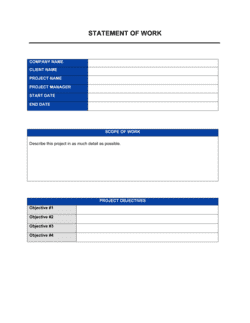
- Scope of Work
- A defined list of deliverables, activities, and boundaries that clarifies exactly what is — and is not — included in the engagement.
- Deliverable
- A specific, tangible output the vendor commits to producing — such as a report, a deployed feature, or a completed campaign — by a defined date.
- Milestone
- A checkpoint within the project timeline that marks the completion of a phase or the delivery of a key output, often tied to a payment installment.
- Call to Action (CTA)
- The specific next step you ask the reader to take — signing, scheduling a call, or returning a signed copy — stated clearly at the end of the proposal.
- Value Proposition
- A clear statement of the specific benefit the client receives from your solution, expressed in terms of their outcomes rather than your features.
- Retainer
- An ongoing fee arrangement where the client pays a fixed monthly amount for a defined set of services or a reserved block of time.
- RFP (Request for Proposal)
- A formal document issued by a buyer specifying a need and inviting vendors to submit structured proposals — often with mandatory response formats and evaluation criteria.
- Terms and Conditions
- The operational ground rules attached to a proposal — covering payment schedules, revision limits, intellectual property, and what happens if scope changes.