SEO Proposal Template

Free Word download β€’ Edit online β€’ Save & share with Drive β€’ Export to PDF

22 pagesβ€’40–55 min to fillβ€’Difficulty: Expert
Learn more ↓
FreeSEO Proposal Template

At a glance

What it is
An SEO Proposal is a structured business document an agency or consultant sends to a prospective client to outline a recommended search engine optimization strategy, define deliverables, set timelines, and present pricing. This free Word download gives you a professionally formatted starting point you can edit online and export as PDF to share with clients before a project kicks off.
When you need it
Use it when pitching an SEO retainer or project engagement to a new prospect, responding to an RFP from a business seeking organic search support, or documenting a scope expansion for an existing client.
What's inside
An executive summary, situational audit findings, proposed strategy and keyword approach, detailed scope of work with deliverables, project timeline, team credentials, pricing and payment terms, and a call to action for sign-off.

What is an SEO Proposal?

An SEO Proposal is a structured document an agency or consultant delivers to a prospective client to recommend a tailored search engine optimization strategy, define the scope of deliverables, establish a project timeline, and present pricing before work begins. Unlike a generic capabilities deck, a well-built SEO proposal is grounded in a real audit of the client's current organic performance β€” referencing actual rankings, traffic gaps, and technical issues β€” and maps those findings to a specific plan of action. It functions simultaneously as a sales tool and as the reference document that governs expectations throughout the engagement.

Why You Need This Document

Pitching SEO services without a written proposal creates misaligned expectations that typically surface three months into the engagement: the client expected page-1 rankings by Month 2; you were delivering foundational technical work. A documented proposal eliminates that gap by making strategy, deliverables, timeline, and success metrics explicit before a single invoice is sent. Proposals that reference real audit data and tie deliverables to measurable outputs convert at significantly higher rates than generic decks, and they reduce mid-engagement disputes by establishing a written record of what was and wasn't included in the scope. This template gives freelancers and agencies a professionally structured starting point that can be adapted in hours, not days β€” so the difference between winning and losing the next proposal comes down to your insights, not your formatting.

Which variant fits your situation?

If your situation is…Use this template
Pitching a full-service ongoing SEO retainerSEO Proposal (Retainer)
Proposing a one-time technical SEO audit and fix projectTechnical SEO Audit Proposal
Pitching a combined SEO and paid search strategyDigital Marketing Proposal
Responding to a formal RFP from a mid-market or enterprise clientMarketing RFP Response Template
Presenting a content-led SEO strategy focused on blog and landing pagesContent Marketing Proposal
Pitching local SEO services to a brick-and-mortar businessLocal SEO Proposal
Upselling link-building services to an existing SEO clientLink Building Proposal

Common mistakes to avoid

❌ Guaranteeing specific ranking positions

Why it matters: No SEO professional controls Google's algorithm or competitor behavior. A ranking guarantee either gets you into a contract dispute or pressures your team into risky tactics that damage the client's site.

Fix: Commit to deliverable outputs β€” content pieces, technical fixes, backlinks acquired β€” and directional traffic growth ranges. Frame rankings as expected outcomes, not guarantees.

❌ Generic proposals not referencing the client's actual site

Why it matters: Decision-makers read multiple proposals. A generic document signals you haven't done the work to understand their business, and the contract typically goes to the agency that demonstrated they already understand the problem.

Fix: Spend 30–60 minutes before writing running a real mini-audit. Include at least three specific findings from the client's domain β€” actual URLs, actual ranking positions, actual traffic numbers.

❌ Scoping deliverables as hours rather than outputs

Why it matters: Hour-based scope invites clients to question your efficiency and opens every invoice to a 'what did you actually do' conversation. It also makes it impossible for them to evaluate whether the work was completed.

Fix: Define every deliverable as a tangible output: a keyword map, a set of optimized pages, a backlink report, a monthly performance dashboard. Clients buy results, not time.

❌ Omitting client responsibilities and assumptions

Why it matters: SEO requires CMS access, content approvals, and developer cooperation. When these aren't provided on time and the project slips, a proposal with no documented assumptions leaves you with no basis to renegotiate scope or timeline.

Fix: Add an explicit section listing what the agency requires from the client β€” access, turnaround times for approvals, and who the internal point of contact is β€” before work begins.

The 9 key sections, explained

Executive summary

Situational audit and findings

Proposed strategy and keyword targets

Scope of work and deliverables

Project timeline and milestones

Team and credentials

Pricing and payment terms

Reporting and communication cadence

Terms, assumptions, and exclusions

How to fill it out

  1. 1

    Run a pre-proposal audit before writing

    Before opening the template, spend 30–60 minutes in Google Search Console, Ahrefs or SEMrush, and a crawler like Screaming Frog. Capture current traffic, top-ranking pages, DA, and three to five critical technical or content issues.

    πŸ’‘ A proposal written from real data takes less time to write and converts at a dramatically higher rate than one built from generic assumptions.

  2. 2

    Write the executive summary around a specific opportunity

    Open with the client's current organic gap β€” estimated missed traffic, lost ranking positions, or a competitor that is outranking them β€” then state what the engagement will achieve and over what timeframe.

    πŸ’‘ Lead with a number the client recognizes: 'You are missing an estimated 1,200 monthly visits because three core pages aren't optimized for their target terms.'

  3. 3

    Translate audit findings into business consequences

    For each technical or content issue you found, add one sentence explaining the business impact β€” not just the SEO impact. Slow page speed becomes 'estimated 12% higher bounce rate on mobile'; thin category pages become 'no ranking presence for your highest-margin product line.'

    πŸ’‘ Clients approve budgets based on business outcomes, not crawl reports. Every finding needs a so-what.

  4. 4

    Define the keyword strategy with intent tiers

    Group target keywords into tiers by intent: informational (top-of-funnel content), commercial (comparison and category pages), and transactional (product and service pages). Assign a primary content type and page to each tier.

    πŸ’‘ Show 10–15 specific keyword examples with monthly search volume rather than describing the research process in the abstract.

  5. 5

    Scope deliverables as outputs, not activities

    For each month of the engagement, list the specific documents, pages, or changes the client will receive β€” not the hours you will spend. '4 optimized blog posts' is a deliverable; '20 hours of content work' is not.

    πŸ’‘ Add estimated impact ranges next to key deliverables: '4 blog posts targeting informational queries β€” projected 200–400 new monthly visits at Month 6.'

  6. 6

    Set a phased timeline with explicit milestones

    Divide the engagement into at least three phases. Phase 1 should always cover technical fixes and research β€” these are prerequisites for measurable results and help justify early billing before rankings move.

    πŸ’‘ Flag Month 6 as the first meaningful ranking checkpoint. Most SEO results take 3–6 months; setting this expectation in the proposal prevents early churn.

  7. 7

    Price with context and present tiers if applicable

    State the monthly retainer or project fee, the contract term, and a brief breakdown of what drives the cost. If you offer multiple service tiers, present them in a simple table with the deliverables included at each level.

    πŸ’‘ Anchor the price to potential ROI: 'At [X] average order value and a 2% organic conversion rate, [X] additional monthly visits represents approximately $[X] in incremental monthly revenue.'

  8. 8

    Close with a clear next step

    End the proposal with a single call to action β€” a link to schedule a call, a signature block for approval, or a reply-to-accept instruction. Include a proposal expiry date (typically 30 days) to create a natural close.

    πŸ’‘ Proposals without a defined next step sit in inboxes indefinitely. A 30-day expiry with a follow-up calendar invite closes deals 40–60% faster than open-ended proposals.

Frequently asked questions

What is an SEO proposal?

An SEO proposal is a document an agency or consultant sends to a prospective client to recommend a search engine optimization strategy, define the scope of work and deliverables, establish a timeline, and present pricing. It serves as both a sales document and the foundation for the service agreement that follows β€” aligning both parties on what will be done, by whom, and for how much before work begins.

What should an SEO proposal include?

A complete SEO proposal covers eight core components: an executive summary tied to the client's specific situation, audit findings with business context, the proposed keyword and content strategy, a deliverable-based scope of work, a phased project timeline, team credentials, pricing and payment terms, and a section on reporting cadence and client responsibilities. Missing any of these creates expectation gaps that typically surface as disputes mid-engagement.

How long should an SEO proposal be?

For most agency-to-SMB pitches, 6–10 pages is the right range β€” long enough to demonstrate expertise and cover scope clearly, short enough to be read before the follow-up call. Enterprise or RFP-driven proposals may run 15–25 pages. Appendices with keyword data, audit screenshots, or case studies can supplement the main document without adding to the core page count.

How much does an SEO engagement typically cost?

Monthly SEO retainers for small to mid-size businesses typically range from $1,000 to $5,000 per month for a full-service agency. Freelance consultants often charge $500–$2,500 per month depending on scope. Enterprise SEO retainers can run $10,000–$30,000+ per month. One-time technical audit projects commonly range from $1,500 to $5,000. Pricing should always be tied to a defined scope of deliverables, not a block of hours.

What is the difference between an SEO proposal and an SEO contract?

An SEO proposal is a pre-sale document used to pitch the engagement and establish scope, strategy, and pricing. An SEO contract (or service agreement) is the legally binding document signed after acceptance β€” it formalizes the terms, payment obligations, IP ownership, and termination conditions. The proposal becomes the reference point for the contract's scope-of-work exhibit.

Should I include pricing in an SEO proposal?

Yes. Proposals that omit pricing force a second conversation before the client can make a decision, extending your sales cycle unnecessarily. Present pricing with enough context to justify the number β€” a brief breakdown by deliverable category (content, technical, link building, reporting) prevents sticker shock and reduces price objections. Offering two to three service tiers gives the client a choice rather than a yes-or-no decision.

How long does it take to see results from an SEO campaign?

Most SEO campaigns produce measurable organic traffic improvements within 3–6 months for technical and on-page work, and 6–12 months for content and link-building initiatives targeting competitive keywords. Set this expectation explicitly in the proposal β€” clients who expect page-1 rankings in 30 days churn before results materialize. Month 6 is a reasonable first benchmark for ranking and traffic progress.

Can I use this template for an internal SEO budget proposal?

Yes. The same structure works for an internal proposal submitted to leadership or a finance committee for budget approval. Replace the agency credentials section with the internal team's qualifications and previous results. Adjust the pricing section to reflect headcount, tooling costs, and agency support fees rather than a client-facing retainer. Frame the ROI section around leads or revenue influenced rather than client acquisition.

What metrics should an SEO proposal commit to tracking?

The core metrics to commit to in any SEO proposal are: organic sessions from Google Search Console, keyword ranking movement for a defined tracked set (typically 20–50 priority terms), domain authority or referring domain count, and conversions or leads from organic traffic. Avoid committing solely to vanity metrics like impressions β€” tie at least one metric directly to the client's business goal, whether that is leads, revenue, or trial sign-ups.

How this compares to alternatives

vs Digital Marketing Proposal

A digital marketing proposal covers the full channel mix β€” SEO, paid search, social media, and email β€” in a single document. An SEO proposal focuses exclusively on organic search strategy, deliverables, and metrics. Use the SEO proposal when the client's need is specifically organic growth; use the digital marketing proposal when pitching an integrated multi-channel engagement.

vs Marketing Plan

A marketing plan is an internal strategic document that maps all marketing activities across channels for a full year. An SEO proposal is a client-facing sales and scoping document for a specific organic search engagement. The marketing plan drives internal execution; the SEO proposal wins the contract that funds it.

vs Content Marketing Proposal

A content marketing proposal focuses on editorial strategy β€” blog posts, whitepapers, videos, and distribution β€” and may or may not include SEO optimization. An SEO proposal treats content as one lever within a broader technical, on-page, and link-building strategy. Use an SEO proposal when rankings and organic traffic are the primary KPIs; use a content proposal when brand awareness and engagement are the goals.

vs Service Agreement

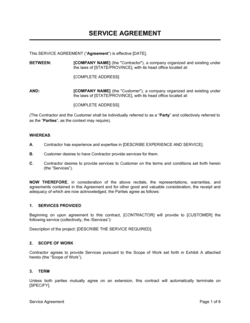
A service agreement is the legally binding contract signed after a proposal is accepted β€” it covers payment obligations, IP ownership, termination rights, and liability. The SEO proposal is the pre-sale document that defines strategy and scope. Once a client accepts the proposal, a service agreement formalizes the engagement. Both documents are needed; neither substitutes for the other.

Industry-specific considerations

E-commerce

Product and category page optimization, structured data for rich results, and keyword targeting focused on transactional and commercial-intent queries with high purchase probability.

SaaS / Technology

Bottom-of-funnel comparison and alternative pages, integration and use-case content targeting long-tail queries, and link building through developer and tech publication outreach.

Professional Services

Local SEO and Google Business Profile optimization for location-based practices, thought-leadership content targeting informational queries from decision-makers, and review acquisition strategy.

Healthcare

YMYL (Your Money or Your Life) content requirements for E-E-A-T compliance, physician-authored content strategy, and local SEO for practice locations with map-pack visibility as a key KPI.

Template vs pro β€” what fits your needs?

PathBest forCostTime
Use the templateFreelance SEO consultants and small agencies pitching SMB clients with straightforward organic search needsFree2–4 hours per proposal
Template + professional reviewAgencies pitching mid-market clients where scope complexity or pricing requires a second set of eyes before sending$0–$200 (internal senior review or peer critique)4–8 hours
Custom draftedEnterprise RFP responses, multi-year contracts above $100K, or proposals requiring legal review of liability and IP terms$500–$2,000 (proposal writer or legal review)1–2 weeks

Glossary

Organic Search
Website traffic generated from unpaid search engine results, driven by content relevance and authority rather than advertising spend.
Keyword Research
The process of identifying the specific search terms a target audience uses, along with their monthly search volume, competition level, and commercial intent.
On-Page SEO
Optimizations applied directly to webpage content and HTML β€” including title tags, meta descriptions, heading structure, and internal linking.
Technical SEO
Improvements to a website's infrastructure β€” crawlability, page speed, mobile usability, structured data, and indexing β€” that help search engines access and rank the site.
Backlink
A hyperlink from an external website pointing to your site, which search engines treat as a signal of authority and trustworthiness.
Domain Authority (DA)
A third-party metric (Moz) estimating a website's likelihood of ranking well, scored 1–100 based on the quality and quantity of inbound links.
Search Intent
The underlying goal a user has when entering a search query β€” informational, navigational, commercial, or transactional.
Scope of Work (SOW)
A written description of the specific tasks, deliverables, and responsibilities both parties agree to within a service engagement.
Retainer
A recurring monthly fee a client pays for an ongoing block of services, rather than a fixed-price one-time project.
Conversion Rate
The percentage of website visitors who complete a desired action β€” form submission, purchase, or call β€” out of total visitors in a given period.

Part of your Business Operating System

This document is one of 3,000+ business & legal templates included in Business in a Box.

  • Fill-in-the-blanks β€” ready in minutes
  • 100% customizable Word document
  • Compatible with all office suites
  • Export to PDF and share electronically

Create your document in 3 simple steps.

From template to signed document β€” all inside one Business Operating System.
1
Download or open template

Access over 3,000+ business and legal templates for any business task, project or initiative.

2
Edit and fill in the blanks with AI

Customize your ready-made business document template and save it in the cloud.

3
Save, Share, Send, Sign

Share your files and folders with your team. Create a space of seamless collaboration.

Save time, save money, and create top-quality documents.

β˜…β˜…β˜…β˜…β˜…

"Fantastic value! I'm not sure how I'd do without it. It's worth its weight in gold and paid back for itself many times."

Managing Director Β· Mall Farm
Robert Whalley
Managing Director, Mall Farm Proprietary Limited
β˜…β˜…β˜…β˜…β˜…

"I have been using Business in a Box for years. It has been the most useful source of templates I have encountered. I recommend it to anyone."

Business Owner Β· 4+ years
Dr Michael John Freestone
Business Owner
β˜…β˜…β˜…β˜…β˜…

"It has been a life saver so many times I have lost count. Business in a Box has saved me so much time and as you know, time is money."

Owner Β· Upstate Web
David G. Moore Jr.
Owner, Upstate Web

Run your business with a system β€” not scattered tools

Stop downloading documents. Start operating with clarity. Business in a Box gives you the Business Operating System used by over 250,000 companies worldwide to structure, run, and grow their business.

Free Forever PlanΒ Β·Β No credit card required