Assignment of License Template

Free Word download β€’ Edit online β€’ Save & share with Drive β€’ Export to PDF

2 pagesβ€’25–30 min to fillβ€’Difficulty: Standardβ€’Signature requiredβ€’Legal review recommended
Learn more ↓
FreeAssignment of License Template

At a glance

What it is
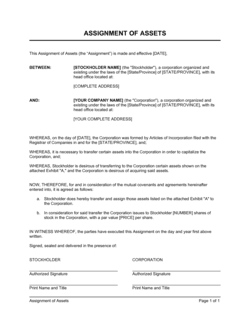
An Assignment of License is a legally binding agreement by which a licensee transfers some or all of their rights under an existing license to a third party β€” the assignee. This free Word download gives you a structured, attorney-reviewed starting point you can edit online and export as PDF, covering the scope of rights transferred, licensor consent, warranties, indemnification, and governing law in a single document.
When you need it
Use it whenever a licensee needs to pass its licensed rights to another party β€” typically during a business acquisition, merger, restructuring, or when subletting a software or IP license to a successor entity. It is also required when a startup transfers its technology licenses to a holding company or when a company sells a product line that depends on third-party licensed IP.
What's inside
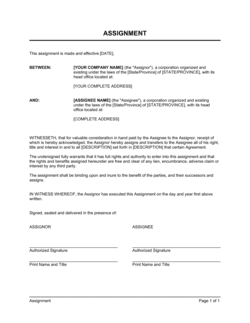
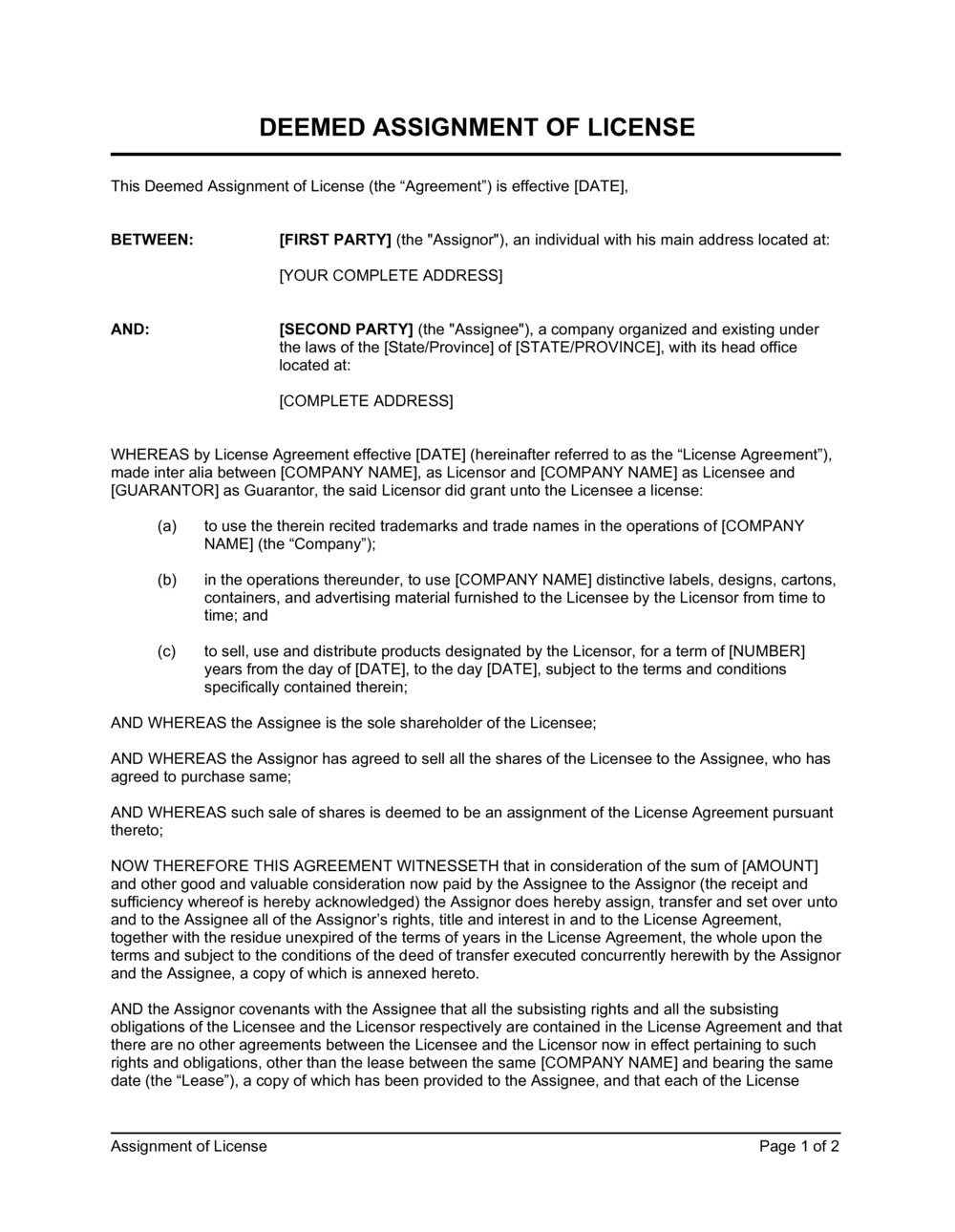
Identification of the original license being assigned, the assignor, assignee, and licensor consent mechanism; the scope and limitations of rights transferred; representations and warranties from the assignor; indemnification obligations; and the effective date, governing law, and signature blocks.

What is an Assignment of License?

An Assignment of License is a legally binding agreement by which a licensee β€” the party holding rights under an existing license β€” formally transfers some or all of those rights to a new party, called the assignee. Unlike creating a new license, an assignment steps the assignee directly into the original licensee's position, making them subject to the same terms, restrictions, and obligations that governed the original grant. The document identifies the original license being transferred, confirms the licensor's consent where required, records the assignee's assumption of ongoing obligations, and allocates liability between the parties for pre- and post-assignment breaches. It is a distinct instrument from a sublicense (which preserves the original licensee's own rights) and from an IP assignment (which transfers ownership of the underlying intellectual property itself rather than just the right to use it).

Why You Need This Document

Without a properly executed assignment of license, a business transfer, merger, or restructuring that relies on third-party licensed IP can unravel entirely. Most commercial, software, and IP license agreements contain anti-assignment clauses: proceeding without documented licensor consent gives the licensor grounds to terminate the original license immediately β€” stripping the acquirer or successor of any right to use the technology, brand, or content they thought they were receiving. Beyond consent, an undocumented assignment leaves both parties exposed: the assignor may remain liable for the assignee's future breaches without any contractual recourse, and the assignee may inherit obligations β€” ongoing royalties, use restrictions, compliance requirements β€” they were never formally told about. A complete, signed assignment of license closes these gaps, provides a clear paper trail for audits and future transactions, and protects both parties if the licensor or a successor ever challenges the validity of the transfer.

Which variant fits your situation?

If your situation is…Use this template
Transferring all licensed rights permanently to a new ownerAssignment of License (Full Transfer)
Allowing a third party to use rights without giving up your ownSublicense Agreement
Transferring ownership of the underlying IP itself, not just the licenseIntellectual Property Assignment Agreement
Granting a new license directly from the IP owner to a new partyLicense Agreement
Assigning a software license specifically during a business saleSoftware License Agreement
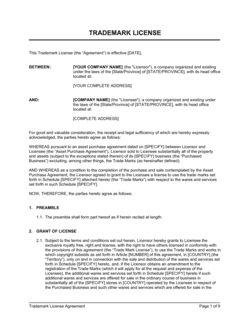
Assigning trademark use rights to a new entityTrademark License Agreement
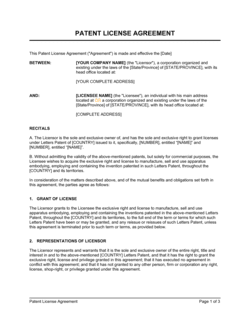
Transferring a patent license to a third partyPatent License Agreement

Common mistakes to avoid

❌ Assigning without licensor consent

Why it matters: Most commercial and software license agreements contain anti-assignment clauses. An assignment completed without required consent is void or voidable, meaning the licensor can terminate the original license entirely β€” leaving the assignee with no rights at all.

Fix: Review the original license for anti-assignment language and obtain written consent from the licensor before executing the assignment. Document consent as a countersignature or separate consent letter.

❌ Failing to document the assignor's release from liability

Why it matters: Without an express release or novation, the assignor typically remains secondarily liable for the assignee's performance under the original license. This can expose the assignor to claims years after the assignment closes.

Fix: Include an explicit release clause or negotiate a novation agreement with the licensor that formally substitutes the assignee for the assignor and extinguishes the assignor's continuing obligations.

❌ Using inconsistent governing law between the assignment and the original license

Why it matters: If the assignment is governed by a different jurisdiction than the original license, courts may apply different rules to interpret the same licensed rights β€” creating conflicting outcomes in a dispute.

Fix: Default to the same governing law as the original license unless there is a compelling reason to deviate, and include a conflict-resolution clause if the laws must differ.

❌ Omitting warranties that the assignor has not previously encumbered the rights

Why it matters: If the assignor has previously sublicensed, pledged, or assigned the same rights to another party, the assignee may receive a clouded or worthless interest β€” with no contractual recourse unless a warranty was given.

Fix: Include a representation and warranty from the assignor confirming that the rights being assigned are free and clear of all prior assignments, pledges, sublicenses, and encumbrances.

❌ Specifying the scope of assigned rights too broadly or too vaguely

Why it matters: Assigning 'all rights' when the original license only granted limited rights creates an assignment that purports to transfer more than the assignor ever held β€” which courts will narrow, creating uncertainty for the assignee.

Fix: Attach the original license as an exhibit and tie the scope of the assignment expressly to the rights granted in that document, using the same defined terms.

❌ Missing assumption of ongoing payment obligations

Why it matters: If ongoing royalty or license fee obligations are not expressly assumed by the assignee, the licensor may look to the assignor for payment β€” and the assignor has no contractual right of reimbursement against the assignee.

Fix: List all ongoing financial obligations from the original license β€” including payment dates, amounts, and royalty rates β€” explicitly in the assumption of obligations clause.

The 10 key clauses, explained

Recitals and Background

In plain language: Sets out the context for the assignment β€” identifies the original license agreement by name and date, summarizes the licensed rights, and explains why the assignment is occurring.

Sample language
WHEREAS, Assignor is a party to that certain License Agreement dated [DATE] with [LICENSOR NAME] (the 'Original License'), pursuant to which Assignor was granted certain rights to use [DESCRIPTION OF LICENSED RIGHTS]; and WHEREAS, Assignor desires to assign all of its rights under the Original License to Assignee.

Common mistake: Referencing the original license by informal name only rather than full title and execution date β€” making it impossible to identify the correct agreement if disputes arise later.

Assignment of Rights

In plain language: The operative clause that formally transfers the licensed rights from the assignor to the assignee, specifying whether all rights or only a defined subset are being transferred.

Sample language
Assignor hereby assigns, transfers, and conveys to Assignee all of Assignor's right, title, and interest in and to the Original License, including all rights to use [DESCRIPTION OF LICENSED RIGHTS] in the territory of [TERRITORY], effective as of [EFFECTIVE DATE].

Common mistake: Using vague language like 'all rights' without specifying which rights the original license actually granted β€” creating ambiguity about what was transferred if the original license was only partial.

Licensor Consent

In plain language: Confirms that the licensor has provided written consent to the assignment, as typically required by an anti-assignment clause in the original license.

Sample language
Licensor hereby consents to the assignment of the Original License from Assignor to Assignee as set forth herein. This consent does not constitute a waiver of any anti-assignment provision with respect to any future assignment.

Common mistake: Proceeding without documenting licensor consent when the original license contains an anti-assignment clause β€” rendering the entire assignment void or voidable at the licensor's election.

Assumption of Obligations

In plain language: States that the assignee agrees to perform all of the assignor's obligations under the original license from the effective date forward, including payment of any ongoing fees.

Sample language
Assignee hereby accepts the foregoing assignment and assumes all obligations of Assignor arising under the Original License on and after the Effective Date, including payment of [LICENSE FEES / ROYALTIES] as set forth in Section [X] of the Original License.

Common mistake: Omitting a clear assumption of obligations clause, leaving the licensor uncertain whether the assignor or assignee is responsible for ongoing royalty payments and compliance obligations.

Representations and Warranties of Assignor

In plain language: The assignor confirms that the original license is valid and in good standing, that it has the right to assign, and that it has not previously assigned or encumbered the same rights.

Sample language
Assignor represents and warrants that: (a) the Original License is in full force and effect; (b) Assignor has not previously assigned, pledged, or encumbered the rights being assigned; and (c) Assignor is not in breach of any obligation under the Original License.

Common mistake: Omitting a warranty that the assignor has not already sublicensed or pledged the same rights to a third party β€” exposing the assignee to competing claims against the same license.

Representations and Warranties of Assignee

In plain language: The assignee confirms it has the authority to enter the assignment, will comply with all terms of the original license, and has reviewed and accepted those terms.

Sample language
Assignee represents and warrants that: (a) it has full authority to enter into this Assignment; (b) it has reviewed the Original License and agrees to be bound by all terms and conditions thereof; and (c) its use of the licensed rights will comply with applicable law.

Common mistake: Skipping assignee warranties entirely, leaving the assignor and licensor with no contractual basis to pursue the assignee if it violates the original license terms.

Indemnification

In plain language: Allocates responsibility for losses arising from pre-assignment breaches (assignor's responsibility) and post-assignment breaches (assignee's responsibility).

Sample language
Assignor shall indemnify and hold harmless Assignee from any claims arising from Assignor's breach of the Original License prior to the Effective Date. Assignee shall indemnify and hold harmless Assignor from any claims arising from Assignee's breach of the Original License on or after the Effective Date.

Common mistake: Using a unilateral indemnification that only protects one side β€” leaving the other party exposed to third-party claims arising from the period before or after the effective date.

Release of Assignor

In plain language: Confirms whether the licensor releases the assignor from further obligations under the original license after the assignment β€” or whether the assignor remains secondarily liable.

Sample language
Upon execution of this Assignment and subject to Licensor's written consent, Assignor shall be released from all obligations arising under the Original License on and after the Effective Date, provided Assignee has assumed such obligations in full.

Common mistake: Assuming the assignor is automatically released from liability at assignment without an express release β€” courts in most jurisdictions hold that assignors remain secondarily liable absent an explicit novation or release.

Governing Law and Dispute Resolution

In plain language: Specifies which jurisdiction's laws govern the assignment and how disputes will be resolved β€” litigation, arbitration, or mediation.

Sample language
This Assignment shall be governed by the laws of [STATE / PROVINCE / COUNTRY], without regard to its conflict-of-law principles. Any dispute arising hereunder shall be resolved by [binding arbitration / litigation] in [CITY / FORUM].

Common mistake: Choosing a governing law that differs from the governing law of the original license without analyzing whether the two documents may be interpreted inconsistently under different legal standards.

Entire Agreement and Amendment

In plain language: Confirms that this document, together with the original license, constitutes the full agreement between the parties and can only be changed in writing.

Sample language
This Assignment, together with the Original License, constitutes the entire agreement of the parties with respect to the subject matter hereof. No amendment shall be effective unless in writing and signed by all parties.

Common mistake: Omitting reference to the original license in the entire-agreement clause, creating uncertainty about whether conflicting terms in the two documents should be reconciled.

How to fill it out

  1. 1

    Identify and attach the original license agreement

    Record the full legal name, execution date, and parties to the original license. Attach it as Exhibit A or reference it precisely so all parties can confirm the exact rights being assigned.

    πŸ’‘ Review the original license for anti-assignment language before completing any other section β€” if consent is required and not obtained, the assignment is void from the start.

  2. 2

    Confirm licensor consent in writing before signing

    If the original license contains an anti-assignment clause, obtain and document the licensor's written consent before executing the assignment. Include the consent as part of the agreement or as a countersignature block.

    πŸ’‘ Request consent early in the deal timeline β€” licensors can take 2–6 weeks to review and approve assignments, especially for enterprise software licenses.

  3. 3

    Define the scope of rights being transferred

    Specify whether you are assigning all rights under the original license or only a defined subset β€” such as rights limited to a specific territory, product line, or field of use.

    πŸ’‘ If assigning only partial rights, confirm that the original license actually permits partial assignment β€” many licenses require an all-or-nothing transfer.

  4. 4

    Complete the assignor and assignee details

    Enter the full legal name, registered address, and entity type for both the assignor and the assignee. Use the exact names as they appear in corporate registry filings.

    πŸ’‘ For M&A transactions, use the acquirer's post-closing legal name rather than the deal nickname β€” the registered entity name governs enforcement.

  5. 5

    Set the effective date precisely

    Enter a specific calendar date on which the assignment takes effect. For transactions tied to a closing date, use 'the date of closing' as defined in the purchase agreement and cross-reference it.

    πŸ’‘ Avoid 'as of' backdating unless all parties have explicitly agreed and applicable law permits it β€” retroactive assignments raise tax and audit issues in some jurisdictions.

  6. 6

    Draft the assumption of obligations clause carefully

    Confirm which obligations the assignee is assuming β€” all obligations from the effective date forward, or only specific ones. List any ongoing payment obligations, compliance requirements, or use restrictions explicitly.

    πŸ’‘ If the original license includes a minimum royalty or usage fee, state the exact dollar amount in the assumption clause so the assignee has clear notice of what it is accepting.

  7. 7

    Negotiate and complete the indemnification split

    Allocate pre-assignment liabilities to the assignor and post-assignment liabilities to the assignee. Include a survival clause so indemnification obligations continue after the assignment closes.

    πŸ’‘ Cap indemnification exposure at the total fees paid or payable under the original license to prevent open-ended liability on either side.

  8. 8

    Execute with all required signatures before the effective date

    Collect signatures from the assignor, assignee, and β€” where required β€” the licensor. Ensure authorized signatories sign in their legal capacity (e.g., as CEO or Director).

    πŸ’‘ Distribute fully-executed counterparts to all three parties and store a copy with the original license in your contract management system immediately after signing.

Frequently asked questions

What is an assignment of license?

An assignment of license is a legal document by which a licensee transfers some or all of their rights under an existing license agreement to a third party called the assignee. The assignee steps into the licensee's position and is bound by the terms of the original license. It is commonly used in business sales, mergers, acquisitions, and corporate restructurings where licensed IP rights need to follow the business or assets being transferred.

What is the difference between an assignment of license and a sublicense?

An assignment transfers the licensee's rights to a new party entirely β€” the assignor typically exits the picture. A sublicense grants a third party the right to use the licensed material while the original licensee retains their own rights and remains a party to the original license. Assignments are permanent transfers; sublicenses are derivative grants that depend on the original license remaining in force.

What is the difference between an assignment of license and a novation?

An assignment transfers rights from the assignor to the assignee but does not automatically release the assignor from liability under the original license β€” the assignor may remain secondarily responsible. A novation is a three-party agreement in which the original party is completely replaced by the new party, and the original party is expressly released from all obligations. If a full release of the assignor is important, negotiate a novation rather than a simple assignment.

What happens to the assignor's obligations after an assignment of license?

Unless there is an express release or novation, the assignor typically remains secondarily liable to the licensor for obligations arising under the original license even after the assignment. To eliminate this ongoing exposure, the assignment should include an express release clause signed by the licensor, or the parties should execute a formal novation agreement that substitutes the assignee for the assignor entirely.

Can a partial license be assigned β€” for example, rights in one territory only?

Yes, if the original license permits partial assignment and the licensor consents. A partial assignment transfers only a defined subset of rights β€” such as rights in a specific territory, for a specific product line, or for a limited period. The original license should be reviewed carefully because some licenses prohibit partial assignments and require an all-or-nothing transfer.

Is an assignment of license the same as an assignment of intellectual property?

No. An assignment of IP transfers ownership of the underlying intellectual property itself β€” the patent, copyright, trademark, or trade secret. An assignment of license transfers only the right to use the IP under the terms of an existing license. The licensor retains ownership of the IP in a license assignment; ownership changes hands only in an IP assignment.

What law governs an assignment of license?

The governing law is typically the jurisdiction chosen in the assignment agreement itself, which should usually match the governing law in the original license to avoid inconsistent interpretation. In the US, state contract law governs most IP license assignments, with Article 9 of the UCC potentially applying to security interests in licensed rights. In the UK and EU, additional statutory rules may apply to the assignment of specific IP types such as copyright or patents.

Do I need a lawyer to complete an assignment of license?

For straightforward assignments β€” such as transferring a single software license in a simple business sale β€” a high-quality template is a solid starting point. Engage a lawyer when the licensed IP is material to the deal value, when the original license is complex or has significant ongoing payment obligations, when the assignment is part of a larger M&A transaction, or when the parties operate across multiple jurisdictions with different IP laws. A 1–2 hour review typically costs $400–$800 and is worthwhile for any assignment involving IP that is core to the business.

How this compares to alternatives

vs Intellectual Property Assignment Agreement

An IP assignment transfers ownership of the underlying intellectual property β€” the patent, copyright, or trademark itself β€” from one party to another. An assignment of license transfers only the right to use IP under an existing license; the original owner retains title. Use an IP assignment when you are buying or selling the IP outright; use a license assignment when you are only transferring usage rights that were granted under a prior agreement.

vs License Agreement

A license agreement creates a new grant of rights directly from the IP owner to a licensee. An assignment of license transfers an existing licensee's rights to a third party without creating a new grant. If the licensor is willing to issue a fresh license to the new party directly, a new license agreement is cleaner than an assignment and avoids successor-liability concerns.

vs Sublicense Agreement

A sublicense lets the original licensee grant use rights to a sub-licensee while retaining its own rights and remaining bound by the original license. An assignment permanently transfers the licensee's position to the assignee. Choose a sublicense when the original licensee needs to continue using the IP; choose an assignment when the licensee is exiting and wants to transfer the entire position to someone else.

vs Business Sale Agreement

A business sale agreement transfers ownership of a company or its assets β€” including, by reference, its licenses. However, most licenses contain anti-assignment clauses that are triggered by asset sales. A standalone assignment of license (with licensor consent) provides the specific documentary evidence that each transferred license has been properly assigned, which a general bill of sale alone does not.

Industry-specific considerations

Technology / SaaS

Software license assignments are routine in SaaS acquisitions; the original license terms β€” including SLAs, seat limits, and use restrictions β€” transfer to the acquirer and must be confirmed acceptable before closing.

Media and Entertainment

Music, film, and publishing licenses involve complex layered rights; assignments require clearance from all upstream licensors and must address synchronization, distribution, and performance rights separately.

Pharmaceutical and Life Sciences

Drug compound and research tool licenses often contain field-of-use restrictions and sublicensing prohibitions; assignments in licensing deals or spin-outs must be cleared with the originating research institution or licensor.

Manufacturing

Patent and process technology licenses tied to production lines require assignment when a facility is sold; failure to assign before closing can leave the buyer operating without authorization to use core manufacturing IP.

Professional Services

Consulting and advisory firms frequently hold software, database, or proprietary tool licenses that must be formally assigned when the firm is acquired or merged, as many enterprise licenses are non-transferable without consent.

Retail / E-commerce

Brand licensing and franchise-adjacent retail arrangements require assignment documentation when a retail brand or product line changes ownership, particularly where trademark license terms restrict the categories or channels of use.

Jurisdictional notes

United States

US courts generally enforce anti-assignment clauses strictly, meaning an assignment completed without required consent is void rather than merely voidable in many states. Article 9 of the UCC may apply where a license is used as collateral. In bankruptcy, Section 365(c) of the Bankruptcy Code further restricts the assumption and assignment of non-exclusive IP licenses in certain circumstances. State law varies on whether patent licenses can be assigned without consent.

Canada

Canadian courts apply general contract principles to license assignments; anti-assignment clauses are enforceable but courts may consider whether consent was unreasonably withheld. Quebec follows civil law principles under the Civil Code, which treats assignment of contracts differently from common-law provinces. Assignments of copyright licenses must comply with the Copyright Act, which requires the assignment to be in writing and signed by the assignor.

United Kingdom

Under UK law, the assignment of contractual rights is generally permitted under Section 136 of the Law of Property Act 1925 unless prohibited by the contract. Anti-assignment clauses are enforceable and strictly interpreted. Copyright assignments under the Copyright, Designs and Patents Act 1988 must be in writing signed by the assignor. Post-Brexit, EU IP frameworks no longer apply automatically, and UK-specific registration may be required for assigned IP rights.

European Union

EU member states each have their own IP and contract laws, but common principles apply: copyright assignments must be in writing under most national laws, and anti-assignment clauses are generally enforceable. GDPR considerations arise when the licensed material involves personal data processing rights. In Germany and France, moral rights in copyright cannot be fully assigned, which can limit the scope of a license assignment involving authored works. Cross-border assignments within the EU should specify which member state's law governs.

Template vs lawyer β€” what fits your deal?

PathBest forCostTime
Use the templateSimple one-license transfers in a business sale where the licensor has already confirmed consent and the license has no ongoing royalty obligationsFree30–60 minutes
Template + legal reviewAssignments involving multiple licenses, ongoing royalties, IP material to business value, or cross-border parties$400–$8002–5 days
Custom draftedComplex M&A transactions, pharmaceutical or patent licensing portfolios, or assignments requiring negotiated novations with institutional licensors$2,000–$8,000+1–4 weeks

Glossary

Assignor
The party holding the existing license who transfers their rights under it to the assignee.
Assignee
The party receiving the transferred license rights and stepping into the assignor's position under the original agreement.
Licensor
The original owner of the intellectual property or rights who granted the license in the first place.
Anti-Assignment Clause
A provision in the original license agreement that prohibits the licensee from transferring their rights without the licensor's written consent.
Consent to Assignment
Written approval from the licensor acknowledging and permitting the transfer of license rights from the assignor to the assignee.
Scope of Rights
The specific bundle of licensed rights being transferred β€” which may be all rights under the original license or only a defined subset.
Successor Liability
The principle that an assignee may inherit not only the rights but also the obligations and liabilities of the original licensee under the transferred license.
Novation
A three-party agreement that replaces the original party in a contract with a new party, releasing the original party from all obligations β€” distinct from a simple assignment.
Residual Rights
Any rights retained by the assignor after the assignment β€” for example, the right to continue using the licensed material for existing, pre-assignment purposes.
Effective Date
The specific calendar date on which the assignment takes legal effect and the assignee assumes the rights and obligations transferred.
Indemnification
A contractual obligation for one party to compensate the other for losses or liabilities arising from specified acts, breaches, or misrepresentations.
Governing Law
The jurisdiction whose laws will be used to interpret and enforce the assignment agreement in the event of a dispute.

Part of your Business Operating System

This document is one of 3,000+ business & legal templates included in Business in a Box.

  • Fill-in-the-blanks β€” ready in minutes
  • 100% customizable Word document
  • Compatible with all office suites
  • Export to PDF and share electronically

Create your document in 3 simple steps.

From template to signed document β€” all inside one Business Operating System.
1
Download or open template

Access over 3,000+ business and legal templates for any business task, project or initiative.

2
Edit and fill in the blanks with AI

Customize your ready-made business document template and save it in the cloud.

3
Save, Share, Send, Sign

Share your files and folders with your team. Create a space of seamless collaboration.

Save time, save money, and create top-quality documents.

β˜…β˜…β˜…β˜…β˜…

"Fantastic value! I'm not sure how I'd do without it. It's worth its weight in gold and paid back for itself many times."

Managing Director Β· Mall Farm
Robert Whalley
Managing Director, Mall Farm Proprietary Limited
β˜…β˜…β˜…β˜…β˜…

"I have been using Business in a Box for years. It has been the most useful source of templates I have encountered. I recommend it to anyone."

Business Owner Β· 4+ years
Dr Michael John Freestone
Business Owner
β˜…β˜…β˜…β˜…β˜…

"It has been a life saver so many times I have lost count. Business in a Box has saved me so much time and as you know, time is money."

Owner Β· Upstate Web
David G. Moore Jr.
Owner, Upstate Web

Run your business with a system β€” not scattered tools

Stop downloading documents. Start operating with clarity. Business in a Box gives you the Business Operating System used by over 250,000 companies worldwide to structure, run, and grow their business.

Start freeΒ Β·Β No credit card required