Architect Business Plan Template

Free Word download β€’ Edit online β€’ Save & share with Drive β€’ Export to PDF

42 pagesβ€’3h 20m – 4h 30m to fillβ€’Difficulty: Expert
Learn more ↓
FreeArchitect Business Plan Template

At a glance

What it is
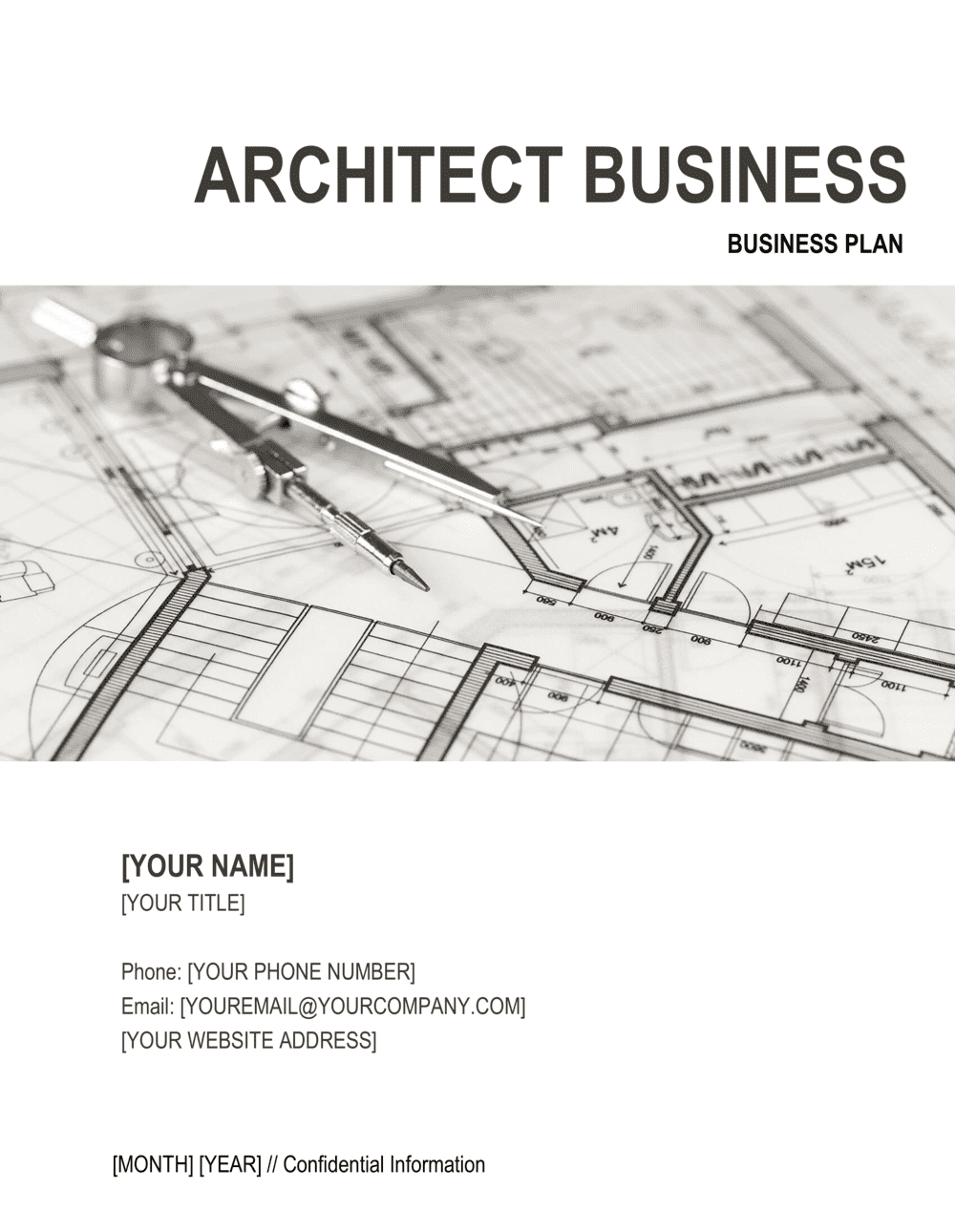
An Architect Business Plan is a structured operational document that maps a design firm's service offerings, target market, competitive positioning, staffing model, and 3–5 year financial projections into a single strategic reference. This free Word download gives principals and founding partners a professionally formatted starting point they can edit online and export as PDF for lenders, investors, or internal planning use.
When you need it
Use it when launching a new architecture practice, applying for an SBA loan or line of credit, seeking equity partners, or restructuring an existing firm around a new service focus or market segment.
What's inside
Executive summary, firm overview and mission, market and client analysis, service offerings and project types, competitive positioning, marketing and business development strategy, operations and staffing plan, and 3-year financial projections including revenue by project type, overhead, and projected profit margin.

What is an Architect Business Plan?

An Architect Business Plan is a structured operational document that defines an architecture firm's design philosophy, target client segments, service offerings, competitive positioning, staffing model, and 3–5 year financial projections. Unlike a general business plan, it addresses the specific economics of an architectural practice β€” billable utilization rates, net multipliers, design phase fee structures, and the 90–180 day cash lag between project commission and first invoice. It serves as both an internal strategic roadmap for founding principals and an external document for lenders, equity partners, or surety bond underwriters evaluating the firm's financial viability.

Why You Need This Document

Without a written business plan, an architecture practice is highly exposed on several fronts. Lenders require one for any SBA loan or commercial line of credit β€” submitting a pitch deck or resume in its place is grounds for immediate rejection. Partners and associate principals need a shared written reference to align on fee structure, client focus, and growth targets before disputes arise. Most critically, the process of building the plan forces you to confront the numbers that routinely sink new firms: break-even utilization, cash flow timing, and the overhead reserve required to survive the gap between winning a commission and collecting the first payment. This template gives you a professionally structured starting point so that your time goes into the analysis, not the formatting.

Which variant fits your situation?

If your situation is…Use this template
Launching a residential architecture practice focused on custom homesResidential Architecture Business Plan
Opening a commercial or mixed-use design firmCommercial Architecture Business Plan
Structuring an interior design studio alongside architecture servicesInterior Design Business Plan
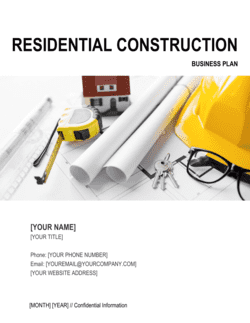
Planning a construction management or design-build companyConstruction Business Plan
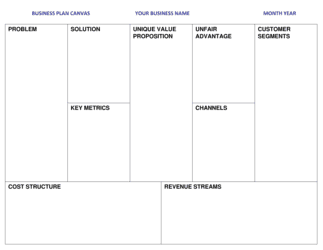
Quick internal planning or early-stage practice ideationOne-Page Business Plan
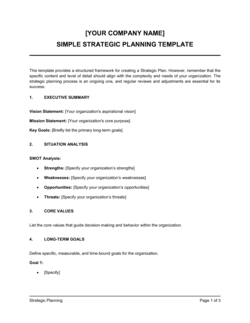
Presenting expansion plans to a board or existing equity partnersStrategic Plan
Raising outside investment for an architecture technology startupStartup Business Plan

Common mistakes to avoid

❌ Using national construction statistics instead of local permit data

Why it matters: Lenders and investors evaluate the local pipeline. A firm in a slow-growth market cannot credibly claim a share of a national $1T construction industry.

Fix: Pull annual permit valuations from the local building department or a regional market report and cite the source. Even a single year of data is more credible than national averages.

❌ Projecting revenue without a project-count model

Why it matters: A Year 3 revenue target of $1.5M sounds achievable until you calculate it requires 30 residential projects at an average fee of $50K β€” more than most two-person firms can physically deliver.

Fix: Build revenue as project count Γ— average fee Γ— realization rate. Show each assumption on a separate line so the math is transparent and auditable.

❌ Omitting a cash flow model for Year 1

Why it matters: Architecture projects have 90–180 day cycles from commission to first invoice. Without monthly cash flow modeling, a firm can win four commissions and still run out of cash before receiving any payment.

Fix: Model monthly cash inflows and outflows for the full first year, including the lag between project start and first billing milestone.

❌ Setting utilization rate assumptions too high in Year 1

Why it matters: New firms spend 30–40% of principal time on business development, proposals, and administration. Assuming 75%+ billable utilization from month one creates a phantom revenue number that the actual cash flow will contradict.

Fix: Use 55–65% as a Year 1 utilization target, increasing to 68–72% by Year 3 as BD activities generate a more consistent project pipeline.

The 9 key sections, explained

Executive Summary

Firm Overview and Mission

Market and Client Analysis

Service Offerings and Project Types

Competitive Analysis and Differentiation

Marketing and Business Development Strategy

Operations and Staffing Plan

Financial Projections

Funding Requirements and Use of Funds

How to fill it out

  1. 1

    Complete the firm overview and confirm licensure details

    Enter the legal entity name, state(s) of licensure, founding date, and office location. Confirm that all named principals hold current architectural licenses in the jurisdictions where the firm will practice.

    πŸ’‘ List each state license number in the firm overview β€” lenders and public-sector clients verify licensure before issuing contracts.

  2. 2

    Define your target client segments and service area

    Identify two or three primary client types (e.g., custom residential homeowners, boutique hotel developers, healthcare operators) and set a specific geographic service radius. Pull local building permit data to support your market size estimate.

    πŸ’‘ Your county or city building department publishes annual permit valuations by project type β€” use that data for the market analysis instead of national averages.

  3. 3

    List service offerings with fee structures

    For each service line, specify the project type, the design phases covered, and the fee basis β€” percentage of construction cost, hourly rate, or fixed fee. Include minimum project size if applicable.

    πŸ’‘ Firms that publish clear fee ranges close proposals faster and attract clients who are already pre-qualified on budget.

  4. 4

    Map the competitive landscape honestly

    Research at least three to five local firms targeting the same segments. Note their staff size, service focus, fee positioning, and any awards or specializations. Then write one specific paragraph on your differentiated advantage.

    πŸ’‘ Check AIA firm directories and local award submission lists to identify competitors that are not yet visible on Google.

  5. 5

    Build the staffing and utilization model

    List each role, the FTE count, the billing rate, and the target utilization percentage. Calculate break-even utilization: total annual overhead divided by (billing rate Γ— annual available hours).

    πŸ’‘ For a new firm, target 55–65% utilization in Year 1 to account for non-billable business development time. Assuming 75%+ from day one leads to chronic cash shortfalls.

  6. 6

    Build the three-year financial model from project counts up

    Start with the number of projects per year by type, multiply by average fee, and build the P&L from there. Do not start from a revenue target and work backward. Include a separate tab with assumptions clearly labeled.

    πŸ’‘ Architecture firms carry a 90–180 day lag from project start to first invoice. Model this cash timing explicitly in the Year 1 monthly cash flow.

  7. 7

    State the funding ask with a six-month overhead reserve

    Calculate total startup costs plus six months of projected overhead and include that sum in the funding ask. Break the request into at least four spending categories with dollar amounts.

    πŸ’‘ Lenders expect to see that the owner is contributing at least 10–20% of the total project cost in equity β€” show your personal capital contribution explicitly.

  8. 8

    Write the executive summary last

    Pull the single most compelling data point from each section β€” market size, differentiation, Year 3 revenue, and funding ask β€” and compress them into one to two pages.

    πŸ’‘ If a loan officer reads only two pages of your plan, make sure those two pages answer: what do you do, who is your client, what are you asking for, and how do you pay it back.

Frequently asked questions

What is an architect business plan?

An architect business plan is a structured operational document that defines an architecture firm's services, target clients, competitive positioning, staffing model, and 3–5 year financial projections. It functions as both an internal strategic roadmap for the firm's principals and an external document for lenders, investors, or equity partners evaluating the practice. Unlike a general business plan, it addresses architecture-specific metrics such as utilization rate, net multiplier, and project phase fee structures.

Do I need a business plan to start an architecture firm?

No law requires one, but most practical paths to opening a practice do. SBA loans and bank lines of credit require a written business plan as part of the application. Bringing in an equity partner or associate principal requires a shared document that defines the firm's direction. Even for a sole-practitioner launch, a written plan forces you to stress-test your fee structure, utilization assumptions, and cash flow timing before you commit to office space or staff.

What financial projections should an architecture firm's business plan include?

At minimum: a three-year P&L broken down by project type and revenue source, a monthly cash flow statement for Year 1 reflecting the 90–180 day lag between project start and first invoice, an overhead rate calculation, a break-even utilization analysis, and a net multiplier target (typically 2.5–3.5Γ— for a healthy small firm). Lenders also expect a use-of-funds schedule tied directly to the capital request.

How long should an architect business plan be?

For a bank loan or lender presentation, 20–30 pages plus a financial model appendix is appropriate. For an internal operating plan, 10–15 pages with a working financial model is sufficient. One-page summaries are useful for early ideation but inadequate for any external capital purpose. The plan should be long enough to be credible and short enough to be read by a loan officer in under 30 minutes.

What is a realistic utilization rate target for a new architecture firm?

A utilization rate of 55–65% is a realistic Year 1 target for a new firm, where principals spend significant time on business development, proposals, and administrative setup. Established firms typically target 65–72% for billable staff. Assuming 75%+ from day one consistently leads to overstated revenue projections and cash flow shortfalls when the actual billing does not materialize on schedule.

How do architecture firms typically structure their fees in a business plan?

The three most common fee structures are: a percentage of construction cost (typically 8–15% for residential, 5–10% for commercial depending on project complexity), an hourly rate for each staff classification, and a fixed fee negotiated per project scope. Many plans show a blended model β€” fixed fees for standard phases with hourly billing for scope changes and additional services. Each structure should be modeled separately in the financial projections.

What makes lenders reject an architecture firm business plan?

The four most common rejection triggers are: revenue projections not supported by a project-count model, no cash flow statement showing the timing of receipts relative to overhead obligations, utilization assumptions above 75% in Year 1 without justification, and a market analysis that cites national statistics without any local demand evidence. Lenders also flag plans that request capital without a six-month overhead reserve.

Should I include a marketing strategy in my architecture business plan?

Yes. Business development is the primary risk factor for a new architecture practice. The marketing section should identify your two or three primary client acquisition channels β€” referral networks, developer relationships, design-press visibility, AIA competition submissions β€” and attach a revenue percentage target to each. Plans that list tactics without conversion assumptions give lenders no basis for evaluating how the firm will win work.

Can I use this template for a design-build or interior design firm?

The core structure applies to any design practice, but design-build firms should add a construction revenue and cost-of-goods-sold section, and interior design practices should model furnishings procurement margin separately from design fees. Business in a Box offers dedicated templates for both construction and interior design business plans that include those adjustments out of the box.

How this compares to alternatives

vs Construction Business Plan

A construction business plan centers on cost of goods sold, subcontractor management, bonding capacity, and job-cost accounting. An architect business plan is a professional-services model built around billable hours, design phase fees, and utilization rates. The two documents are distinct even for design-build firms, which typically need one of each.

vs Interior Design Business Plan

An interior design business plan includes furnishings procurement margin and trade-pricing relationships as separate revenue streams alongside design fees. An architect business plan focuses on construction-document production, code compliance, and project administration. Firms offering both services should address each revenue model in its own section.

vs One-Page Business Plan

A one-page plan is a rapid-alignment tool for early ideation or internal team discussions. It lacks the financial depth, staffing model, and market evidence that lenders require. Use the one-page format to test a practice concept, then build the full architect business plan before any capital raise or partnership negotiation.

vs Strategic Plan

A strategic plan focuses on goals, initiatives, and KPIs for an existing firm over a 3–5 year horizon. An architect business plan is an external-facing document that adds market sizing, competitive context, and a capital structure. Established firms typically need both β€” the business plan to secure financing, the strategic plan to drive execution.

Industry-specific considerations

Residential Architecture

Fee structures as a percentage of construction cost, custom home project cycles of 18–36 months, and referral-driven business development with homebuilders and realtors.

Commercial and Mixed-Use Development

Tenant improvement budgets, developer repeat-client relationships, competitive fee compression on large projects, and phased delivery tied to construction draw schedules.

Healthcare and Institutional

FGI Guidelines and infection-control design requirements, longer procurement cycles (12–24 months from RFQ to commission), and detailed compliance documentation in the operations section.

Sustainable and Passive House Design

Certification costs (LEED, Passive House Institute, Living Building Challenge) modeled as a distinct overhead line, premium fee positioning, and grant or incentive revenue streams for qualifying projects.

Template vs pro β€” what fits your needs?

PathBest forCostTime
Use the templateSolo practitioners, new firm founders, and small partnerships applying for SBA loans under $500KFree2–4 weeks (30–60 hours including financial modeling)
Template + professional reviewFirms seeking bank loans above $500K or bringing in an equity partner who will scrutinize the financials$500–$2,000 for an accountant or architecture practice consultant review3–5 weeks
Custom draftedMulti-principal firms restructuring for acquisition, merger, or institutional equity investment$3,000–$8,000 for a professional business plan writer with AEC industry experience4–8 weeks

Glossary

Principal-in-Charge
The licensed architect who holds ultimate responsibility for a project's design quality, contract compliance, and deliverables.
Utilization Rate
The percentage of total staff hours billed directly to client projects, as opposed to time spent on overhead activities like business development or administration.
Realization Rate
The ratio of fees actually collected to the total billable value of hours worked β€” a key profitability measure for architecture firms.
Schematic Design (SD)
The first formal design phase in which the architect establishes the project's basic scope, scale, and concept, typically representing 15% of total design fees.
Construction Documents (CDs)
Detailed drawings and specifications from which contractors bid and build a project β€” typically the most labor-intensive phase and the largest fee component.
Scope Creep
Uncontrolled expansion of project requirements beyond the original contract, which erodes profit margin if not captured in a formal change order.
Overhead Rate
Total indirect firm costs (rent, insurance, software, non-billable salaries) expressed as a percentage of direct labor costs.
Break-Even Utilization
The minimum billable-hour percentage a firm must achieve to cover all overhead costs without a net loss.
Net Multiplier
Total revenue divided by direct labor cost β€” a standard efficiency benchmark for architecture firms, with 2.5–3.5Γ— considered healthy.
Retainer Agreement
A pre-project or ongoing contract in which a client pays a fixed monthly fee for access to architectural services, providing the firm with predictable recurring revenue.

Part of your Business Operating System

This document is one of 3,000+ business & legal templates included in Business in a Box.

  • Fill-in-the-blanks β€” ready in minutes
  • 100% customizable Word document
  • Compatible with all office suites
  • Export to PDF and share electronically

Create your document in 3 simple steps.

From template to signed document β€” all inside one Business Operating System.
1
Download or open template

Access over 3,000+ business and legal templates for any business task, project or initiative.

2
Edit and fill in the blanks with AI

Customize your ready-made business document template and save it in the cloud.

3
Save, Share, Send, Sign

Share your files and folders with your team. Create a space of seamless collaboration.

Save time, save money, and create top-quality documents.

β˜…β˜…β˜…β˜…β˜…

"Fantastic value! I'm not sure how I'd do without it. It's worth its weight in gold and paid back for itself many times."

Managing Director Β· Mall Farm
Robert Whalley
Managing Director, Mall Farm Proprietary Limited
β˜…β˜…β˜…β˜…β˜…

"I have been using Business in a Box for years. It has been the most useful source of templates I have encountered. I recommend it to anyone."

Business Owner Β· 4+ years
Dr Michael John Freestone
Business Owner
β˜…β˜…β˜…β˜…β˜…

"It has been a life saver so many times I have lost count. Business in a Box has saved me so much time and as you know, time is money."

Owner Β· Upstate Web
David G. Moore Jr.
Owner, Upstate Web

Run your business with a system β€” not scattered tools

Stop downloading documents. Start operating with clarity. Business in a Box gives you the Business Operating System used by over 250,000 companies worldwide to structure, run, and grow their business.

Start freeΒ Β·Β No credit card required