Letter of Understanding Regarding Terms of Proposed Contract Template

Free Word download β€’ Edit online β€’ Save & share with Drive β€’ Export to PDF

1 pageβ€’15–25 min to fillβ€’Difficulty: Standard
Learn more ↓
FreeLetter of Understanding Regarding Terms of Proposed Contract Template

At a glance

What it is
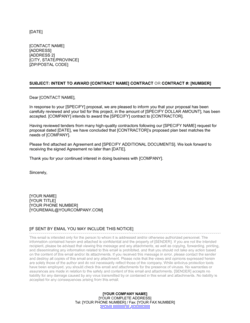
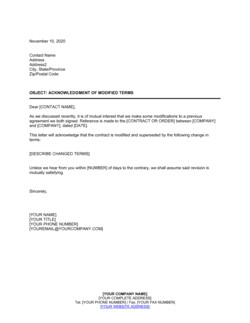
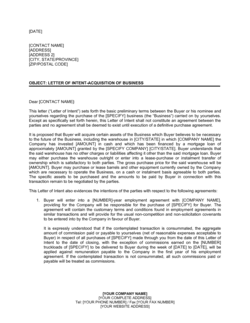
A Letter of Understanding Regarding Terms of Proposed Contract is a formal business letter confirming that two parties have reached a mutual understanding on the key terms of a contract they intend to finalize and sign. This free Word download gives you a ready-to-edit structure you can complete in minutes and export as PDF to send before the formal agreement is drafted.
When you need it
Use it after preliminary negotiations conclude but before the formal contract is drawn up β€” when both parties want a written record of the agreed terms to prevent misunderstandings from surfacing later. It is particularly useful when drafting the full contract will take days or weeks and you need interim confirmation of what was agreed.
What's inside
Sender and recipient details, a plain-language summary of the proposed contract's core terms, a statement of mutual understanding, any conditions or reservations that remain open, and a clear note that the letter does not itself constitute a binding contract.

What is a Letter of Understanding Regarding Terms of a Proposed Contract?

A Letter of Understanding Regarding Terms of a Proposed Contract is a formal business letter confirming that two parties have reached a mutual understanding on the key commercial terms of a contract they intend to finalize and sign. It is written after negotiations conclude but before the formal agreement is drafted, serving as a written checkpoint that documents scope, price, timeline, and any remaining open items. Unlike a binding contract, it records intent and shared understanding without creating legal obligations β€” provided it includes a clear non-binding disclaimer. Its primary function is to prevent the misunderstandings, shifting positions, and "I thought we agreed" disputes that frequently arise in the gap between a handshake and a signed contract.

Why You Need This Document

When negotiations wrap up and both parties say yes, the terms exist only in memory and scattered email threads until the formal contract is signed. Without a letter of understanding, those terms are vulnerable β€” a personnel change, a long drafting timeline, or a change in circumstances can cause one party to revisit what was agreed. The result is a second round of negotiation at the contract stage, often more contentious than the first. A letter of understanding closes that gap: it creates a shared, documented record of exactly what was agreed, identifies what remains open, and sets a deadline for formal execution. It also provides a paper trail of good faith that is admissible evidence if a dispute later arises. This template gives you a professional, correctly structured letter ready to send in minutes β€” reducing the risk that a deal you negotiated carefully unravels before the ink is dry.

Which variant fits your situation?

If your situation is…Use this template
Confirming mutual understanding on proposed contract terms before draftingLetter of Understanding Regarding Terms of Proposed Contract
Recording a broader non-binding agreement to negotiate in good faithLetter of Intent
Creating a binding preliminary agreement on key deal termsMemorandum of Understanding
Summarizing agreed terms at the close of a negotiation meetingMeeting Minutes Template
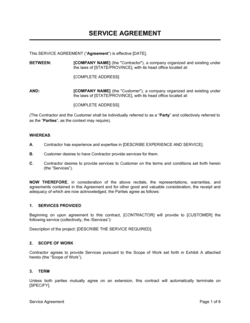
Confirming terms of a service engagement before the service agreement is signedService Agreement
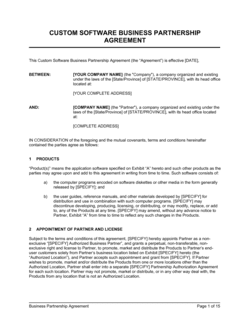
Documenting partnership terms at the term-sheet stageBusiness Partnership Agreement

Common mistakes to avoid

❌ Omitting the non-binding disclaimer

Why it matters: Without a clear non-binding statement, a detailed letter of understanding can be construed as a binding contract in some jurisdictions β€” particularly if one party has begun performing in reliance on it.

Fix: Include the disclaimer paragraph explicitly and ensure it appears prominently, not buried in a closing paragraph.

❌ Using vague scope descriptions

Why it matters: A scope described as 'consulting services' or 'IT work' is open to competing interpretations that typically surface as disputes when the formal contract is negotiated.

Fix: Describe the scope in at least two to three specific sentences β€” deliverables, volume, or a defined activity β€” even if full detail will be in the contract.

❌ Treating open items as agreed

Why it matters: If a material term like price or timeline is still being negotiated and is not flagged as open, the other party may stop negotiating on that point, creating a false baseline that complicates the formal contract.

Fix: List every unresolved term in a dedicated open-items section, no matter how minor it seems at the time of writing.

❌ Not requesting a countersignature

Why it matters: A letter sent without a countersignature request leaves no confirmation that the other party read and agreed to the recorded understanding, reducing its value as evidence of pre-contract negotiations.

Fix: Add an acknowledgment block at the bottom of the letter and explicitly ask the recipient to sign and return a copy within a defined timeframe.

The 9 key clauses, explained

Header and parties identification

In plain language: Identifies the sender and recipient by full name and organization, and establishes the date and subject line so the letter is easy to reference later.

Sample language
[DATE] | To: [RECIPIENT FULL NAME], [RECIPIENT TITLE], [RECIPIENT ORGANIZATION] | From: [SENDER FULL NAME], [SENDER TITLE], [SENDER ORGANIZATION] | Re: Letter of Understanding β€” Terms of Proposed Contract for [PROJECT / SUBJECT]

Common mistake: Using informal names or job titles that don't match the signatory on the eventual contract, which can create ambiguity about which entities are actually party to the understanding.

Purpose statement

In plain language: Opens the letter by stating that its purpose is to confirm the mutual understanding reached between the parties on the terms of a proposed contract.

Sample language
This letter confirms the mutual understanding reached by [PARTY A] and [PARTY B] following discussions on [DATE(S)] regarding the proposed [CONTRACT TYPE] to be entered into between the parties.

Common mistake: Omitting the purpose statement entirely and diving straight into terms, leaving the reader uncertain whether the letter is a confirmation, a counter-proposal, or a formal demand.

Summary of proposed contract terms

In plain language: Lists the key commercial terms agreed in negotiation β€” scope, price, timeline, payment schedule, and any material conditions β€” in plain, numbered language.

Sample language
The parties understand the proposed contract will include the following terms: (1) Scope: [DESCRIPTION OF GOODS/SERVICES]; (2) Contract Value: $[AMOUNT]; (3) Payment Schedule: [TERMS]; (4) Commencement Date: [DATE]; (5) Completion Date: [DATE].

Common mistake: Being vague about price or scope to avoid 'locking in' terms β€” this defeats the purpose of the letter and leaves room for exactly the disputes it is meant to prevent.

Open items and reservations

In plain language: Clearly identifies any terms that have not yet been agreed or that remain subject to further negotiation or due diligence.

Sample language
The following items remain subject to further discussion and are not yet agreed: (a) [OPEN ITEM 1]; (b) [OPEN ITEM 2]. The parties agree to conclude discussion on these matters by [DATE].

Common mistake: Treating all terms as agreed when one or more are still open β€” if those points are omitted, one party may reasonably assume they are settled and stop negotiating.

Non-binding disclaimer

In plain language: States explicitly that the letter is not a binding contract and that neither party is legally obligated to proceed until a formal agreement is signed.

Sample language
This letter is intended to record the parties' current understanding only. It is not legally binding and does not constitute a contract or commitment to enter into a contract. The terms described herein are subject to the execution of a formal written agreement.

Common mistake: Omitting the non-binding disclaimer entirely β€” in some jurisdictions, a sufficiently detailed letter of understanding can be construed as a binding agreement, especially if one party has begun performing.

Confirmation of intent to proceed

In plain language: Records both parties' current intention to finalize the proposed contract, providing a paper trail of good faith without creating a legal obligation.

Sample language
Both parties confirm their current intention to proceed toward the execution of a formal [CONTRACT TYPE] incorporating the terms described above, subject to resolution of the open items noted in Section [X].

Common mistake: Phrasing the intent to proceed as an absolute commitment β€” 'the parties will execute' instead of 'the parties intend to execute' β€” which can be read as a binding obligation.

Deadline for formal contract execution

In plain language: Sets a target date by which the parties expect to have the formal contract drafted, reviewed, and signed β€” keeping both sides accountable to a timeline.

Sample language
The parties anticipate executing the formal contract by [DATE]. If a formal agreement has not been executed by this date, either party may withdraw from discussions without liability.

Common mistake: Setting no deadline, which allows the proposed contract to stall indefinitely while one party acts in reliance on the understanding reached.

Governing correspondence and prior discussions

In plain language: States that the letter supersedes prior informal correspondence or verbal agreements on the subject, establishing it as the definitive record of the current understanding.

Sample language
This letter supersedes all prior oral or written communications between the parties regarding the terms of the proposed contract and represents the complete understanding of the parties as of the date hereof.

Common mistake: Leaving prior email chains or meeting notes as potentially competing records of agreed terms β€” without a supersession clause, earlier communications can be cited to argue that different terms were agreed.

Closing and signature block

In plain language: Closes the letter with a professional sign-off, the sender's name and title, and optionally an acknowledgment line for the recipient to countersign confirming receipt and agreement.

Sample language
Please confirm your agreement with the above by signing and returning a copy of this letter. | Sincerely, [SENDER NAME] | [TITLE] | [ORGANIZATION] | [DATE] || Acknowledged and agreed: [RECIPIENT NAME] | [TITLE] | [DATE]

Common mistake: Omitting a countersignature block β€” without it, there is no documented confirmation that the recipient read and agreed to the recorded understanding.

How to fill it out

  1. 1

    Enter both parties' full details in the header

    Add the sender's and recipient's full legal names, titles, organization names, and addresses. Match the names exactly to those that will appear on the eventual contract.

    πŸ’‘ Confirm the recipient's correct legal entity name before sending β€” a mismatch here can cause delays when the formal contract is drafted.

  2. 2

    Write a clear subject line referencing the proposed contract

    State the subject as 'Letter of Understanding β€” Terms of Proposed Contract for [PROJECT NAME or CONTRACT TYPE].' A specific subject line makes the letter easy to retrieve and cite later.

    πŸ’‘ Include a brief project code or reference number if your organization uses one β€” this links the letter directly to the negotiation file.

  3. 3

    Summarize the agreed commercial terms in numbered paragraphs

    List each agreed term β€” scope, price, payment schedule, start and end dates, key deliverables β€” in a numbered list. Write each term in plain language, not legal jargon.

    πŸ’‘ If a term was discussed but not yet agreed, list it separately under open items rather than leaving it out entirely.

  4. 4

    Identify all open items clearly

    Add a separate section naming every term that is still under discussion or subject to further review. Set a target date for resolving each open item.

    πŸ’‘ Being explicit about what is not agreed prevents the other party from later claiming those items were settled.

  5. 5

    Insert the non-binding disclaimer

    Include the disclaimer paragraph verbatim from the template, confirming that the letter is not a binding contract and that a formal agreement must be executed before obligations arise.

    πŸ’‘ Do not soften or remove this clause to seem more accommodating β€” it protects both parties equally.

  6. 6

    Set a deadline for formal contract execution

    Enter a realistic target date by which both parties expect to sign the formal contract. If that date passes without execution, either party should be free to withdraw.

    πŸ’‘ Allow enough time for legal review of the formal contract β€” for straightforward service agreements, two to three weeks from this letter is usually sufficient.

  7. 7

    Send and request countersignature

    Export the completed letter as PDF and send it to the recipient with a short covering note asking them to countersign and return a copy to confirm their agreement with the recorded understanding.

    πŸ’‘ Follow up within 48 hours if you have not received a countersigned copy β€” silence does not confirm agreement.

Frequently asked questions

What is a letter of understanding regarding terms of a proposed contract?

A letter of understanding regarding terms of a proposed contract is a formal business letter that records the key terms two parties have agreed on in principle before a formal contract is drafted and signed. It serves as a written checkpoint after negotiations conclude, confirming what was discussed and agreed while explicitly stating that no binding obligation exists until the formal contract is executed.

Is a letter of understanding legally binding?

In most cases, no β€” provided the letter includes a clear non-binding disclaimer and uses language of intent rather than obligation. However, if a letter contains sufficiently definite terms and one party begins performing in reliance on it, courts in some jurisdictions have found that a binding contract was formed. Including an explicit non-binding clause and a "subject to contract" statement protects both parties.

What is the difference between a letter of understanding and a letter of intent?

A letter of intent typically expresses one party's intention to enter into a future agreement and is often used in M&A, real estate, or partnership transactions to signal serious interest. A letter of understanding confirms a mutual agreement already reached on proposed contract terms and is used after negotiations, not before. Both are generally non-binding, but they serve different stages of the deal process.

What is the difference between a letter of understanding and a memorandum of understanding?

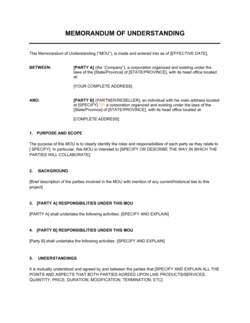
A memorandum of understanding (MOU) is a more formal document that often covers broader relational or partnership terms and is more commonly used between organizations or government bodies. A letter of understanding is typically shorter, less formal, and focused specifically on confirming the proposed commercial terms of a single contract. MOUs can sometimes be binding; a letter of understanding is typically not.

When should I use a letter of understanding instead of jumping straight to a contract?

Use a letter of understanding when drafting the formal contract will take meaningful time β€” days or weeks β€” and you want a written record of what was agreed in negotiation to prevent terms from shifting or being misremembered. It is also useful when one party needs to seek internal approval before the contract can be signed and you want to document the agreed basis for that approval process.

Does a letter of understanding need to be signed by both parties?

It is not legally required, but having both parties sign is strongly advisable. A countersignature confirms that the recipient read and agrees with the recorded understanding. Without it, the letter is a unilateral record of one party's interpretation of the negotiation, which carries far less weight if a dispute arises later.

Can a letter of understanding be used as evidence in a dispute?

Yes. Even though a letter of understanding is non-binding, it can be admitted as evidence of what the parties discussed, agreed, and intended at the time of writing. Courts use pre-contract documents to interpret ambiguous contract terms or to assess whether a party acted in good faith. A clear, accurate letter of understanding is a useful piece of documentation in any contract dispute.

Should I have a lawyer review my letter of understanding?

For straightforward commercial transactions between businesses, a well-structured template is typically sufficient. Consider a brief legal review if the proposed contract involves significant sums, a complex regulatory environment, international parties, or if you are unsure whether the letter's language could inadvertently create binding obligations. A short review by a commercial lawyer typically takes one to two hours.

How this compares to alternatives

vs Letter of Intent

A letter of intent expresses one party's desire to enter into a future agreement and is often used early in negotiations to signal commitment. A letter of understanding confirms the mutual terms already reached after negotiations conclude. Use a letter of intent to open discussions; use a letter of understanding to document where those discussions landed before the contract is drafted.

vs Memorandum of Understanding

An MOU is a more structured document typically used between organizations or government bodies to record broader collaborative terms, and it can be drafted as binding or non-binding. A letter of understanding is shorter, focused on a single proposed contract's commercial terms, and is almost always non-binding. For a straightforward pre-contract confirmation, a letter of understanding is faster to prepare and less formal.

vs Service Agreement

A service agreement is the binding contract that creates enforceable rights and obligations between a service provider and a client. A letter of understanding is the pre-contract document confirming the terms on which that service agreement will be based. Sign the service agreement when you are ready to create binding obligations; use the letter of understanding as the documented bridge that gets you there.

vs Business Partnership Agreement

A business partnership agreement is a binding legal document that governs the rights, responsibilities, and profit-sharing of partners in an ongoing business relationship. A letter of understanding is appropriate at the pre-agreement stage when the parties want to confirm their shared understanding of proposed partnership terms before the formal agreement is drafted and reviewed.

Industry-specific considerations

Professional Services

Confirms engagement scope, hourly or project rate, and delivery timeline before a services agreement is signed, reducing scope disputes at contract stage.

Construction and Real Estate

Documents agreed project specifications, contract value, and payment milestones before a construction contract or development agreement is formalized.

Technology and SaaS

Records agreed licensing terms, implementation scope, and SLA expectations before a software or services contract is drafted, keeping complex deals on track.

Manufacturing and Supply Chain

Confirms pricing, minimum order quantities, delivery schedules, and quality standards with a supplier or buyer before a supply or purchase agreement is executed.

Template vs pro β€” what fits your needs?

PathBest forCostTime
Use the templateStandard B2B pre-contract confirmations for services, supply, or project engagementsFree10–15 minutes
Template + professional reviewHigh-value deals, international counterparties, or complex regulatory environments$150–$400 (one-hour commercial lawyer review)1–2 days
Custom draftedStrategic partnerships, M&A pre-contract confirmations, or situations where binding effect is genuinely uncertain$500–$1,5002–5 days

Glossary

Letter of Understanding
A formal written document summarizing the agreed terms or mutual positions of two parties on a subject, typically before a binding contract is signed.
Proposed Contract
A draft or anticipated agreement whose terms are under discussion but have not yet been formally executed by either party.
Non-Binding
A characterization of a document or clause that records intent or understanding without creating a legally enforceable obligation.
Letter of Intent (LOI)
A formal letter expressing one party's intention to enter into an agreement, often used in M&A, real estate, and partnership negotiations.
Memorandum of Understanding (MOU)
A document recording the terms two or more parties have agreed to explore or implement, which may or may not be legally binding depending on its language.
Good Faith
The principle that parties to a negotiation or agreement deal with each other honestly and without intent to deceive or defraud.
Subject to Contract
A phrase indicating that any understanding reached is not binding until a formal written contract is executed by both parties.
Mutual Understanding
A shared agreement between two parties on the meaning, scope, or terms of a subject β€” distinct from a binding contractual commitment.
Effective Date
The date on which the terms described in a document are intended to take effect, which may differ from the date the document is written or sent.
Consideration
Something of value β€” money, services, goods, or a promise β€” exchanged between parties that is required to make a contract legally enforceable.

Part of your Business Operating System

This document is one of 3,000+ business & legal templates included in Business in a Box.

  • Fill-in-the-blanks β€” ready in minutes
  • 100% customizable Word document
  • Compatible with all office suites
  • Export to PDF and share electronically

Create your document in 3 simple steps.

From template to signed document β€” all inside one Business Operating System.
1
Download or open template

Access over 3,000+ business and legal templates for any business task, project or initiative.

2
Edit and fill in the blanks with AI

Customize your ready-made business document template and save it in the cloud.

3
Save, Share, Send, Sign

Share your files and folders with your team. Create a space of seamless collaboration.

Save time, save money, and create top-quality documents.

β˜…β˜…β˜…β˜…β˜…

"Fantastic value! I'm not sure how I'd do without it. It's worth its weight in gold and paid back for itself many times."

Managing Director Β· Mall Farm
Robert Whalley
Managing Director, Mall Farm Proprietary Limited
β˜…β˜…β˜…β˜…β˜…

"I have been using Business in a Box for years. It has been the most useful source of templates I have encountered. I recommend it to anyone."

Business Owner Β· 4+ years
Dr Michael John Freestone
Business Owner
β˜…β˜…β˜…β˜…β˜…

"It has been a life saver so many times I have lost count. Business in a Box has saved me so much time and as you know, time is money."

Owner Β· Upstate Web
David G. Moore Jr.
Owner, Upstate Web

Run your business with a system β€” not scattered tools

Stop downloading documents. Start operating with clarity. Business in a Box gives you the Business Operating System used by over 250,000 companies worldwide to structure, run, and grow their business.

Free Forever PlanΒ Β·Β No credit card required