Agriculture Services Business Plan 2 Template

Free Word download β€’ Edit online β€’ Save & share with Drive β€’ Export to PDF

38 pagesβ€’3h 5m – 4h 10m to fillβ€’Difficulty: Expert
Learn more ↓
FreeAgriculture Services Business Plan 2 Template

At a glance

What it is
An Agriculture Services Business Plan is a structured operational document that maps a service-based agricultural business β€” such as crop consulting, soil testing, irrigation management, or equipment rental β€” across its market opportunity, service model, operational workflow, and multi-year financial projections. This free Word download gives you a professionally organized starting point you can edit online and export as PDF for lenders, investors, or grant programs.
When you need it
Use it when launching a new agriculture services venture, applying for a USDA loan or agricultural grant, or presenting an existing operation's growth strategy to investors or a co-op board.
What's inside
Executive summary, company overview, service offerings, market and competitive analysis, marketing and client acquisition strategy, operations plan, management team profiles, and three-year financial projections including revenue, cost of services, and cash flow.

What is an Agriculture Services Business Plan?

An Agriculture Services Business Plan is a structured operational document that defines the service model, target client base, market opportunity, operational workflow, and financial projections for a business that delivers services to farms and agricultural operations β€” rather than producing crops or livestock directly. It covers everything from service pricing and equipment utilization to seasonal cash flow and client acquisition strategy, organized into a format that meets the documentation requirements of USDA FSA loan programs, state agricultural financing agencies, and conventional agricultural lenders.

Why You Need This Document

Without a written business plan, USDA FSA loan applications are returned incomplete, bank loan officers decline to underwrite, and grant reviewers move on to better-documented applicants. The document forces you to confront the practical realities of an agriculture services operation before you commit capital: the seasonal cash gap between planting-season revenue and off-season operating costs, the equipment utilization rate needed to service your debt, and the client retention rate required to hit Year 3 projections. Lenders who finance agriculture service businesses do not evaluate ideas β€” they evaluate documented assumptions. A complete, internally consistent plan with credible local market data and a realistic seasonal cash flow model is the single most important factor in getting a rural service loan approved. This template gives you the professional structure to build that case without starting from a blank page.

Which variant fits your situation?

If your situation is…Use this template
Launching a crop consulting or agronomy advisory serviceAgriculture Services Business Plan 2
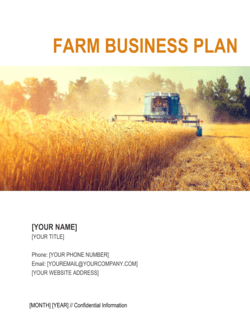
Planning a full-scale farming operation with land and productionFarm Business Plan
Applying for a USDA microloan or FSA loan under $50,000One-Page Business Plan
Raising equity investment for an agri-tech startupInvestor Business Plan
Outlining a 3-year growth strategy for an existing ag services firmStrategic Planning Template
Documenting a new service line for an established agricultural co-opNew Product Launch Plan
Creating a quick internal roadmap for a seasonal services operationOne-Page Business Plan

Common mistakes to avoid

❌ Projecting flat monthly revenue

Why it matters: Agriculture services revenue follows hard seasonal patterns. A model with equal revenue every month tells a lender the applicant does not understand their own cash cycle, triggering a denial or a request for revision.

Fix: Build monthly revenue tied to crop calendar milestones β€” planting, in-season scouting, harvest β€” and show the cash reserve or credit line that covers off-season gaps.

❌ Using national market size data without local validation

Why it matters: Claiming a share of a $50B national agriculture services market without a county-level client count is unconvincing to FSA loan officers and regional lenders who know the local farm density.

Fix: Pull USDA NASS or state department of agriculture data for your specific service territory and build a bottom-up addressable market from the number of farms, acreage, and estimated spend per farm.

❌ Omitting equipment ownership or lease costs

Why it matters: Equipment is frequently the single largest cost line in an agriculture services business. Missing it overstates margins and creates an immediate red flag during financial review.

Fix: List every piece of equipment β€” owned, financed, or leased β€” with its annual depreciation or lease payment, maintenance cost, and expected utilization rate.

❌ No client retention or multi-season contract strategy

Why it matters: Agriculture services businesses depend on repeat seasonal clients. A plan with no retention mechanism implies 100% new-client acquisition every year, which makes the revenue model unsustainable.

Fix: Include multi-season service agreements or annual retainer structures and model the Year 2 and Year 3 revenue split between retained and new clients explicitly.

❌ Generic team bios without agricultural credentials

Why it matters: A lender or grant committee evaluating a soil-testing or crop consulting business needs to see specific agronomic credentials β€” CCA certification, university extension experience, or documented yield results.

Fix: Lead each team bio with the single most relevant credential or quantified field result. Cut career history that does not directly support the service model in the plan.

❌ Funding ask inconsistent with the cash flow gap

Why it matters: A loan officer will compare the funding request to the peak negative cash balance in the monthly projections. A mismatch β€” asking for $150K when the model shows a $40K gap β€” signals either padded numbers or a model the founder does not understand.

Fix: Set the funding ask equal to peak working capital need plus equipment costs plus a documented reserve buffer, and annotate each component in the use-of-funds table.

The 9 key sections, explained

Executive Summary

Company Overview

Service Offerings

Market and Competitive Analysis

Marketing and Client Acquisition Strategy

Operations Plan

Management Team

Financial Projections

Funding Requirements and Use of Funds

How to fill it out

  1. 1

    Define your company and mission precisely

    Enter your legal entity name, formation date, state, and a mission statement that names the specific agricultural outcome you deliver, the client type you serve, and the region you cover.

    πŸ’‘ Tie the mission to a measurable outcome β€” 'increase yield per acre by 8–12%' is more credible to a lender than 'support farmers in our community.'

  2. 2

    List and price each service line

    Document every service you offer with a clear description, delivery method, pricing structure (per acre, per hour, per season), and whether it is currently active or planned for launch.

    πŸ’‘ If you offer bundled service packages, break them into their component services first. Lenders want to see individual margins before evaluating bundles.

  3. 3

    Research and size your local market

    Use USDA NASS county-level data, FSA farm records, and state agricultural department reports to count the number of farms in your service territory and estimate the addressable spend per farm.

    πŸ’‘ A bottom-up count β€” farms Γ— average service spend per farm β€” is more credible than a top-down market share claim for agriculture lenders.

  4. 4

    Map your client acquisition channels

    Identify at least three channels β€” e.g., county extension office referrals, farm bureau membership, direct mail to FSA farm lists β€” and set a realistic new-client target for each in Year 1.

    πŸ’‘ Extension office partnerships are one of the highest-conversion channels for new agriculture services businesses and cost close to nothing to initiate.

  5. 5

    Build the seasonal operations schedule

    Map your service delivery calendar month by month, showing peak staffing needs, equipment utilization, and the revenue booked in each period. Identify any off-season months where cash burn exceeds receipts.

    πŸ’‘ Identify one or two off-season services β€” cover crop consulting, equipment maintenance contracts, soil sampling β€” to flatten the revenue trough.

  6. 6

    Model the three-year financials from the bottom up

    Build revenue from the number of client farms multiplied by services per farm per season multiplied by price. Layer in cost of services (labor, fuel, inputs) and operating expenses to reach EBITDA and cash flow.

    πŸ’‘ Model a downside scenario at 70% of projected client count. If the business is still cash-flow positive, the plan is fundable. If not, adjust the cost structure before submitting.

  7. 7

    Specify the funding ask with a clear use-of-funds table

    Enter the total amount requested, the instrument type, and a table allocating funds to equipment, working capital, marketing, and operations β€” each with a dollar amount and percentage.

    πŸ’‘ Cross-check that the working capital draw in the use-of-funds table matches the largest negative cash balance in your monthly cash flow projection.

  8. 8

    Write the executive summary last

    Pull the single most compelling data point from each section β€” market size, key service, Year 3 revenue target, team credential, and funding ask β€” and compress into one to two pages.

    πŸ’‘ USDA and FSA loan officers read the executive summary and financial projections first. If those two sections are internally consistent, the full plan receives a thorough review.

Frequently asked questions

What is an agriculture services business plan?

An agriculture services business plan is a structured document that defines the service offerings, target client base, market opportunity, operations model, and financial projections for a business that provides services to farms and agricultural operations β€” rather than producing crops or livestock directly. Common service types include crop consulting, soil testing, irrigation management, equipment repair, and precision agriculture data services. Lenders, grant programs, and co-op boards use it to evaluate feasibility and creditworthiness.

Who needs an agriculture services business plan?

Agricultural consultants, agronomists launching independent practices, equipment service operators, irrigation management firms, precision agriculture technology providers, and agricultural co-ops adding service divisions all use this document. It is required for most USDA FSA loan applications, USDA RBEG grants, and state department of agriculture financing programs, as well as for conventional bank loans to agricultural service businesses.

What financial projections should the plan include?

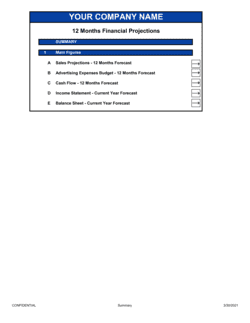
At minimum: monthly revenue by service line for Year 1, annual projections for Years 2 and 3, a cost-of-services breakdown by labor and inputs, an operating expense schedule, EBITDA, and a monthly cash flow statement that reflects the seasonal revenue pattern. Agriculture lenders specifically look for the peak cash deficit month and the facility or reserve covering it.

How is an agriculture services business plan different from a farm business plan?

A farm business plan covers land ownership or lease, crop or livestock production, commodity sales, and production cost per unit. An agriculture services business plan covers a service delivery model β€” staffing, equipment utilization, client contracts, and service revenue β€” without owning or producing the underlying agricultural output. The financial model, cost structure, and lender expectations differ significantly between the two.

What USDA programs require a business plan for agriculture services?

The USDA Farm Service Agency requires a business plan for Operating Loans, Ownership Loans, and Microloan applications. The USDA Rural Business Enterprise Grant (RBEG) program requires a plan for service businesses in rural areas. State-level USDA Rural Development offices may require additional supporting schedules depending on loan size and business type. Check the specific program requirements with your local FSA service center.

How long should an agriculture services business plan be?

For a USDA loan or bank financing application, 20 to 30 pages plus a financial model appendix is the accepted range. A plan under 15 pages typically lacks the market evidence and operational detail lenders require. Internal planning documents can be shorter, but any plan submitted for external financing should include all nine core sections with supporting data.

How do I model seasonal revenue in the financial projections?

Map your service calendar to the local crop calendar β€” identify which months generate field activity and billable work, and which are off-season. Assign a percentage of annual revenue to each month based on typical service timing for your region. Then model cash outflows (payroll, fuel, equipment payments) against those receipts to identify the peak cash gap month, which determines your working capital line or loan size.

Do I need a consultant to write an agriculture services business plan?

For FSA microloans under $50,000 or straightforward single-service operations, a well-completed template is generally sufficient. Engage an agricultural business consultant for loans above $250,000, multi-service operations with complex equipment financing, or grant applications requiring economic impact analysis. USDA rural development offices and many land-grant university extension programs offer free or low-cost business plan review services for qualifying agricultural businesses.

How this compares to alternatives

vs Farm Business Plan

A farm business plan covers a production operation β€” land, crops or livestock, commodity sales, and production cost per unit. An agriculture services business plan covers a service delivery model with client contracts, staffing, and equipment utilization. The financial structure and lender expectations differ fundamentally. Use the agriculture services plan if your revenue comes from serving other farms, not from selling your own production.

vs One-Page Business Plan

A one-page plan is a rapid-alignment tool suitable for early ideation or internal team communication. It does not include the market analysis, operational detail, or three-statement financial model required by USDA FSA, conventional lenders, or grant programs. Use the one-page format to test and refine your concept, then build the full agriculture services plan before any external financing application.

vs Strategic Planning Template

A strategic plan is an internal document focused on goals, initiatives, and KPIs for an existing business. An agriculture services business plan is an external-facing financing document that adds market evidence, competitive context, and a capital structure. Established operations typically need both β€” the business plan to secure financing, the strategic plan to execute against it.

vs Marketing Plan

A marketing plan focuses exclusively on client acquisition channels, messaging, and campaign budgets. An agriculture services business plan contains a marketing section but also covers operations, financials, team, and funding β€” the full picture a lender or investor requires. Use a standalone marketing plan to develop the go-to-market strategy in detail, then summarize it within the business plan.

Industry-specific considerations

Crop Consulting and Agronomy

Service contracts billed per acre or per scouting visit, CCA certification as a credentialing requirement, and seasonal demand concentrated in the 90-day planting and early-growth window.

Precision Agriculture and AgTech

Recurring data subscription revenue alongside one-time field mapping fees, drone fleet utilization rate as a key operational metric, and technology licensing costs built into the service margin.

Equipment Repair and Custom Farming

Equipment utilization rate and depreciation schedule as the primary financial drivers, peak labor demand during harvest season, and parts supplier lead times affecting service capacity.

Irrigation and Water Management

Multi-year service and maintenance contracts providing revenue stability, regulatory compliance documentation for water rights and discharge permits, and capital-intensive installation projects requiring project-based billing.

Template vs pro β€” what fits your needs?

PathBest forCostTime
Use the templateAgronomists, consultants, and agriculture service operators applying for FSA loans under $250K or building an internal operating planFree2–4 weeks (30–60 hours)
Template + professional reviewLoan applications between $250K and $1M or operations with multiple service lines and seasonal equipment financing$500–$2,000 for an agricultural business advisor or extension service review3–5 weeks
Custom draftedEquity raises for agri-tech ventures, USDA RBEG grant applications requiring economic impact analysis, or multi-location service expansions$3,000–$8,000 for a professional agricultural business plan writer4–8 weeks

Glossary

Agronomy Services
Professional advisory or field services related to soil science, crop selection, nutrient management, and yield optimization.
Cost of Services (COS)
The direct costs incurred to deliver a specific agricultural service β€” labor, inputs, equipment time, and fuel β€” equivalent to cost of goods sold in product businesses.
FSA Loan
A loan issued by the USDA Farm Service Agency to beginning farmers, minority operators, or agricultural businesses that cannot obtain conventional financing.
Precision Agriculture
Technology-driven farming management that uses GPS, drones, sensors, and data analytics to optimize inputs and yields at the field or sub-field level.
Service Territory
The defined geographic area β€” typically measured in miles from a base location or by county β€” within which an agriculture services company actively operates.
Seasonal Revenue Profile
The predictable peaks and troughs in revenue that most agriculture service businesses experience, tied to planting, growing, and harvest cycles.
Input Cost Passthrough
A billing arrangement where the service provider charges the client at cost for consumable inputs β€” fertilizer, pesticide, seed β€” on top of the service fee.
Certified Crop Adviser (CCA)
A professional certification issued by the American Society of Agronomy, recognized by farmers and lenders as a credential for crop consulting services.
Equipment Utilization Rate
The percentage of available operating hours that a piece of machinery is actively billable, used to gauge capacity and justify capital expenditure.
Custom Farming
A service model where the provider performs specific field operations β€” planting, spraying, harvesting β€” on a client's land using the provider's own equipment, billed per acre or per hour.

Part of your Business Operating System

This document is one of 3,000+ business & legal templates included in Business in a Box.

  • Fill-in-the-blanks β€” ready in minutes
  • 100% customizable Word document
  • Compatible with all office suites
  • Export to PDF and share electronically

Create your document in 3 simple steps.

From template to signed document β€” all inside one Business Operating System.
1
Download or open template

Access over 3,000+ business and legal templates for any business task, project or initiative.

2
Edit and fill in the blanks with AI

Customize your ready-made business document template and save it in the cloud.

3
Save, Share, Send, Sign

Share your files and folders with your team. Create a space of seamless collaboration.

Save time, save money, and create top-quality documents.

β˜…β˜…β˜…β˜…β˜…

"Fantastic value! I'm not sure how I'd do without it. It's worth its weight in gold and paid back for itself many times."

Managing Director Β· Mall Farm
Robert Whalley
Managing Director, Mall Farm Proprietary Limited
β˜…β˜…β˜…β˜…β˜…

"I have been using Business in a Box for years. It has been the most useful source of templates I have encountered. I recommend it to anyone."

Business Owner Β· 4+ years
Dr Michael John Freestone
Business Owner
β˜…β˜…β˜…β˜…β˜…

"It has been a life saver so many times I have lost count. Business in a Box has saved me so much time and as you know, time is money."

Owner Β· Upstate Web
David G. Moore Jr.
Owner, Upstate Web

Run your business with a system β€” not scattered tools

Stop downloading documents. Start operating with clarity. Business in a Box gives you the Business Operating System used by over 250,000 companies worldwide to structure, run, and grow their business.

Free Forever PlanΒ Β·Β No credit card required