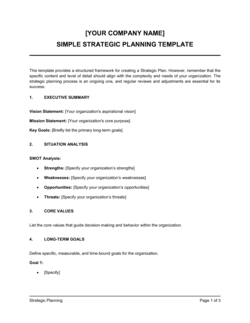
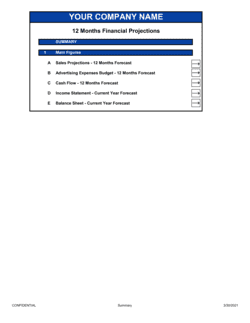
Farm Business Plan 2 Template

Free Word download β€’ Edit online β€’ Save & share with Drive β€’ Export to PDF

40 pagesβ€’3h 10m – 4h 20m to fillβ€’Difficulty: Expert
Learn more ↓
FreeFarm Business Plan 2 Template

At a glance

What it is
A Farm Business Plan is a structured document that maps your agricultural operation's production model, market channels, equipment and land resources, cost structure, and 3–5 year financial projections into a single reference document. This free Word download gives you a complete, lender-ready starting point you can edit online and export as PDF to share with banks, USDA loan officers, grant reviewers, or farm succession advisors.
When you need it
Use it when applying for an FSA or USDA farm loan, seeking a grant from a state agricultural program, bringing on an investor or land partner, or formalizing a new enterprise β€” livestock, row crops, specialty produce, or agritourism β€” within an existing operation.
What's inside
Executive summary, farm description and history, production and enterprise plan, market and sales strategy, operational and equipment plan, management team and labor, environmental and risk management, and full financial projections including an income statement, cash flow schedule, and balance sheet.

What is a Farm Business Plan?

A Farm Business Plan is a structured document that defines an agricultural operation's enterprise mix, production model, market channels, equipment and land resources, risk management approach, and 3–5 year financial projections β€” including an income statement, cash flow schedule, and balance sheet. It functions as both an internal management roadmap and the formal submission document required by USDA Farm Service Agency loan officers, commercial agricultural lenders, and state and federal grant programs before approving financing. Unlike a general business plan, a farm business plan incorporates agriculture-specific components: per-enterprise budgets, crop insurance schedules, seasonal cash flow modeling tied to planting and harvest cycles, and a debt service coverage ratio calculation.

Why You Need This Document

Without a written farm business plan, loan applications stall at the first underwriting review, grant submissions are disqualified for missing financial documentation, and land purchase negotiations lack the credibility a formal plan provides. USDA FSA direct and guaranteed loans explicitly require a written plan β€” submitting without one results in an automatic request for additional information that can delay approval by weeks. Beyond financing, the planning process itself forces you to stress-test yield assumptions against realistic commodity prices, size your operating line to cover the peak cash deficit month rather than annual net income, and document lease terms that lenders factor into tenure risk assessments. A complete, accurate farm business plan built on this template gives lenders, grant reviewers, and partners the evidence they need to say yes β€” and gives you the operational clarity to execute once they do.

Which variant fits your situation?

If your situation is…Use this template
Operating a small direct-to-consumer vegetable or CSA farmSmall Farm Business Plan
Raising livestock and applying for USDA operating loansLivestock Farm Business Plan
Launching an agritourism or farm-stay operationAgritourism Business Plan
Starting a greenhouse or controlled-environment agriculture ventureGreenhouse Business Plan
Rapid internal planning for a new farm enterprise or seasonOne-Page Business Plan
Formalizing a farm-to-table restaurant or food-service spin-offRestaurant Business Plan
Outlining a 3–5 year growth strategy for an existing operationStrategic Plan

Common mistakes to avoid

❌ Omitting a monthly cash flow schedule

Why it matters: Agricultural income arrives in concentrated windows β€” at harvest or after market. A plan showing only annual income can mask months where the operation cannot cover loan payments or input costs.

Fix: Build a 12-month cash flow schedule for Year 1 showing each income and expense item in the month it actually occurs, and size the operating line to cover the peak deficit month.

❌ Using peak commodity prices for revenue projections

Why it matters: Projections based on 5-year-high prices look optimistic to lenders and collapse under any market correction, producing a cash flow shortfall that wasn't modeled.

Fix: Use a 3–5 year rolling average price for each commodity, sourced from USDA NASS or your elevator's historical basis records, and state the source in the plan.

❌ Leaving family labor out of the expense schedule

Why it matters: Unpaid family labor is a real cost β€” if the operator were replaced by hired labor, the business would not be profitable. Lenders and grant reviewers add it back to expenses, reducing net income and DSCR.

Fix: Value all operator and family labor at a market wage rate β€” typically $18–$25/hr for general farm labor β€” and include it as a line item in the operating expense budget.

❌ Not disclosing lease terms and expiration dates

Why it matters: A farm that rents 60% of its acres on a year-to-year lease has significant tenure risk. Lenders will discount the value of long-term investments β€” tile drainage, buildings β€” on rented ground without lease security.

Fix: List every lease with the landlord name, acreage, annual rent per acre, lease expiration date, and any renewal terms. Attach signed lease agreements as appendices.

❌ Ignoring the debt service coverage ratio calculation

Why it matters: Lenders apply a minimum DSCR of 1.25 for most farm loans. A plan that does not calculate DSCR forces the loan officer to do it manually β€” and they may use more conservative assumptions than you would.

Fix: Calculate DSCR explicitly in the financial section: net farm income divided by total annual principal and interest payments. If the ratio is below 1.25, revise the funding structure or reduce the loan amount before submitting.

❌ Skipping the risk management section

Why it matters: Weather, price volatility, and pest pressure can each wipe out a season's income. A plan with no risk mitigation strategy signals to lenders that the operator has not considered downside scenarios.

Fix: Document crop insurance coverage, forward contracts, diversified enterprise mix, and any off-farm income that provides a cash flow buffer. Quantify the coverage where possible.

The 9 key sections, explained

Executive Summary

Farm Description and History

Production and Enterprise Plan

Market and Sales Strategy

Operational and Equipment Plan

Management Team and Labor Plan

Environmental and Risk Management

Financial Projections

Funding Request and Use of Funds

How to fill it out

  1. 1

    Complete the farm description and legal structure first

    Enter your farm's legal name, entity type, acreage breakdown (owned vs. leased), soil types, and key infrastructure. Include lease expiration dates for any rented ground.

    πŸ’‘ Pull soil data from the USDA Web Soil Survey (websoilsurvey.sc.egov.usda.gov) to support your yield assumptions with documented soil productivity ratings.

  2. 2

    Define each enterprise with an enterprise budget

    List every crop or livestock enterprise with acreage or head count, target yield or production rate, and a per-unit cost of production. Attach individual enterprise budgets as appendices.

    πŸ’‘ Use your state's land-grant university extension service enterprise budget templates as a benchmark β€” they provide county-level cost averages that lenders recognize and accept.

  3. 3

    Map your market channels and price assumptions

    Assign each enterprise's output to specific market channels β€” commodity elevator, direct sales, wholesale, food hub β€” with a realistic price for each channel based on 3-year historical averages, not peak prices.

    πŸ’‘ If you sell any product direct, document your buyer relationships by name. A signed CSA roster or a wholesale agreement letter carries more weight with lenders than a projected price alone.

  4. 4

    Build the monthly cash flow projection

    Enter income month by month based on expected sale timing, then enter all expenses by the month they are due β€” seed in March, fertilizer in April, insurance premium in January. Identify the months with negative cash flow and size your operating line to cover the largest deficit.

    πŸ’‘ Do not net income against expenses on an annual basis and assume the cash flow works. Show each month individually β€” a corn farmer with strong annual income can still face a $60,000 March cash deficit.

  5. 5

    Document your equipment inventory and depreciation

    List every major piece of equipment with the year purchased, original cost, and current estimated market value. Calculate annual depreciation using IRS Form 4562 straight-line or MACRS schedules and include it as an expense line.

    πŸ’‘ A machinery and equipment schedule attached as an appendix doubles as collateral documentation for lenders β€” complete it carefully and keep it updated.

  6. 6

    Complete the risk management section with insurance details

    Enter your crop insurance policy type (APH, RP, or SCO), coverage level, and premium for each insured crop. Add any livestock risk protection (LRP) or livestock gross margin (LGM) coverage.

    πŸ’‘ If you are applying for an FSA loan, confirm your crop insurance meets the minimum coverage level required for the loan program before submitting the plan.

  7. 7

    Write the executive summary last

    Pull the key metrics β€” total acreage, enterprise mix, projected net farm income, DSCR, and funding ask β€” from the completed sections and compress them into 1–2 pages.

    πŸ’‘ Lead the executive summary with your strongest data point β€” years of operation, a profitable track record, or a signed offtake agreement β€” to anchor the reader's confidence before they reach the financials.

  8. 8

    Stress-test the financials at 80% of projected revenue

    Rerun the cash flow and income statement with gross income reduced by 20% β€” simulating a poor yield year or a price drop. Confirm your DSCR stays above 1.0 and that your operating line covers the worst-case monthly deficit.

    πŸ’‘ FSA loan officers run this exact scenario during underwriting. Presenting it proactively in your plan demonstrates financial literacy and typically speeds up approval.

Frequently asked questions

What is a farm business plan?

A farm business plan is a structured document that defines an agricultural operation's enterprise mix, production practices, market channels, resource needs, and 3–5 year financial projections. It serves both as an internal management tool and as the formal document required by USDA FSA loan officers, commercial agricultural lenders, and grant program administrators before approving financing.

Do I need a business plan to get a farm loan?

Yes β€” virtually all FSA direct and guaranteed loans, USDA farm ownership loans, and commercial agricultural operating loans require a written business plan. The plan must include an enterprise budget, cash flow projection, balance sheet, and a description of how loan proceeds will be used. Beginning farmer loan programs often require additional narrative sections on management experience and training.

What financial statements should a farm business plan include?

A complete farm business plan includes a monthly cash flow projection for Year 1, annual projections for Years 2–5, an income statement (showing net farm income), a balance sheet listing all farm assets and liabilities, and a debt service coverage ratio calculation. Lenders also expect enterprise budgets for each crop or livestock enterprise as supporting appendices.

How long should a farm business plan be?

Most farm business plans run 15–30 pages plus financial appendices. A beginning farmer applying for an FSA loan typically submits 20–25 pages. An established operation refinancing land may use a shorter 12–15 page update plan focused on current financials and the specific loan purpose. Grant applications sometimes specify a maximum page count β€” read the program guidelines before writing.

What is a debt service coverage ratio and why does it matter?

The debt service coverage ratio (DSCR) is net farm income divided by total annual loan principal and interest payments. Most agricultural lenders require a DSCR of at least 1.25, meaning the farm generates $1.25 of income for every $1.00 of debt service. A DSCR below 1.0 means the farm cannot cover its loan payments from farm income alone, which typically results in loan denial unless strong off-farm income or collateral compensates.

Can I write a farm business plan myself or do I need a consultant?

Most farm operators can complete a strong plan using a structured template combined with extension service enterprise budgets for their region. Hire an agricultural lender advisor or farm management consultant ($500–$2,500) when the loan exceeds $500K, when the operation involves complex enterprise diversification, or when a previous loan application was declined. Your local USDA Farm Service Agency office also provides free technical assistance to beginning farmers.

How do I estimate realistic commodity prices for my projections?

Use a 3–5 year rolling average from USDA NASS published prices for your crop or livestock category, then adjust for your local basis β€” the difference between the local cash price and the futures contract price at your nearest elevator or packing facility. Document your price source in the plan. Avoid using the highest price from the past five years as your base assumption.

What is an enterprise budget and how does it fit into the plan?

An enterprise budget is a single-crop or single-livestock cost and revenue worksheet showing expected gross income, variable costs (seed, fertilizer, feed, labor), fixed cost allocation (equipment depreciation, land rent), and net return per acre or per head. Each enterprise in the farm plan should have its own budget, attached as an appendix. Your state's land-grant university extension service publishes free regional enterprise budget templates you can adapt to your operation.

How often should I update my farm business plan?

Update the financial projections and cash flow schedule every year before the operating season begins. Revise the full plan β€” including enterprise mix, market strategy, and equipment β€” every 2–3 years or whenever you are applying for new financing, pursuing a grant, or making a significant operational change such as adding a new enterprise or purchasing land.

How this compares to alternatives

vs General Business Plan

A general business plan covers market analysis, competitive positioning, and financial projections for any industry. A farm business plan replaces generic sections with agriculture-specific components β€” enterprise budgets, crop insurance schedules, FSA loan requirements, and seasonal cash flow modeling. If you are applying for any USDA or agricultural lender financing, the farm-specific format is required.

vs One-Page Business Plan

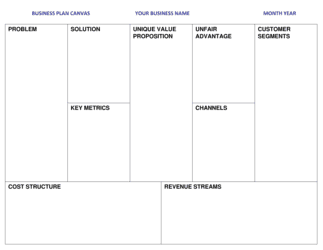
A one-page plan is a rapid-alignment tool for internal planning or early ideation. It lacks the financial depth β€” monthly cash flow, DSCR calculation, enterprise budgets β€” that agricultural lenders require. Use a one-page canvas to test a new enterprise idea, then build the full farm business plan before any loan or grant application.

vs Strategic Plan

A strategic plan focuses on long-term goals, initiatives, and KPIs for an existing operation. A farm business plan is an external-facing capital document that adds lender-required financial statements, enterprise budgets, and a specific funding request. Established farm operations typically benefit from both β€” the business plan to secure financing, the strategic plan to guide multi-year operational decisions.

vs Financial Projection Template

A standalone financial projection covers revenue, expenses, and cash flow in isolation. A farm business plan contextualizes those numbers with production detail, market channel strategy, risk management, and team credentials β€” the full narrative lenders need to assess repayment ability. Financial projections submitted without the surrounding plan context are typically returned for additional information.

Industry-specific considerations

Row Crop Farming

Commodity price basis, per-acre enterprise budgets, crop insurance APH documentation, and seasonal operating line sizing tied to input purchase and harvest sale timing.

Livestock and Dairy

Per-head cost of production, feed conversion ratios, milk or meat price volatility risk management, and facility depreciation schedules for barns and handling equipment.

Specialty Crops and Direct Market

CSA membership revenue, farmers market and wholesale channel mix, labor-intensive cost structures, and premium price assumptions supported by documented buyer relationships.

Agritourism and Value-Added

Revenue diversification from on-farm events, farm stays, or processed product sales; zoning and liability insurance considerations; seasonal visitor traffic assumptions.

Template vs pro β€” what fits your needs?

PathBest forCostTime
Use the templateBeginning farmers, FSA loan applicants, and operators applying for state or USDA grantsFree2–4 weeks (30–60 hours including financial modeling)
Template + professional reviewLoans between $250K and $750K, first commercial bank application, or complex multi-enterprise operations$500–$2,000 for an agricultural lender advisor or farm management consultant review3–5 weeks
Custom draftedLarge-scale land purchases over $1M, multi-generation succession transactions, or institutional investor presentations$2,500–$8,000 for a professional agricultural business plan writer or farm management firm4–8 weeks

Glossary

Enterprise Budget
A single-crop or single-livestock cost and revenue summary showing expected income, variable costs, fixed costs, and net return per acre or per head.
FSA (Farm Service Agency)
The USDA agency that administers farm loans, price support programs, and disaster assistance for US agricultural producers.
Operating Loan
Short-term credit used to cover the annual cost of seed, fertilizer, feed, fuel, and labor before harvest or sale proceeds arrive.
Term Loan
Longer-term financing β€” typically 7–30 years β€” used to purchase land, buildings, or major equipment.
Cash Flow Projection
A month-by-month forecast of cash inflows and outflows that identifies the months when operating loans are needed and when they can be repaid.
Net Farm Income
Total farm revenue minus total farm expenses, including depreciation β€” the primary profitability measure used by agricultural lenders.
Debt Service Coverage Ratio (DSCR)
Net farm income divided by total annual debt payments; lenders typically require a DSCR of at least 1.25 before approving a farm loan.
CSA (Community Supported Agriculture)
A direct-marketing model where consumers pay upfront at the start of the season in exchange for weekly shares of the farm's harvest.
Value-Added Product
A farm product that has been processed, packaged, or transformed β€” jams, cheeses, dried herbs β€” to capture more margin than selling raw commodities.
DSCR
See Debt Service Coverage Ratio β€” the shorthand lenders use when reviewing farm financial statements.
Succession Plan
A documented strategy for transferring farm ownership, management, and assets to the next generation or a new owner while minimizing tax and legal friction.

Part of your Business Operating System

This document is one of 3,000+ business & legal templates included in Business in a Box.

  • Fill-in-the-blanks β€” ready in minutes
  • 100% customizable Word document
  • Compatible with all office suites
  • Export to PDF and share electronically

Create your document in 3 simple steps.

From template to signed document β€” all inside one Business Operating System.
1
Download or open template

Access over 3,000+ business and legal templates for any business task, project or initiative.

2
Edit and fill in the blanks with AI

Customize your ready-made business document template and save it in the cloud.

3
Save, Share, Send, Sign

Share your files and folders with your team. Create a space of seamless collaboration.

Save time, save money, and create top-quality documents.

β˜…β˜…β˜…β˜…β˜…

"Fantastic value! I'm not sure how I'd do without it. It's worth its weight in gold and paid back for itself many times."

Managing Director Β· Mall Farm
Robert Whalley
Managing Director, Mall Farm Proprietary Limited
β˜…β˜…β˜…β˜…β˜…

"I have been using Business in a Box for years. It has been the most useful source of templates I have encountered. I recommend it to anyone."

Business Owner Β· 4+ years
Dr Michael John Freestone
Business Owner
β˜…β˜…β˜…β˜…β˜…

"It has been a life saver so many times I have lost count. Business in a Box has saved me so much time and as you know, time is money."

Owner Β· Upstate Web
David G. Moore Jr.
Owner, Upstate Web

Run your business with a system β€” not scattered tools

Stop downloading documents. Start operating with clarity. Business in a Box gives you the Business Operating System used by over 250,000 companies worldwide to structure, run, and grow their business.

Start freeΒ Β·Β No credit card required