- Master Agreement
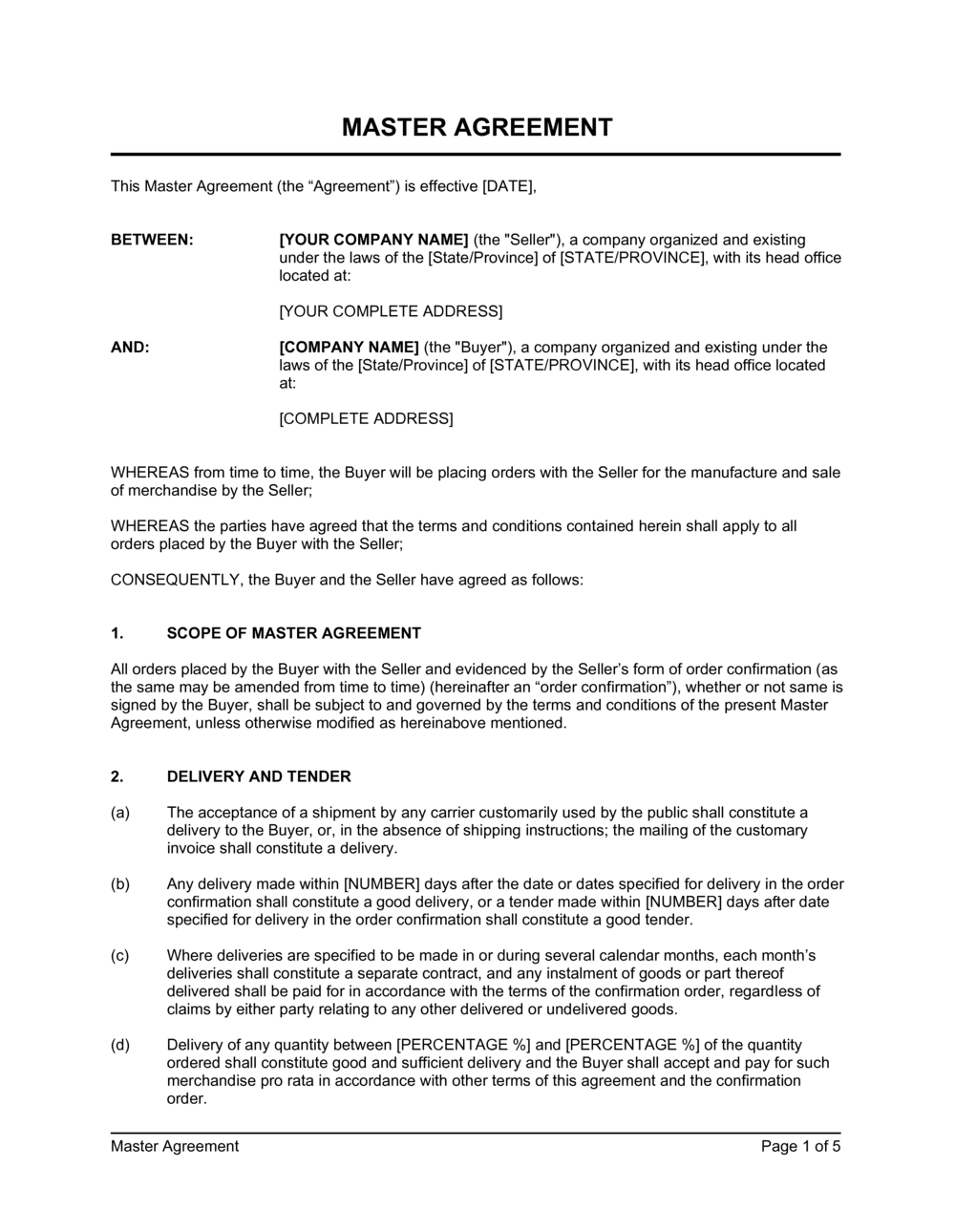
- A contract that establishes the standard terms governing all future transactions between two parties, so individual orders do not require full renegotiation each time.
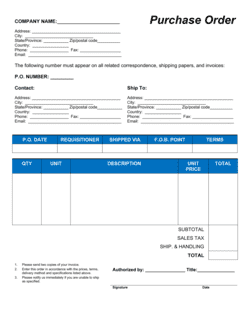
- Purchase Order (PO)
- A buyer-issued document referencing the master agreement that authorizes a specific shipment — identifying quantity, SKUs, price, and delivery date.
- Incoterms
- A set of internationally recognized trade terms (e.g., FOB, CIF, DDP) published by the ICC that define where risk and cost transfer from seller to buyer during shipping.
- Risk of Loss
- The point in the transaction at which responsibility for damage or destruction of goods transfers from the seller to the buyer — typically tied to delivery or FOB designation.
- Acceptance Testing
- A defined procedure by which the buyer inspects received goods against agreed specifications and either formally accepts or rejects them within a stated window.
- Warranty of Merchantability
- An implied or express guarantee that the goods are fit for their ordinary, intended purpose and conform to their description.
- Indemnification
- A contractual obligation by one party to compensate the other for specified losses, damages, or claims — for example, a seller indemnifying a buyer against product liability claims.
- Limitation of Liability
- A clause capping the maximum financial exposure of one or both parties — commonly set at the value of goods purchased in the preceding 12 months.
- Force Majeure
- A clause excusing a party from performance obligations when an unforeseeable event outside its control — such as a natural disaster or government action — prevents timely delivery.
- Cure Period
- A defined number of days in which a party in breach must fix the problem before the other party may exercise termination or other remedies.
- Net Payment Terms
- The number of days after invoice date by which the buyer must remit full payment — e.g., Net 30 means payment is due 30 days from invoice date.
- UCC (Uniform Commercial Code)
- A standardized body of US commercial law governing the sale of goods; Article 2 specifically applies to merchandise sale contracts and fills gaps where the agreement is silent.