1
Identify both parties using their full legal names
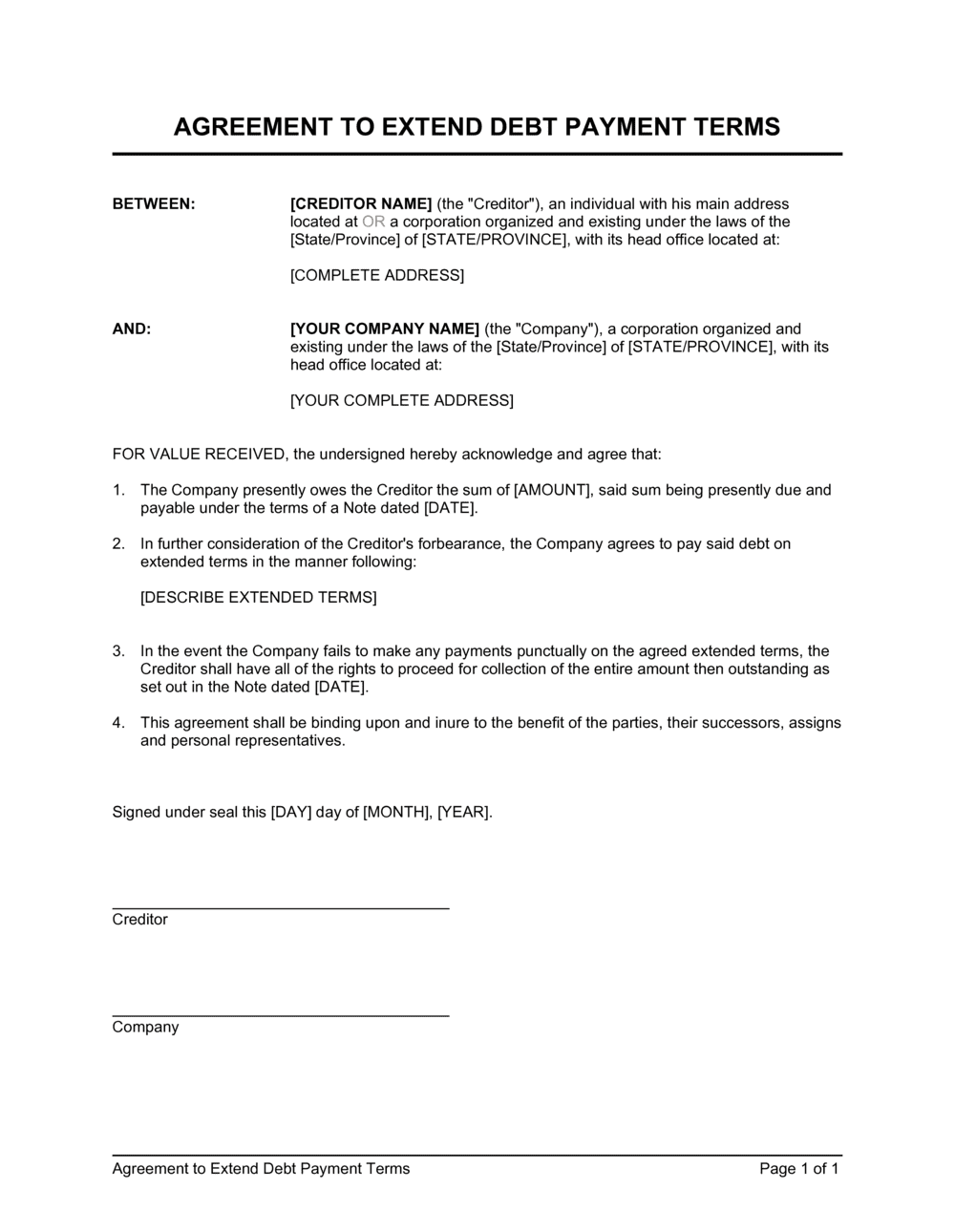
Enter the creditor's and debtor's registered legal entity names — not trade names or individual contact names. If the debtor is an individual, use their full legal name as it appears on government-issued ID.
💡 Pull the entity name from the original debt instrument to ensure it matches exactly. Discrepancies between the extension and the original document can complicate enforcement.
2
Reference the original debt instrument precisely
Cite the original agreement by its full title, execution date, and original principal amount. If the original was a promissory note, include the note number or reference ID.
💡 Attach a copy of the original agreement as an exhibit to the extension. Courts enforce extension agreements more consistently when the underlying obligation is clearly documented.
3
Calculate and confirm the outstanding balance
Determine the exact principal remaining plus any accrued but unpaid interest as of the agreement's effective date. Both parties should review and confirm this figure before signing.
💡 Prepare a short amortization table showing how you arrived at the outstanding balance — it eliminates disputes and speeds up execution.
4
Set the new repayment schedule with specific calendar dates
Enter each installment amount, the day of the month payments are due, the first payment date, and the final maturity date. Use specific dates — not relative time references — for every payment.
💡 Align payment due dates with the debtor's known cash-flow cycle — end of month for businesses paid on Net 30 terms, for example — to reduce the likelihood of default under the new schedule.
5
State the interest rate and calculation method explicitly
Write out the annual interest rate as a percentage, specify the day-count convention (30/360 or actual/365), and state whether accrued interest is paid monthly, capitalized, or deferred to maturity.
💡 If you are reducing the interest rate as part of the extension concession, confirm the new rate in writing rather than referencing 'the original rate' — the original document may be amended or lost.
6
Include a waiver of existing defaults
If the debtor is already in technical default under the original agreement, add an explicit waiver clause that extinguishes those existing defaults upon execution. Limit the waiver to defaults existing as of the effective date only.
💡 Do not include a blanket forward-looking waiver. A narrowly scoped waiver protects the creditor's right to enforce the new schedule strictly going forward.
7
Define the default and acceleration trigger
Specify a grace period of at least five to ten calendar days for missed payments before the acceleration clause activates. Include a notice requirement so the debtor receives written notice before the full balance is called.
💡 A notice-and-cure period of five to ten days reduces the risk of triggering acceleration over a banking delay and demonstrates good faith if the matter proceeds to litigation.
8
Execute before the original maturity date
Both parties must sign and date the agreement before the original debt falls due. Signing after maturity can create a fresh debt instrument with different legal characteristics and tax implications.
💡 Use a dated signature block for each party and, where required by local law, have the agreement witnessed or notarized to maximize enforceability.