1
Identify all parties using their registered legal names
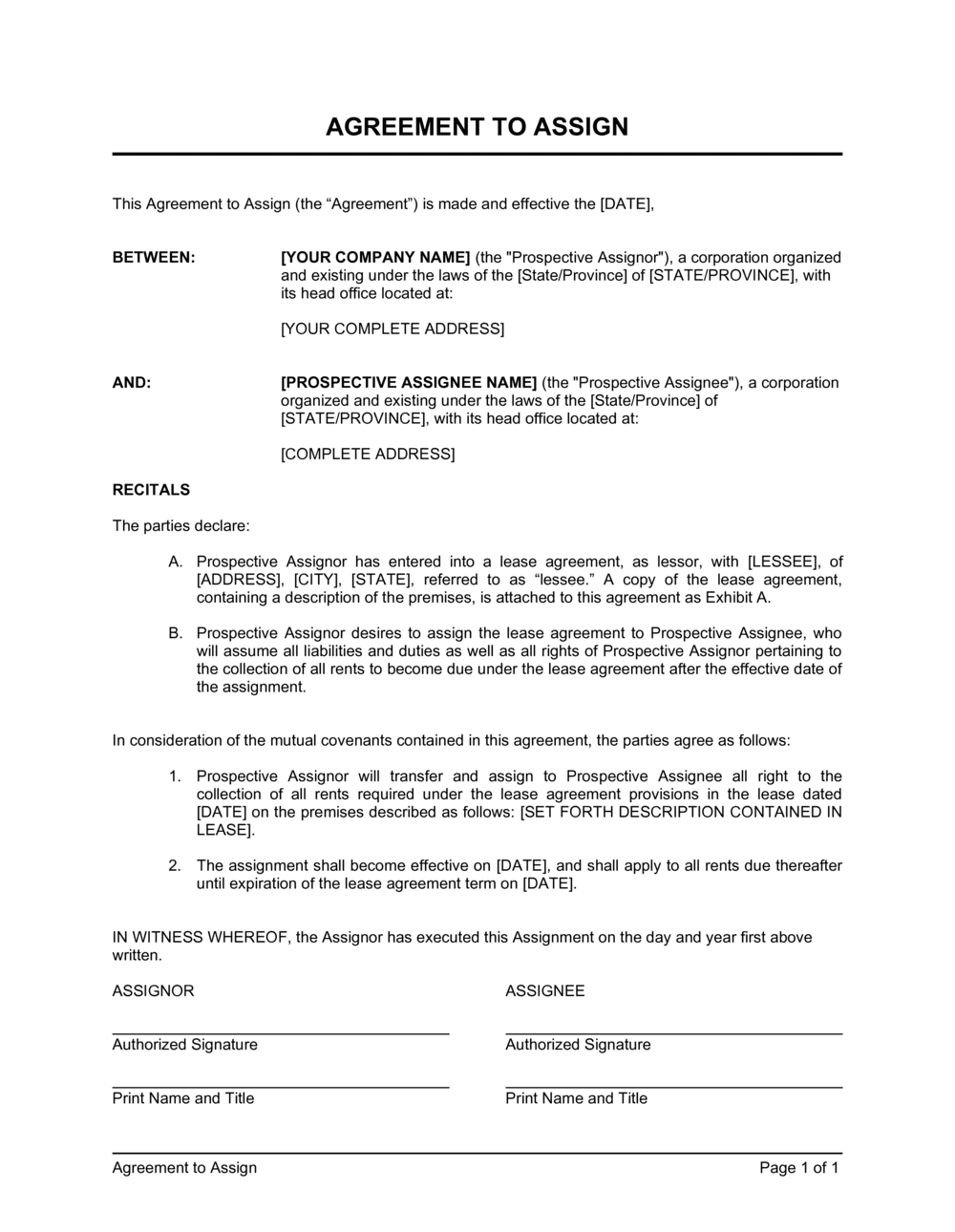
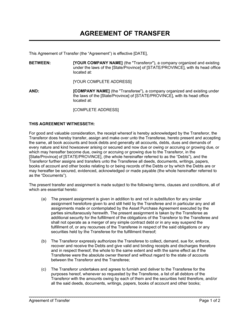
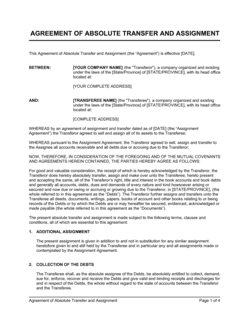
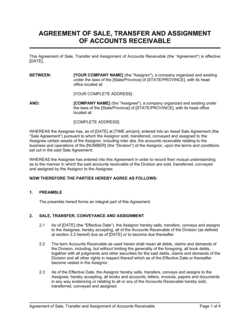
Enter the full registered legal name of the assignor, the assignee, and the obligor (the counterparty in the original contract). Include entity type — corporation, LLC, partnership — and jurisdiction of incorporation for each.
💡 Pull each entity name directly from your corporate registry filing or the original contract signature block. A mismatch voids enforcement.
2
Describe the original contract precisely
Reference the original contract by its full title, execution date, and the parties to it. Attach a copy as a schedule if the obligor is also signing the assignment consent.
💡 If the original contract has been amended, list all amendments by date so the assignee takes the fully amended position, not just the base agreement.
3
Review the original contract for anti-assignment clauses
Before completing the scope-of-assignment clause, locate any assignment restriction in the original contract. Determine whether consent is required, whether it can be withheld, and what form consent must take.
💡 Some contracts deem a change of control of the contracting party to be an assignment — review change-of-control definitions if this assignment follows a business sale.
4
Obtain written consent from the obligor if required
Draft a short consent letter or complete Schedule A of the template, have the obligor execute it, and attach it to the agreement before the assignment is signed. File the signed consent with your transaction records.
💡 Get the obligor's consent before executing the main agreement — not after. An assignment signed before consent is received may be voidable even if consent arrives later.
5
Define the scope: rights only, or rights and obligations
Decide whether the assignee is taking on the assignor's performance obligations going forward or only receiving the benefits. State clearly what is included and what — if anything — is excluded.
💡 Lenders and investors typically want rights and economic benefits only. Buyers in a business acquisition typically assume all obligations. Mixing the two without clear language creates post-closing disputes.
6
Complete the representations and indemnification clauses
Confirm the assignor's warranties are accurate as of the effective date — no defaults, no undisclosed encumbrances. Then split the indemnification cleanly: assignor covers pre-effective-date liabilities; assignee covers post-effective-date performance failures.
💡 If the assignor cannot honestly make the 'no default' warranty, disclose the known defaults in a schedule and carve them out of the warranty rather than omitting the warranty altogether.
7
Set the effective date and sign before it arrives
Enter a specific calendar date on which the assignment takes effect. Both the assignor and assignee must sign before or on that date. Retroactive effective dates require careful drafting and are unenforceable in some jurisdictions.
💡 If the assignment is part of a larger transaction closing, tie the effective date to the closing date using a condition — 'effective upon the closing of [TRANSACTION]' — rather than a fixed calendar date.
8
Notify the obligor and file records
Even when consent was obtained in advance, send a formal notice to the obligor confirming the effective date and providing the assignee's contact details for future correspondence and payments.
💡 In some jurisdictions, an assignment is not effective against the obligor until they receive written notice — sending notice is not a courtesy, it is a legal step.