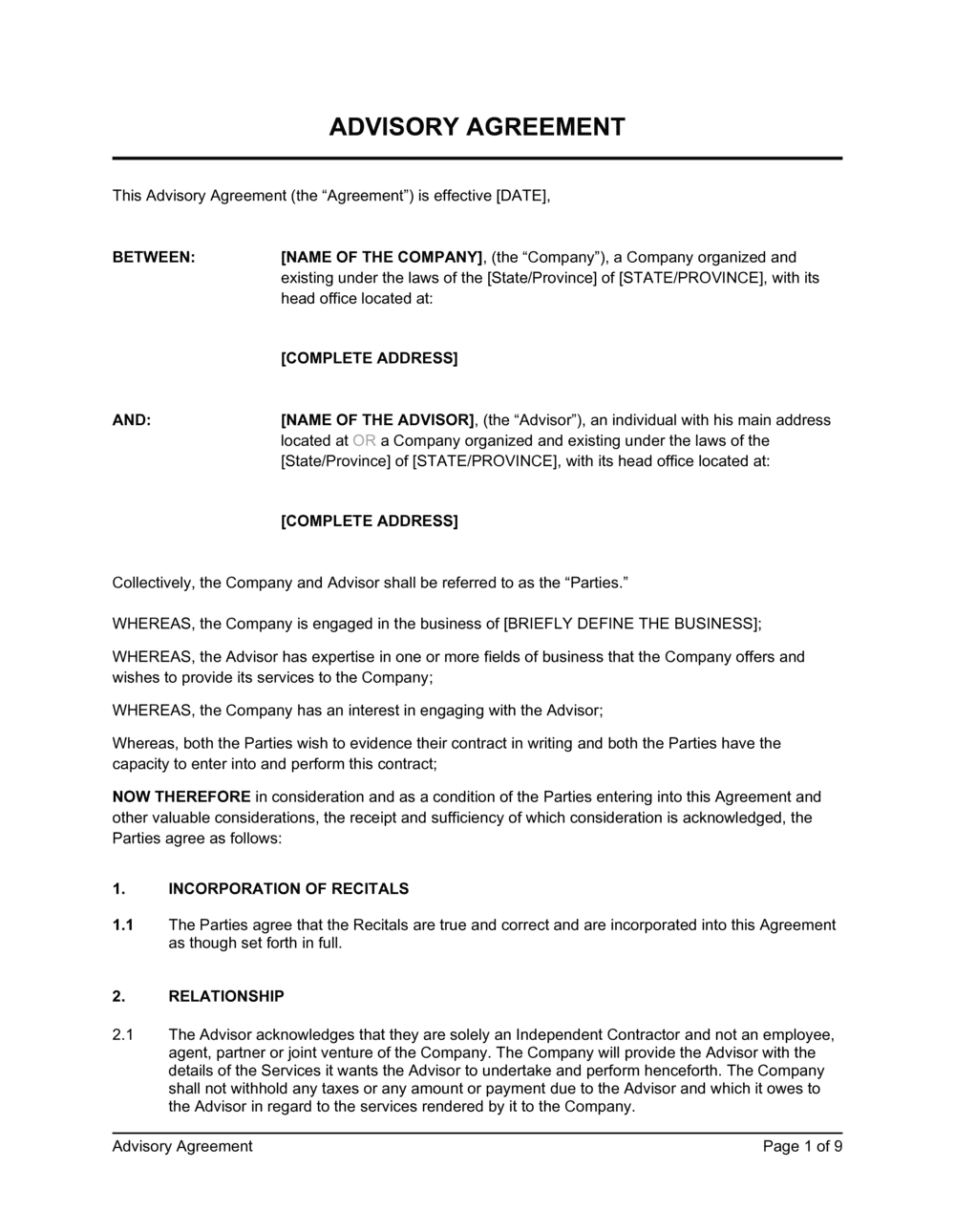
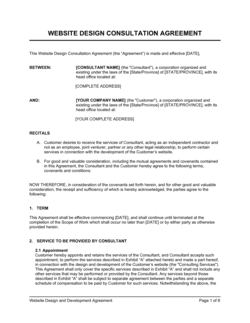
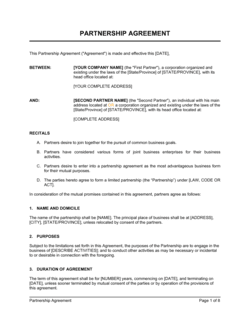
Advisory Agreement Template

Free Word download β€’ Edit online β€’ Save & share with Drive β€’ Export to PDF

9 pagesβ€’30–40 min to fillβ€’Difficulty: Complexβ€’Signature requiredβ€’Legal review recommended
Learn more ↓
FreeAdvisory Agreement Template

At a glance

What it is
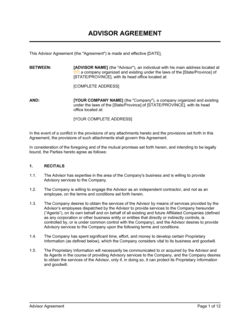
An Advisory Agreement is a legally binding contract between a company and an individual advisor that defines the scope of advisory services, the compensation structure (cash, equity, or both), confidentiality obligations, IP ownership, and termination conditions. This free Word download is editable online and can be exported as PDF β€” ready to execute with a new advisor in under 30 minutes.
When you need it
Use it whenever you bring on a formal advisor β€” whether compensated with equity, a monthly retainer, or a hybrid arrangement β€” and need enforceable obligations around confidentiality, deliverables, and IP ownership in writing before sensitive information is shared.
What's inside
Advisor scope and time commitment, compensation terms including cash and equity vesting schedules, confidentiality and non-disclosure obligations, IP assignment, conflict-of-interest disclosures, term and termination provisions, and governing law.

What is an Advisory Agreement?

An Advisory Agreement is a legally binding contract between a company and an individual advisor that formally governs the advisory relationship. It defines the scope of services the advisor will provide, the time commitment expected, the compensation structure β€” whether cash retainer, equity grant, or a combination of both β€” and the critical protective provisions around confidentiality, intellectual property ownership, conflict-of-interest disclosure, and termination. Unlike a casual handshake arrangement or an informal email exchange, a properly executed advisory agreement creates enforceable obligations on both sides before any sensitive business information changes hands or any equity is committed.

Why You Need This Document

Without a written advisory agreement, equity granted to an advisor vests with no performance baseline and no mechanism for forfeiture when the advisor stops engaging β€” creating a permanent cap table entry that complicates future fundraising and acquisition due diligence. Confidential information shared in advisory conversations β€” financials, customer lists, product roadmaps β€” has no contractual protection if no agreement exists, leaving the company with no legal basis for recourse if that information surfaces at a competitor. Intellectual property developed during the advisory relationship, including strategic frameworks, product concepts, or introductions that generate licensing rights, may belong to the advisor by default under copyright and patent law if no assignment clause is in place. A signed advisory agreement, executed before the first substantive conversation, closes all three gaps and gives both parties a clear, documented understanding of what the relationship entails and what happens when it ends.

Which variant fits your situation?

If your situation is…Use this template
Compensating a startup advisor with equity only, no cash retainerStartup Advisor Agreement (Equity-Only)
Engaging a paid consultant for a defined project rather than ongoing adviceConsulting Agreement
Establishing a formal advisory board with multiple membersAdvisory Board Agreement
Bringing on a part-time fractional executive (CFO, CMO, CTO)Independent Contractor Agreement
Engaging a strategic partner for co-marketing or business developmentStrategic Partnership Agreement
Formalizing a mentorship relationship with no financial compensationMentorship Agreement
Sharing sensitive information before finalizing advisory termsNon-Disclosure Agreement

Common mistakes to avoid

❌ Granting equity with no vesting schedule

Why it matters: An advisor who contributes for two months and then disengages retains a full undiluted equity stake, creating a permanent cap table entry with no ongoing benefit to the company.

Fix: Always include a monthly vesting schedule with a minimum 3-month cliff. Unvested equity should be forfeited immediately on termination for any reason.

❌ Leaving the advisory scope undefined

Why it matters: Without a defined scope and time commitment, the company has no basis to measure value delivered or terminate for non-performance, and the advisor has no boundary for what is being asked of them.

Fix: Specify the domains of advice, the expected monthly hours, and the format of engagement (calls, written feedback, in-person). Reference these in the termination clause as the performance baseline.

❌ Omitting a conflict-of-interest disclosure requirement

Why it matters: An advisor who simultaneously advises a direct competitor β€” without disclosure β€” can cause competitive harm and create a breach-of-fiduciary-duty exposure, with no contractual basis for immediate termination.

Fix: Require the advisor to represent at signing that no conflicts exist and to disclose any that arise during the term within five business days of becoming aware of them.

❌ No surviving obligations clause

Why it matters: Without explicit survival language, a terminated advisor can argue that confidentiality and IP assignment obligations ended with the agreement, leaving sensitive information and work product unprotected.

Fix: Include a standalone survival clause that lists confidentiality, IP assignment, non-solicitation, and governing law as surviving termination indefinitely or for a defined period.

❌ Signing the agreement after confidential information has already been shared

Why it matters: An advisor who has already received confidential data before signing can argue the agreement lacks consideration β€” and that the confidentiality clause was not in place when the disclosure occurred.

Fix: Always execute the agreement before any confidential discussion. If information was shared before signing, acknowledge the prior disclosure in the agreement and have the advisor explicitly agree it is covered.

❌ Using the wrong entity name for the company

Why it matters: A trade name or informal brand name is not a legal entity β€” IP assignment and confidentiality obligations run to the named party, and enforcement against the wrong name creates standing issues in litigation or M&A diligence.

Fix: Confirm the exact registered legal name from your corporate registry filing and use it verbatim in the parties clause.

The 10 key clauses, explained

Parties and recitals

In plain language: Identifies the company and the advisor as legal parties, states the date of the agreement, and briefly describes why the relationship is being formed.

Sample language
This Advisory Agreement ('Agreement') is entered into as of [DATE] between [COMPANY LEGAL NAME], a [STATE] [ENTITY TYPE] ('Company'), and [ADVISOR FULL NAME], an individual ('Advisor').

Common mistake: Using a trade name or brand name for the company instead of its registered legal entity name β€” this creates enforceability issues if the agreement needs to be acted on in court or during an acquisition.

Scope of advisory services

In plain language: Defines what the advisor will actually do β€” the specific areas of expertise they are providing, the expected time commitment per month, and the format of engagement (calls, in-person meetings, email).

Sample language
Advisor agrees to provide advisory services in the area of [DOMAIN], including [SPECIFIC ACTIVITIES]. Advisor will make themselves available for approximately [X] hours per month, including [MEETING FORMAT].

Common mistake: Leaving the scope completely open-ended. Without defined time commitments and service areas, neither party has a baseline for whether the relationship is working β€” and compensation disputes become impossible to resolve.

Term and renewal

In plain language: Sets the start date and duration of the agreement, and states whether it renews automatically or requires affirmative renewal by both parties.

Sample language
This Agreement commences on [START DATE] and continues for [12/24] months ('Initial Term'), unless earlier terminated. The Agreement shall [automatically renew for successive [6]-month terms / expire at the end of the Initial Term] unless either party provides [30] days' written notice of non-renewal.

Common mistake: Omitting a renewal or expiration clause entirely, leaving the agreement open-ended with no natural review point β€” advisors accumulate equity beyond what was intended when the relationship was informally never ended.

Compensation β€” cash retainer

In plain language: States any cash payment the company will make to the advisor, including the amount, payment frequency, and invoicing requirements.

Sample language
In consideration of the advisory services, Company shall pay Advisor a monthly retainer of $[AMOUNT], payable on the [1st / 15th] of each month, beginning [START DATE]. Advisor shall submit an invoice within [5] business days of each period end.

Common mistake: Omitting whether the retainer is subject to withholding or whether the advisor is treated as an independent contractor. Misclassification risk applies β€” ensure the agreement clearly establishes contractor status and excludes employment benefits.

Compensation β€” equity grant

In plain language: Defines the equity award type (options or restricted stock), grant size, exercise price if applicable, vesting schedule, cliff, and what happens to unvested equity on termination.

Sample language
Company shall grant Advisor [X] shares of restricted common stock / options to purchase [X] shares at an exercise price of $[PRICE] per share. The grant vests monthly over [24] months, with a [3]-month cliff. Unvested shares are forfeited immediately upon termination for any reason.

Common mistake: Granting equity without a vesting schedule or cliff. An advisor who disengages after one month retaining a full equity grant is a cap table problem that is expensive and awkward to undo.

Confidentiality and non-disclosure

In plain language: Prohibits the advisor from disclosing or misusing the company's confidential information β€” financials, customer data, product roadmaps, personnel details β€” during and after the agreement.

Sample language
Advisor agrees to hold all Confidential Information of the Company in strict confidence and not to disclose or use it for any purpose outside the advisory relationship. 'Confidential Information' means any non-public information relating to the Company's business, technology, customers, or finances.

Common mistake: Failing to define 'Confidential Information' with enough specificity. Relying on 'anything the company considers confidential' creates ambiguity that weakens enforceability when a disclosure actually occurs.

Intellectual property assignment

In plain language: Assigns to the company any work product, ideas, inventions, or materials the advisor creates in connection with their advisory role.

Sample language
Advisor hereby assigns to Company all right, title, and interest in any work product, inventions, or materials created by Advisor in connection with the advisory services, including all intellectual property rights therein.

Common mistake: No IP assignment clause at all, or language limited to 'deliverables submitted to the company.' Strategy documents, prototypes, or introductions that generate IP can fall outside a narrow clause, leaving ownership in dispute.

Conflict of interest and non-solicitation

In plain language: Requires the advisor to disclose existing and future conflicts, and prohibits them from soliciting the company's employees or customers for a defined period after the agreement ends.

Sample language
Advisor represents that there are no existing conflicts of interest and agrees to promptly disclose any that arise. For [12] months following termination, Advisor shall not solicit any employee or customer of the Company.

Common mistake: Omitting conflict-of-interest disclosure requirements entirely. Advisors who simultaneously advise direct competitors without disclosure create legal and reputational risk β€” the clause is also the company's basis for termination for cause if a conflict surfaces later.

Termination and post-termination obligations

In plain language: States the notice period for termination by either party, the conditions that allow immediate termination for cause, and ongoing obligations β€” confidentiality, IP assignment β€” that survive termination.

Sample language
Either party may terminate this Agreement on [30] days' written notice. Company may terminate immediately for Cause, defined as material breach, fraud, or gross misconduct. Confidentiality and IP assignment obligations survive termination indefinitely.

Common mistake: Not specifying which obligations survive termination. Without a survival clause, a terminated advisor may argue that confidentiality no longer applies once the agreement has ended.

Governing law and dispute resolution

In plain language: Specifies which jurisdiction's law governs the agreement and how disputes will be resolved β€” litigation, arbitration, or mediation.

Sample language
This Agreement is governed by the laws of [STATE / PROVINCE / COUNTRY], without regard to conflict-of-law principles. Any dispute shall be resolved by binding arbitration administered by [AAA / JAMS] in [CITY], except claims for injunctive relief, which may be brought in any court of competent jurisdiction.

Common mistake: Choosing a governing law that has no meaningful connection to where the company operates or where the advisor is located. Courts in several jurisdictions will apply local law regardless of the contractual choice, particularly on IP and non-solicitation issues.

How to fill it out

  1. 1

    Enter the parties' legal names and the agreement date

    Use the company's full registered legal name β€” not a brand name β€” and the advisor's legal name as it appears on government-issued ID. Enter the date the agreement will be signed, not the date it was drafted.

    πŸ’‘ Cross-reference your corporate registry filing to confirm the exact entity name before circulating for signature.

  2. 2

    Define the scope of services and time commitment

    List the specific domains and activities the advisor will contribute β€” e.g., 'introductions to Series A investors, review of fundraising materials, monthly 60-minute strategy call.' Include the expected monthly time commitment in hours.

    πŸ’‘ Specific scope language protects both parties: the company can enforce it if the advisor goes dark, and the advisor can push back if asked for far more than agreed.

  3. 3

    Set the term, start date, and renewal conditions

    Enter the start date and select a term length β€” 12 or 24 months is standard for startup advisors. Choose whether the agreement auto-renews or lapses unless renewed affirmatively, and set the notice period for non-renewal.

    πŸ’‘ A defined term with a renewal review forces both parties to assess whether the relationship is still valuable β€” preventing passive equity accumulation by disengaged advisors.

  4. 4

    Complete the cash compensation block

    Enter the monthly retainer amount (or $0 if equity-only), payment date, and invoicing requirement. Confirm the independent contractor classification language is present and that no employment benefits are implied.

    πŸ’‘ Even a nominal cash payment of $1 per month can strengthen enforceability of the agreement as a binding contract in some jurisdictions where pure equity grants lack consideration.

  5. 5

    Fill in the equity grant details

    Enter the grant type (restricted stock or options), share count, exercise price for options, vesting period, cliff length, and termination treatment. Confirm the grant is consistent with your cap table and any equity plan in place.

    πŸ’‘ Align vesting terms with the FAST Agreement standard (Founder Advisor Standard Template) if your investors are familiar with it β€” it reduces negotiation time on advisor equity.

  6. 6

    Tailor the conflict-of-interest and non-solicitation terms

    List any known existing conflicts the advisor has disclosed and confirm they are acceptable. Set the non-solicitation period β€” 12 months post-termination is standard β€” and confirm it covers both employees and customers.

    πŸ’‘ Ask the advisor to confirm in writing (an email is fine) any competing advisory roles before signing. This disclosure becomes part of the deal record and limits future liability.

  7. 7

    Confirm survival and governing law clauses

    Verify that confidentiality and IP assignment are listed in the survival clause so they continue after termination. Select the governing law jurisdiction that matches the company's primary place of business.

    πŸ’‘ If your company is incorporated in Delaware but operates in California, specify California as the governing law β€” California courts will apply their own IP and non-solicitation rules regardless of a Delaware choice-of-law clause.

  8. 8

    Sign before sharing any confidential information

    Both parties must execute the agreement before the advisor receives proprietary data, financial information, or access to internal systems. A countersigned agreement with a timestamp is your enforcement baseline.

    πŸ’‘ Use an eSign platform to timestamp execution and store the fully executed copy in a secure location β€” email attachments of PDFs are easily lost or disputed.

Frequently asked questions

What is an advisory agreement?

An advisory agreement is a legally binding contract between a company and an individual advisor that documents the terms of the advisory relationship β€” including the scope of services, time commitment, compensation (cash, equity, or both), confidentiality obligations, IP ownership, and termination conditions. It protects both parties by creating enforceable obligations before any sensitive information is exchanged or equity is committed.

What should an advisory agreement include?

At minimum, an advisory agreement should cover: parties and recitals, scope of services and time commitment, term and renewal conditions, cash compensation if applicable, equity grant details with vesting schedule and cliff, confidentiality and non-disclosure obligations, IP assignment, conflict-of-interest disclosure requirements, non-solicitation restrictions, termination and survival provisions, and governing law. Missing any of these creates gaps that default to jurisdiction-specific rules, which may not favor the company.

How is an advisory agreement different from a consulting agreement?

A consulting agreement typically governs a defined project or deliverable with a specific output β€” a report, a software build, a marketing campaign. An advisory agreement governs an ongoing relationship where the advisor provides strategic guidance, introductions, and expertise without producing a defined work product. Advisors are commonly compensated with equity; consultants are more typically paid a project fee or hourly rate. Both documents should include confidentiality and IP assignment clauses, but the scope and compensation structures differ materially.

How much equity should I give an advisor?

Typical startup advisor equity grants range from 0.1% to 0.5% of fully diluted shares, depending on the advisor's seniority, the value of their network, the stage of the company, and the time commitment expected. Early-stage companies with no revenue often grant at the higher end of this range. The FAST Agreement framework from Founder Institute provides a commonly referenced tiered structure: standard (0.25%), strategic (0.50%), and expert (1.00%) β€” though actual grants are always negotiated case by case and should be reviewed against your cap table.

Do advisory agreements need to be notarized?

Notarization is not required for advisory agreements to be legally enforceable in the US, Canada, the UK, or most EU member states. A signed agreement β€” including an electronically signed document β€” is generally sufficient. Some equity grants may require a separate board resolution or stock option plan documentation, but the advisory agreement itself does not need notarization in standard commercial practice.

What vesting terms are standard for advisor equity?

The most common structure for startup advisor equity is monthly vesting over 12 to 24 months with a 3- to 6-month cliff. Monthly vesting aligns equity accumulation with ongoing contribution more closely than annual vesting. The cliff ensures the advisor has demonstrated genuine value before any equity vests. Upon termination, unvested equity is typically forfeited immediately, while vested equity is retained by the advisor unless terminated for cause under a bad-leaver provision.

Can an advisor agreement be terminated early?

Yes. Standard advisory agreements allow either party to terminate with written notice β€” typically 30 days β€” for any reason or no reason. Companies can usually terminate immediately for cause, defined as material breach, fraud, or gross misconduct. Upon early termination, the advisor retains any vested equity but forfeits unvested shares or options. Confidentiality and IP assignment obligations typically survive termination regardless of who initiates it or why.

Is an advisory agreement the same as an advisory board agreement?

An advisory board agreement governs a formal multi-member advisory board with defined governance structures, meeting cadences, and collective responsibilities. A standard advisory agreement is a bilateral contract between the company and a single individual advisor. Many companies start with individual advisory agreements and later consolidate terms into an advisory board charter β€” but each advisor still typically executes their own individual agreement covering their specific equity grant and compensation terms.

Does an advisory agreement cover non-compete restrictions?

Most advisory agreements do not include a post-termination non-compete for advisors, because advisors typically serve multiple companies simultaneously and broad non-competes would make the role unattractive. Non-solicitation clauses β€” preventing the advisor from poaching employees or customers β€” are far more common and generally enforceable. Conflict-of-interest disclosure requirements, which obligate the advisor to reveal competing relationships during the term, provide a practical substitute for a formal non-compete in most advisory contexts.

How this compares to alternatives

vs Consulting Agreement

A consulting agreement governs a defined project with a specific deliverable, timeline, and project fee. An advisory agreement governs an ongoing strategic relationship with no defined deliverable β€” the advisor provides guidance, connections, and expertise over time. Consultants are typically paid cash per project; advisors are commonly compensated with equity. Both documents need confidentiality and IP assignment clauses, but the scope and compensation structures differ substantially.

vs Independent Contractor Agreement

An independent contractor agreement is used for a broader range of services β€” development, design, operations β€” where the contractor executes defined work for a fee. An advisory agreement is specifically tailored to the mentorship and guidance relationship, typically including equity compensation and lighter deliverable obligations. Misusing a contractor agreement for an advisor relationship leaves equity terms unaddressed and creates misclassification exposure.

vs Non-Disclosure Agreement

An NDA covers confidentiality only β€” it protects information shared during exploratory conversations before a formal engagement is agreed. An advisory agreement includes confidentiality as one clause but also covers compensation, equity, IP assignment, scope, and termination. Use an NDA before advisory discussions begin, then replace or supplement it with a full advisory agreement once terms are agreed.

vs Employment Contract

An employment contract creates an employer-employee relationship with associated payroll obligations, benefits, statutory protections, and ongoing duties of loyalty. An advisory agreement creates an independent contractor relationship with no employment entitlements β€” no benefits, no tax withholding, no minimum wage protections. If the advisory role involves regular direction and control over how work is performed, misclassification risk is significant and an employment contract may be more appropriate.

Industry-specific considerations

Technology / SaaS

Equity-for-advice structures are standard; IP assignment clauses must cover software, algorithms, and product feedback to protect pre-funding IP ownership claims during due diligence.

Financial Services

Regulatory conflicts of interest require explicit disclosure provisions; FINRA and FCA rules may restrict certain advisors from holding equity in firms they advise β€” legal review is strongly recommended.

Healthcare / Life Sciences

Key opinion leader (KOL) advisory arrangements are subject to anti-kickback statute scrutiny; compensation must be at fair market value and documented with independent valuation support.

Professional Services

Client non-solicitation provisions are critical given fee-based business models; advisors with existing client relationships at competing firms need explicit conflict-of-interest carve-outs or exclusions.

Manufacturing

Technical advisors may contribute patentable process improvements; IP assignment clauses must explicitly cover inventions and process innovations, not just written deliverables.

Retail / E-commerce

Growth advisors and marketplace specialists often advise multiple competing brands simultaneously; conflict-of-interest disclosure and limited confidentiality carve-outs for general industry knowledge are commonly negotiated.

Jurisdictional notes

United States

Advisory agreements are governed by state contract law. Equity grants to advisors may trigger securities law requirements β€” most companies rely on Rule 701 or a Section 4(a)(2) exemption, but grants exceeding certain thresholds require disclosure documents. California voids many IP assignment clauses for off-duty inventions under Labor Code Β§2870; ensure the IP clause does not purport to capture inventions developed entirely outside the advisory scope. Non-solicitation enforceability varies by state.

Canada

Advisory agreements are treated as independent contractor contracts; no employment law minimums apply if the relationship is properly structured. Equity grants to Canadian advisors may be subject to securities law requirements under provincial rules β€” Ontario and British Columbia have specific exemptions for closely held companies. Quebec requires contracts intended to be enforced in the province to be available in French for provincially regulated entities. Non-solicitation clauses are enforceable if reasonable in scope and duration.

United Kingdom

UK advisory agreements are generally governed by contract law principles; the advisor should be clearly structured as an independent contractor to avoid worker or employee status under the Employment Rights Act 1996. Equity grants to UK advisors may engage the Employment-Related Securities rules under ITEPA 2003, with tax implications for both parties depending on grant structure. Post-termination non-solicitation clauses are enforceable if reasonable. GDPR applies to any personal data the advisor processes in connection with their role.

European Union

EU member states vary significantly in how they classify independent contractors; France, Germany, and Spain have strict worker-status tests that could reclassify an active advisor as an employee if the degree of direction and control is high. Equity grants may be subject to varying tax treatment across member states β€” French BSPCEs and German virtual option structures are common alternatives to direct equity grants. GDPR applies to personal data handled by the advisor, and data processing addenda are recommended when the advisor accesses customer or personnel data.

Template vs lawyer β€” what fits your deal?

PathBest forCostTime
Use the templateStandard equity-for-advice arrangements with early-stage startup advisors in a single jurisdictionFree30 minutes
Template + legal reviewAdvisors receiving more than 0.5% equity, regulated industries (fintech, healthcare), or cross-border arrangements$300–$7001–3 days
Custom draftedHigh-profile advisors with material equity, complex conflict-of-interest situations, or arrangements subject to securities law scrutiny$1,000–$3,500+1–2 weeks

Glossary

Advisory Services
The specific guidance, introductions, strategic input, or expertise the advisor agrees to provide under the contract.
Vesting Schedule
A timeline defining when an advisor earns their equity grant, typically monthly over 12–24 months with or without a cliff.
Cliff
A minimum period β€” commonly 3 or 6 months β€” that must pass before any equity vests; if the advisor leaves before the cliff, no equity is earned.
Restricted Stock
Company shares granted to an advisor subject to vesting conditions; unvested shares are forfeited upon early termination.
Stock Option
A contractual right to purchase company shares at a fixed price (the exercise or strike price) for a defined period, commonly used to compensate advisors.
IP Assignment
A clause transferring ownership of any work product, ideas, or materials the advisor creates in connection with their advisory role to the company.
Conflict of Interest
A situation where the advisor's personal interests or other professional relationships could compromise their objectivity or loyalty to the company.
Retainer
A fixed recurring cash payment β€” typically monthly β€” made to the advisor in exchange for ongoing availability and advisory services.
At-Will Termination
A provision allowing either party to end the advisory relationship at any time without cause, subject to any agreed notice period.
Good Leaver / Bad Leaver
Provisions distinguishing between an advisor who departs cooperatively (good leaver, retains vested equity) and one terminated for cause (bad leaver, may forfeit equity).
Work Made for Hire
A legal doctrine under US copyright law where work created by a contractor within the scope of a commissioned task automatically belongs to the hiring party.

Part of your Business Operating System

This document is one of 3,000+ business & legal templates included in Business in a Box.

  • Fill-in-the-blanks β€” ready in minutes
  • 100% customizable Word document
  • Compatible with all office suites
  • Export to PDF and share electronically

Create your document in 3 simple steps.

From template to signed document β€” all inside one Business Operating System.
1
Download or open template

Access over 3,000+ business and legal templates for any business task, project or initiative.

2
Edit and fill in the blanks with AI

Customize your ready-made business document template and save it in the cloud.

3
Save, Share, Send, Sign

Share your files and folders with your team. Create a space of seamless collaboration.

Save time, save money, and create top-quality documents.

β˜…β˜…β˜…β˜…β˜…

"Fantastic value! I'm not sure how I'd do without it. It's worth its weight in gold and paid back for itself many times."

Managing Director Β· Mall Farm
Robert Whalley
Managing Director, Mall Farm Proprietary Limited
β˜…β˜…β˜…β˜…β˜…

"I have been using Business in a Box for years. It has been the most useful source of templates I have encountered. I recommend it to anyone."

Business Owner Β· 4+ years
Dr Michael John Freestone
Business Owner
β˜…β˜…β˜…β˜…β˜…

"It has been a life saver so many times I have lost count. Business in a Box has saved me so much time and as you know, time is money."

Owner Β· Upstate Web
David G. Moore Jr.
Owner, Upstate Web

Run your business with a system β€” not scattered tools

Stop downloading documents. Start operating with clarity. Business in a Box gives you the Business Operating System used by over 250,000 companies worldwide to structure, run, and grow their business.

Start freeΒ Β·Β No credit card required